

Last Wednesday, 12 August, Ukraine’s President Volodymyr Zelensky announced that Ukraine’s armed forces had carried out a “unique operation” against Russia’s Novorossiysk port and naval base.
Ukraine’s attack hit three Russian warships docked in one of Moscow’s major Black Sea ports, according to the Ministry of Defense and Ukraine’s Security Service (SBU) officials in Kyiv.

Finnish artillery units fire Howitzers At Rovajärvi exercise area In northern Finland. Image Credit: NATO Flickr.

Finnish artillery units fire Howitzers At Rovajärvi exercise area In northern Finland. Image Credit: NATO.
Moscow had hoped that by withdrawing its fleet from the Crimean Peninsula and establishing a base in this northeastern Black Sea port, it would keep its naval vessels safe from attack.
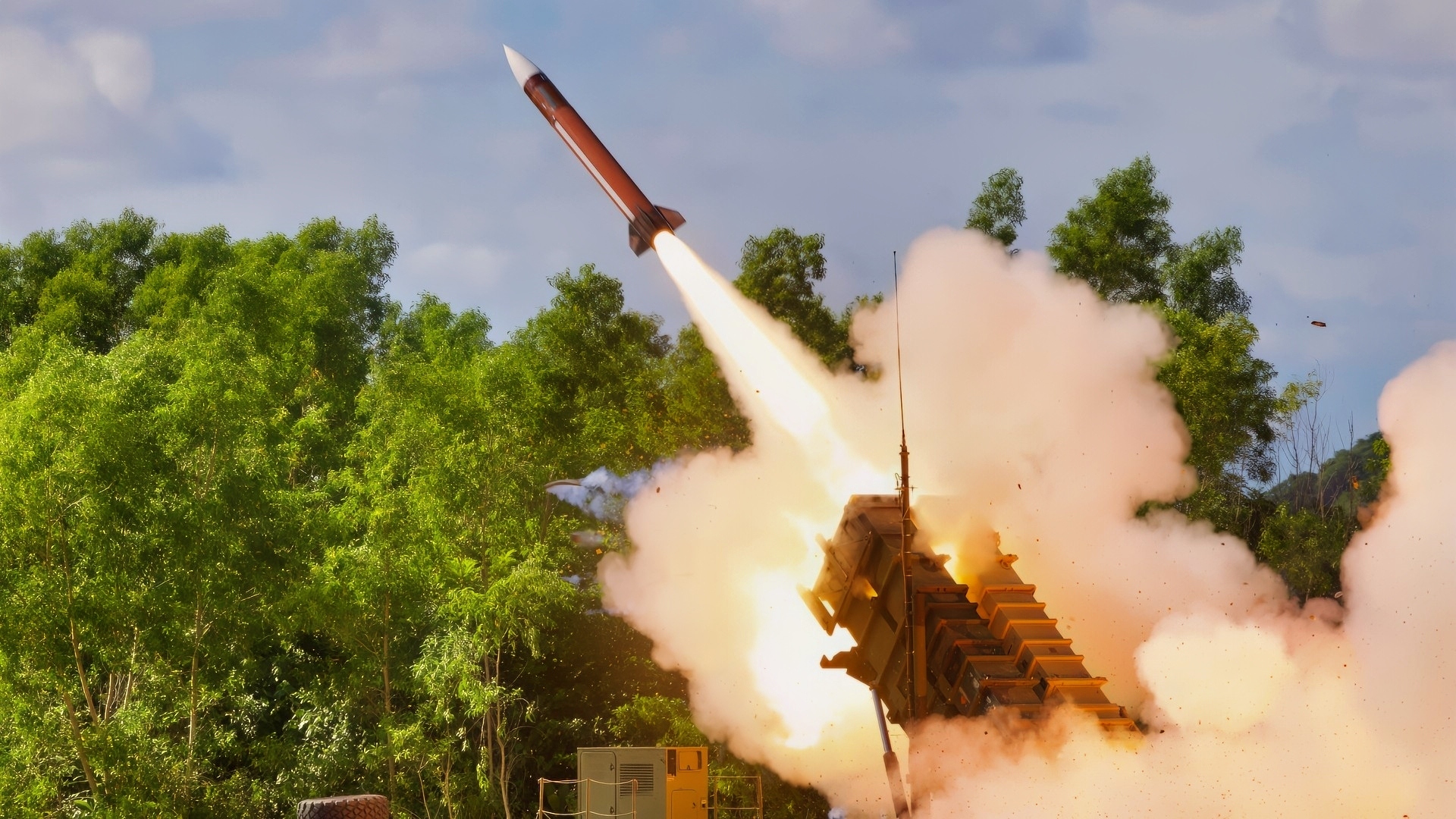
Zelenskiy gave a few additional details, saying Ukraine had used Palianytsia jet-powered drones in the attack, R-360 Neptune anti-ship missiles and unmanned naval drones to target Russian air defense positions, piers and port installations.
This attack on Novorossiysk is yet another demonstration of Kyiv’s ability to threaten Russian military infrastructure far beyond the frontline. “The occupation fleet and all the infrastructure supporting it will not be safe as long as Russian aggression continues,” Zelenskiy said.
Two Russian frigates, the Admiral Essen and Admiral Makarov, were damaged in “large-scale” Ukrainian attacks on Russia’s Novorossiysk base, the SBU announced in a statement late on Wednesday after the initial attack. The security agency also said it hit and destroyed significant port infrastructure.
Both of the Russian frigates carry the Kalibr cruise missiles, the SBU said, in reference to these weapons which have been regularly launched at Ukrainian cities since the beginning of the full-scale war in February 2022.
Damage to Oil Transport Capacity
While Novorossiysk is the site of a naval base that is now the home of Moscow’s Black Sea Fleet, it also operates alongside a major commercial port.
According to an industry source speaking to Reuters, nearly 1 million barrels of Russian crude were loaded daily at Novorossiysk in July.
Loadings had also reached up to 800,000 barrels per day in June.
But Ukraine’s attacks on this facility are not without some degree of controversy, as they are taking out oil transport capacity in addition to military assets.
The issue of damage from drone strikes to the port’s oil industry broke out in the open following a report in the London Financial Times that the US Vice President, JD Vance, had asked Ukraine’s president Volodymyr Zelenskiy to cancel some of these attacks on the Russian Black Sea port of Novorossiysk.
In a phone call that took place on 31 July, Vance reportedly complained to the Ukrainian president that the attacks on tankers that were carrying oil from Kazakhstan were hurting the interests of US companies and destabilizing world oil prices. He reportedly told Zelenskiy to have his military cease targeting these very ships.
Following that phone call, Ukraine’s unmanned systems forces have stopped attacking ships carrying oil from Kazakhstan via the Caspian Pipeline Consortium terminal.
But Kyiv’s forces have continued to hit other targets in Novorossiysk that are part of the Black Sea Fleet’s vessels and facilities.
No Place to Hide
Despite complaints from Washington, Zelenskiy praised the “massive” combined attack on the port.
The ships that were hit in this strike had been “hiding” in Novorossiysk Bay, he said on his Telegram channel, in the hope they would not be detected by the drone operators responsible for targeting.
“The Black Sea Fleet no longer has a base,” declares one of the video news reports on the attack.
Other targets struck were two major grain export terminals. Russian officials later attempted to denounce the attack by saying that three people, including a child, had been killed by the attacking drones.
But “It is entirely justified that Ukraine is responding to Russia’s war, and it is Russia that can and must bring this war to an end,” Zelenskiy replied.
Despite having no navy of its own, Ukraine said that, as of the beginning of 2026, it had destroyed or seriously damaged a third of the Black Sea Fleet.
All of these losses Russia has incurred were at the hands of Ukraine’s drone fleet and domestically developed missiles like the Neptune.
About the Author: Reuben F. Johnson
Reuben F. Johnson has thirty-six years of experience analyzing and reporting on foreign weapons systems, defense technologies, and international arms export policy. Johnson is the Director of Research at the Casimir Pulaski Foundation. He is also a survivor of the Russian invasion of Ukraine in February 2022. He worked for years in the American defense industry as a foreign technology analyst and later as a consultant for the U.S. Department of Defense, the Departments of the Navy and Air Force, and the governments of the United Kingdom and Australia. In 2022-2023, he won two awards in a row for his defense reporting. He holds a bachelor’s degree from DePauw University and a master’s degree from Miami University in Ohio, with a specialization in Soviet and Russian studies. He lives in Warsaw.


