

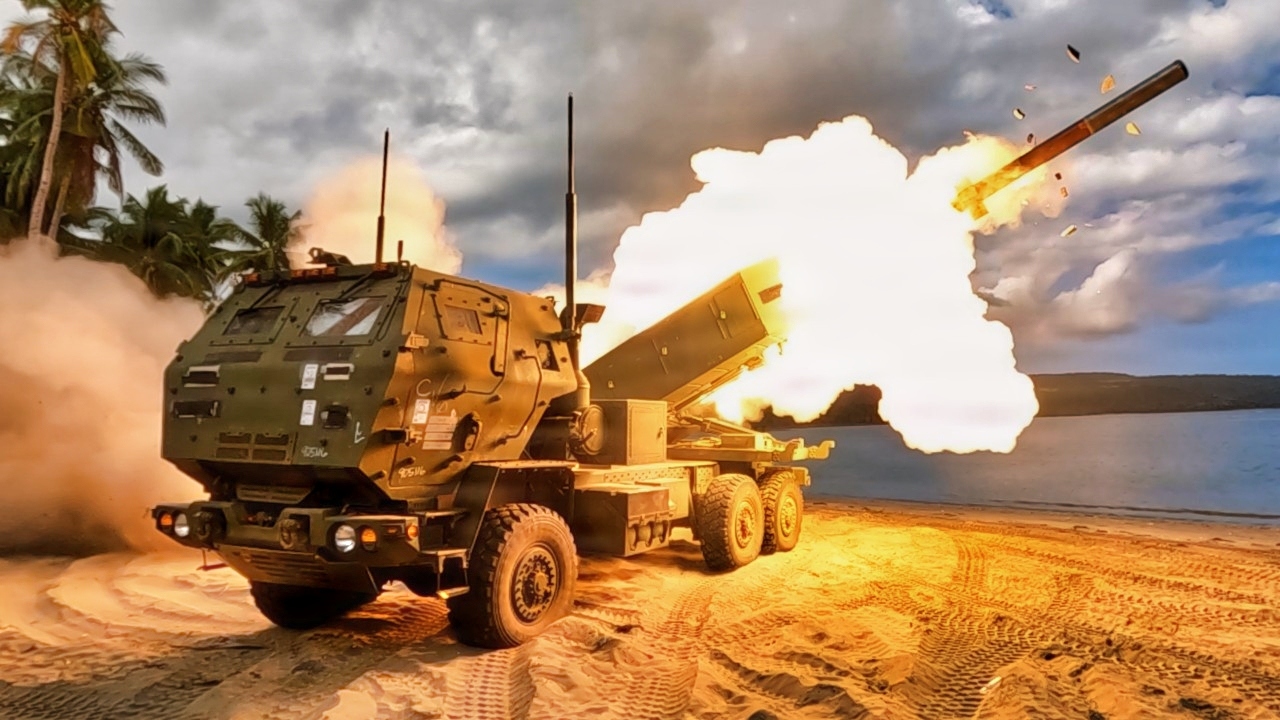
Another Wildberries warehouse was struck on Friday Morning following a Ukrainian drone attack on Yekaterinburg.
According to preliminary reports, no one was killed or injured, and all 800 workers at the warehouse were safely evacuated.
Artillery Test Creative Commons Photo
The attack took place more than 2,000 kilometers away from the border with Ukraine and put the number of warehouses struck at above 20 since July.
Over the past months, Ukraine has been ramping up its strikes against targets deep behind Russian lines, starting first with oil infrastructure and refineries, and now against Russia’s most popular online retailer.
There is, of course, a risk to these attacks as every new escalation from Ukraine gives Moscow the opportunity to strike back just as hard.
Another Warehouse Struck
The strike occurred on August 7th, after a drone attack warning was issued in the Sverdlovsk Oblast.
According to regional governor Denis Pasler, eight drones were intercepted in the region. However, at least three drones “fell” onto the roof of a Wildberries warehouse, sparking a fire.
Based on footage taken during the attack, the warehouse was struck by at least two drones, with a third likely intercepted above the facility, its debris still managing to cause damage.
Footage taken after the attack shows plumes of smoke rising from the facility, although the true extent of the damage is unclear.
According to regional authorities, no one was harmed or killed as a result of the attack. Wildberries’ press services confirmed the attack and said the company would do its best to compensate small businesses whose goods were affected.
After more than 20 attacks against facilities across Russia, Wildberries and smaller businesses have lost millions of roubles worth of goods.
To help compensate for the financial loss, Sberbank, the largest majority state-owned banking company in Russia, has extended financial aid to entrepreneurs whose goods were lost in the attacks. “We have already started on a large scale and actively support the affected entrepreneurs — to date, about 2 thousand applications for loan restructuring have been submitted to Sberbank,” said Sergei Melamed, the director of the Small and Microbusiness division of Sberbank.
Why Wildberries?
There are two reasons Ukraine has given for expanding its long-range to include Russia’s online retailer.
One reason given is that Wildberries is a prominent supplier of drones and other components for military use.
The company has long denied any involvement with the military and claims that none of its warehouses are being used to store weapons.
While the company does sell drones that can be easily converted for military use, the actual military value of a Wildberries warehouse in central Russia is likely low.
It is more likely that the Russians receive small civilian drones directly from the manufacturers, with online retailers like Wildberries playing a small, nearly inconsequential role.
While Wildberries’ direct military contributions are low, the company plays a significant role in Russia’s consumer economy, which ultimately funnels back to the state and, in turn, to the war effort.
According to Ukraine, the company also has a significant amount of state debt, accounting for several billion dollars.
While it is not the largest holder of state debt, the company’s collapse could have serious ramifications for the country’s banking system and the economy as a whole, which has been struggling to shoulder the collective weight of Western sanctions and high government spending.
There are, of course, a few issues with this line of thinking, and this strategy relies on Wildberries going completely bankrupt, which is not guaranteed, but this is the logic driving Ukraine’s current air strategy.
The Hidden Cost of Ukraine’s Drone Campaign
There are many advantages to medium- to long-range drones.
They are much cheaper to manufacture than cruise missiles or ballistic missiles, and when deployed in large numbers, they can overwhelm air defenses and force the enemy to use valuable interceptors. However, drones are not free.
According to the Russian Ministry of Defense, Russian air defenses intercepted a record number of 9,800 drones over Russian airspace in July alone (as always, official figures should be taken with a healthy grain of salt).
The main drone types Ukraine uses for its strikes are the Liutyi (around $200,000 per unit), the Beaver (around $100,000 per unit), and the FP-1 (around $60,000 per unit).
If we assume an average cost of $100,000 per drone and take interception figures at face value, then the month of July represented a loss of around $980 million for Ukraine (for comparison, $980 would cover the cost of 240 Iskander ballistic missiles).
As Russia’s air defenses adjusted to Ukraine’s strikes against fuel refineries, the majority of which have resumed operation to some capacity around Russia, Ukraine has been forced to switch targets in order to bypass air defenses.
Wildberries is a valuable target, not because it helps the Russian war effort, but because it is one that the Ukrainians can reliably hit.
The Russians have no such limitation.
Thanks to Kyiv’s shortage of PAC-3 interceptor missiles, Russian ballistic missiles can strike pretty much anywhere in Ukraine with near impunity.
As Valerii Zalyuzhny, the former Commander-in-Chief of the Ukrainian Armed Forces, wrote in July, Ukraine’s drone campaign, for the amount of hype it generates in Western news, is expensive, technologically demanding, and ultimately reciprocal.
About the Author: Isaac Seitz
Isaac Seitz, a Defense Columnist, graduated from Patrick Henry College’s Strategic Intelligence and National Security program. He has also studied Russian at Middlebury Language Schools and has worked as an intelligence Analyst in the private sector.


