


Ukraine’s campaign of long-range attacks inside Russia continued on Monday, less than 24 hours after it launched one of its biggest drone barrages of the war.
Six Russians Killed
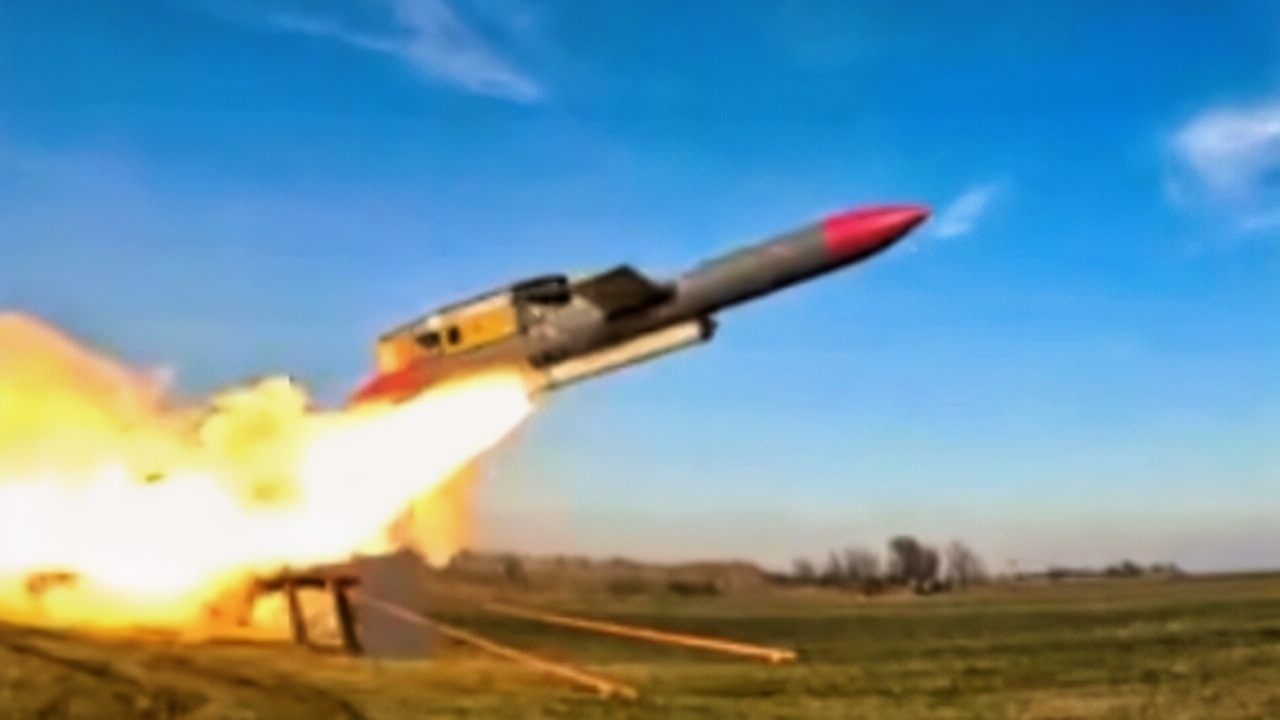
Flamingo Missile Handout Photo
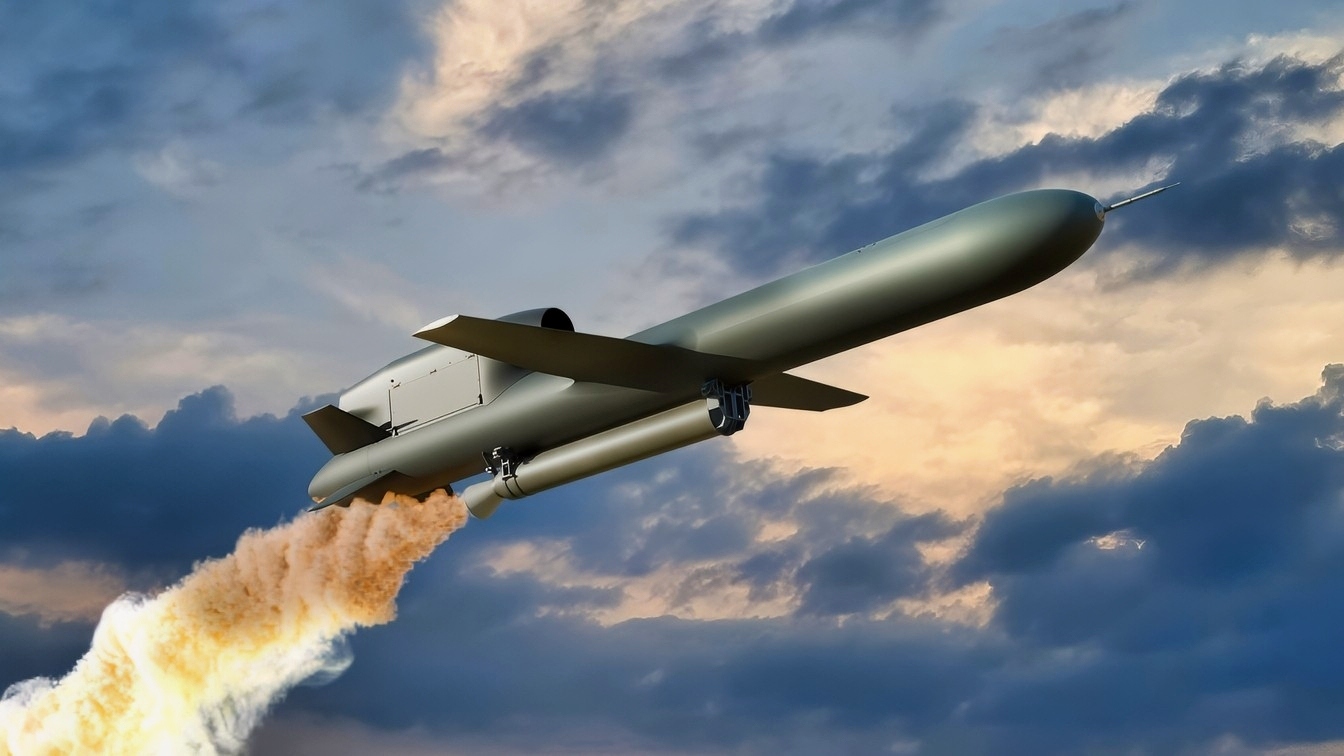
FP-5 Missile From Ukraine Creative Commons Image
According to Russian officials, six people were killed and four wounded in the attack, including a 14-year-old in the Belgorod village of Koloskovo close to the border with Ukraine.
Separately, the Astrakhan regional governor, Igor Yuryevich Babushkin, said a woman had been killed overnight after a Ukrainian drone struck an industrial site.
The fresh strikes arrived less than 24 hours after hundreds of Ukrainian drones were launched against targets across Russia. Moscow’s Defense Ministry said it destroyed some 822 drones on Sunday. Moscow Mayor Sergei Sobyanin said roughly 600 were headed toward the capital, with 201 destroyed in the Moscow region.
Those are Russian claims and have not been independently verified.
Moscow later put the number allegedly destroyed over 24 hours at 1,478, a figure The Guardian said was likely exaggerated and could not be verified.
Wildberries Warehouse Ablaze
A huge fire tore through a Wildberries distribution center at Koledino, near Podolsk, around 28 miles south of Moscow. The warehouse covered roughly 250,000 square meters. Reuters footage showed a large plume of smoke rising from the site.
An 83-year-old man was reportedly killed in the wider attack. A second warehouse was damaged in Domodedovo, close to one of Moscow’s main airports.
Wildberries, Russia’s largest online retailer, has become a deliberate focus of Ukraine’s deep-strike campaign.
The platform, often dubbed “Russian Amazon”, hosts some 500,000–800,000 sellers. Kyiv has accused it of aiding Russia’s invasion of Ukraine by supplying sanctioned components that can be used in drones. The Associated Press recently reported that “such dual-use items as drone components, flak jackets or thermal weapon sights remain available on the platform.” The firm denies the allegations.
Ukraine’s Defense Ministry said Sunday that seven of the company’s 10 largest logistics hubs had now been put out of operation.
The Associated Press reported Monday that around 20 Wildberries facilities have been attacked since July, from the Moscow and St. Petersburg areas to Yekaterinburg, more than 1,200 miles from Ukraine.
Sensitive Russian Industrial Sites Hit
On Sunday, Ukraine also announced that it struck a missile-fuel production facility in Russia’s Rostov region.
The Ukrainian military said the plant produces rocket propellant used to operate multiple-launch rocket systems, missiles, and other airborne weapons.
Five people were killed during Ukrainian drone attacks in the region, according to Russian officials. 19FortyFive cannot verify whether those deaths occurred at the missile-fuel facility
These attacks come on the back of Ukraine’s effort in recent months to widen its use of domestically manufactured long-range weapons well into Russian territory.
On Saturday, President Volodymyr Zelenskyy explained that Ukraine’s homegrown FP-5 Flamingo missiles had targeted Progress Rocket and Space Center in Samara, some 560 miles from the Ukrainian border.
The Samara-based Progress center is a key cog in Russia’s space industry, manufacturing Soyuz launch vehicles first designed in the 1960s.
Ukraine’s General Staff said the facility produced rockets that allowed the Russian military to launch satellites into orbit capable of reconnaissance and communications.
The so-called Rassvet satellites are reportedly an attempt to rival Elon Musk’s revolutionary “Starlink” system, which describes its technology as “using a low Earth orbit to deliver broadband internet.”
Ukraine’s Air Defense Under Pressure
Despite major advances, Ukraine is still tackling almost nightly aerial barrages from Russia.
The ArcelorMittal steelworks in Kryvyi Rih’s power-generation and blast-furnace facilities were damaged in Sunday’s strikes, and civilians were killed.
Ukraine is currently tackling an acute shortage of high-end air-defense interceptors, an issue Moscow is obviously keen to exploit.
Washington is currently reluctant to deplete its own stocks further as conflict with Iran rumbles on.
Last week, Zelenskyy told CNN that Ukraine needs 10 percent of the U.S. Patriot interceptor stockpile to destroy the threat of Russia’s ballistic missile attacks.
He said 5 percent would allow Kyiv to defend itself throughout the coming Winter.
The Ukrainian leader was discreet about Washington’s current stance on the issue, but said he had been making “millions” of phone calls to negotiate more U.S.-built missiles.
About the Author: Georgia Gilholy
Georgia Gilholy is a journalist based in the United Kingdom who has been published in Newsweek, The Times of Israel, and the Spectator. Gilholy writes about international politics, culture, and education.


