

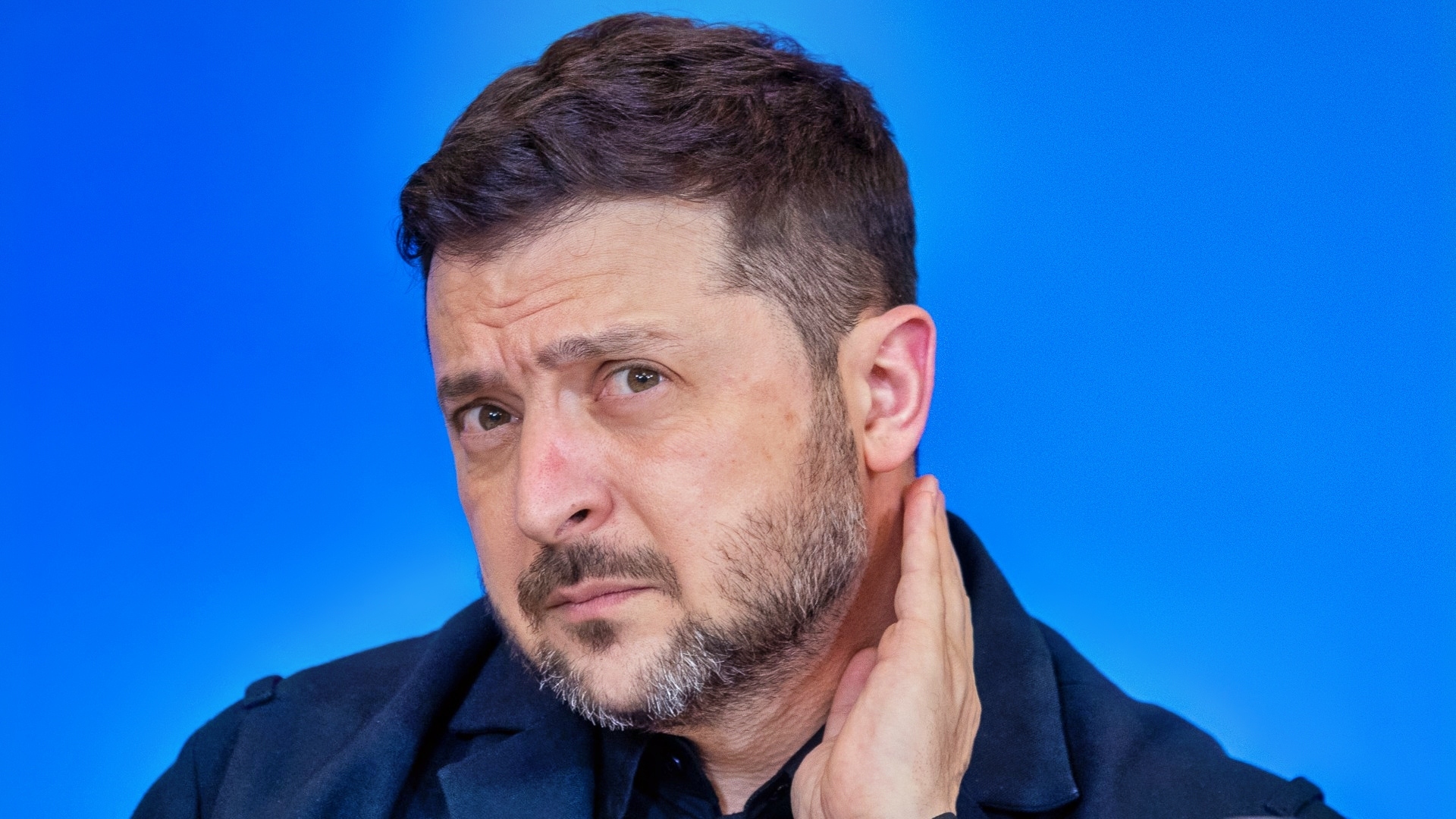
Ukraine is bleeding people, and not all of it is happening at the front.
Since Russia’s full-scale invasion in February 2022, 5.6 million of Ukrainians packed what they could carry and crossed the western border.
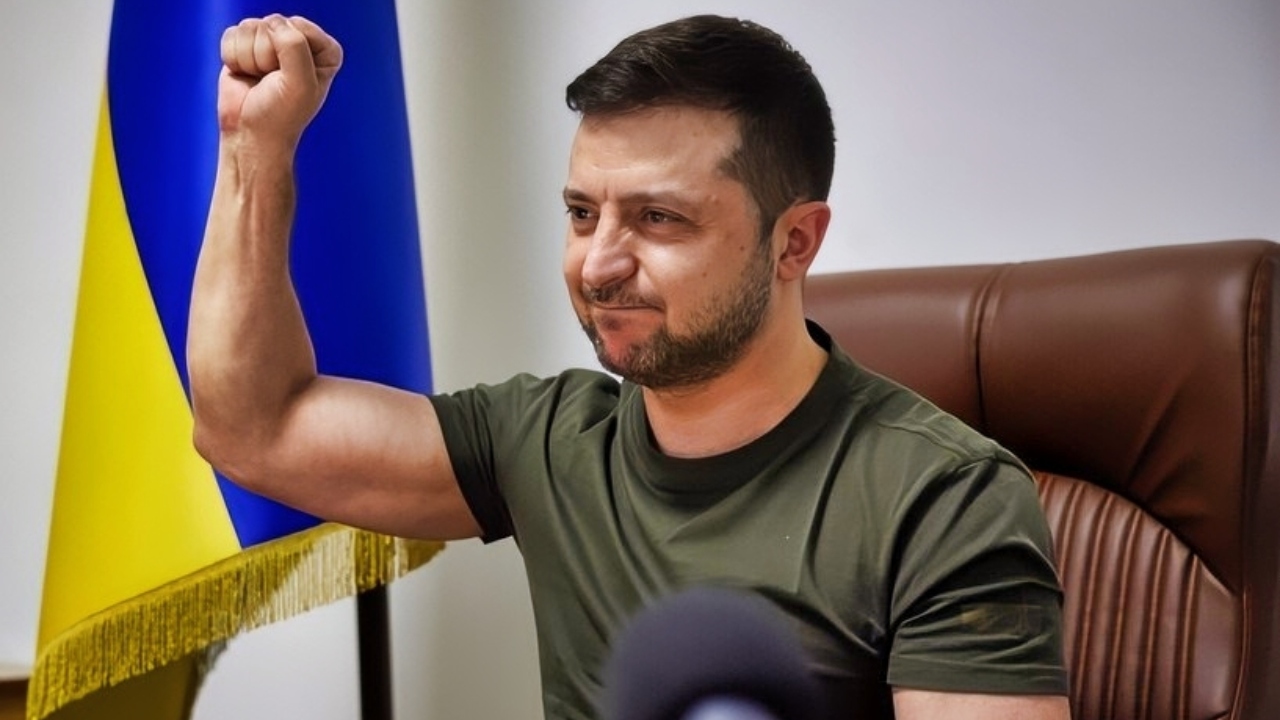
Zelensky Speaking in UK Ukraine Government Photo

President Donald J. Trump and President Zelenskyy in the Oval Office. White House Photo.
Most expected to be home in weeks.
More than four and a half years later, a growing number of them have quietly stopped planning to come back, having built a new life in a safer country (for now).
A new piece in The Hill lays out Kyiv’s population issue quite simply: Ukraine’s migration crisis will not end when the shooting does, and Kyiv has no way to order its citizens home simply.
That’s the uncomfortable reality hanging over every peace proposal floating around Washington and Brussels right now.
The Population Numbers Keep Moving The Wrong Way
The Kyiv-based Center for Economic Strategy (CES) has polled Ukrainian refugees every six months since late 2022. In November 2022, 74 percent said they planned to return, and half of them said “definitely.”
However, by the December 2025 to January 2026 poll, that figure had dropped to 43 percent. And of those, only 19 percent were sure. Another 20 percent couldn’t say either way.
A separate Gradus Research survey conducted in May found the same drop in percentage among Ukrainians living in the EU.
The share planning to return fell from 68 percent to 53 percent in a single year.
The share saying they will never return alarmingly doubled, from 17 to 34 percent.
The CES fifth report on refugees put the number of Ukrainians living abroad at 5.6 million at the start of 2026. About 300,000 more left during 2025 alone.
CES estimates that between 1.3 and 2.2 million could return after the war, depending on how the war ends.
Even the rosiest scenario leaves millions permanently gone.
That must be music to Russia and Vladimir Putin’s ears.
It is The Young People Who Are Leaving
However, the raw totals don’t tell the whole story. Who is leaving matters even more than how many.
Fifty-six percent of Ukrainian refugees are under the age of 35, and CES data shows they are also the group least inclined to return.
These are the workers, taxpayers and young parents a postwar Ukraine needs most.
After Kyiv eased exit rules for young men in August 2025, CES found that roughly one in seven men aged 18 to 22 left the country.
From a military standpoint, this has been the most underreported part of the war, in my opinion.
An army is only as deep as the workforce pool behind it.
Every 20-year-old who settles in Kraków or Leipzig is an infantryman, a mechanic, or a drone operator Ukraine sorely needs to survive.
That pool was already shallow enough, and the casualties that the Ukrainians have suffered are horrific.
Men’s life expectancy dropped from 65.2 years before the war to 57.3 years in 2024.
For women, the figure fell from 74.4 to 70.9.
Meanwhile, the home front is hollowing out.
According to the CIA’s World Factbook, Ukraine’s death rate outpaced its birth rate by nearly three to one in 2025, and the fertility rate sits below one child per woman.
The government’s own demographic strategy warns of a shortage of 4.5 million workers over the next decade. A Bocconi and National Bank of Ukraine study found the workforce has already shrunk by a quarter since 2021.
And it is expected to sink even further by 2051.
And a ceasefire signature won’t solve these issues.
Why They Aren’t Coming Home: Ukrainians who have chosen to stay in Germany or Poland have rational reasons, and Kyiv has to deal with them.
The Hill article makes a key observation: for most families, the question has nothing to do with whether they love Ukraine. It comes down to whether going back makes sense.
A parent with a steady job abroad and kids settled in a European school, who has lived there for the past few years, has to weigh that against a native country with no housing, no employer, not enough food, and air raid sirens at night.
Most refugees told CES they would only consider returning once the war fully ends and civilian flights resume. A frozen conflict with a ceasefire Russia clearly won’t respect won’t move the needle much.
It is widely believed that “if the war ends at the front line, the Russian Federation will resume it in a few years,” says Oleksander Gladun of the Ptoukha Institute for Demography and Social Studies of the National Academy of Sciences of Ukraine.
Those who have already gone back haven’t always liked what they found. According to the UNHCR, 55 percent of civilians who returned said job opportunities were scarcer than they had expected.
Coming home also comes at a social cost.
Demographer Ella Libanova told LIGA.net that many refugees fear being branded as deserters or traitors if they return. The Gradus data backs her up.
The share of Ukrainians abroad citing hostility at home as a reason to stay away jumped from 30 percent to 53 percent in a year.
While understandable, to a degree, that’s a wound Ukrainians are inflicting on themselves. And it must be rectified.
Europe’s Patience Has Limits
Host countries are starting to pull back the welcome mat, too.
German Chancellor Friedrich Merz said in April that Berlin would limit asylum for Ukrainian men and help them return, and the two governments have set up a working group on returning draft-age men.
Germany is also beginning to aggressively re-evaluate existing protection statuses of men from Syria and Iraq.
However, Ukrainian lawmaker Danylo Hetmantsev has warned that people pushed home by vanishing benefits abroad are a different animal from people pulled home by a future worth having.
He’s right.
One group comes back resentful.
The other comes back to build.
What Kyiv Can Actually Do
The Hill’s Kateryna Odarchenko’s proposed fixes are sensible, if unglamorous.
Protect property rights and pay credible compensation for destroyed homes.
Rebuild housing and offer affordable rental and mortgage programs.
Create jobs and fund retraining.
Give Ukrainians abroad reliable information about security, schools, healthcare, and employment in their home communities. As the author bluntly notes, “The government cannot order people home.”
I’d add another. Kyiv needs to stop treating Ukrainians abroad like a loan it can call in once the guns go silent. The undecided middle, that 20 percent who answer “hard to say,” is the group that can still be won back. Shaming them won’t do it, and Ukraine is going to need all of its people to rebuild when the war with Russia is finally over.
In my opinion, this war’s outcome will be measured in two ways.
One is the line on the map: will Ukraine still be a country free of Russia?
The other is how many Ukrainians are still standing behind it in 2035.
Of course, if Russia wins, then the vast majority of the people will never return.
Right now, Ukraine is still bleeding people.
About the Author: Steve Balestrieri
Steve Balestrieri is a National Security Columnist. He served as a US Army Special Forces NCO and Warrant Officer. In addition to writing on defense, he covers the NFL for PatsFans.com and is a member of the Pro Football Writers of America (PFWA). His work was regularly featured in many military publications.s


