
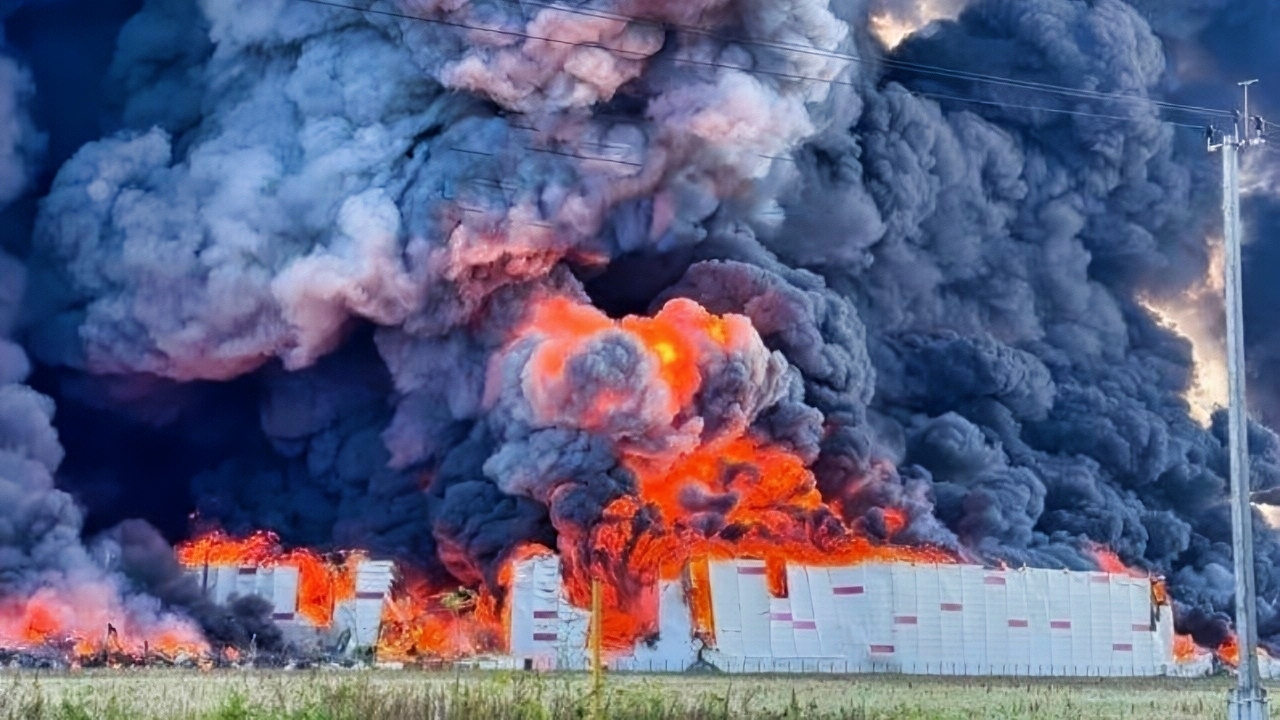
Why Ukraine Is Hitting Warehouses: Ukrainian drone strikes reportedly killed seven warehouse workers and injured dozens of others overnight into Saturday, according to regional governors in Russia. The strikes reportedly targeted an oil depot in the wider Moscow region, showing once again that Ukrainian forces are capable of inflicting significant damage in and around Russia’s capital city.
What Happened
According to Governor Evgeniy Pervyshov, 25 people were injured in overnight Ukrainian strikes after drones hit a Wildberries-owned warehouse. The company, Russia’s largest online retailer, had facilities in the city of Kotovsk in the Tambov region, under 300 miles from the center of Moscow.
“Seven people working the night shift died on the spot,” Pervyshov wrote in a Telegram statement.
The governor said that 28 drones were also shot down as they approached the region, but noted that, had they achieved their goal, “the number of civilian casualties could have been much higher.”
Andrei Vorobyov, the governor of the Moscow region, also announced that 24 people were injured following another strike at a different Wildberries warehouse in Elektrostal, east of Moscow.
Putin Speaking in 2025. Image Credit: Creative Commons.
The CEO and co-founder of the company, Tatyana Kim, described a “terrible night” for both the country and the Russian economy. The firm offered condolences to the families of victims of the strikes.
Notably, Wildberries is often considered Russia’s Amazon, making it one of the country’s largest retailers.
Oil Depot Fires
Ukrainian drones also struck an oil depot in the town of Noginsk, east of Moscow, where Governor Andrei Vorobyov confirmed that a large fire broke out overnight.
Two people were injured in the attack, while authorities evacuated patients from a nearby maternity hospital as a precaution after debris fell close to the facility.
Vorobyov also claimed that fragments from intercepted drones damaged a kindergarten building, though no children were inside at the time because the strike occurred overnight. Fires at the oil depot continued into Saturday morning as emergency crews worked to contain the blaze, marking yet another attack on Russia’s fuel infrastructure as Kyiv continues to target the logistics network supporting Moscow’s war effort.
According to the Russian Ministry of Defense, air defenses intercepted 379 Ukrainian drones in total overnight across 19 regions, as well as over occupied Crimea and the waters of both the Sea of Azov and the Black Sea.
Moscow Mayor Sergei Sobyanin also said that dozens of drones headed toward the capital were destroyed before reaching the city.
What Zelenskyy Said
In a statement published on X, Ukrainian President Volodymyr Zelenskyy once again praised troops for successfully conducting more strikes as part of what he calls a “long-range sanctions” campaign against Russia. The Ukrainian president described how strikes targeted three regions of Russia, as well as occupied regions of Ukraine, both on land and at sea.
“In particular, in response to Russian strikes on our civilian infrastructure and on our cities and communities, two major logistics facilities were hit – in the Moscow and Tambov regions, more than 500 and nearly 700 kilometers from the front line. The aggressor used them to supply sanctioned components for drone production and navigation equipment. An oil facility was also struck. In addition, Ukrainian mid-range strikes engaged targets in the waters of the Sea of Azov and the Black Sea, and in our temporarily occupied Crimea,” he said in a statement.
“I thank the warriors of the Unmanned Systems Forces, the Special Operations Forces, the Armed Forces of Ukraine, the Security Service of Ukraine, and the Defense Intelligence of Ukraine – every unit of Ukraine’s Defense Forces – for their precise and coordinated execution of these missions. Glory to Ukraine!” the post continued, accompanied by video footage of the aftermath of last night’s enormous strikes.
Ukraine’s Economic Pressure Campaign
The continued overnight strikes are part of Ukraine’s effort to raise the cost of sustaining the war in as many ways as possible. Not only is Kyiv looking to deny Russian forces the fuel and supplies needed to continue fighting by disrupting logistics in strategic locations like Crimea, but strikes are also focusing on Russian grain exports, warehouses, and other major infrastructure that keep its economy moving. The apparent targeting of two Wildberries logistics centers in a single night is notable given the size of the company and the widening scope of Ukraine’s campaign deep inside Russian territory.
Not only is Moscow now on the defensive after more than four years of war – it isn’t sure what targets are going to be hit next.
And every night’s additional strikes bring new economic troubles to the country, further risking Russian President Vladimir Putin’s position in national polls. In surveys published on July 17 by the Kremlin-linked Public Opinion Foundation (FOM), the Russian president’s approval rating slipped by the largest margin since the full-scale invasion began in 2022, suggesting that the growing fuel crisis and economic woes could soon risk Putin’s position as leader.
About the Author: Jack Buckby
Jack Buckby is a British researcher and analyst specializing in defense and national security, based in New York. His work focuses on military capability, procurement, and strategic competition, producing and editing analysis for policy and defense audiences. He brings extensive editorial experience, with a career output spanning over 1,000 articles at 19FortyFive and National Security Journal, and has previously authored books and papers on extremism and deradicalization.


