

Ukraine Makes Drone History: A Ukrainian defense firm has, for the first time, used an aerial drone to transport a wounded frontline soldier in what it described as a “historic event” for advancing battlefield medical evacuations.
Drone manufacturer Gurzuf Defense said enemy drones and landmines in the area made a conventional evacuation too dangerous, prompting the use of one of its heavy-lift hexacopters to extract an injured foot soldier from Ukraine’s 30th Mechanized Brigade.

Mirage 2000 Fighter. Image Credit: Creative Commons.
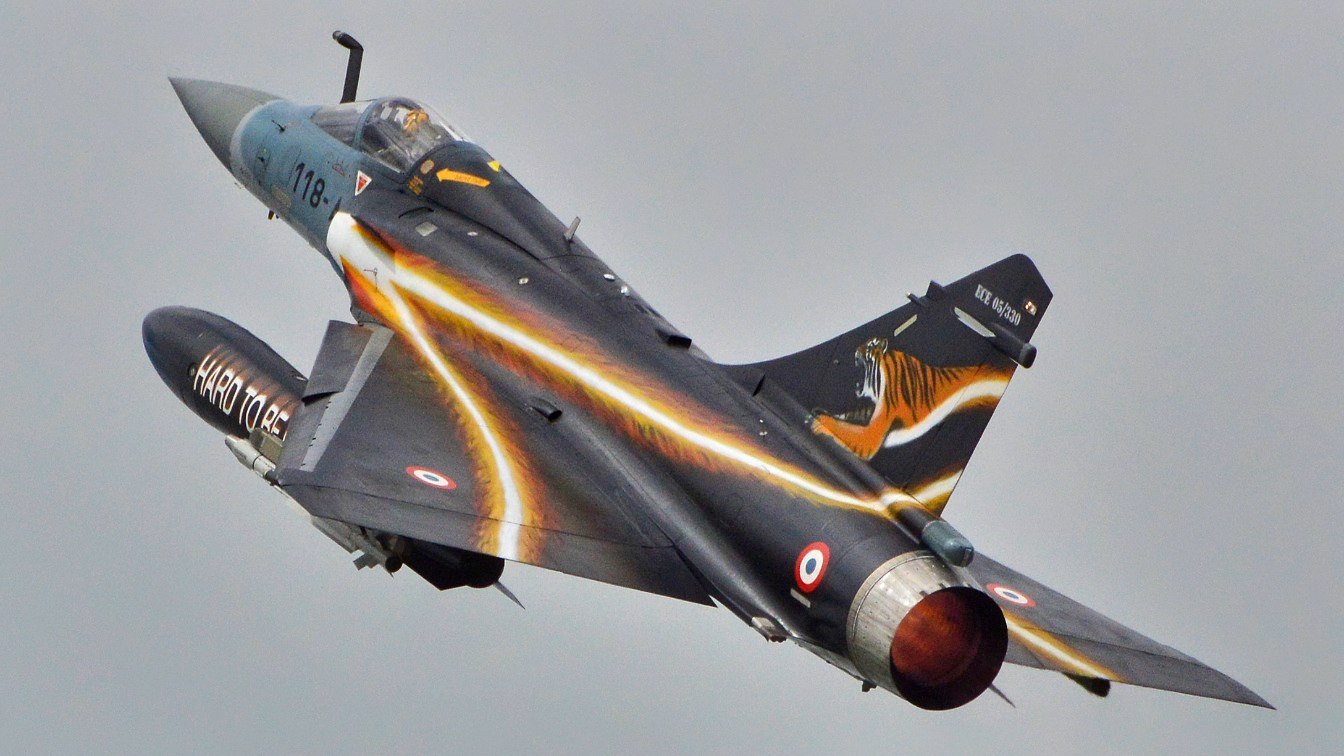
Mirage 2000. Image Credit: Creative Commons.
As CBS News reported, the Ukrainian Ground Forces’ 92nd Assault Brigade announced on Monday that it had flown a wounded soldier off the front line using a heavy-lift hexacopter.
The soldier’s story is amazing even before his extraction.
Konstantyn Vlasenko of the 30th Separate Mechanized Brigade had been stuck at a position for almost 500 days, according to Ukrainian outlets cited by CBS.
Dense minefields and constant Russian drone activity put him out of reach of both ground troops and ground robots.
His comrades kept him alive by flying in food, water, ammunition, and medicine by drone, the Kyiv Independent reported.
Then he was wounded by a Russian drone attack.
According to those same reports, Vlasenko was forced to carry out partial self-amputations of both legs while he waited for a rescue that couldn’t reach him.
A Bomber Drone Reconfigured To Carry A Man
The aircraft was a Gurzuf Defense heavy hexacopter, the Ayudag-6, originally designed to drop bombs on Russian positions.
Specialists modified it to carry a person without flipping or swinging him, then tested the new setup before planning the mission. Tom’s Hardware puts the drone’s lift capacity at about 130 kg (about 287 pounds).
The rescue itself was a small combined-arms operation.
Four Ukrainian brigades were involved, and planning took seven days. Another drone first delivered a harness rig with carabiners to Vlasenko, then a hexacopter arrived with a winch.
He clipped himself in underneath it and rode out of the kill zone.
The whole mission took about an hour and 15 minutes, and CBS reports the drone covered almost 40 miles in that time while other Ukrainian drones worked to distract the Russians.
The rescue operation, however, lifted Vlasenko eight miles to safety.
“An extremely complex operation, but a successful one. This is a historic event,” ‘Napalm,’ a 92nd Brigade programmer involved in the operation’s preparation, said.
“It marks the next stage in the evacuation of the wounded, which we will all eventually reach. Now the serious, systematic work begins to ensure that such missions take place regularly,” he added.
Vlasenko was transported to a Ukrainian hospital where reports stated his life is no longer in danger.
The Kill Zone And The Situation Influenced “The Golden Hour”
This operation showed that Ukrainians will go to great lengths to get their wounded troops out of harm’s way, a huge morale boost.
Combat medics are taught the golden hour, the window in which getting a casualty to surgical care gives him the best shot at surviving combat wounds.
However, the situation in Ukraine has nearly eliminated that window by drones.
Early in the full-scale invasion, evacuation vehicles could get almost to the front line.
Not anymore.
Front-line medics told the AP that FPV drones now hunt anything moving between positions, and one soldier wounded by a drone-dropped explosive in August wasn’t able to reach medical care for five days.
Ukraine’s answer has been to use robots to evacuate the wounded.
Ground drones have become a standard way to drag wounded soldiers out, and CBS has previously covered a robot that rescued a soldier trapped for 33 days behind Russian lines after seven attempts.
However, robots have limits, especially when crossing minefields. In Vlasenko’s case, a ground drone tried to reach him, but the enemy destroyed it on the way in.
That left an air evacuation.
The brigade stated that intense enemy kamikaze drone activity and landmines made a ground robot evacuation impossible.
The operation was still very risky.
A wounded man hanging under a hexacopter over contested ground is a target, which is why Ukrainian units flew escorts and decoys.
Tom’s Hardware notes the support package included kamikaze drones and interceptor drones fitted with nets.
Gurzuf co-founder Pavlo Feldbloom told CBS his company never set out to build an evacuation platform. The company built a heavy, modular, multi-mission drone, and figured anything that could lift that much payload could also save a life.
He also said he doesn’t expect aerial evacuation to become routine, because the risks to a wounded person in the air are so high. In his words, aerial drone transport is “the last resort.” But that may change as they study the after-action report.
The Concept Works And That’s Encouraging
No one outside Ukraine has independently verified it, and the brigade hasn’t said when or where the rescue happened, but that’s beside the point.
The concept works, and a purpose-built version is already coming.
Ukrainian firm SkyFall developed StarGate, an aerial drone designed to carry a wounded soldier on a stretcher, and handed it to a combat brigade this month for front-line evaluation.
The U.S. Army is closely monitoring this development. In a May simulation in northeastern Poland, the 2nd Cavalry Regiment tested a Flowcopter FC-100 drone for casualty evacuation using a dummy, Stars and Stripes reported.
The demonstration was part of a broader Army effort, including initiatives such as Transforming in Contact and Project Flytrap, to develop autonomous systems for medical evacuation and resupply on high-threat battlefields.
U.S. forces have also used unmanned systems in pulling personnel out of harm’s way.
In June, a Navy drone boat from Task Force 59 retrieved two Army helicopter pilots after their Apache went down off Oman and carried them to a location where they could be transferred to a helicopter.
The Pentagon should keep taking a hard look at this new capability. Our entire casevac model rests on owning the air. MEDEVAC birds, the nine-line, the golden hour all depend on air superiority.
And getting a Black Hawk in and out.
Against a peer adversary with kamikaze drones blanketing the front, that assumption may not survive the first week.
A $100 FPV drone can shoot down a helicopter. But in reality, it just has to make the landing zone too hot to use.
Aerial drone evacuation won’t replace the MEDEVAC crew. Feldbloom is right that it’s a last resort. However, wars are full of last resorts, and the army that has one ready will bring more of its people home.
About the Author: Steve Balestrieri
Steve Balestrieri is a National Security Columnist. He served as a US Army Special Forces NCO and Warrant Officer. In addition to writing on defense, he covers the NFL for PatsFans.com and is a member of the Pro Football Writers of America (PFWA). His work was regularly featured in many military publications.


