

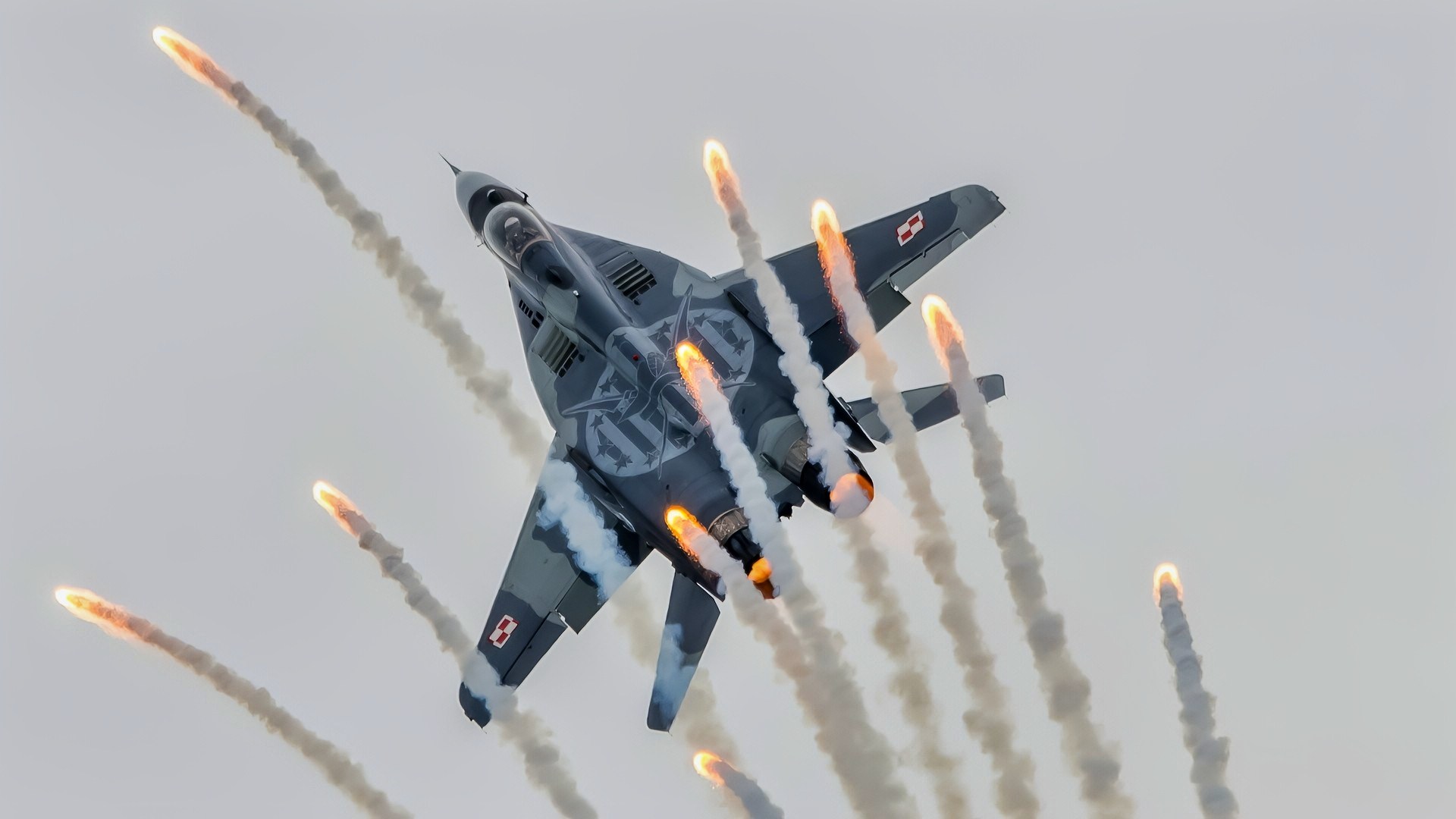
According to one recent report, a Russian pilot is said to have shot down two Ukrainian fighters during what is, if true, one of the war in Ukraine’s increasingly rare fighter-on-fighter aerial engagements.
“One of the most striking examples was the feat of a young pilot who, flying a Su-35S, was conducting a combat patrol to provide cover for an advancing group of troops.
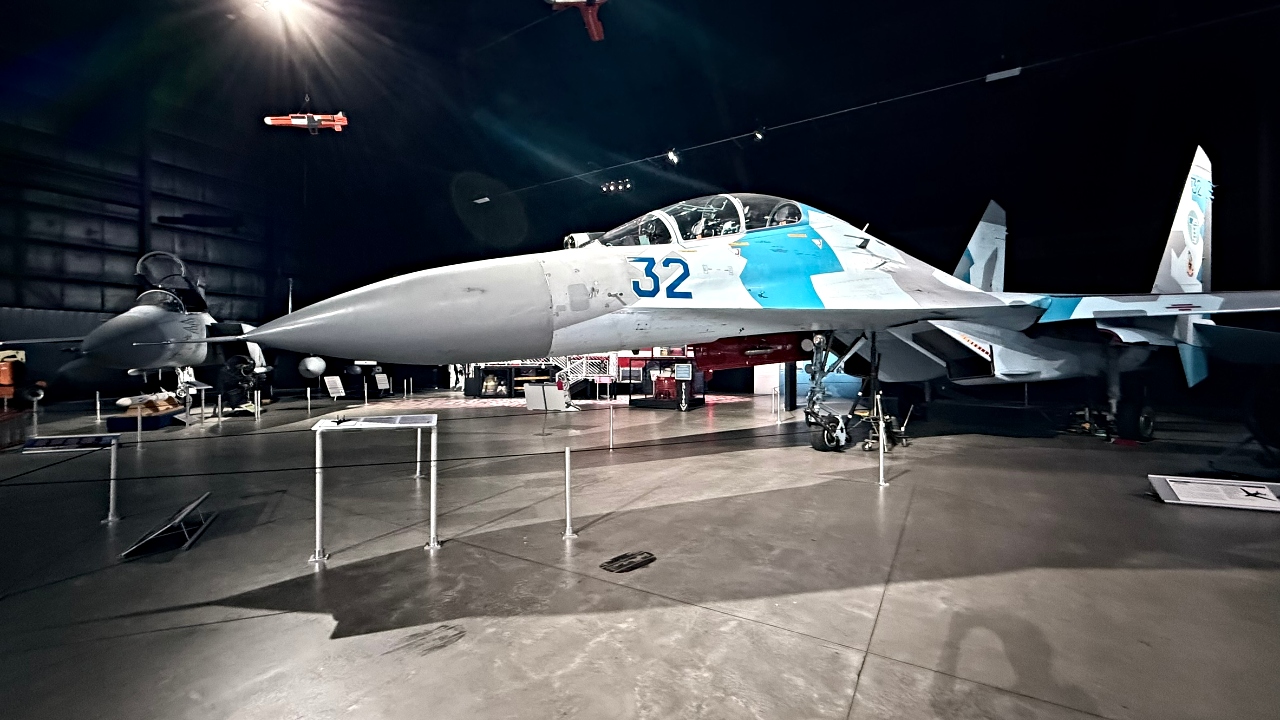
Su-27 Flanker from U.S. Air Force Museum. Image Credit: National Security Journal.
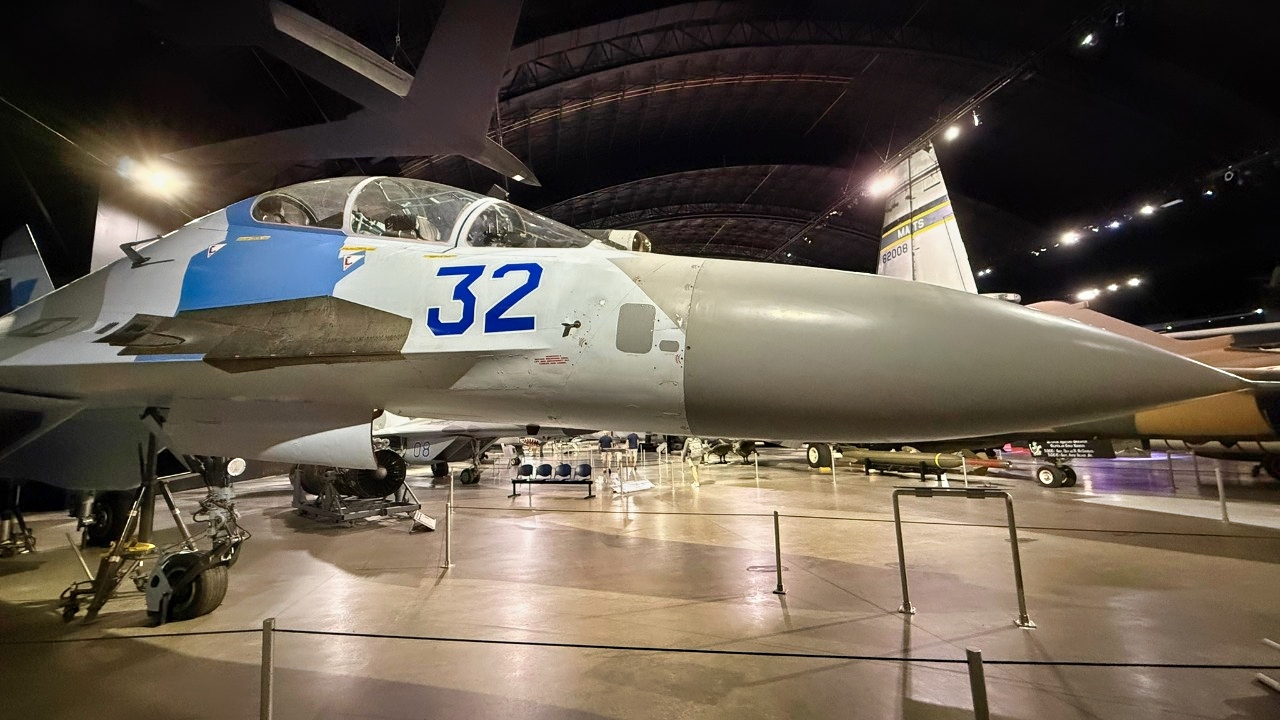
Su-27 Flanker Fighter from Russia. Image Credit: National Security Journal.
After taking up his air patrol position, the pilot began a radar search for aerial targets in the designated area. Despite the enemy’s use of jamming devices, he detected two enemy Su-27 aircraft.
After assessing the situation, displaying courage and bravery, the pilot engaged in aerial combat against the numerically superior enemy,” Air Force Commander, Deputy Commander-in-Chief of the Russian Aerospace Forces Sergey Kobylash said in an interview that was reported on by TASS, the Russian news agency.
Kobylash added that, “after skillfully executing a maneuver and taking up an advantageous tactical position,” a Russian pilot shot off a trio of air-to-air missiles, destroying a pair of Ukrainian aircraft.
The veracity of that statement could not be immediately confirmed, and, in general, the numbers require careful handling.
There is no reliable, comprehensive tally of every aircraft destroyed in the ongoing war in Ukraine.
Both Russia and Ukraine have incentives to exaggerate enemy losses and conceal their own, and many aircraft that have been damaged have subsequently returned to service.
But the most useful independent source is Oryx, which tallies losses only when supported by photographic or video evidence or other sufficiently strong evidence, such as a pilot death notice.
Oryx itself notes that its figures are a minimum, a baseline, and not the true total.
But even with that caveat, Russia has taken the larger share of losses. Oryx’s current database records hundreds of Russian fixed-wing aircraft and helicopters lost since the full-scale invasion, versus a smaller Ukrainian total.
Earlier snapshots illustrate a clear pattern.
In the initial period following the invasion, it recorded 309 Russian aerial losses compared with 188 Ukrainian losses.
But the figures alone tell only one story and downplay the fact that Ukraine’s losses were actually much more significant relative to the size of its air force.
A Numbers Game
When Russia invaded in February 2022, the Ukrainian Air Force had only a few dozen operational MiG-29s and Su-27s, plus Su-24 and Su-25 strike aircraft.
These were mostly Soviet-era fighters. In stark contrast, Russia entered the war with a much larger and more modern fleet, including hundreds of fighters and strike aircraft, backed by a huge ground-based air-defense network.
But despite the massive on-paper advantage enjoyed by Russia, Moscow’s forces failed to destroy the Ukrainian Air Force on the ground in the opening campaign.
That was one of the more important Ukrainian military successes of the first weeks of the war.
Ukraine dispersed aircraft, moved them between bases, and used decoys, giving Russian intelligence an imperfect picture of where Ukraine’s surviving aircraft actually were.
While Russia did destroy quite a few Ukrainian jets, in particular during airbase attacks, it never really achieved the kind of systematic suppression of Ukrainian aviation that would have allowed Russian aircraft to operate freely over the whole country.
Air Superiority
Neither Russia nor Ukraine has achieved true conventional air superiority during the war.
While Russia has a vastly larger air force, Russian fighters and bombers don’t typically fly deep into Ukrainian-controlled airspace because Ukraine still has a dangerous integrated air-defense system.
Russian pilots instead tend to operate from safer distances and rely heavily of long-range missiles and glide bombs.
It has become one of Russia’s important advantages, as its aircraft can launch more glide bombs beyond the effective reach of much of Ukraine’s air defense network.
This has allowed Russia to exert considerable influence over the battlefield without necessarily needing to control the skies.
So while Russia may indeed have shot down a pair of Ukrainian fighters using a trio of missiles, that single combat engagement — and indeed, any other single skirmish — does not reveal much about the current dynamics of the war or the position of Kyiv and Moscow’s forces in the air.
The war’s aerial balance is much more complex than fighter-on-fighter engagements.
Instead, the aerial aspect of the war is a contest that involves fighters, ground-based air defenses, cruise and ballistic missiles, glide bombs, reconnaissance drones, cheap attack drones, and long-range strike systems.
About the Author: Caleb Larson
Caleb Larson is an American multiformat journalist based in Berlin, Germany. His work covers the intersection of conflict and society, with a focus on American foreign policy and European security. He has reported from Germany, Russia, and the United States. Most recently, he covered the war in Ukraine, reporting extensively on the war’s shifting battle lines in the Donbas and writing on its civilian and humanitarian toll. Previously, he worked as a Defense Reporter for POLITICO Europe. You can follow his latest work on X.


