


Key Points and Summary – China acquired the advanced Su-27 fighter from a collapsing Soviet Union in a pivotal 1990 deal that reshaped its military future.
-Following a Western arms embargo after the Tiananmen Square protests, a diplomatically isolated China turned to a financially desperate Moscow to modernize its obsolete, decades-old air force.
-China not only purchased 24 Su-27s but later took advantage of Russia’s post-Soviet economic weakness to secure a license to build the jet domestically, which became the J-11.
-This crucial technology transfer laid the foundation for China’s modern aerospace industry.
How Did The Chinese Get the Su-27 Fighter Aircraft? The Soviet Union Collapsed
China obtained the Su-27 fighter jet from the Soviet Union through a combination of direct purchase and licensed production agreements. Beijing’s initial purchase followed the Tiananmen Square protests and a Western arms embargo. This deal was part of a broader effort by both nations to strengthen ties after a period of strained relations.
In December 1990, China became the only country ever approved by the Soviet Union to acquire Su-27 fighters, with an agreement signed on Dec. 28 for 24 aircraft. In less than a year, on Dec. 26, 1991, the Soviet Union would collapse.
Why Did China Want the Su-27?
China’s interest in the Su-27 stemmed from its need to modernize its air force and acquire advanced technology – particularly relating to air superiority. The Su-27 was a top-tier, fourth-generation fighter jet with excellent range, maneuverability, and advanced avionics. It was a significant upgrade over China’s existing aircraft at the time.
China also sought to use the Su-27 as a platform for developing its domestic fighter jet industry. China was operating the J-7, a MiG-21 spinoff that had joined the fleet in 1959 and that boasted less advanced capabilities than the latest Soviet MiG-21 variants. China had only limited numbers of the aircraft.
The most prevalent fighter in China’s fleet was the MiG-19, which had first flown in 1952 and was barely considered a second-generation fighter.
Discussions regarding the sale of fourth-generation Soviet fighters to China had begun in 1988, with the MiG-29 and Su-24 that had been offered to export clients being marketed as the potential future backbone of the Chinese fighter fleet – a fleet that was technologically about three decades behind those of the USSR and the United States.
The Su-27 was a significant technological jump, providing a modern air superiority fighter and a platform for future upgrades. The aircraft’s long range and ability to engage multiple targets gave China a platform that could actually challenge potential adversaries and control airspace.
Negotiations Between China and The Soviets Took Several Years:
The Soviets initially did not offer the Su-27 for export sales. However, that changed, beginning with the Sino-Soviet thaw in 1989. During Premier Mikhail Gorbachev’s visit to China in May 1989, motions were made to reopen Sino-Soviet military trade.
A Chinese delegation visited the Soviet Union in May 1990 to discuss the acquisition of advanced aircraft. This delegation saw demonstrations of the MiG-29, Su-27, and various helicopters.
China’s Initial Purchase
The Soviets were pushing China to purchase the MiG-29. But Chinese officials were really interested in the Su-27, a larger aircraft with a longer combat radius, a fly-by-wire system instead of hydraulic controls, and better-performing powerplants, especially in terms of engine life and thrust.
China wanted to build up and modernize its own Air Force, and for that purposel it wanted the larger-framed Su-27 as a base model.
Following the Tiananmen Square protests and the subsequent Western arms embargo, China turned to the Soviets for advanced fighter aircraft. In 1990, China signed a deal to purchase 24 Su-27SK and Su-27UBK aircraft. This agreement was honored by Russian President Boris Yeltsin despite the collapse of the Soviet Union. The first batch of Su-27s was delivered in 1992.
The Chinese knew the economic hardship the Russians were experiencing after the collapse of the Soviet Union, and they took advantage. Beijing pushed for a transfer of the entire production line of the Su-27.
This was granted in 1995, and the Su-27 became known as the J-11 in China. The agreement allowed China to manufacture the aircraft domestically, initially using Russian-supplied parts.
The agreements with Russia included not only the aircraft themselves but also training, spare parts, and maintenance support, laying the groundwork for a long-term military-technical relationship. This transfer of technology was crucial for China’s development of its aerospace industry.
Further Acquisitions
China later purchased the Su-30, a further development of the Flanker family. This was another acquisition driven in part by China’s desire to acquire advanced technologies, particularly in areas such as engines and avionics.
China’s Stealing of Military Technology
China’s well-known and heavily documented effort to copy or steal foreign technologies began with the J-11, which, as mentioned, emerged shortly after China acquired the Russian Su-27.
In more recent years, the People’s Liberation Army Air Force developed and built its own WS-15 engine to replace the Russian engines powering its J-20 stealth fighters.
Photos Essay: National Security Journal Visits the Su-27 Flanker
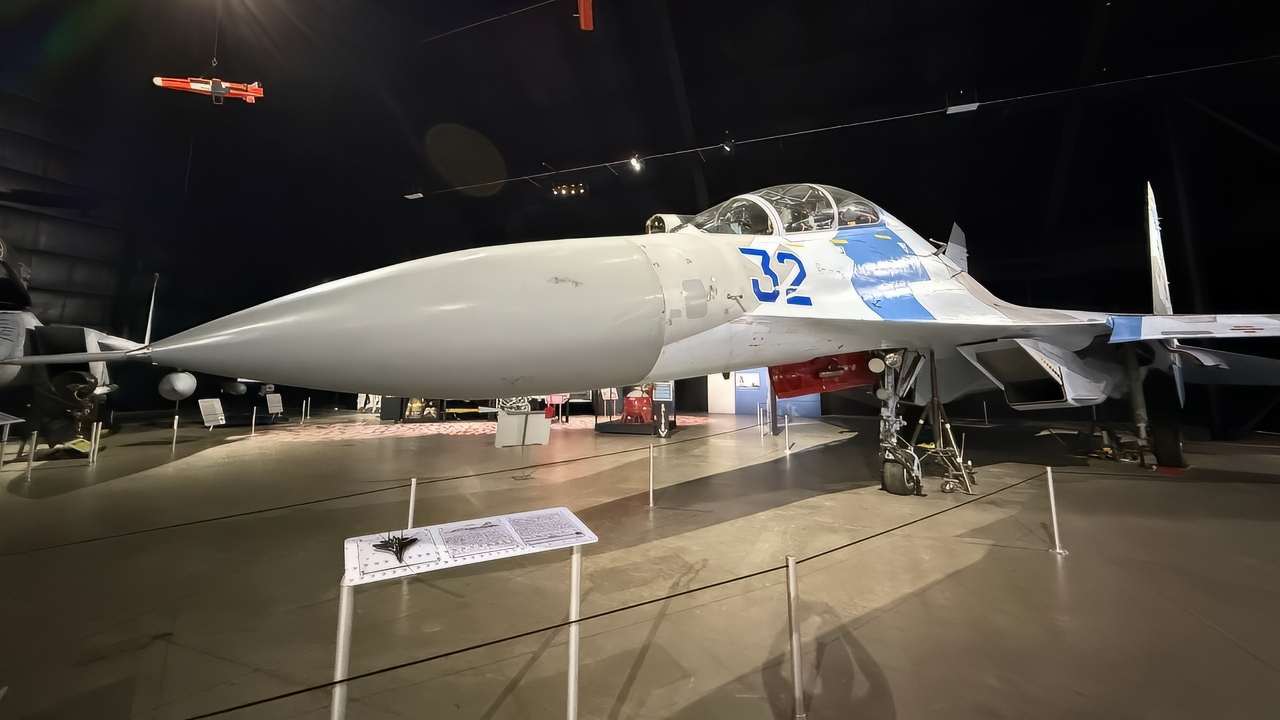
Su-27 Flanker Up Close. Image Credit: National Security Journal Taken on July 19, 2025.
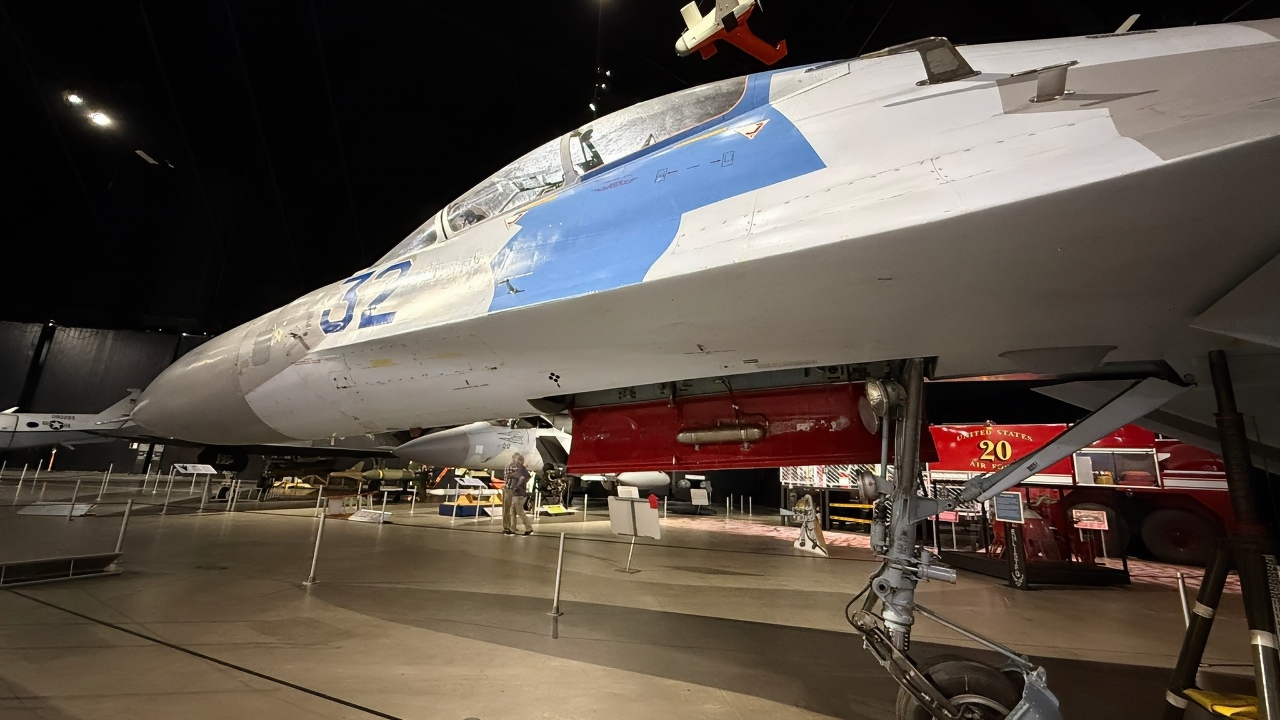
Russian Su-27 Flanker from USAF Museum. Image Credit: National Security Journal.
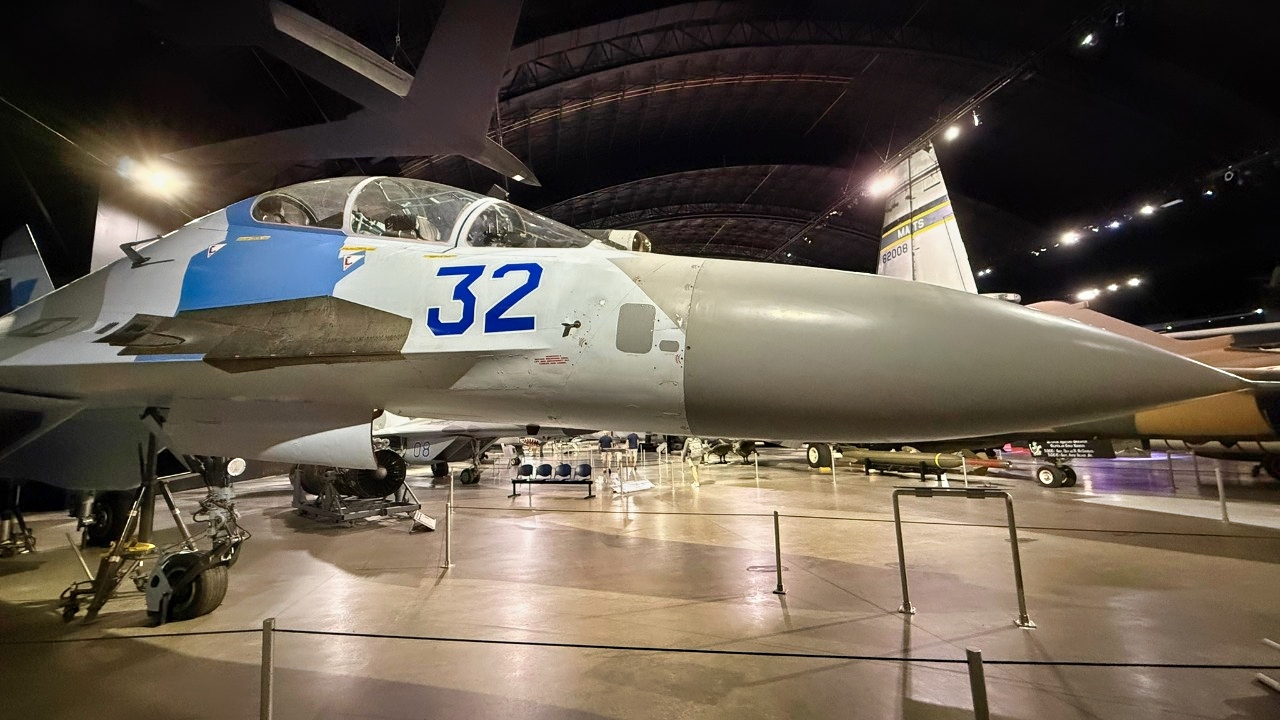
Su-27 Flanker Fighter from Russia. Image Credit: National Security Journal.
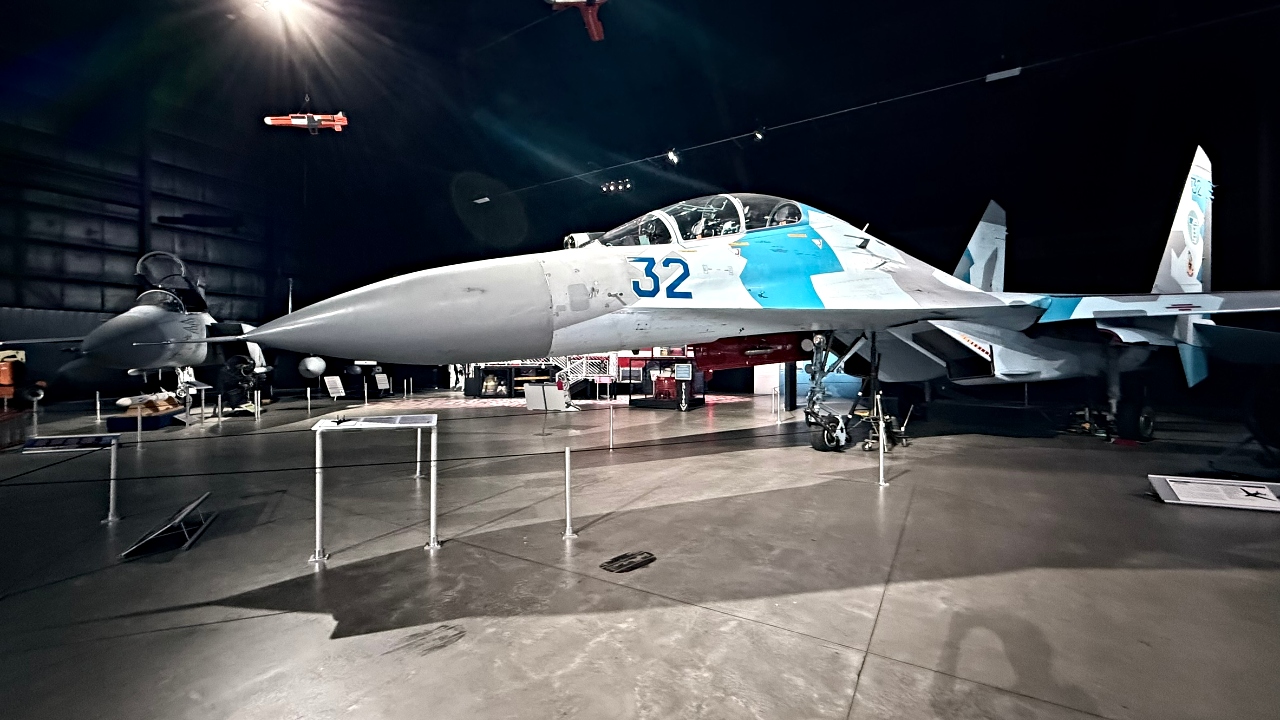
Su-27 Flanker from U.S. Air Force Museum. Image Credit: National Security Journal.
About the Author: Steve Balestrieri
Steve Balestrieri is a National Security Columnist. He served as a US Army Special Forces NCO and Warrant Officer. In addition to writing on defense, he covers the NFL for PatsFans.com and is a member of the Pro Football Writers of America (PFWA). His work was regularly featured in many military publications.
Military Affairs
China’s Stealth Air Force Has 1 Mission


Fakenewsatitagain
October 25, 2025 at 11:36 am
So? Like how Japan’s and South Korea’s Airforce was borned thanks to the United State’s F-15?
“China’s well-known and heavily documented effort to copy or steal foreign technologies began with the J-11, which, as mentioned, emerged shortly after China acquired the Russian Su-27.”
The Su-27 was licensed from Russia, so before Steve you ignoramus say anything about the Su-27, say that to the F-15J, Atd-x, and F-15K being a ripoff of the F-15 first. Same logic.