

Over the weekend, Ukraine launched its largest attack of the year against Russia, firing what is estimated to be over 600 drones against Moscow alone in the hours between Saturday evening and early Sunday morning.
Russia’s Defense Ministry claimed it had downed a total of 822 Ukrainian drones across all regions of the country.

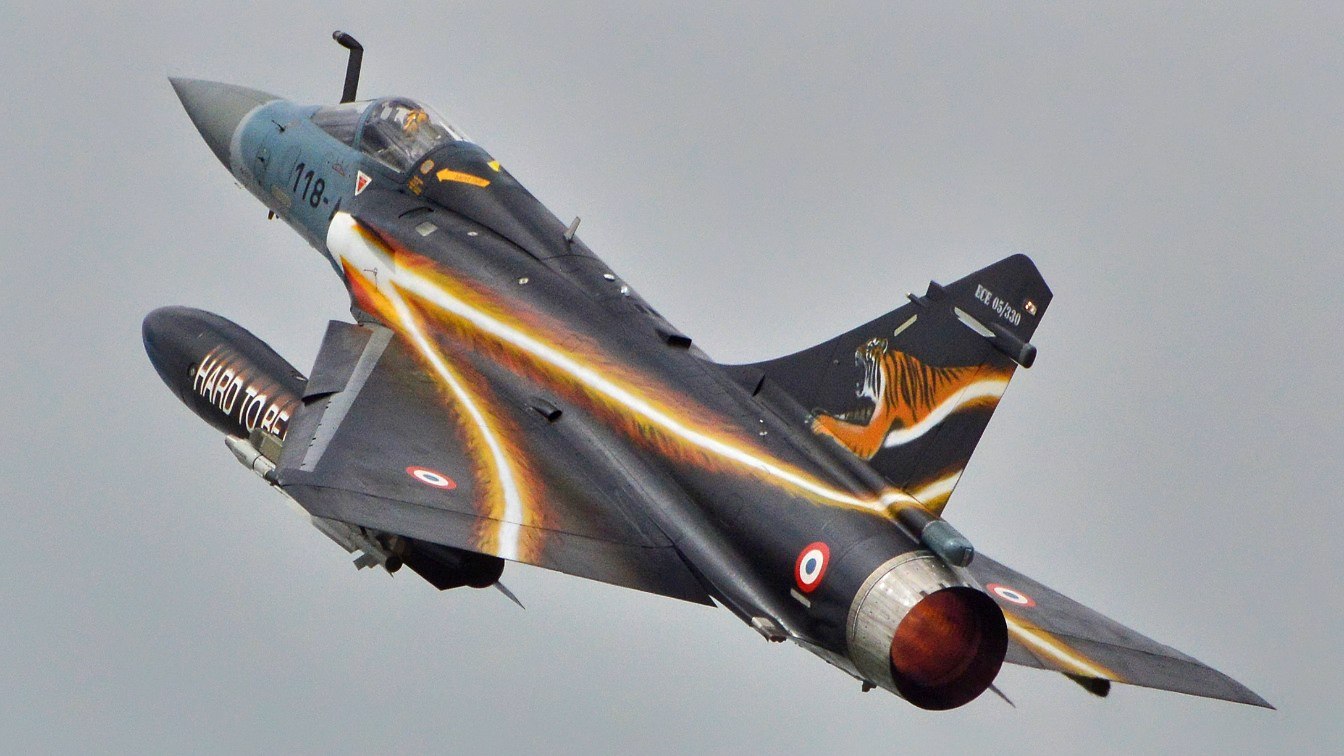
Mirage 2000 Fighter. Image Credit: Creative Commons.
The size of the attack is a stark reminder to Russian President Vladimir Putin and his generals that in a period of only four and a half years, Ukraine has progressed from having little better than nascent unmanned systems capabilities to becoming the world’s leader in this new type of air warfare.
Russia has long been known as a nation that leads the world in air defense systems.
Moscow has literally written the book on developing advanced techniques for building layered networks of short-, medium-, and long-range radars and missile systems.
Russian air defense firms and Moscow’s armed forces have always declared that they have the means to close the skies over Russia from any possible manner of attack.
But Ukraine’s proven capacity to strike deep inside Russian territory despite these extensive air defense assets has now shattered the myth that there are any areas of Russia that are safe from attack.
On the weekend of 8-9 August, Ukrainian drones were even able to destroy an S-400 air defense battery that was standing guard over Putin’s grandiose palace on the Black Sea near the city of Gelendzhik.
New Fuel Crisis
Ukraine’s Drone Forces have by now become famous for dozens of attacks on Moscow’s oil industry. There has been no let-up in this campaign, to the point where Russia has been plunged into another fuel crisis.
Authorities in at least 10 of Russia’s major regions have been forced to place restrictions on the sales of refined petrol at fuel stations.
Witnesses who spoke to Reuters on Monday, 17 August, reported that petrol was once again unavailable at some stations in the Moscow region, although diesel fuel remained available at almost all stations.
Russian government officials said the most acute fuel supply shortages were in Orenburg, Lipetsk, Oryol and Tver oblasts; Krasnodar Krai; Zabaykalsky Krai; Primorsky Krai; Krasnoyarsk Krai; and Tuvan Autonomous Oblast and Khakas Autonomous Oblast.
As a response to these continuing shortages in late July 2026, the Kremlin extended a ban on all petrol exports until 31 January 2027 and a separate moratorium on diesel exports that will be in force until 31 August 2026.
Destruction of E-Commerce Logistics
The same Ukrainian drone forces have also continued to hit warehouses belonging to Wildberries, the largest online retailer in Russia and an analog to the US E-commerce giant Amazon.
Last week, Ukraine attacked at least two more warehouses and has justified its strikes on the grounds that the company has been trading in military goods and dual-use items.
Kyiv has been calling the Wildberries facilities military-linked “logistics centers” and has attacked approximately 20 Wildberries warehouses in different locations since July 18.
Russian officials and Wildberries representatives have both denied that these warehouses are connected to the military. Moscow has instead accused Ukraine’s armed forces of using these attacks to disrupt the consumer economy as a whole.
“Ukraine has taken 7 of Wildberries’ 10 largest logistics hubs out of operation,” Ukraine’s Ministry of Defense said in a social media posting this past Sunday. “Russian logistics is feeling the consequences of the war Russia brought to Ukraine.”
Russia trade and industry associations report that more than 400,000 sellers were affected by these attacks, and that their combined losses are between 600 and 700 billion roubles (US$ 7.2 billion to $8.4 billion).
The market value of the goods affected by these attacks is estimated at 200 billion to 300 billion roubles (US$ 2.4 billion to $3.6 billion).
Wildberries alone has seen more than 20 percent of its warehouse capacity destroyed and has suffered an estimated 100 billion to 200 billion roubles (US $1.2 billion to $2.4 billion) in losses from these massive buildings and distribution centers.
These attacks – as are the attacks on the oil industry and destruction of Russian air defense units– demonstrate Ukraine’s seemingly never-ending capabilities to hit targets deep inside Russian territory and at distances of 1,500 miles or more from the border.
About the Author: Reuben F. Johnson
Reuben F. Johnson has thirty-six years of experience analyzing and reporting on foreign weapons systems, defense technologies, and international arms export policy. Johnson is the Director of Research at the Casimir Pulaski Foundation. He is also a survivor of the Russian invasion of Ukraine in February 2022. He worked for years in the American defense industry as a foreign technology analyst and later as a consultant for the U.S. Department of Defense, the Departments of the Navy and Air Force, and the governments of the United Kingdom and Australia. In 2022-2023, he won two awards in a row for his defense reporting. He holds a bachelor’s degree from DePauw University and a master’s degree from Miami University in Ohio, with a specialization in Soviet and Russian studies. He lives in Warsaw.


