

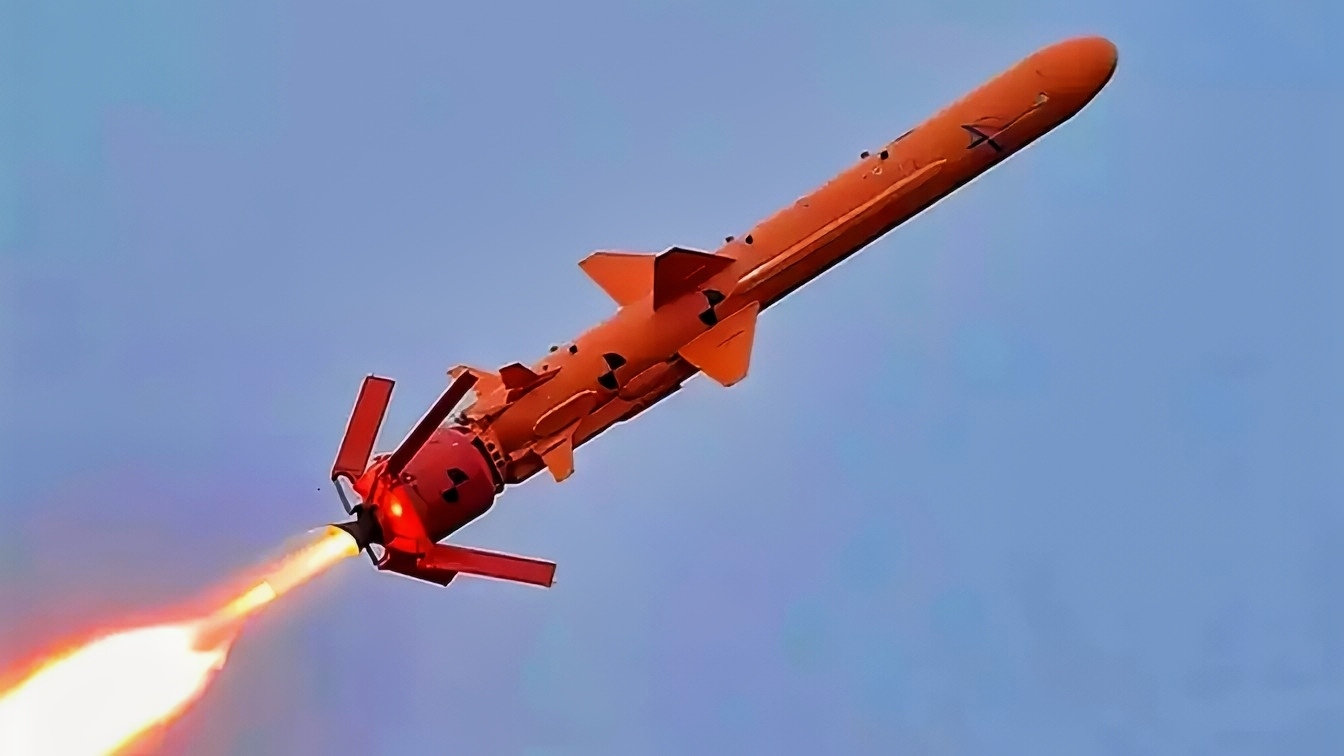
Western news media outlets are awash with enthusiasm for Ukraine’s successes in the most recent phase of its ongoing drone and missile wars against Russia. Photos and videos of a blazing Russian oil refinery on the outskirts of Moscow were especially prominent in late June 2026. However, nearly every Ukrainian drone or missile attack that inflicts damage on a Russian target receives maximum coverage in Europe and the United States. Western commentators also routinely hail those strikes as solid evidence that the tide in the Ukraine-Russia war has finally turned decisively in Kyiv’s favor.
The Ukraine War: Where Is This Headed?
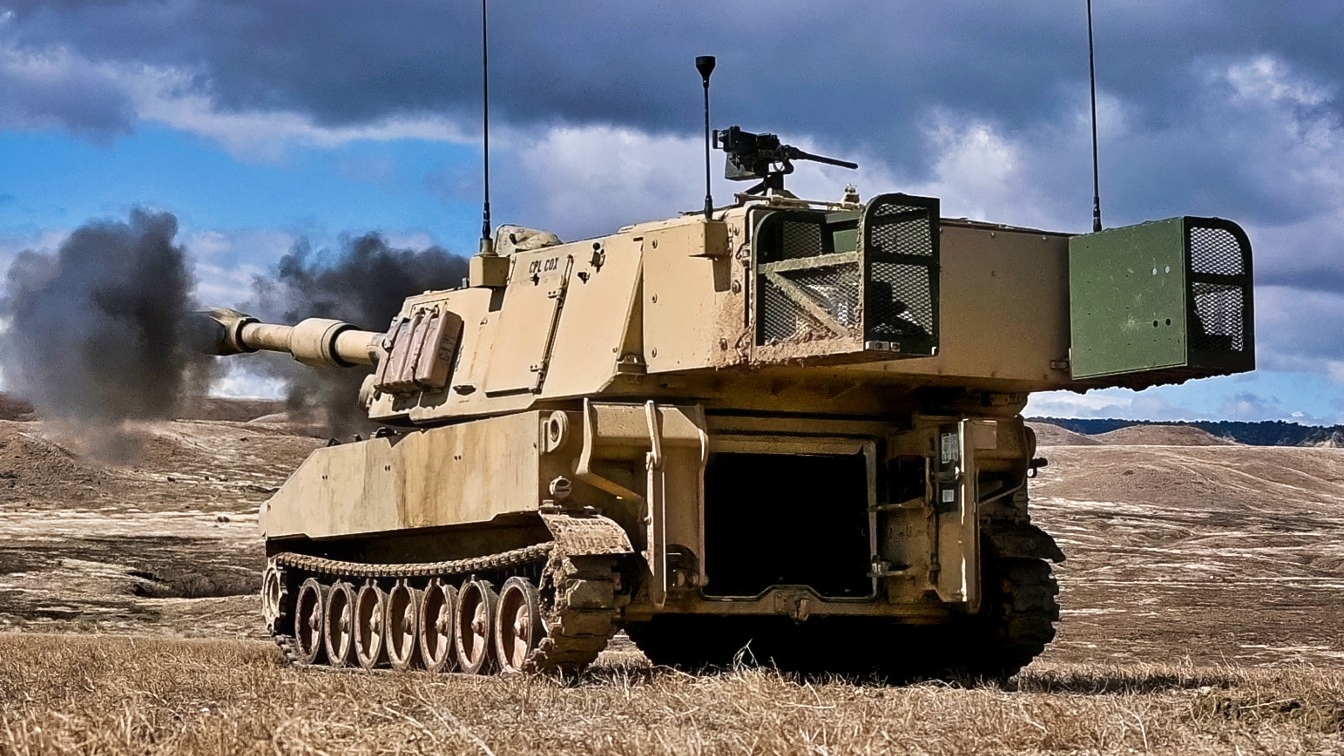
A U.S. Army M109A6 Paladin assigned to 3rd Battalion, 29th Field Artillery Regiment, 3rd Armored Brigade Combat Team, 4th Infantry Division fires during an artillery direct fire range at Fort Carson, Colorado, April 28, 2023. Direct fire ranges test gun crews’ abilities to engage threats at close range, one of the few times a gun crew can see their targets without a forward observer. (U.S. Army photo by Capt. Tobias Cukale)
The principal piece of evidence they cite is that the latest attacks are inflicting serious damage on the Russian homeland and arousing discontent among the populace. Already under severe pressure from multiple international factors, Vladimir Putin’s rule is now supposedly downright precarious. Ukraine’s heightened pace of drone attacks supposedly could be the final straw in bringing Putin down.
A more sober assessment would note that while the Ukrainian drone and missile attacks have caused significant damage and are sometimes visually very impressive (as with the damaged oil refinery), they do not fundamentally alter the overall military capabilities of the warring parties. Russia, the larger, more populous country with a bigger, more lethal military force, is still better positioned to win a war of attrition.
Indeed, even within the confines of drone and missile warfare, Russia’s retaliatory attacks have been at least as destructive as Ukraine’s original strikes.
Hope vs. Reality
Contrary to their perversely stubborn fantasy about Ukraine’s ultimate chances of a definitive military victory, NATO leaders should hope that such a comprehensive triumph never occurs. If the Kremlin ever finds itself truly at risk of an existential defeat that would knock Russia from the ranks of the great powers, it is highly probable that Russian leaders will do whatever is necessary to avert it.
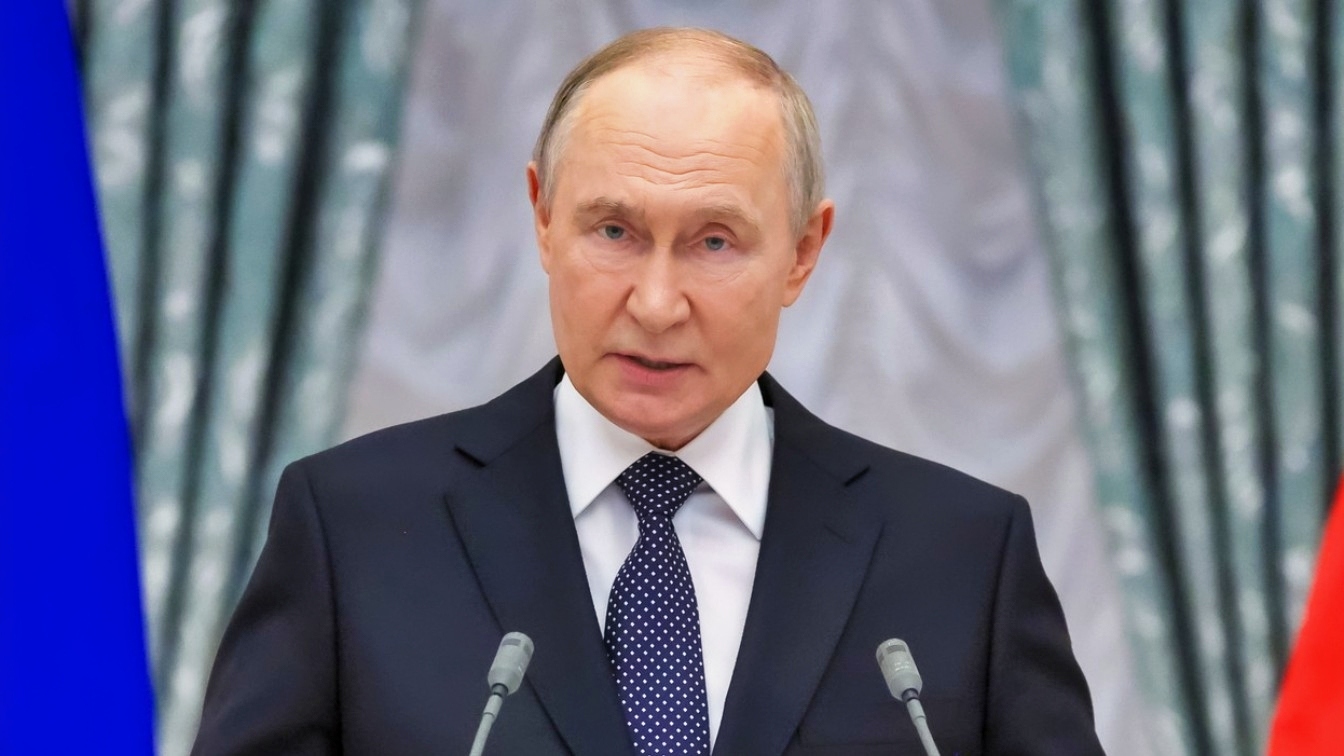
Putin in May of 2026. Image Credit_ Creative Commons
Preventive steps could include adopting a “scorched earth” policy toward civilian targets throughout Ukraine.
A nasty response also might include systematic, but plausibly deniable, sabotage of key infrastructure and other prominent targets in NATO members that have been actively assisting Kyiv’s war effort.
Moscow’s enemies set the precedent for that tactic with their destruction of Russia’s Nord Stream natural gas pipeline.
Tactical Nuclear Weapons Fears
Worst of all, desperate retaliation from a beleaguered Russia facing a humiliating defeat might take the form of using tactical nuclear weapons against Ukraine. Indeed, the use of such weapons even against the Baltic republics and other small NATO members who have been Kyiv’s most enthusiastic backers could become a viable scenario, however nightmarish the outcome would be for everyone concerned.
Ukraine and ‘Winning’ the War
Fortunately, despite the orchestrated Western media hype about Kyiv’s latest successful drone and missile attacks on the Russian homeland, the prospect of a decisive overall Ukrainian military triumph remains remote.
Indeed, we have encountered similar unwarranted hype before about developments alleged to be “breakthroughs” for Ukraine in the war. Perhaps the most spectacular episode was Kyiv’s covert drone assault in late May 2025 on the Kremlin’s strategic bomber fleet deep inside northern Russia, far away from the Ukraine front.
Ukrainian forces were able to smuggle 117 deadly drones deep inside Russian territory and conduct Operation Spiderweb—a series of coordinated attacks on 4 air bases housing a significant portion of the Kremlin’s strategic bomber fleet. Estimates about the extent of the resulting damage varied widely, with the Ukrainian government at the high end of the range claiming that 40 aircraft were destroyed or severely damaged. Whatever the actual figure, there was little doubt that the Russian military had suffered a humiliating setback. Indeed, Kyiv and its backers began calling the attack “Russia’s Pearl Harbor .”
However, while Kyiv and its allies celebrated the success of the Spiderweb attacks, Russian forces continued to pound targets in Ukraine from the air and advance on the ground. Overall, Moscow continued winning the war, albeit slowly and at great cost in terms of military hardware and the lives of Russian soldiers.
A Conflict that Grinds On
The outcome of Ukraine’s latest drone and missile attacks is not likely to be much different. There is an ever-larger gap emerging between military realities and the gushing pro-Ukraine propaganda flowing from the Western news media. But contrary to that well-organized and well-funded cheerleading campaign, Ukraine is not on the brink of winning its war against Russia.
To the extent that any meaningful changes at all occur with respect to the military situation, they are likely to take the form of Moscow’s fraying patience and the growing likelihood that Russia and its chief ally, Belarus, will become even more aggressive toward Ukraine. Kyiv’s ballyhooed successes in its drone war campaign would then become very hollow indeed.
About the Author: Ted Galen Carpenter
Ted Galen Carpenter is a senior fellow at the Randolph Bourne Institute and a contributing editor at The National Security Journal and The American Conservative. He is the author of 13 books and more than 1,500 articles on national security, international affairs, and civil liberties. His latest book is Unreliable Watchdog: The News Media and U.S. Foreign Policy (2022).


high-end faight
July 3, 2026 at 3:09 pm
Our world of today are controlled by very powerful fascistic forces hell-bent on defeating and crushing Russia. And china.
Russia is actually in a better position to confront the fascists, compared to china.
The reason is russia has a strategic nuclear arsenal far superior to that possessed by china.
But right now, Russia is being very greatly hamstrung by Vladimir Putin, the secret ukro agent ensconced in Moscow.
This Russia must now, today, get rid of Putin, and unleash tactical nukes against the ukro nazis. This will immediately vanquish the fascist threat against Russia by the ukros.
As for the threat from Brussels, Russia must develop air-launched burevestnik missiles. This will gravely curtail the hotheads in Brussels.
For China, extremely powerful US forces have gathered at its front doorstep. But these forces won’t be able to defeat china’s forces using conventional means.
Thus in the coming ‘high-end fight’ against china, US forces will resort to the use of tactical nukes.
China’s nuke strength today can’t measure up to the US, and therefore china is sure to bite the dust in the comin’ high-end fight.
Thus china needs to develop a space-based nuke arsenal, alongside FOBS warheads and space-air gliders.
Otherwise, otherwise, china gonna be in a more difficult situation compared to Russia.
The coming high-end fight could spell the end of china as an independent state. Beware.