
Russia Conducts “Massive” Overnight Attack, Killing Two – Russia conducted “massive” overnight airstrikes across Ukraine, according to the country’s Ministry of Defense.
At least nine cities across multiple regions of Ukraine were hit in the early hours of Thursday, 27th August. A 78-year-old woman was killed in Zaporizhzhia, with another person mortally wounded in Kharkiv. Explosions could also be heard across the country’s capital, Kyiv, throughout Thursday morning.
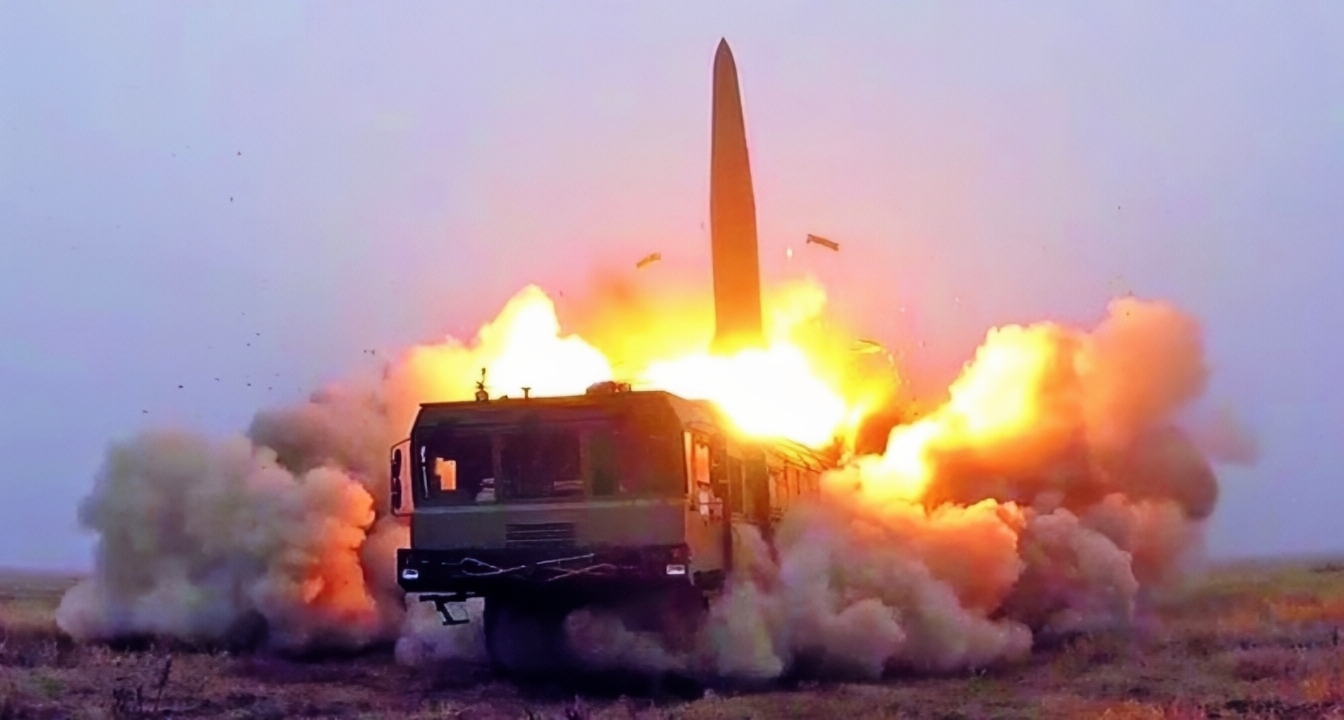
Iskander Missile Attack Creative Commons Image
A “Massive” Attack
Moscow said its armed forces had inflicted a “massive blow” to Ukraine in the early hours of Thursday morning. “As a result of which, facilities of the military-industrial complex of Ukraine, the metallurgical and oil refining industries, as well as logistics centers in the cities of Kyiv, Boryspil, Zaporizhzhia, Kremenchuk, Kryvyi Rih and Ilyichovka were affected,” according to the Russian Defense Ministry.
Port infrastructure in Odesa, Chernomorsk and Reni, used by Ukraine to receive and store military cargo, was also targeted, as were energy facilities connected with sea and river ports in the Odesa region. Oil refineries and logistics hubs were also reportedly struck during the aerial assault.
While Moscow maintained that the strikes targeted only military facilities, civilian buildings were also damaged, with two people killed and at least a dozen more wounded.
Zelensky Calls for Countermeasures
Ukrainian President Volodymyr Zelensky posted a response shortly after the overnight attacks. Describing the assault as a “combined strike” with both drones and missiles used, Zelensky said “critical infrastructure” had been hit across multiple regions. Residential buildings were also damaged, including a high-rise building in Kramatorsk which Zelensky described as being hit by a “guided aerial bomb”.
“Russia continues to invest in missiles and in expanding its war, and that means more countermeasures are needed,” the Ukrainian president added. “This week, our European allies made important decisions to strengthen Ukrainian air defense. It is important that these are also supplemented by additional ballistic missile defense packages, first and foremost through PURL [Prioritized Ukraine Requirements List].
“Everything that strengthens the protection of our skies effectively saves the lives of Ukrainians every day,” he continued. “To bring down Russia’s desire to keep fighting, we need to effectively bring down the missiles Moscow clings to so much to keep the war going.”
Kyiv’s Patriot Problem
Zelensky has called for more air defenses ever since the start of Russia’s full-scale invasion. While Western allies were hesitant to supply munitions capable of striking deep inside Russian territory during the war’s infancy, NATO has long believed that Ukraine has a right to defend itself, and so air defense systems have almost always been at the top of the Ukrainian president’s wish list.
However, supplies are dwindling. Ukraine has less than 40% of the number of Patriot air defense missiles it had three years ago, and the war in Iran has sharply increased demand.
Ukrainian officials believe Russia is exploiting this by focusing on fewer, much larger attacks designed to overwhelm the former’s air defenses. Such attacks leave Ukraine with a tough decision: focus on the larger, more destructive missiles which are fewer in number, or seek to destroy the hundreds of drones heading towards cities across the country.
A Drone Dilemma
Both countries have used drones to attack one another throughout much of the conflict, with Ukraine sending drones towards Russian infrastructure on a near-nightly basis in an attempt to disrupt Moscow’s economy, supply lines and morale. Russia, likewise, has sent drones across Ukraine, including towards border regions – something which has concerned neighboring nations throughout the conflict.
On Thursday morning, Moldova’s Ministry of Defense said five drones had entered its airspace overnight just hours before the country’s Independence Day, with another found on the ground. “We have repeatedly warned about the unacceptable risks posed by Russia’s war against Ukraine,” the department said on social media. “These incidents are another reminder of the need to strengthen our national security and our ability to protect our citizens.”
Such incursions prove problematic for NATO’s Eastern flank. As the use of drones has increased, so have airspace violations from both sides. For much of the conflict, NATO members bordering the conflict have resisted shooting down stray drones, let alone retaliating. However, with no end in sight for the conflict and drone warfare becoming a nightly occurrence, a crucial question remains regarding what to do when, not if, a NATO country is next struck by an inadvertent aerial assault.
About the Author:
Shay Bottomley is a British journalist based in Canada. He has written for the Western Standard, Maidenhead Advertiser, Slough Express, Windsor Express, Berkshire Live and Southend Echo, and has covered notable events including the Queen’s Platinum Jubilee.