


The Ukraine War Comes Closer to Putin: Russia’s capital city was once again under bombardment by Ukrainian drones in the latest round of strikes to hit Russia’s largest city and the seat of power in the world’s largest country.
Posting to his Telegram channel, Moscow Mayor Sergei Sobyanin wrote that more than 60 explosive-laden drones had been successfully shot down by Russian air defenses, but it was not immediately clear how many Ukrainian drones had managed to evade being shot down.
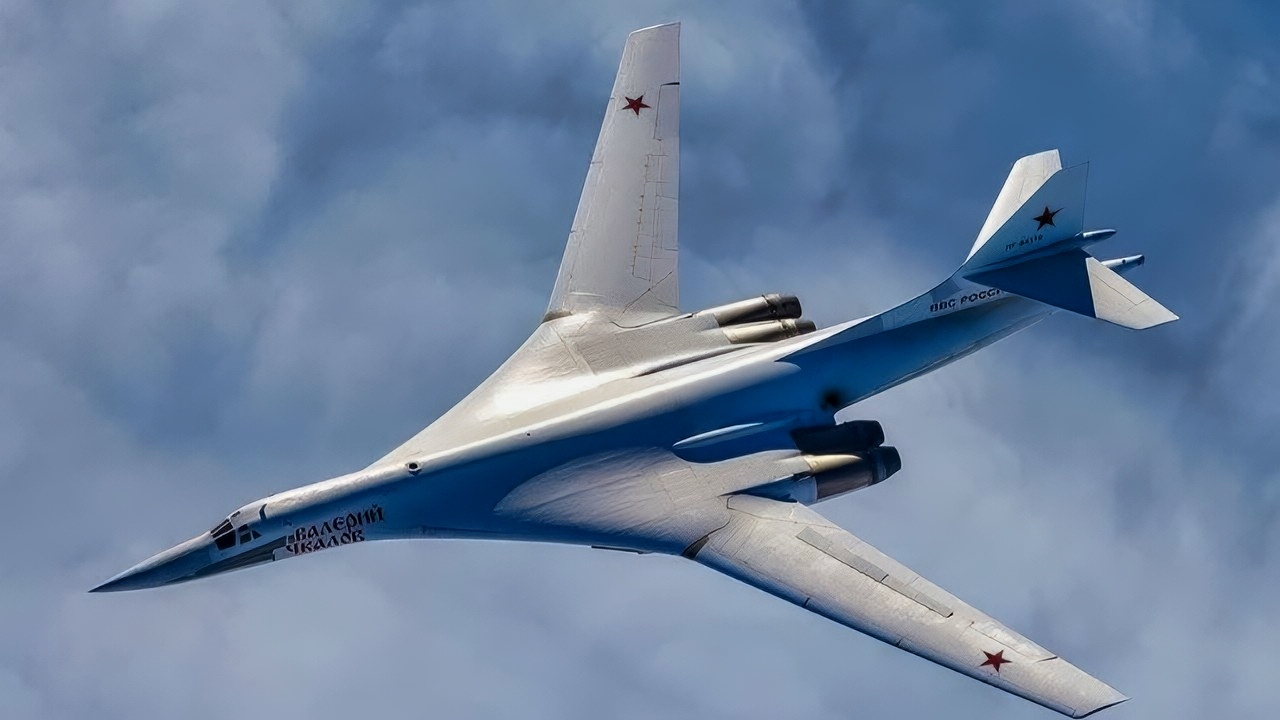
Tu-160 Bomber from Russia. Image Credit: Creative Commons.

Russia Tu-160 Bomber on Tarmac. Image Credit: Creative Commons.
Several of Moscow’s international airports experienced disruptions for several hours, marking at least the third time in about a month that international flights have been disrupted to and from the Russian capital.
Ukraine’s Long-range Sanctions Regime
The rounds of strikes that have pummeled Russia are part of what Ukrainian President Volodymyr Zelensky has termed Ukraine’s long-range sanctions regime.
More broadly, it is part of Kyiv’s effort to stymie what is Russia’s state’s single-largest source of revenue: the export of energy abroad.
The Ukrainian campaign has, thus far, enjoyed a great deal of success.
Explosive-laden Ukrainian drones have pummeled Russian oil refining and transportation infrastructure specifically.
As a result, fuel shortages have been felt across Russia, and in Crimea, the Ukrainian peninsula that Russia annexed in 2014. Fuel restrictions have been implemented across Russia. One survey by Mediazona, an independent Russian outlet, found that fuel sales have been curtailed or halted entirely in more than half of Russia’s regions.
Even in Siberia, thousands of miles from the front line in Ukraine, fuel sales are limited to 50 liters per customer per day, or about 13 gallons.
An Admission of Disruption
Although Russian President Vladimir Putin has largely refrained in the past from addressing the effects of Ukraine’s strike campaign on the Russian heartland, earlier this week he addressed the fuel shortages in Russia — a remarkable admission for one of the world’s leading energy-producing countries.
Speaking to Russian media, Putin said that the Ukrainian campaign is “obviously creating problems,” adding that though the country is “currently seeing a certain shortage… It’s not critical.”

Tu-160 bomber. Image Credit: Creative Commons.
Putin argued that Ukraine’s long-range sanctions are having “absolutely no impact on the situation at the front line.”
But it is increasingly difficult for the Russian population to ignore a war that has, more than four years after Putin launched his full-scale invasion of Ukraine, finally come to bite at home.
Stymied Progress on the Battlefield
Despite harrowing losses, Russian forces are managing to eke out small, incremental gains on the battlefield — but the costs have been enormous.
Thanks to their growing prowess in the air, Ukrainian forces claim to have killed or wounded roughly the same number of troops that Moscow lures into the ranks each month, though generous sign-up bonuses, preferential mortgages and educational treatment, and enormous debt-relief measures upon completion of service.
But with Russian service member numbers seemingly at a standstill, that juice might not be worth the squeeze.
But Ukraine has notched several successes of its own, namely the movement of Russian air defenses back to Russia.
Reshuffling Russia’s Air Defenses
Images and videos on Russian social media have been replete with images of enormous clouds of black, acrid smoke billowing into Moscow’s skyline.
And while Putin attempted to downplay the seriousness of the situation, the movement of Russian air defense assets away from Ukraine and back to Russia is a tacit admission of how defenseless Russian energy infrastructure has been.
Last month, CBS News reported that the supply of interceptor missiles for Russia’s S-300 air defense batteries had dipped, expended against Ukrainian drones.
While Russia has a number of air defense systems at its disposal, including the S-350 and newer S-400 batteries, as well as Pantsir, the dearth of interceptors for Russia’s S-300 risks leaving vital openings in air defense coverage.
Coupled with a dip in recruitment numbers for the Russian war machine, the situation has rarely looked this dire for Russia.
Still, the Russian president remained defiant and rejected even the idea of peace with Ukraine, saying he refused a hypothetical pause on long-range strikes for both sides.
“It is clear why this [strike pause] proposal is being made, because our counter-strikes deep into Ukrainian territory are much stronger, have greater impact and are, frankly, more destructive,” Putin said. “Given their catastrophic shortage of personnel, the Ukrainian Armed Forces apparently believe this could be their salvation. But saving the Kyiv regime is not part of our plans.”
About the Author: Caleb Larson
Caleb Larson is an American multiformat journalist based in Berlin, Germany. His work covers the intersection of conflict and society, focusing on American foreign policy and European security. He has reported from Germany, Russia, and the United States. Most recently, he covered the war in Ukraine, reporting extensively on the war’s shifting battle lines in the Donbas and writing about its civilian and humanitarian toll. Previously, he worked as a Defense Reporter for POLITICO Europe. You can follow his latest work on X.


