
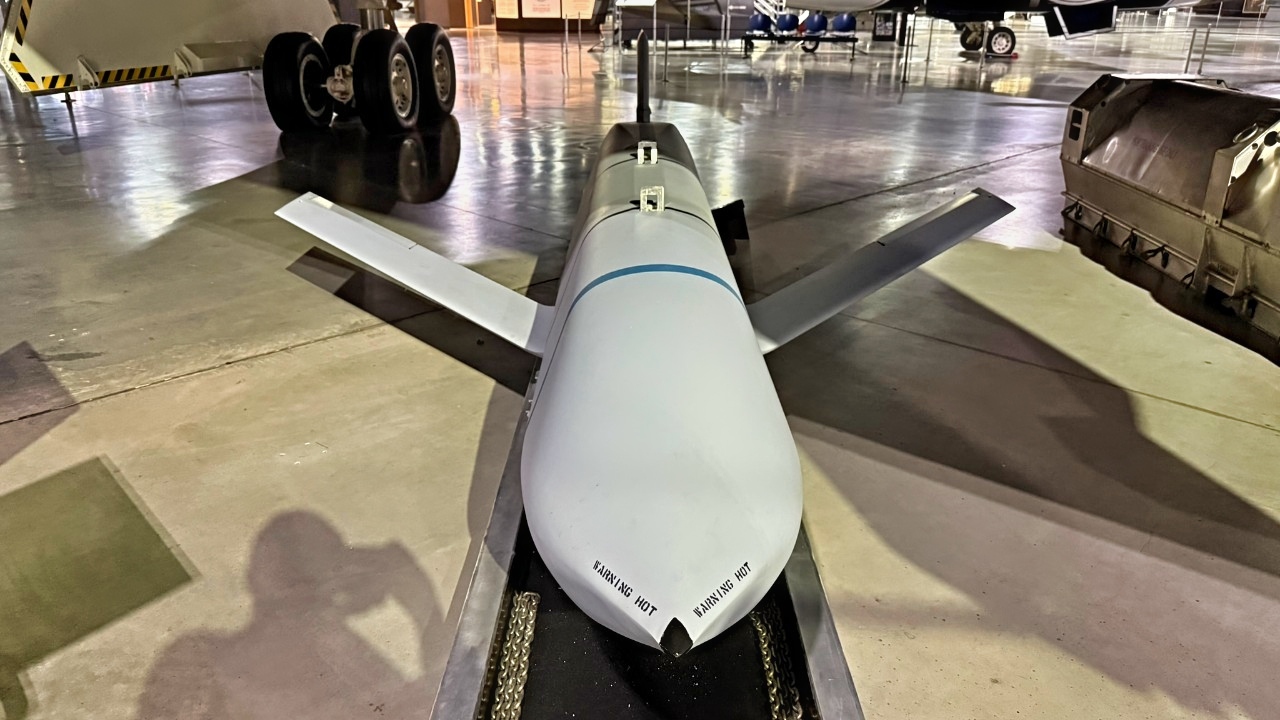
Key Points and Summary – In a direct appeal to the White House, Ukraine’s commander-in-chief, Gen. Oleksandr Syrsky, is asking President Trump for long-range missiles to strike deep inside Russia.
-The explicit goal is to target and cripple Russian arms factories to slow down a war machine that currently out-produces the West.
-The request puts Trump in a critical position, as he has previously been hesitant to approve such a major escalation.
-However, with Russia intensifying its own attacks, and after Trump reportedly asked if Ukraine could strike Moscow, the strategic appeal of degrading Russia’s military output may prove decisive.
Kyiv Wants Trump’s Help Striking Russia
Speaking to The Washington Post, Ukraine’s commander in chief Gen. Oleksandr Syrsky made it clear that Kyiv wants U.S. President Donald Trump’s help to strike deep inside Russia.
A report published on July 23 revealed how Kyiv’s top military officials are not only calling on the White House to deliver more offensive weapons, but actively seeking permission to use long-range missiles to strike high-value Russian targets.
The interview comes just one day after the United States and Germany confirmed plans to send five Patriot missile systems to Kyiv.
Syrsky justified the requests – which have so far been dismissed by the Trump White House – by explaining how mid- and long-range missiles could help Ukrainian forces do more than just protect themselves against incoming Russian drone and missile barrages.
Instead, Syrsky said, Ukraine could slow down Russian weapon production by specifically targeting domestic manufacturing plants.
Ukraine Makes a Good Case
It’s an argument that could well work; President Donald Trump has grown tired of Moscow’s refusal to make concessions, and Russia’s strengthening military capabilities has NATO on edge. With NATO members raising defense spending targets to 5 percent amid concerns that Russia could launch new military campaigns after Ukraine, the prospect of slowing down Russia’s arms manufacturing capabilities could work for the U.S., NATO, and Ukraine.
At present, Russia is producing artillery ammunition at a rate almost three times greater than the combined production of the U.S. and Europe. Russia is producing around 250,000 artillery rounds per month, totalling approximately 3 million annually, compared to the combined 1.2 million rounds per year produced by Europe and the U.S.
“They are targeting virtually everything – airfields, populated areas, infrastructure facilities,” Syrsky said. “So, of course, we need supplies of ballistic missiles in order to be able to give the enemy a fitting rebuff.”
Syrsky added that having access to missiles is itself a deterrent, and could make Russian forces rethink future aerial bombardments of Ukrainian cities.
In recent weeks, and particularly in the wake of Ukraine’s successful Operation Spider’s Web drone attacks, Russian attacks on urban population centers have become more frequent and increasingly deadly.
Will America Give Long-Range Weapons to Ukraine?
So, will Trump provide long-range weapons? It’s hard to say. While the Biden administration gradually warmed to the idea of permitting Ukrainian strikes on Russian territory, Trump has been more hesitant.
During a July 4 phone call, however, Trump reportedly asked Ukrainian President Volodymyr Zelenskyy whether he could strike Moscow or St. Petersburg. Zelenskyy said he could if Ukraine was given the weapons, although the White House later claimed that the president was merely asking a “question.”
About the Author:
Jack Buckby is a British author, counter-extremism researcher, and journalist based in New York. Reporting on the U.K., Europe, and the U.S., he works to analyze and understand left-wing and right-wing radicalization, and reports on Western governments’ approaches to the pressing issues of today. His books and research papers explore these themes and propose pragmatic solutions to our increasingly polarized society. His latest book is The Truth Teller: RFK Jr. and the Case for a Post-Partisan Presidency.
The Best Tanks on Earth
AbramsX: The Tank the US Army Wants


Pingback: Zelenskyy Faces a Political Nightmare as His Own People Protest His New Law - National Security Journal