

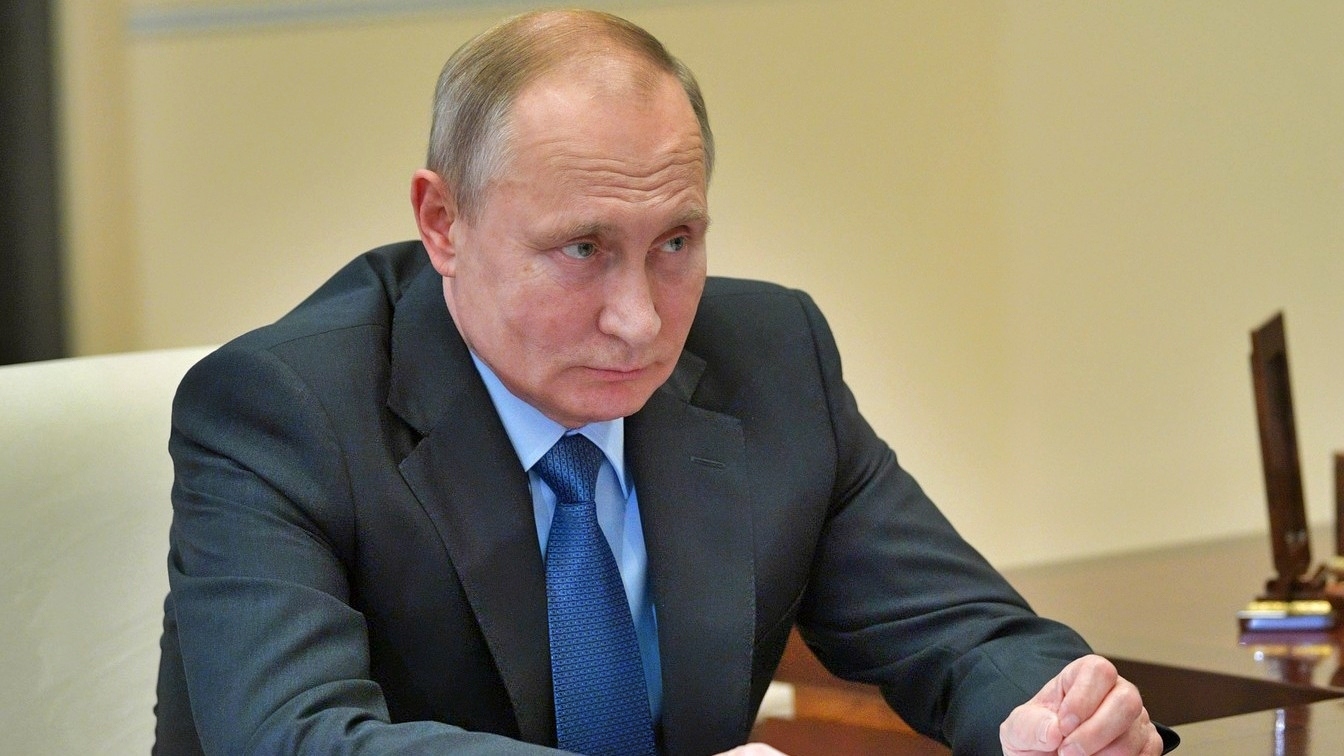
The war in Ukraine is escalating as both sides increase their medium- to long-range strike campaigns against each other. While many experts and analysts hoped that Ukraine’s recent drone campaign would force Russia to the negotiating table, it appears that the opposite has happened. Sources close to Putin have instead reported that the Kremlin is digging its heels in and remains adamant about ending the war on Russia’s terms.
Despite efforts from President Trump to negotiate with Putin, the Russian war effort shows no signs of stopping, leaving escalation as the only solution to bring a lasting peace to Eastern Europe.
The War is Escalating

Tu-95 Bomber from Russia. Image Credit: Creative Commons.
Putin has recently rejected calls to negotiate a lasting peace with Ukraine. According to some anonymous sources in reports in Reuters and other outlets, the President of Russia is likely to escalate the war following Ukraine’s long-range drone campaign against Russian oil refineries. Another source claimed that Russia is doubling down on the war to achieve its goals of annexing the entirety of the Donbas region.
Rather than forcing Moscow to the table, the recent drone campaign seems to have hardened the Kremlin against diplomacy and has instead soured sentiments in Moscow against Ukraine. According to Kremlin spokesman Dimitry Peskov, “There is a war going on, this is a real war.” This is a notable change in Moscow’s rhetoric.
Over the last four years, both sides have rejected each other’s peace propositions.
Despite claims from Moscow and Kyiv of readiness to negotiate a lasting peace, neither side is willing to accept the other’s demands or reach any sort of compromise. According to some reports, Kyiv reached out to Moscow in an attempt to limit the war to the four contested regions in the Donbas and to curb long-range strikes against each other. Putin flatly rejected both of these proposals.
From Moscow’s perspective, accepting such demands would be akin to forcing Russia to fight the war with one hand tied behind its back while giving Ukraine breathing room to rearm and reorganize its armed forces.
The fundamental problem is that neither side trusts the other to uphold its end of any settlement.
Mediator or Enabler? America’s Role in the War
The role of the United States has been very clear since the beginning of the war. Under President Biden’s leadership, the U.S. provided Ukraine with vast military, financial, and intelligence support with no intention of negotiating with Moscow, except maybe for Moscow’s surrender. Part of Trump’s platform was to bring the war in Ukraine to a swift end, with more critical rhetoric against Biden’s unwavering support for Kyiv. Initially, Trump attempted to serve as a mediator in Ukraine, encouraging Putin and Zelensky to reach a quick agreement. Trump’s meeting with Putin in Alaska seemed to mark the beginning of a new era in Russian-American relations and appeared, at least to the Russians, that Moscow had finally found a partner in Washington.
Behind the scenes, however, Trump’s handling of the war has been fundamentally no different than Biden’s approach. After a brief period of heightened tensions with Kyiv, during which the U.S. briefly blocked all forms of aid to Ukraine, Trump eventually resumed the flow of financial and military aid, operating no differently than the previous administration aside from the occasional rhetoric against NATO. During the recent NATO summit with Ankara, Trump seems to have doubled down on his support for Ukraine, allowing Kyiv the license to produce Patriot interceptors and expressing his hope that Ukraine’s recent drone campaign will force Moscow to the negotiating table. “This is an escalation, but this is an escalation that will help end the conflict,” Trump said. Despite frequent conversations with Putin, the U.S. has been undeniably in support of Ukraine, even if Trump’s rhetoric makes people think otherwise.
No Options Left for Putin
It appears that the Russians are finally starting to realize where America’s support lies, and it isn’t with Moscow. “Behind Kyiv there is Berlin, and Paris, and The Hague, and Oslo, and, unfortunately, Washington,” said Peskov. Russian news media noted that despite Trump’s usual NATO-critical rhetoric, the President showed immense support for Ukraine and happily contributed to the alliance’s 70-billion-euro aid package to Kyiv. The news outlet also noted that the “Spirit of Anchorage,” which Moscow hoped would normalize relations with the Americans, had now been replaced by the “Spirit of Ankara.”
Against this backdrop, there is really only one path forward for Moscow: escalation. If the Americans are not willing to be a neutral mediator, then the only tool Russia has left at its disposal is its military. As the war continues to escalate, however, the economic fallout of the conflict will only apply more pressure to the Kremlin. As Ukraine continues to strike oil refineries across Russia, the country is experiencing an ongoing fuel shortage that has mainly affected the civilian sector. Russia has also increased its own attacks against Ukraine, hoping to grind Kyiv down into submission.
Putin vs. Ukraine: Who Will Cave First?
Ultimately, the war will be decided by who caves first. If Ukraine can maintain or increase its current attacks, then Russia may be forced to fold. However, Ukraine is also feeling immense pressure after four years of fighting and is essentially only running because of Western support. It is too early to say which side will emerge victorious, but Moscow currently retains an advantage in long-range strike capabilities, especially as Ukraine faces a critical shortage of air-defense interceptors.
MORE – Ukraine Could Soon Build Patriot Missiles
About the Author: Isaac Seitz
Isaac Seitz, a Defense Columnist, graduated from Patrick Henry College’s Strategic Intelligence and National Security program. He has also studied Russian at Middlebury Language Schools and has worked as an intelligence Analyst in the private sector.


