

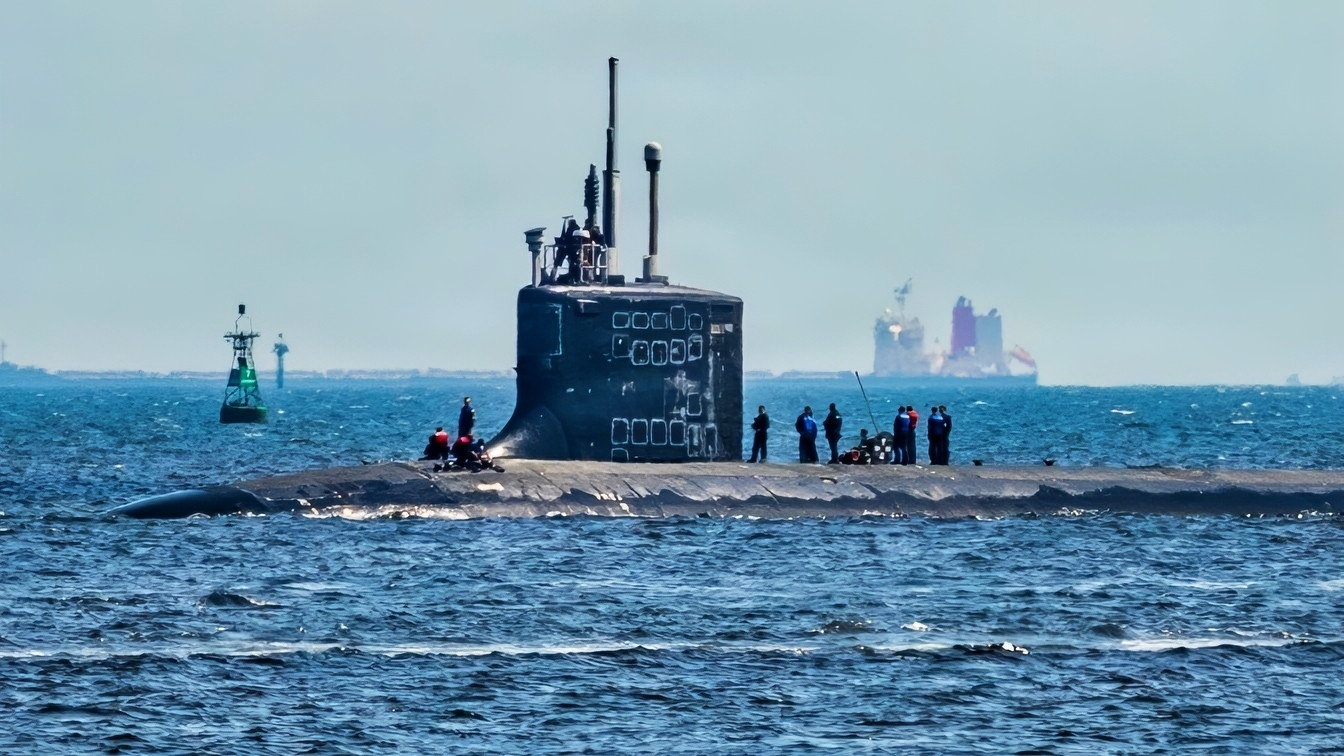
“The Dodge Durango of submarines.” That’s how a former U.S. Navy admiral described the Virginia-class attack submarine. The framing is correct by every credible technical measure. The Virginia-class is the most capable nuclear attack submarine ever built — quieter than the Russian Yasen-class, more heavily armed than the British Astute, and now carrying 40 Tomahawk cruise missiles per boat in the Block V configuration. It is also produced at half the rate the Navy actually needs.
Why The Virginia-Class Is The Best Attack Boat On Earth — And Why The Navy May Lose The Industrial Base That Builds It
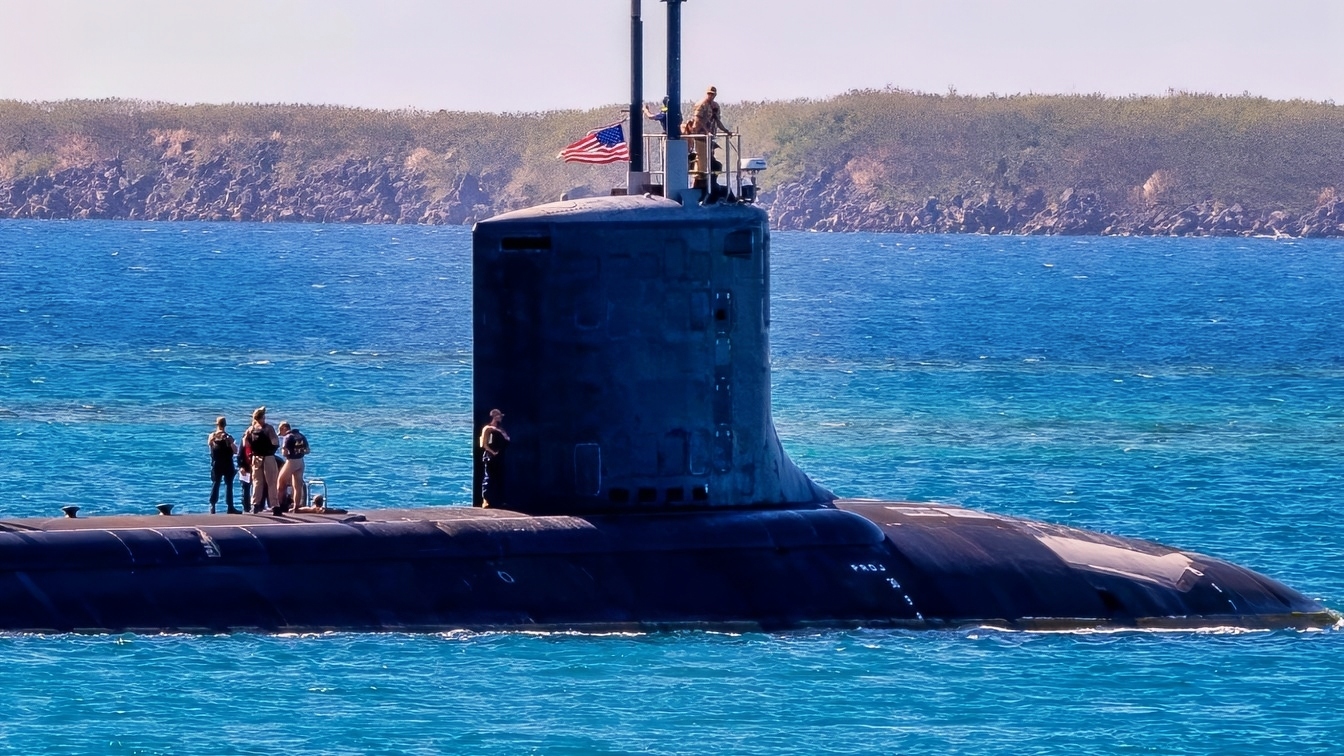
NAVAL BASE GUAM (Jan. 18, 2025) – The Virginia-class fast-attack submarine USS Minnesota (SSN 783) transits Apra Harbor, Naval Base Guam, Jan. 18, 2025. Assigned to Commander, Submarine Squadron 15, based at Polaris Point, Naval Base Guam, Minnesota is one of five forward-deployed fast-attack submarines. Renowned for their unparalleled speed, endurance, stealth, and mobility, fast-attack submarines are the backbone of the Navy’s submarine force. Regarded as apex predators of the sea, Guam’s fast-attack submarines serve at the tip of the spear, helping to reaffirm the submarine force’s forward-deployed presence in support of a free and open Indo-Pacific. (U.S. Navy photo by Lt. James Caliva)
“The Dodge Durango of submarines. This boat keeps getting upgrade after upgrade, that’s why it’s the best on Earth.”
That was the assessment a former U.S. Navy admiral gave me about the Virginia-class attack submarine. The framing is unusually direct for someone who spent a career in submarine warfare. It is also, by every credible technical measure, correct.
And I have at least some direct life experience with the Virginia-class. I was able to spend an hour on the bridge of the USS North Carolina, a real Virginia-class submarine, back in 2004, when she was under construction at Electric Boat in Groton, Connecticut. I was floored by the level of technology that was backed into that small section, even roughly 22 years ago.

Norfolk, VA. (May 7, 2008)-The Virginia-class submarine USS North Carolina (SSN 777) pulls into Naval Station Norfolk’s Pier 3 following a brief underway period. North Carolina was commissioned in Wilmington, N.C. on May 3, 2008. (U.S. Navy Photo By Mass Communications Specialist 3rd Class Kelvin Edwards) (RELEASED)
A Special Class of U.S. Navy Submarine
The Virginia-class is the most capable nuclear attack submarine ever put to sea by any navy. The boats are quieter than the Russian Yasen-class. They carry more weapons than the British Astute-class. They have absorbed mission sets that previously required four separate submarine designs — anti-submarine warfare, anti-surface warfare, land-attack strike, special operations support, and intelligence collection. They have evolved across six production blocks, each one substantially more capable than the last. The Block V boats carry 40 Tomahawk cruise missiles — more than tripling the strike capacity of the original Block I design.
Twenty-six are in service. Forty-three are on order. The class will eventually number 66 in U.S. Navy service alone, with three additional hulls bound for the Royal Australian Navy under AUKUS.
The Virginia-class is also the centerpiece of a strategic problem that no amount of submarine engineering can fix. The two American shipyards building these boats can produce roughly 1.2 hulls per year. The Navy needs 2.33 boats per year to meet its operational requirements, plus the AUKUS commitment. The supposed successor program — the SSN(X) — has slipped from 2031 to 2035, then to 2040, and may slip further. The Ohio-class guided-missile submarines that the Virginia-class is supposed to replace are retiring faster than the new boats can be delivered.

(Sept.9, 2011) The Virginia-class submarine Pre-Commissioning Unit (PCU) California (SSN 781) gets underway from Naval Station Norfolk to conduct weapons systems acceptance trials. California is the eighth Virginia-class submarine and is scheduled to be commissioned Oct. 29. (U.S. Navy photo by Mass Communication Specialist 2nd Class William Jamieson/Released)
The Virginia-class is the best submarine on Earth. It is also working at half the production tempo the Navy needs, supported by an industrial base that is currently unable to recover.
Why The Navy Needed The Virginia-Class
The Virginia program exists because the two submarines it was supposed to bridge between — the Los Angeles-class and the Seawolf-class — could not solve the post-Cold War submarine procurement problem on their own.
The Los Angeles-class was the workhorse American attack submarine of the late Cold War. Sixty-two boats were built between 1972 and 1996, anchoring U.S. anti-submarine warfare against the Soviet Navy. The early hulls began retiring in the 2000s. By the early 1990s, the Navy needed a replacement.
The Seawolf-class was supposed to be that replacement. The design was extraordinary by any technical measure — larger, faster, quieter, and more heavily armed than the Los Angeles boats it was meant to succeed. The Seawolf-class also cost between $3.5 and $4.5 billion per hull in 1990s dollars, a price tag the post-Cold War Pentagon could not sustain in a strategic environment where the Soviet submarine threat had collapsed, and the political case for high-end ASW had weakened.
The Seawolf-class was truncated at three boats — USS Seawolf, USS Connecticut, and USS Jimmy Carter, the last of which was modified extensively for special operations and intelligence collection roles. The class entered service between 1997 and 2005 and remains operational, but the procurement run was so small that the Navy needed an entirely different replacement program for the Los Angeles fleet.
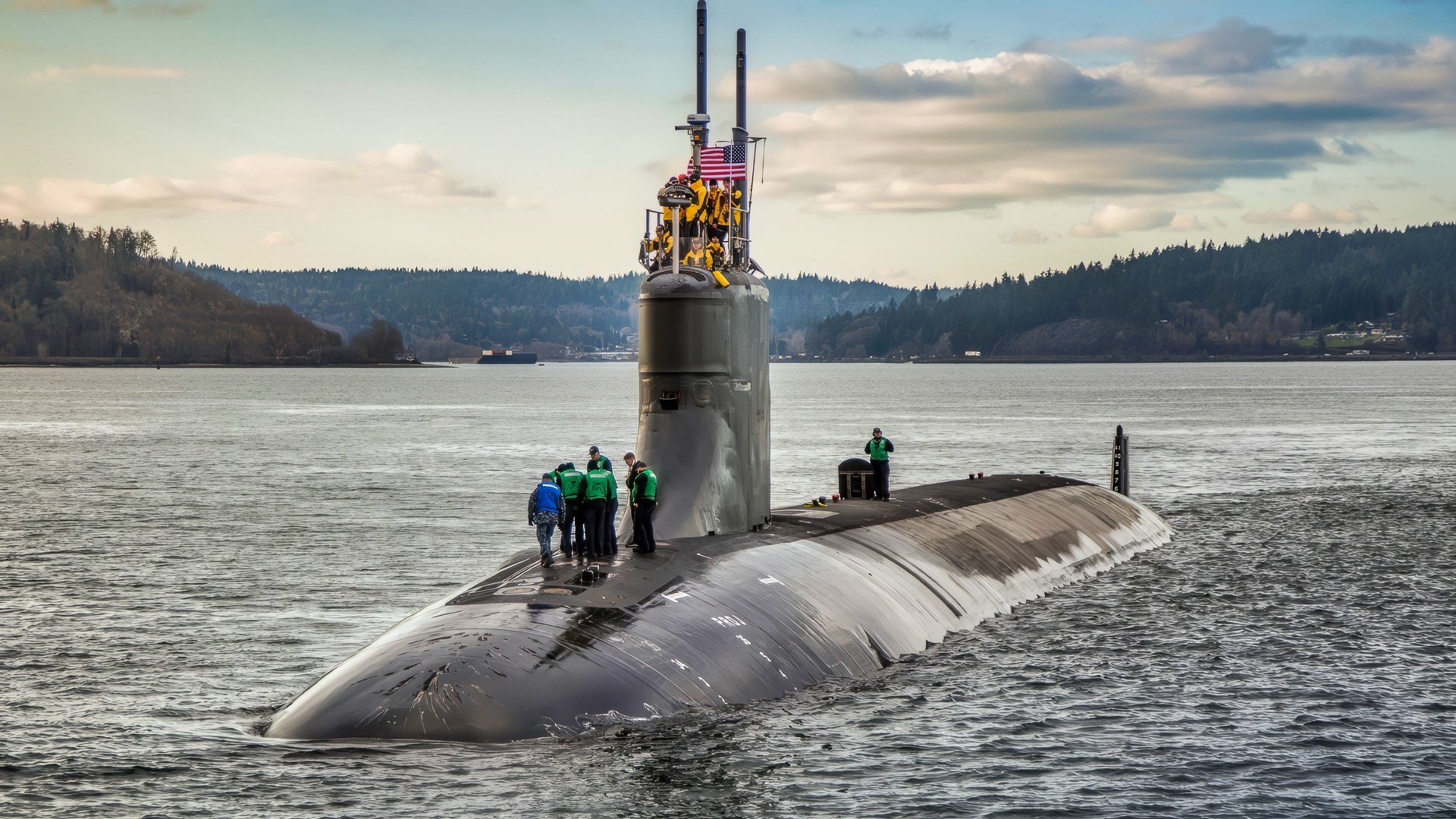
(Dec. 15, 2016) – The Seawolf-class fast-attack submarine USS Connecticut (SSN 22) departs Puget Sound Naval Shipyard for sea trials following a maintenance availability. (U.S. Navy photo by Thiep Van Nguyen II/released)

USS Seawolf (SSN-21) U.S. Navy Submarine. Image Credit: Creative Commons.
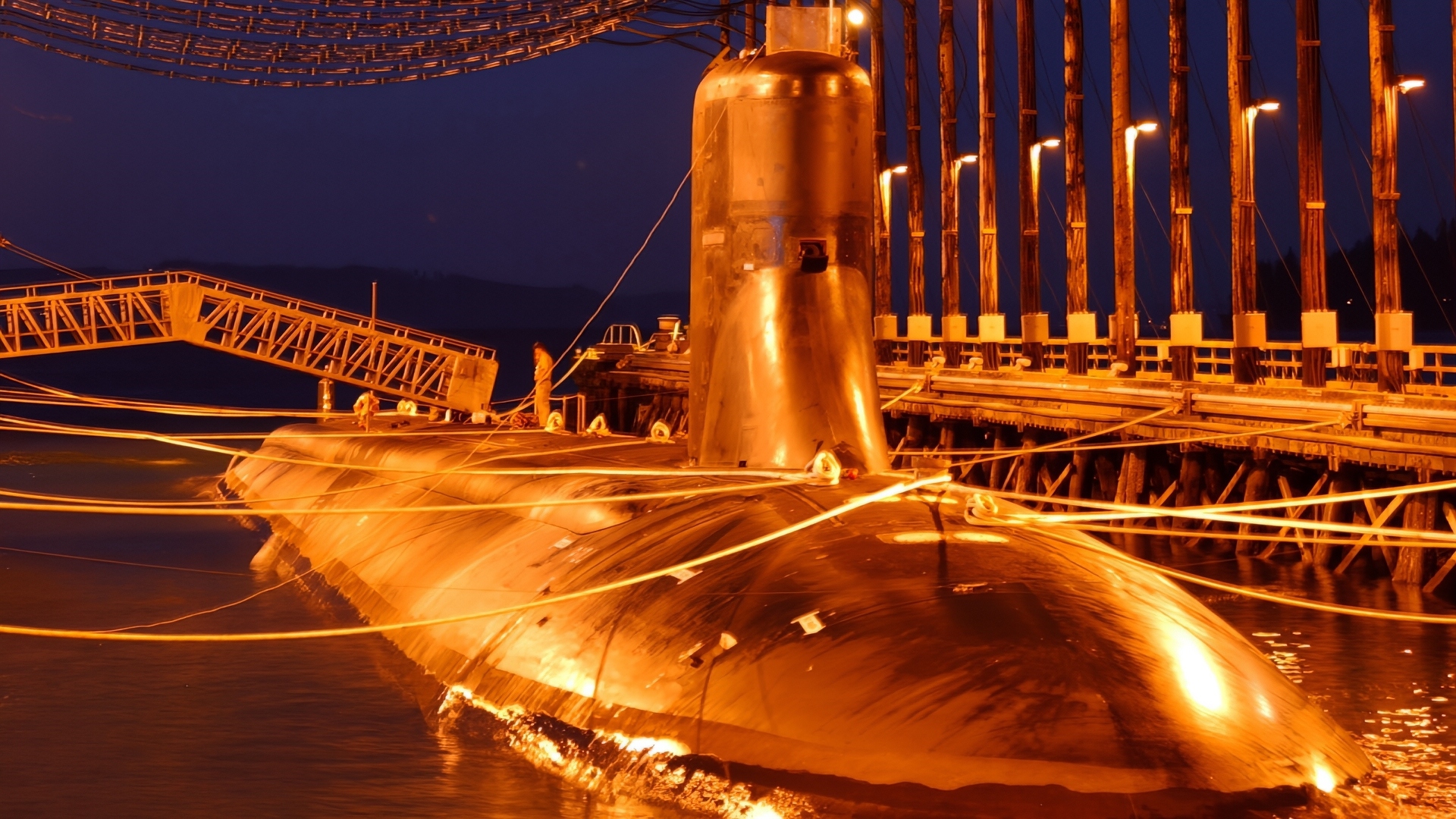
The nuclear-powered attack submarine USS Jimmy Carter (SSN 23) sits moored in the magnetic silencing facility at Naval Base Kitsap Bangor in Silverdale, Wash., on Aug. 16, 2006. The Jimmy Carter is the third and final submarine of the Sea Wolf-class.
(DoD photo by Master Chief Jerry McLain, U.S. Navy. (Released))
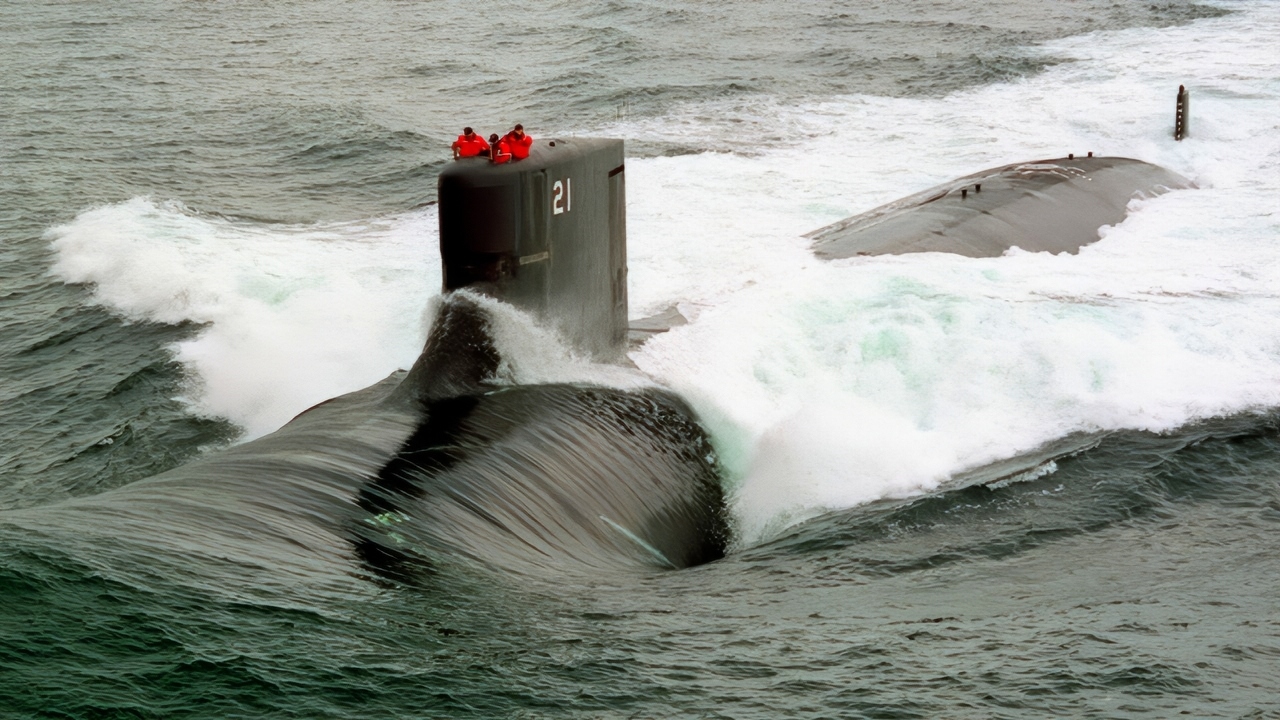
The U.S. Navy attack submarine, USS Seawolf (SSN 21), conducts Bravo sea trials off the coast of Connecticut in preparation for its scheduled commissioning in July 1997. Image Credit: Creative Commons.
That program became the Virginia-class. The defining requirement was cost. The Virginia-class had to deliver Seawolf-comparable capability at roughly half the per-hull price. The original target was approximately $2 billion per boat in then-year dollars — substantially below Seawolf and within the budget envelope the post-Cold War Navy could realistically procure year after year. Per Naval Technology’s profile of the program’s foundational design choices, the class was specifically designed for affordability, with modular construction techniques shared between General Dynamics Electric Boat in Groton, Connecticut, and Huntington Ingalls Industries’ Newport News Shipbuilding facility in Virginia.
The first Virginia-class submarine, USS Virginia (SSN-774), was authorized in 1998 and commissioned in October 2004.
The Design That Worked
The Virginia-class hull form is approximately 377 feet long, with a 34-foot beam, and has a submerged displacement of 7,900 tons for the original Block I-IV configuration. The boats are powered by a single S9G pressurized water reactor producing approximately 40,000 shaft horsepower, driving a pump-jet propulsor rather than a conventional propeller. Top submerged speed is in excess of 25 knots. The reactor core is designed to last the boat’s full 33-year service life without refueling — a substantial improvement over the Los Angeles-class, which required mid-life refuelings, and a major operational advantage over Russian and Chinese submarines that require more frequent reactor servicing.
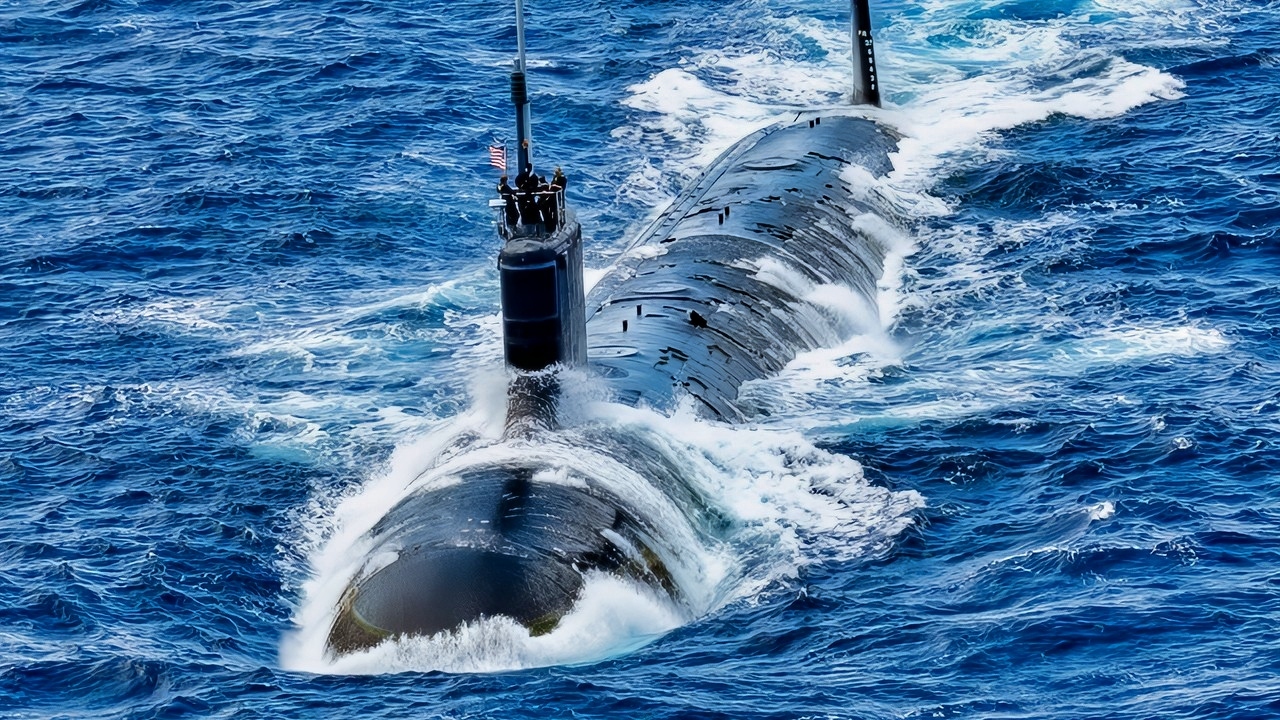
Virginia-class attack submarine USS North Carolina (SSN 777) sails in formation, off the coast of Hawaii during Exercise Rim of the Pacific (RIMPAC) 2024, July 22. Twenty-nine nations, 40 surface ships, three submarines, 14 national land forces, more than 150 aircraft and 25,000 personnel are participating in RIMPAC in and around the Hawaiian Islands, June 27 to Aug. 1. The world’s largest international maritime exercise, RIMPAC provides a unique training opportunity while fostering and sustaining cooperative relationships among participants critical to ensuring the safety of sea lanes and security on the world’s oceans. RIMPAC 2024 is the 29th exercise in the series that began in 1971. (U.S. Navy photo by Mass Communication Specialist 1st Class John Bellino)
The acoustic performance is the Virginia-class’s defining capability. The hull is wrapped in anechoic tiles that mask sonar reflections and dampen radiated noise. Machinery throughout the boat is mounted on flexible isolation systems to prevent vibrations from transmitting into the hull. The pump-jet propulsor eliminates the propeller cavitation noise that defined earlier Cold War submarine signatures. The combined acoustic signature is widely assessed in open-source defense analysis as quieter than that of any other operational submarine on the planet — including the Seawolf-class boats (this is disputed), which were designed specifically for maximum quieting at the height of the Cold War.
The sensor suite centers on the AN/BQQ-10 spherical bow array sonar, the wide-aperture light-array flank sonar, a chin-mounted high-frequency sonar, and the TB-29A and TB-34 towed array systems. The combat management system is the AN/BYG-1 — the same combat system that will power the next-generation SSN-AUKUS boats being built jointly with Britain and Australia.
Conventional periscopes have been eliminated in favor of two non-hull-penetrating Universal Modular Mast photonics systems carrying digital cameras, infrared imaging, and electronic surveillance receivers. Per Military Factory’s technical breakdown of the Virginia-class, the change frees up substantial volume in the boat’s control room and allows the room to be located on a lower deck — a structural innovation that improves crew comfort and operational flexibility.
The crew complement is 135 personnel — substantially more than the 98 sailors that crew the smaller British Astute-class, but smaller than the 142 typical of the Los Angeles-class boats Virginia replaced.

(March 21, 2009) The Los Angeles-class attack submarine USS Hartford (SSN 768) arrives pier side at Mina Salman pier in Bahrain where U.S. Navy engineers and inspection teams will asses and evaluate damage that resulted from a collision with the amphibious transport dock ship USS New Orleans (LPD 18) in the Strait of Hormuz March 20. Overall damage to both ships is being evaluated. The incident remains under investigation. Hartford is deployed to the U.S. 5th fleet area of responsibility to support maritime security operations. (U.S. Navy photo by Cmdr. Jane Campbell/Released)
Block I Through Block IV: Incremental Evolution
The Virginia program was deliberately structured around block-by-block evolutionary upgrades rather than periodic clean-sheet redesigns. Each block introduces specific capability improvements while preserving the structural commonality that keeps unit cost down across the production run.
Per the Congressional Research Service’s most recent Virginia-class program assessment, Block I and Block II — the first ten boats, ordered between fiscal years 1998 and 2008 — established the baseline Virginia design. The boats carried 12 Vertical Launch System tubes for Tomahawk cruise missiles, four 21-inch torpedo tubes for Mk-48 heavyweight torpedoes and Harpoon anti-ship missiles, and the original sonar and combat system suite.
Block III, which began with USS North Dakota (SSN-784) ordered in fiscal year 2009, was the first major redesign of the class. Per National Defense Magazine’s coverage of the Block III architectural changes, the Navy redesigned approximately 20 percent of the ship to reduce acquisition costs. The 12 vertical launch tubes were replaced with two large-diameter 87-inch Virginia Payload Tubes, each capable of launching six Tomahawk cruise missiles using Multiple All-up Round Canisters. The redesign simplified construction, reduced acquisition costs, and gave the boats payload flexibility that the original VLS configuration did not provide — the larger tubes could accommodate future weapons systems that the smaller original tubes could not.
Block IV, ordered between fiscal years 2014 and 2018, focused on operational availability improvements. Per USNI News reporting on the block’s design priorities, the block extended the time between major maintenance cycles, reducing the number of mid-life depot availability periods required across the boat’s service life. Each Block IV submarine is expected to deliver approximately three additional deployments over its service life compared to the earlier blocks — a substantial increase in operational availability per boat.
By the end of Block IV, the Virginia-class had matured into a stable, proven, multi-mission attack submarine that the Navy could produce on a sustained two-per-year cadence and that demonstrated capability against the most demanding submarine operations of the post-Cold War era.
Block V: The VPM Changes Everything
The Block V Virginia-class submarine is fundamentally different from its predecessors. The defining change is the Virginia Payload Module — an 84-foot hull section inserted between the bow and the sail that contains four additional large-diameter vertical payload tubes, each capable of carrying seven Tomahawk cruise missiles.
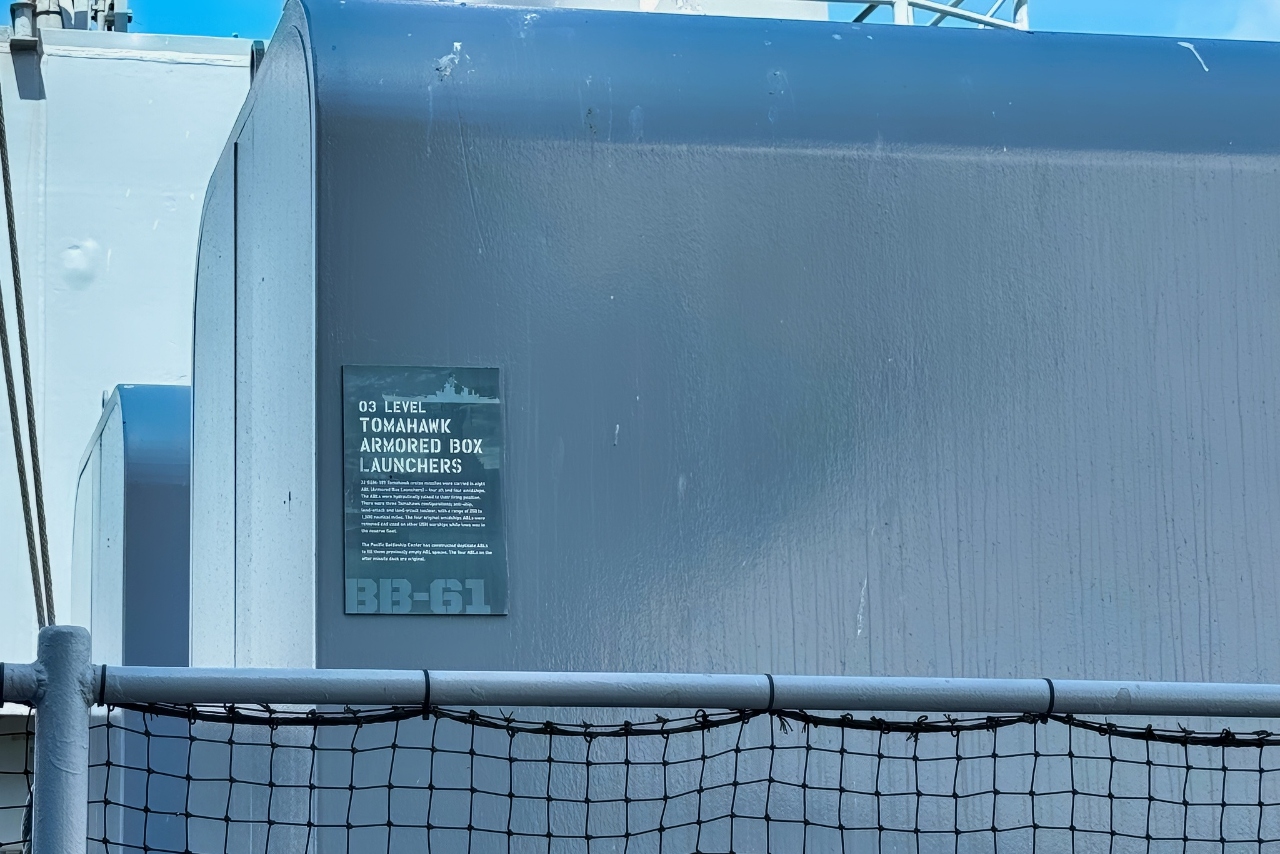
USS Iowa Tomahawk Box. National Security Journal Photo.
The math is straightforward. The original Block I-IV Virginia carries 12 Tomahawks. The Block V adds 28 additional missiles through the VPM. Total Tomahawk loadout per Block V hull: 40 missiles. Per Military Machine’s profile of the Block V configuration, the VPM increases submerged displacement from 7,800 tons in earlier blocks to approximately 10,200 tons, and lengthens the boat from 377 feet to 461 feet.
The VPM exists for one specific reason: to replace the firepower the U.S. Navy is losing as the four Ohio-class guided-missile submarines retire. The Ohio-class SSGNs — USS Ohio, USS Michigan, USS Florida, and USS Georgia — were converted from Trident ballistic missile submarines in the 2000s and each carries 154 Tomahawk cruise missiles. Together, the four boats account for more than half of the U.S. submarine force’s vertical-launch payload capacity. They are scheduled to retire between 2026 and 2028.
The Virginia Payload Module does not provide a one-for-one replacement. A single Block V VPM-equipped Virginia carries 40 Tomahawks. The four retiring Ohio boats collectively carry 616 Tomahawks. To replace that capacity through Block V Virginia’s alone, the Navy would need to field 15 to 16 VPM-equipped boats. The Navy plans to acquire 10 Block V Virginia-class submarines, per Army Recognition’s coverage of the FY2027 30-year shipbuilding plan released May 8, 2026. The mathematics do not close.
Per Breaking Defense’s coverage of the broader submarine industrial base problem, the production gap is being driven by industrial base constraints rather than by program design. The two shipyards that build Virginia-class boats — General Dynamics Electric Boat and HII Newport News — are operating at roughly 1.2 hulls per year combined, well below the Navy’s required 2.33 boats per year. The shortfall stems from skilled labor constraints, supplier base contraction, and the parallel demands of the Columbia-class ballistic missile submarine program, which has priority access to the same workforce.
The VPM tubes are also designed with future weapons in mind. Per Naval News’ technical analysis of the Block V payload architecture, the large diameter accommodates the Conventional Prompt Strike hypersonic missile program — the U.S. Navy’s response to the hypersonic anti-ship and land-attack weapons that China has fielded over the past decade. Where the Tomahawk is a subsonic cruise missile that takes hours to reach distant targets, a hypersonic weapon launched from a Block V VPM could travel 1,500 kilometers in less than 15 minutes. The VPM-equipped Virginia is being designed to carry both the existing Tomahawk inventory for the immediate threat environment and hypersonic strike capability as the new weapons enter the inventory across the late 2020s and into the 2030s.
Block VI And Block VII: Continuing The Evolution
The Virginia program is not stopping at Block V. The Navy’s current 30-year shipbuilding plan calls for the procurement of Block VI and Block VII variants extending production into the early 2040s.
Block VI, which began with the FY2024 procurement, continues the VPM configuration with incremental improvements. Per Defense News reporting on the future Virginia-class development trajectory, the Block VI and Block VII variants are expected to integrate tethered unmanned underwater systems, enhanced acoustic reduction technology, expanded ISR capability, and specialized seabed operations capabilities — the latter responding to growing concerns about Russian and Chinese threats to undersea infrastructure, including transatlantic communications cables.
Block VII, with first procurement now planned for fiscal year 2030 per the May 8, 2026, FY2027 30-year shipbuilding plan, will extend Virginia-class production well into the 2040s. The decision to formalize Block VII procurement reflects the Navy’s growing recognition that the SSN(X) program — once intended to begin production in the mid-2030s — will not be ready when the Virginia-class would otherwise complete its production run.
The implication is significant. The Virginia-class is no longer a bridge platform between the Los Angeles-class and a future clean-sheet successor. The Virginia-class is the long-term mainstay of the American attack submarine force through at least the early 2040s, and possibly substantially beyond.
The SSN(X) Problem
The Navy’s planned successor to the Virginia-class is the SSN(X) — formally the Next-Generation Attack Submarine program. The boat is supposed to combine the speed and payload of the Seawolf-class, the acoustic stealth of the Virginia-class, and the operational availability of the Columbia-class ballistic missile submarine.
Per the Congressional Research Service’s standing assessment of the SSN(X) program, the FY2025 budget submission deferred the envisaged procurement of the first SSN(X) from FY2035 to FY2040 due to limitations on the Navy’s total budget. The Navy’s earlier target had been the first procurement in FY2031. The program has slipped by approximately a decade across the past five budget cycles.
The cost is the structural problem. The Congressional Budget Office estimates each SSN(X) hull at $6.7 billion to $8.0 billion — substantially higher than the $4.3 billion per-hull cost of a Block V Virginia. Per Space Coast Daily’s coverage of the program timeline, at a time when the Navy is struggling to fund the Columbia-class ballistic missile submarine program, the Ford-class aircraft carrier program, the F/A-XX sixth-generation carrier fighter, and the broader fleet recapitalization effort, the SSN(X) does not have a clear funding pathway that the current Pentagon budget can support.

F/A-XX U.S. Navy Fighter. Image Credit: Creative Commons.

F/A-XX U.S. Navy Fighter. Image Credit: Creative Commons.
The technical specifications are also still in flux. The Navy has not finalized the SSN(X) design. Debates continue over reactor fuel type — highly enriched uranium versus low-enriched uranium — and over the trade-offs between size, speed, payload, and acoustic performance. Each unresolved design decision pushes the program further into the future.
The practical effect is that the Virginia-class will remain the U.S. Navy’s primary attack submarine well into the 2040s and possibly into the 2050s. The class, designed as a bridge between Cold War and post-Cold War submarine architectures, will anchor American undersea warfare for half a century.
What The Virginia-Class Actually Means
The admiral’s “Dodge Durango” framing is accurate in a specific way. The Virginia-class was never the most exotic submarine the Navy could have designed. The Seawolf-class was technically superior on most performance metrics. The SSN(X) is supposed to be substantially more advanced than the Virginia when it eventually arrives.
What the Virginia-class is, is the submarine the Navy actually built — in numbers, on a sustainable production cadence, with an architecture flexible enough to absorb six production blocks of incremental improvements without requiring a clean-sheet redesign. The boats are quieter than any submarine they will face. They carry more strike weapons than any previous American attack submarine class. They have absorbed mission sets — special operations, intelligence collection, anti-surface warfare — that previously required dedicated platforms.
The Virginia-class is the platform working. The SSN(X) is the platform that has not yet been built.

NAVAL BASE GUAM (April 23, 2025) – The guided-missile submarine USS Ohio (SSGN 726) transits Apra Harbor, Naval Base Guam, April 23, 2025. Ohio, homeported in Bangor, Washington, and assigned to Submarine Squadron 19, is conducting routine operations in the U.S. 7th Fleet area of operations. U.S. 7th Fleet is the U.S. Navy’s largest forward-deployed numbered fleet and routinely interacts and operates with allies and partners in preserving a free and open Indo-Pacific region. (U.S. Navy photo by Lt. James Caliva)
What worries the U.S. submarine community is not the Virginia design. It is the production rate behind it. Two shipyards producing 1.2 boats per year against a 2.33 boats per year requirement means the U.S. attack submarine force is slowly shrinking in net inventory, even as China is fielding new boats faster than at any point in modern Chinese naval history. The Ohio-class SSGNs are retiring. The Virginia-class is producing slower than needed. The SSN(X) is delayed indefinitely. And the AUKUS commitment requires the United States to sell three to five Virginia-class boats to Australia in the 2030s, further straining a fleet that cannot currently meet its own requirements.
The Virginia-class is the best attack submarine ever built. It is also working at half the speed the United States needs it to. That is the strategic problem the next administration will inherit — and the one that no additional Virginia upgrades will fix on its own.
About the Author: Harry J. Kazianis
Harry J. Kazianis (@Grecianformula) was the former Senior Director of National Security Affairs at the Center for the National Interest (CFTNI), a foreign policy think tank founded by Richard Nixon based in Washington, DC. Harry has over a decade of experience in think tanks and national security publishing. His ideas have been published in the NY Times, The Washington Post, The Wall Street Journal, CNN, and many other outlets worldwide. He has held positions at CSIS, the Heritage Foundation, the University of Nottingham, and several other institutions related to national security research and studies. He is the former Executive Editor of the National Interest and the Diplomat. He holds a Master’s degree focusing on international affairs from Harvard University.


xi-xi-xi
May 21, 2026 at 2:06 pm
Virginia submarines are like the U-boats of ww2. Exactly.
Recall the early part or early phase of the ‘battle of the atlantic’. Amazing.
But later, the predator became the prey.
In the coming ‘battle of the pacific’ and/or possibly ‘battle of the world’ submarines are like the sardines in your local wet market.
So, What’s the top fish.
Spaceplanes, spacebombers, air-spacegliders and FOBS.
Rick B22
May 21, 2026 at 3:19 pm
Why “Dodge Durango” vs. maybe Cadillac Escalade or Acura MDX? Favorite SUV?
securocrat
May 21, 2026 at 4:07 pm
A brief look at world events (after the 17th and 18th European wars of utmost great rivalry) will show that submarines are highly responsible for the bloodiest of bloody genocidal wars in our modern global history.
There’s the famous submarine warfare that brought US into ww1, resulting in the massive graveyards, cemeteries and necropolis fields that still exist today in France.
Then there’s the jap submarine action that preceded the pearl harbor air raid.
Later, axis submarines transported vital war materiel to Tokyo, while US submarines sank transport ships carrying prisoners to jap labor camps.
Today, submarines prowl the Indian and Pacific oceans, hoping to spark the outbreak of the next world war.
What did former submarine commander Scott swift told highly impressionable Australians in 2017.
I would launch my nuclear missiles immediately upon receiving the president’s order.
Who cares if he was high on drugs.
The civilized world needs to ban or limit submarines. ASAP.