

Key Points and Summary – USS Abraham Lincoln (CVN-72) is a Nimitz-class, nuclear-powered carrier homeported in San Diego and flagship of Carrier Strike Group 3.
-Commissioned in 1989, “The Abe” fields ~90 aircraft, twin A4W reactors, and layered defenses (CIWS, RAM, ESSM) for sustained power projection.
-Its record spans Desert Storm, Restore Hope, post-9/11 operations, and Operation Iraqi Freedom—plus major HA/DR in 2004’s tsunami relief. Recently, Lincoln surged to the Middle East to deter Iran and conduct strikes against Houthi targets.
-With decades of combat and humanitarian missions, CVN 72 remains a frontline Pacific Fleet asset and a symbol of U.S. naval reach.
USS Abraham Lincoln, CVN-72: A Historic Aircraft Carrier
The USS Abraham Lincoln (CVN-72) is a Nimitz-class, nuclear-powered aircraft carrier that serves as the flagship for Carrier Strike Group 3 and is part of the US Pacific Fleet, homeported in San Diego, CA.
Commissioned in 1989, the 1,092-foot vessel is designed for sustained power projection, maritime security, and disaster response.
Named after the 16th president of the United States, it is the second naval vessel named after President Lincoln.
The Abe has a homeport of NAS North Island, San Diego, California; she is a member of the United States Pacific Fleet. She is administratively responsible to Commander, Naval Air Forces Pacific, and operationally serves as the flagship of Carrier Strike Group 3 and host to Carrier Air Wing Nine.
Meet “The Abe” CVN-72
The USS Abraham Lincoln (CVN-72) is a Nimitz-class nuclear-powered aircraft carrier with a length of 1,092 feet, a beam of 252 feet, a displacement of about 100,000 tons, and a speed of over 30 knots.
Its propulsion comes from two Westinghouse A4W nuclear reactors, providing virtually unlimited range.
The carrier’s crew consists of approximately 3,200 personnel, and it can accommodate around 90 aircraft.
Its armament includes Phalanx CIWS, Rolling Airframe Missile (RAM) launchers, and Evolved Sea Sparrow Missile (ESSM) launchers.
A Humanitarian Mission Delayed Combat
The Lincoln was commissioned in 1989, and her first cruise was around the tip of South America after leaving the naval base at Norfolk, VA.
The Abe was initially slated to take part in Desert Storm in 1991. However, she was diverted instead to support evacuation operations following the eruption of Mount Pinatubo on Luzon Island, Republic of the Philippines.
Operation Fiery Vigil was the largest recorded peacetime evacuation of active-duty military personnel and their family members. Lincoln led a 23-ship rescue fleet that moved nearly 45,000 people from Subic Bay Naval Station to the Visayas Province port of Cebu.
The ship eventually arrived in the Arabian Gulf, where Carrier Air Wing (CVW) 11, the embarked air wing, provided combat air patrol, reconnaissance, and support for air operations over Kuwait and Iraq in Operation Desert Storm for three months.
In 1993, the Lincoln was ordered to the coast of Somalia to assist UN humanitarian operations. For four weeks, Abraham Lincoln flew air patrols over Mogadishu in support of Operation Restore Hope.
First Female Fighter Pilot In The Pacific Fleet
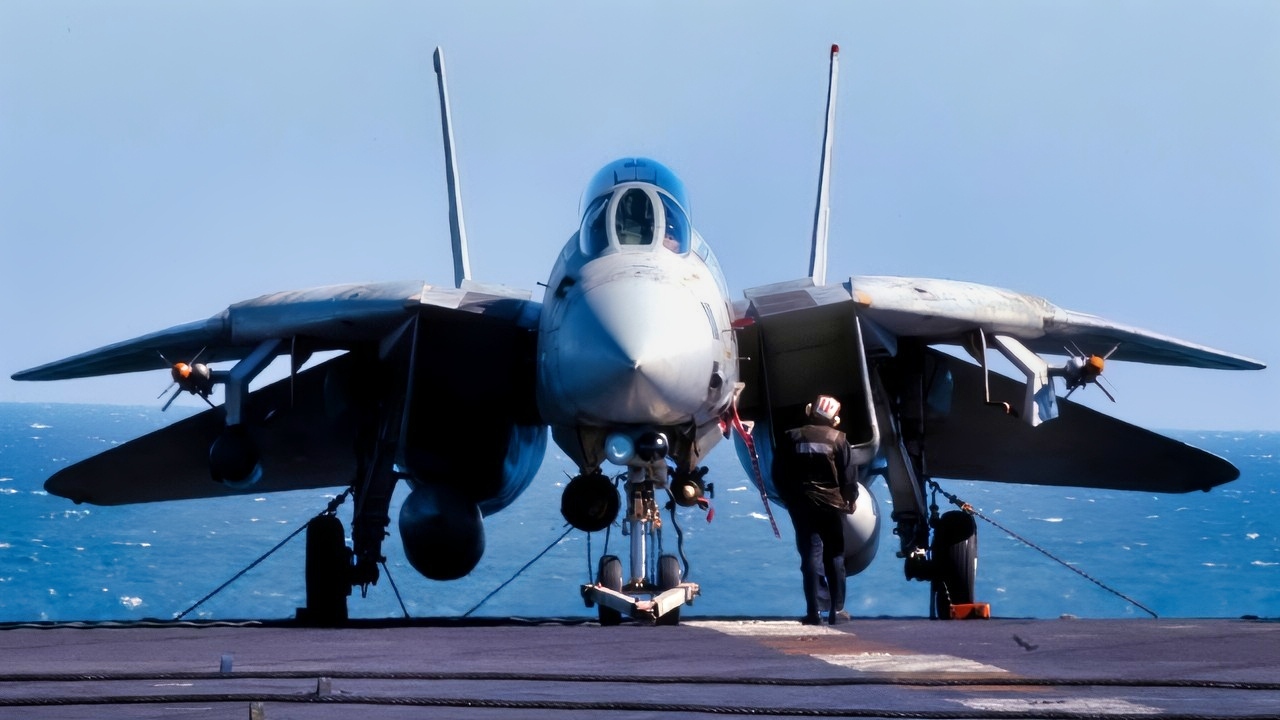
In April 1993, when the Combat Exclusion Laws were rescinded, the Lincoln received the first female fighter pilot in the Pacific Fleet. A year and a half later, Lieutenant Kara Spears Hultgreen, the first female F-14 Tomcat pilot, died when her plane crashed into the sea.
Her Tomcat suffered a compressor stall during her final approach, losing power to one of the engines. She aborted the landing to the best of her ability in an effort to prevent a collision with the aft end of the ship, and the plane inverted and went into the ocean.
Radar intercept officer Lieutenant Matthew Klemish ejected safely from the plane and was rescued from the water minutes later. Hultgreen, who was automatically ejected 0.4 seconds after Klemish, rocketed straight into the ocean and was instantly killed.
Her body, still strapped in the ejection seat, was recovered 19 days later.
Operation Enduring Freedom
After the terrorist attacks of 9/11, the USS Abraham Lincoln, which was in port at the time, was later sent to the Persian Gulf to take part in the air operations.
A year later, the Lincoln’s deployment was extended from January to May 2003 to participate in Operation Iraqi Freedom. The message to extend the crew’s deployment was given by then Battle Group Commander Rear Admiral Kelly, with the phrase, “We don’t need to be home holding our loved ones, we need to be here holding the line. Get over it!”
“Get over it” became a running joke aboard ship, which eventually led to a deployment patch made aboard that read “Westpac 2003 CVN-72 CVW-14 GET OVER IT”, with an image intended to depict an admiral kicking a sailor in the crotch.
That deployment concluded with a visit by President Bush, during which the crew hoisted the now-infamous banner that read, “Mission Accomplished.”
While the US and coalition partners cut through Saddam Hussein’s Iraqi military like a knife through butter, no one knew that the war would enter an insurgent phase that would stretch decades and cost thousands of lives, and allow Iran to exert influence in Iraq that stretches to today.
During air operations of Operation Iraqi Freedom, the Lincoln flew approximately 16,500 sorties, dropping 1.6 million pounds of ordnance.
Sea Control Squadron 35 (VS-35), the “Blue Wolves”, was instrumental in delivering over 1,000,000 pounds (450,000 kg) of fuel to these strike aircraft, one of the largest aerial refueling undertakings by a carrier aviation squadron in history.
Operation Unified Assistance
The Abraham Lincoln was in port in Hong Kong in 2004, when a massive 9.0 earthquake and tsunami struck southern Asia the day after Christmas. The Abe joined the international relief and search and rescue efforts off Indonesia.
The carrier delivered 5,929,000 pounds (2,689,000 kg) of relief and humanitarian supplies, including 2,915,500 pounds (1,322,400 kg) of food and 748,410 pounds (339,470 kilograms) of medical supplies, during Operation Unified Assistance.
Carrier Strike Group Three received the Humanitarian Service Medal in recognition of its humanitarian assistance/disaster response (HA/DR) efforts during the relief mission.
Operations Against the Houthis
In early August of 2024, the Lincoln was ordered to relieve the USS Theodore Roosevelt operating in the Gulf of Oman, joining other US naval forces in the region as a deterrent against potential Iranian aggression against Israel.
In mid-August, the US Central Command announced that the vessel had arrived in the Middle East.
Austin had ordered her to speed up to help Israel in case of a potential attack from Iran.
However, after Iranian proxy Houthi rebels in Yemen continued attacks on shipping in the Gulf, including drone attacks on US warships, the Lincoln began conducting air strikes against Houthi targets.
About the Author: Steve Balestrieri
Steve Balestrieri is a National Security Columnist. He served as a US Army Special Forces NCO and Warrant Officer. In addition to writing on defense, he covers the NFL for PatsFans.com and is a member of the Pro Football Writers of America (PFWA). His work was regularly featured in many military publications.
More Military
The F-35A Stealth Fighter Is Also a Stealth Bomber
Mach 2.65 F-111 ‘Aardvark’ Strike Fighter Has a Message for the U.S. Military
Russia’s MiG-29 Fulcrum Fighter Has a Message for NATO
The X-40A Space Plane Has a Message for the U.S. Military
The Mach 6.7 X-15 Space Plane Has a Message for the U.S. Air Force


Pingback: The Audacity of Iran To Park Its Country 500 Miles From a US Warship – WebInvestigator.KK.org – by F. Kaskais