

Gulf allies are worried that President Donald Trump may pull back troops from the Middle East after the war with Iran, following months of missile and drone attacks.
Government officials in the Gulf are increasingly concerned about the prospect, NBC News reported Tuesday, citing sources including a U.S. official, a former U.S. official, and two others familiar with the situation.
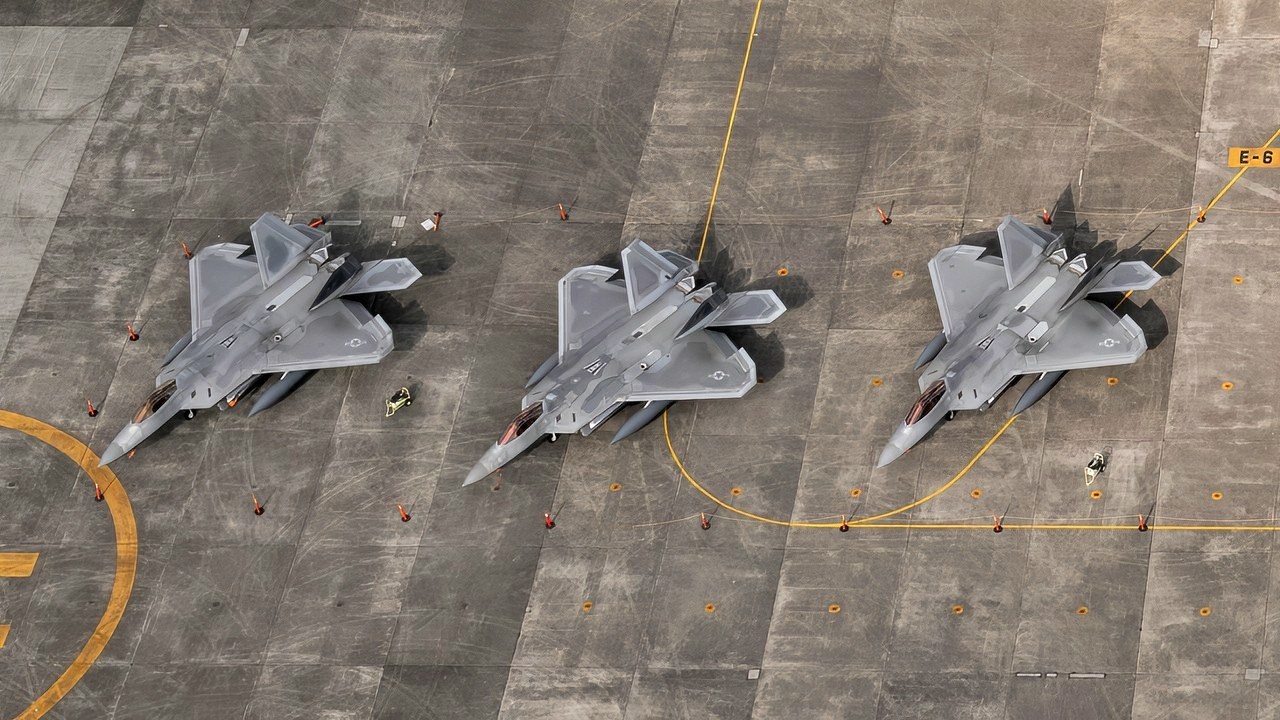
Eight U.S. Air Force F-22 Raptors from Joint Base Elmendorf-Richardson, Alaska, sit on the flightline, July 9, 2018, at Yokota Air Base, Japan. Eight F-22s evacuated from Kadena Air Base, Japan due to Typhoon Maria. The F-22 are deployed under U.S. PACOM’s theater security package (TSP) program, which has been in operation since 2004. (U.S. Air Force photo by Yasuo Osakabe)
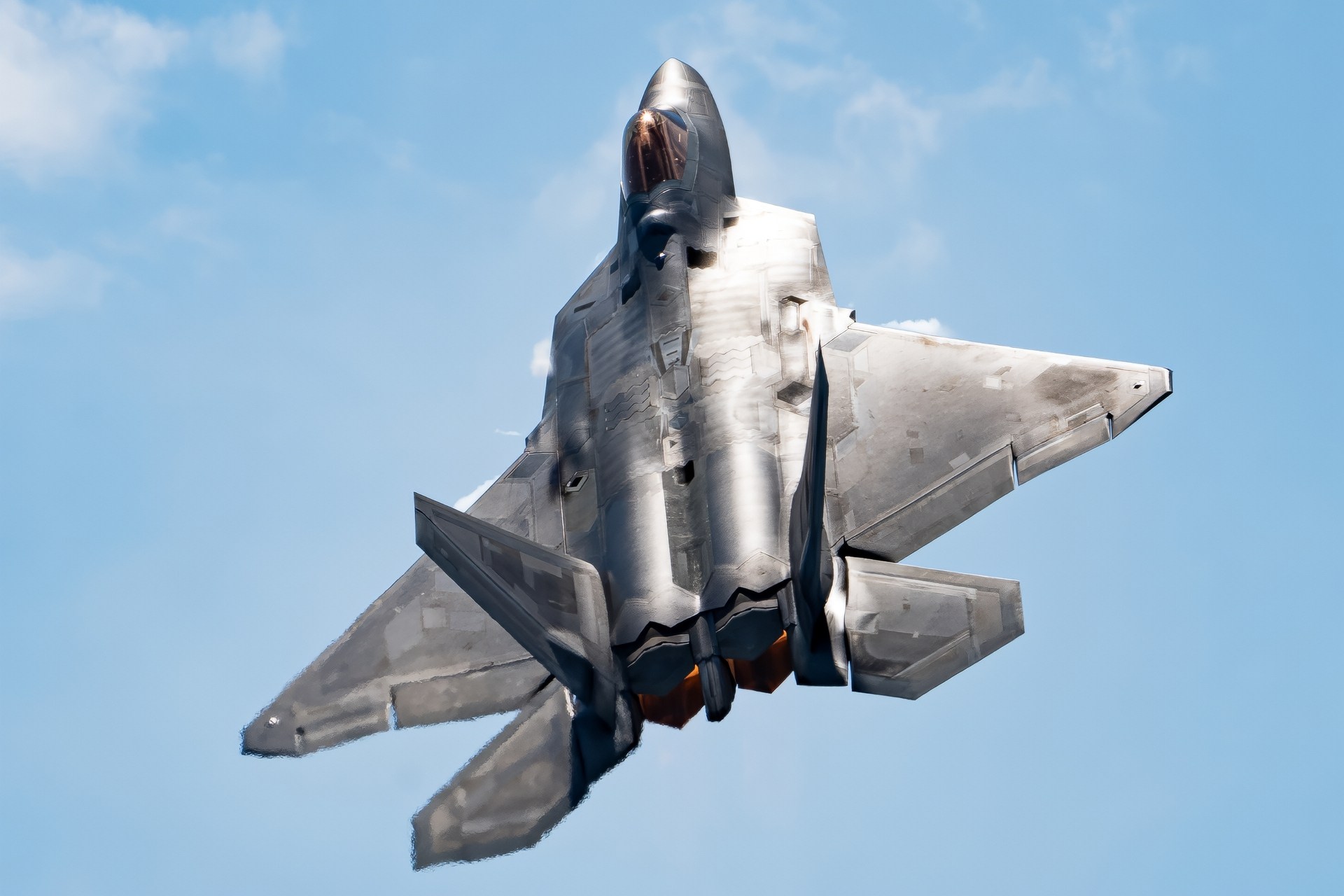
Maj. Joshua “Cabo” Gunderson, F-22 Raptor Demo Team commander and pilot, maneuvers into a climb after a tactical-pitch at the Cold Lake Air Show July 17, 2022, at Cold Lake, Alberta, Canada. The F-22 Raptor’s two Pratt and Whitney F119 Turbofan engines bring a combined 70,000 pounds of thrust in combination with two-dimensional thrust vectoring to enable maximum maneuverability for the multi-role air-to-air stealth fighter. (U.S. Air Force photo by Tech. Sgt. Don Hudson)
This comes as Trump weighs launching a new attack against Iran, while commanders are pulling people away from vulnerable bases.
Why is the Pentagon Reconsidering Presence in the Region?
While officials are considering pulling out of damaged facilities or moving people further away from Iran, there are currently no plans for a permanent troop reduction, the Washington Post reported in August.
Typically, around 40,000 troops are stationed across almost 20 locations in the region. Bahrain, where the Fifth Fleet is based, suffered extensive damage to the main U.S. naval base to the tune of $400 million or more, according to a report by the Congressional Research Service.
Gulf Leaders Express Concerns
“Trump started this war,” one unnamed Gulf official told the Washington Post in August, adding, “and we are paying the price.”
U.S. envoy Tom Barrack said little to console Gulf states during his speech at the Global Security Forum in Doha last week.
“The bargain is not to control, but to not leave. We’re not leaving… Everybody is saying: OK, I can’t rely on America to solve all my problems,” Barrack said.
But he added: “We are not going anywhere,” according to Arab News.
U.S. Central Command has also been careful with its comments. Spokesman Capt. Tim Hawkins told CBS News: “We regularly move U.S. service members and assets to optimize mission readiness.”
The comments refer to short-term movement.
CENTCOM commander Adm. Brad Cooper stressed earlier this month: “The U.S. military remains intensely focused on this mission,” referring to the naval blockade against Iran.
However, U.S. forces could carry out large-scale attacks against Iran within 96 hours of Trump’s approval, CNN reported on Monday.
“It will be a big effort,” another U.S. official said.
Houthis Continue to Threaten Saudi Arabia
Saudi Arabia is facing increased threats from the Houthi terror proxy, backed by Iran, which has attacked many airports and oil facilities.
The State Department told non-essential U.S. government personnel and their families to leave Saudi Arabia on October 21. However, State Department spokesman Tommy Pigott clarified that the decision applied only to “non-essential U.S. government employees and their family members in Saudi Arabia only,” according to CBS News.
U.S. embassies in Jordan, Lebanon, Qatar, and the UAE have also seen staff cuts; however, the Associated Press said there were no compulsory evacuation orders.
Two people were killed during the attack when debris fell from an intercepted drone near the Shaybah oil field.
Civilian airports have also been hit, causing disruption.
The internationally recognized government of Yemen is calling for more international help.
“We are fighting on behalf of everyone, because the threat and risk of the Houthis will expand,” Yemen’s Foreign Ministry adviser Marwan Ali Noman told CBS News.
Could Gulf Powers Go It Alone?
Saudi Defense Minister Prince Khalid bin Salman traveled to Tehran on October 26 to meet Turkish and Pakistani officials in an attempt to avoid a new onslaught of attacks.
The Saudi Foreign Ministry said it was interested in “opening channels of negotiation to prevent a return to military escalation in the region”. It noted that Qatar and Pakistan are acting as mediators.
Oman’s foreign minister, Badr Albusaidi, went further, saying a regional agreement should involve Iran and Iraq, as well as the six Gulf Cooperation Council nations.
“A Non-Aggression Pact between all eight states should be the goal,” he said in a speech at the University of Cambridge, according to Gulf News.
At a four-way meeting on Tuesday, with delegations from Saudi Arabia, Turkey, Pakistan, and Iran, Iranian security chief Mohsen Rezaei said, “We concluded that West Asia’s security must be based on the countries of the region, and any external interference must be prevented.”
Rezaei told left-leaning outlet Drop Site News last week that the regime could attack data centers, undersea internet cables, and Gulf energy installations if U.S. and Israeli strikes resume.
About the Author: Georgia Gilholy
Georgia Gilholy is a journalist based in the United Kingdom who has been published in Newsweek, The Times of Israel, and the Spectator. Gilholy writes about international politics, culture, and education.


