

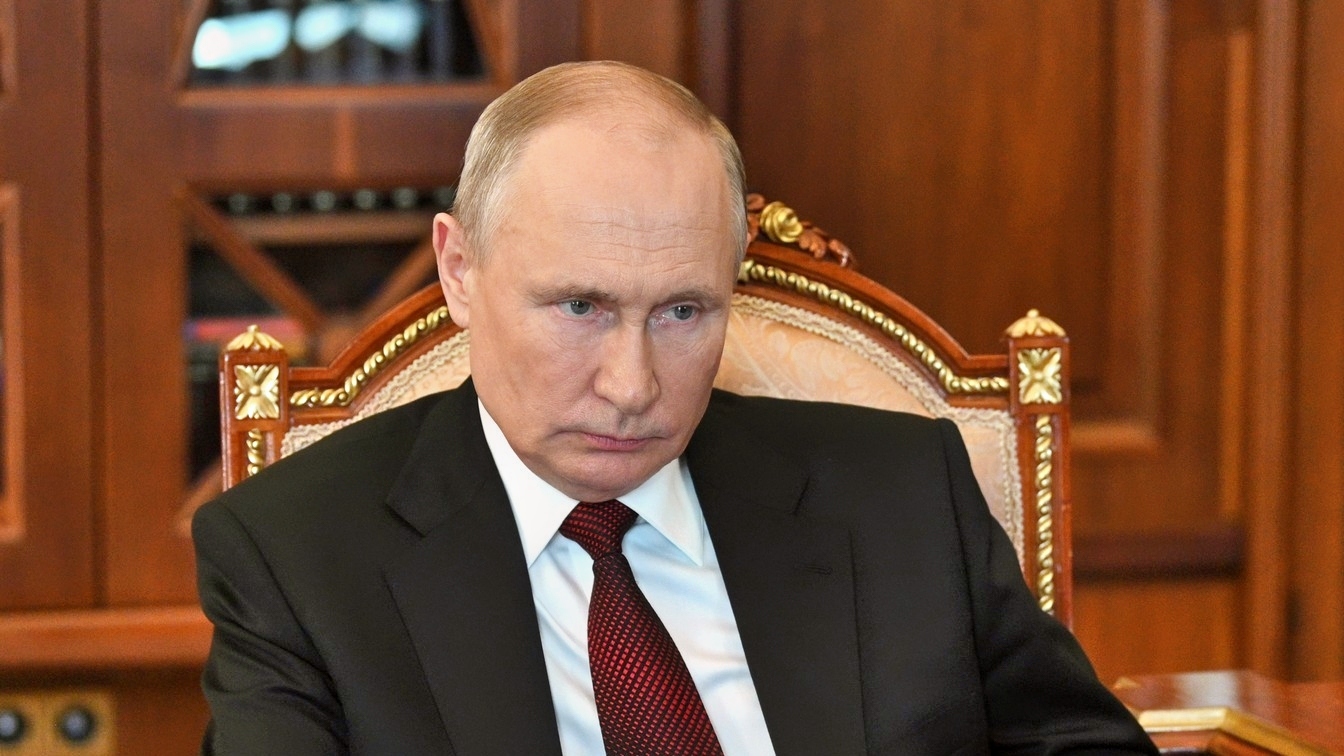
Running Out of Money, Options Russia’s Putin is Risking an Internal Revolt If He Enacts Forced Conscription – Multiple news outlets are reporting that Russian President Vladimir Putin is facing a difficult next two months. The most politically dangerous move for him, say, numerous experts, is how he decides to address his need for addressesower.
His decision may or may not reverberate negatively with the population at large – potentially producing an open revolt and creating political conflict in some of Russia’s regions, as well as in Moscow itself.
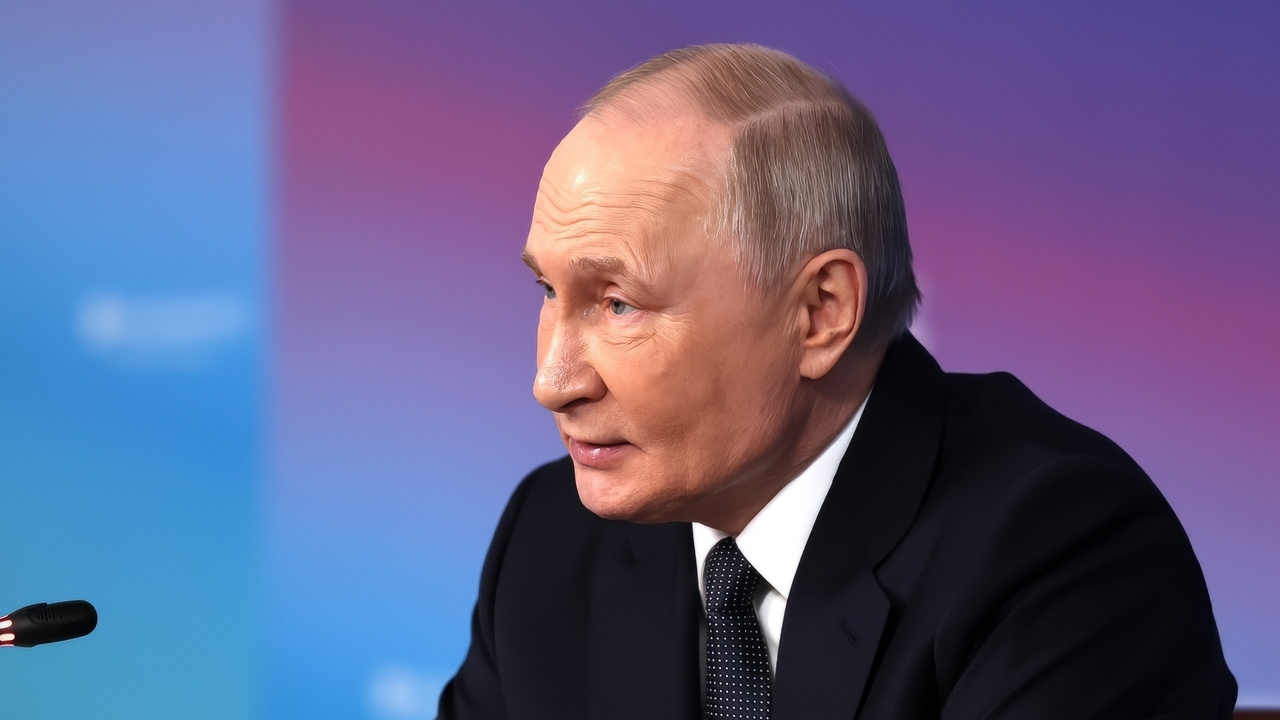
Vladimir Putin in Murmansk (2025-03-27). Image Credit: Creative Commons.
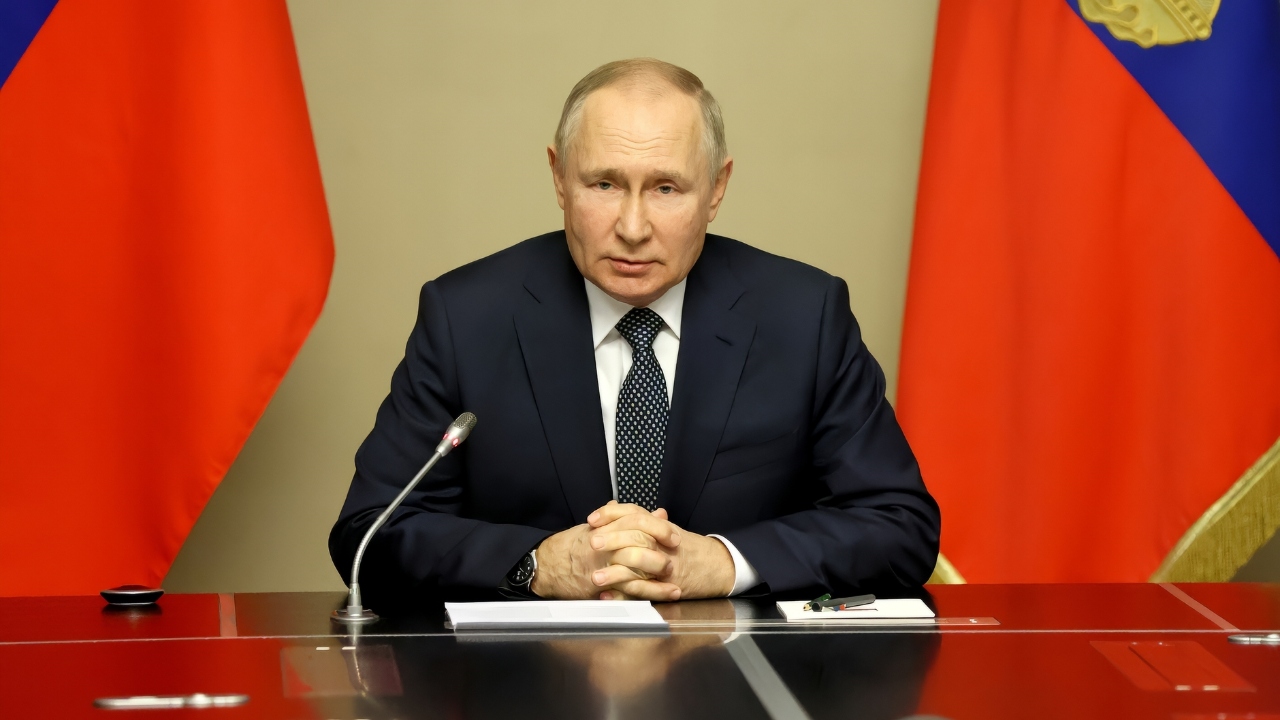
Putin November 2022. Image Credit: Creative Commons.
The story begins with Ukrainian President Volodymyr Zelenskiy telling Western news agencies this past weekend that Putin is likely to follow through on what has been rumored for weeks now. According to his sources, the former KGB Lt. Col., who now rules Russia, is set to mobilize another 300,000 troops later this year. That call-up could be followed by a second wave of another 200,000 next year, in 2027.
Zelenskiy, whose remarks were only released on Sunday, has stated that these troops will be thrown into the breach in those regions Putin has vowed to completely occupy by the end of this year. According to the Ukrainian leader, 300,000 troops will be newly mobilized to bolster the field, as many units have suffered tremendous losses in recent months.
Once they have been introduced into the ranks of the Russian army, these troops will either be used in an offensive effort to take the “fortress belt” cities in the Donetsk Oblast. Alternatively, they could be used in a push against Ukraine’s northern border. Putin, he says, is determined to capture these coveted regions by the end of the year, but barring some dramatic reversal of the situation on the front lines, there appears to be no formula for Russia’s military being able to do so.
More Help From Kim
One of the other sources of more manpower is now coming from Kim Jong Un, the supreme leader of the Democratic People’s Republic of Korea (DPRK). Reports earlier this month are that up to 50,000 more troops will be dispatched to the Ukraine theatre by Kim.
Major General Vadym Skibitskiy, Deputy Head of the Ukrainian Defense Intelligence Service (HUR), had stated two days before Zelenskiy’s remarks were reported that 8500 of the predicted 50,000 are already in Russia. According to Skibitskiy, these DPRK troops already deployed are mostly located in Russia’s Kursk region. They include a thousand engineers and demining specialists, plus 400 drone operators.
Despite assistance from his North Korean allies and regardless of how many troops Putin can mobilize from inside Russia, Zelensky predicted that Moscow would nonetheless end this year occupying the same total square miles of Ukrainian territory as it controlled at the beginning of the year.
Moscow’s manpower losses have been horrific, the Ukrainian president noted. “Russia has lost 267,000 personnel since the start of the year, including around 155,000 killed to date,” Zelensky stated. How and where Putin intends to deploy the troops he is planning to mobilize is not known, but he believes Putin will “deploy the 300,000 newly mobilized troops depending on the situation in the east of our country.”
What Happens Next
What makes this mobilization different from previous efforts to recruit more soldiers is that, thus far, Russia’s military has relied on volunteers who have signed contracts and received salaries well above the average wage in today’s Russia.
But according to reports for months now, the budgets that the regional administrations have been drawing on to pay those salaries, enlistment bonuses, and death benefits in the cases of soldiers killed in action are largely depleted.
With no funds available to pay new enlistees, this call-up would essentially be a massive draft, pulling in as many personnel as possible from the peripheral regions. It would also take place after Russia’s September parliamentary elections so that any negative publicity or resentment over forced conscriptions would not be expressed in the polls.
“We are confident that following the elections, they will carry out a mobilization. We believe this will not take place in the major cities,” Zelensky said. However, he does not see that all of this new manpower will have a measurable impact on the battlefield.
“They’ll lose all 300,000 of these newly mobilized Russians there; we’ll wipe them out,” Zelensky asserted.
Putin is, however, apparently worried enough about the public backlash from so many more men being sent into battle zones where the casualty rates are extremely high.
The Washington, DC-based think tank, the Institute for the Study of War (ISW), reports that plans have been made for Russia’s National Guard, known as Rosgvardia, to expand its powers under civil-defense laws covering undefined “dangers” that could emerge during mobilization, martial law, and wartime.
“The Kremlin appears to be setting conditions for potential mobilization and is preparing for possible civil unrest in Russia resulting from [that] mobilization,” reads an ISW report from last month.
The think tank also projects that these preparations would not only support this formal, mass mobilization but also the imposition of martial law, as another call-up will be highly unpopular.
About the Author: Reuben F. Johnson
Reuben F. Johnson has thirty-six years of experience analyzing and reporting on foreign weapons systems, defense technologies, and international arms export policy. Johnson is the Director of Research at the Casimir Pulaski Foundation. He is also a survivor of the Russian invasion of Ukraine in February 2022. He worked for years in the American defense industry as a foreign technology analyst and later as a consultant for the U.S. Department of Defense, the Departments of the Navy and Air Force, and the governments of the United Kingdom and Australia. In 2022-2023, he won two awards in a row for his defense reporting. He holds a bachelor’s degree from DePauw University and a master’s degree from Miami University in Ohio, specializing in Soviet and Russian studies. He lives in Warsaw.


