
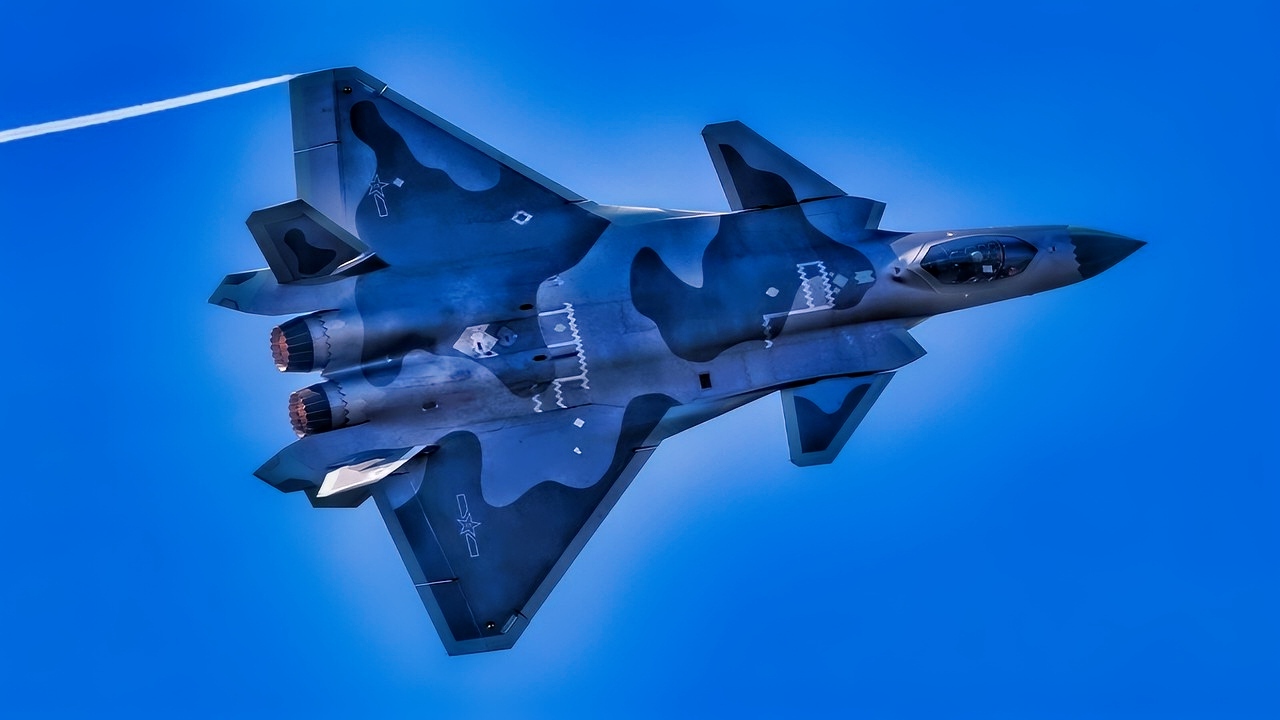
PUBLISHED on August 12, 2025, 3:37 PM EDT – Key Points and Summary – China is rapidly scaling production of its J-20 “Mighty Dragon” stealth fighter, aiming for a fleet of over 1,000 jets by the 2030s.
-This impressive manufacturing feat, with a current rate exceeding 100 airframes per year, is made possible by a “pulsating assembly line” system.
China J-20 Fighter X Screenshot.
-This innovative process, refined over decades in China’s commercial and military sectors, enables the simultaneous construction of multiple jets in batches, thereby significantly reducing downtime and accelerating production.
-This industrial might, as much as the jet’s technology, represents a formidable challenge to Western air superiority in the Indo-Pacific.
How China Is Rapidly Scaling J-20 Production
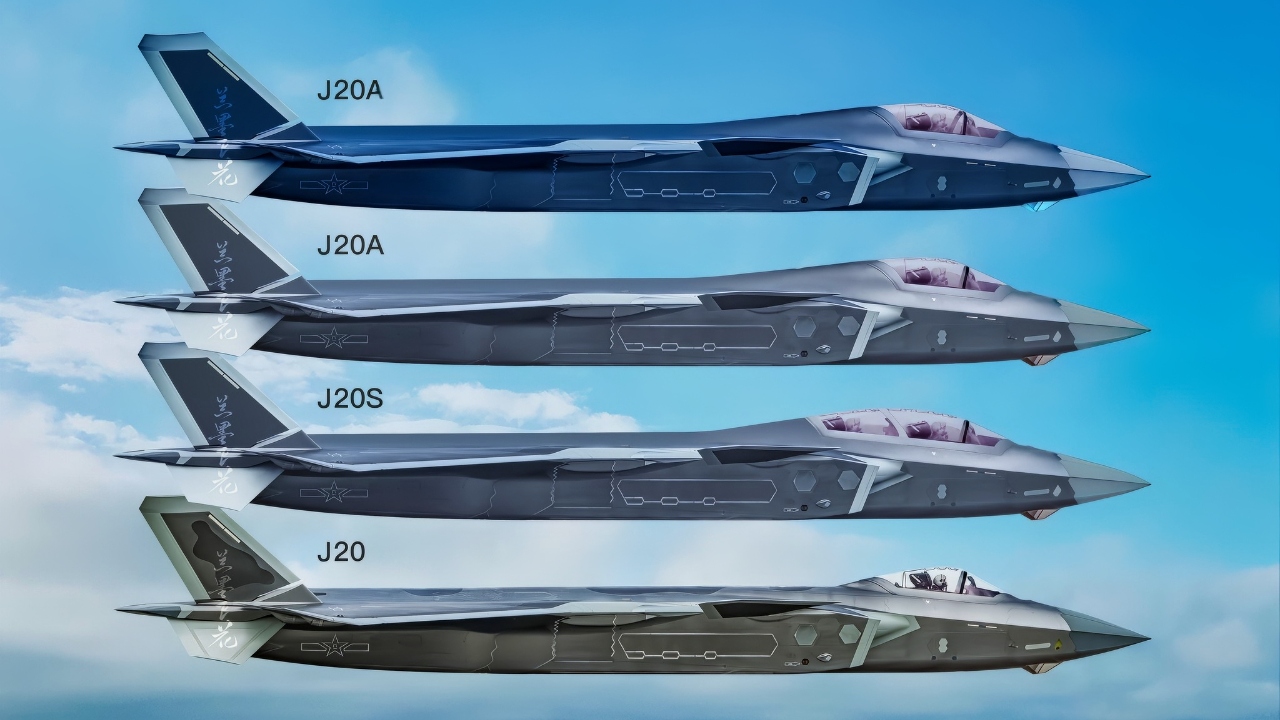
China’s fifth-generation air superiority fighter, the Chengdu J-20 Mighty Dragon, first entered service in March 2017. It was developed in record time and has become one of the most notable Chinese military developments in recent years.
Since its introduction less than a decade ago, the People’s Liberation Army Air Force (PLAAF) has fielded well over 200 J-20s, organized across a dozen combat brigades. Production continues to this day, at a rate exceeding 100 airframes per year.
That rapid fielding tells us that the J-20 matters to China, but it’s not just the stealth, sensors, and weapons that make this jet consequential – it’s the scale at which Beijing is producing them, and the reach they’re giving China’s air force in the Indo-Pacific and beyond.
How China Is Scaling J-20 Fighter Production Quickly
With production already scaling rapidly, the PLAAF is reportedly setting its sights on a fleet of well over 1,000 J-20s by the 2030s. Already fielding hundreds of the aircraft, China’s air force benefits from a new “pulsating assembly line” approach to manufacturing. It’s a system whereby jets are moved through different workstations in batches, rather than building one jet from start to finish in one part of a manufacturing facility.
In a typical assembly line, an aircraft in the process of being manufactured is slowly moved along the production line, much like a car is built. In a pulsating system, however, multiple jets are produced simultaneously, moving from one stage to the next in batches.
When each batch of jets completes one part of the process, they “pulse” forward together for the next round of tasks.
The process speeds up manufacturing by reducing downtime, allowing workers to focus on one stage for multiple aircraft at once. Additionally, the process keeps tools and equipment in constant use, rather than sitting idle.
In China’s case, it means that multiple J-20s can progress through the build process simultaneously.
In 2022, details of China’s new manufacturing processes were revealed when the South China Morning Post reported on new “world-class” pulsating production lines developed to hasten the delivery of the country’s newest fighter jets.
The report described how the pulsating assembly process is utilized only after major components have already been constructed, and how Chinese manufacturing facilities have long employed it, both for their extensive and still-growing commercial manufacturing operations and for military and civilian aircraft.
It’s an art the Chinese have honed for decades – and it’s a skill that military insiders say is helping Beijing respond to the United States’ “increasing deployment of its dominant air-superiority aircraft, the F-22, and another fifth-generation stealth jet fighter, the F-35, to the region.”
China does not yet field more fifth-generation fighters than the United States overall, but with its rapidly growing production scale and plans to field more than 1,000 J-20s within the next decade, the race is on for the United States and NATO.
About the Author:
Jack Buckby is a British author, counter-extremism researcher, and journalist based in New York. Reporting on the U.K., Europe, and the U.S., he works to analyze and understand left-wing and right-wing radicalization, and reports on Western governments’ approaches to the pressing issues of today. His books and research papers explore these themes and propose pragmatic solutions to our increasingly polarized society. His latest book is The Truth Teller: RFK Jr. and the Case for a Post-Partisan Presidency.
More Military
America Almost Had to Invade Japan


PseudoExpertent
August 12, 2025 at 4:51 pm
The j-20 is just a small part in china’s arsenal of today to fight or fend off the coming death lunge by the dreaded 21st century genghis.
Still, the jet, in particular the two-seat j-20 is vital despite its small numbers.
The dreaded genghis has implemented or relocated its most fearsome missiles to china’s front doorstep with recent dark eagle (LRHW) units to Australia and its Typhon system to northern Philippines.
The idea is to smash and destroy china’s A2AD defense, and allow the Pacific forces to break down the front door.
But the genghis, in his full furiousness to apply war and aggression has forgotten china now has powerful EYES in the sky.
What’s that.
China in anticipation of the coming war, has launched big satellites like the ludi tance series and the yaogan birds and the jilin observation satellites.
Many of the satellites or birds provide a permanent 24/7 (nite & day) view of the asia-pacific region, watching the genghis as he places and deploys his fearsome attack arsenal at the front doorstep.
From aircraft carriers to spyplanes to missiles and troop deployments, nothing can be hidden. Today.