

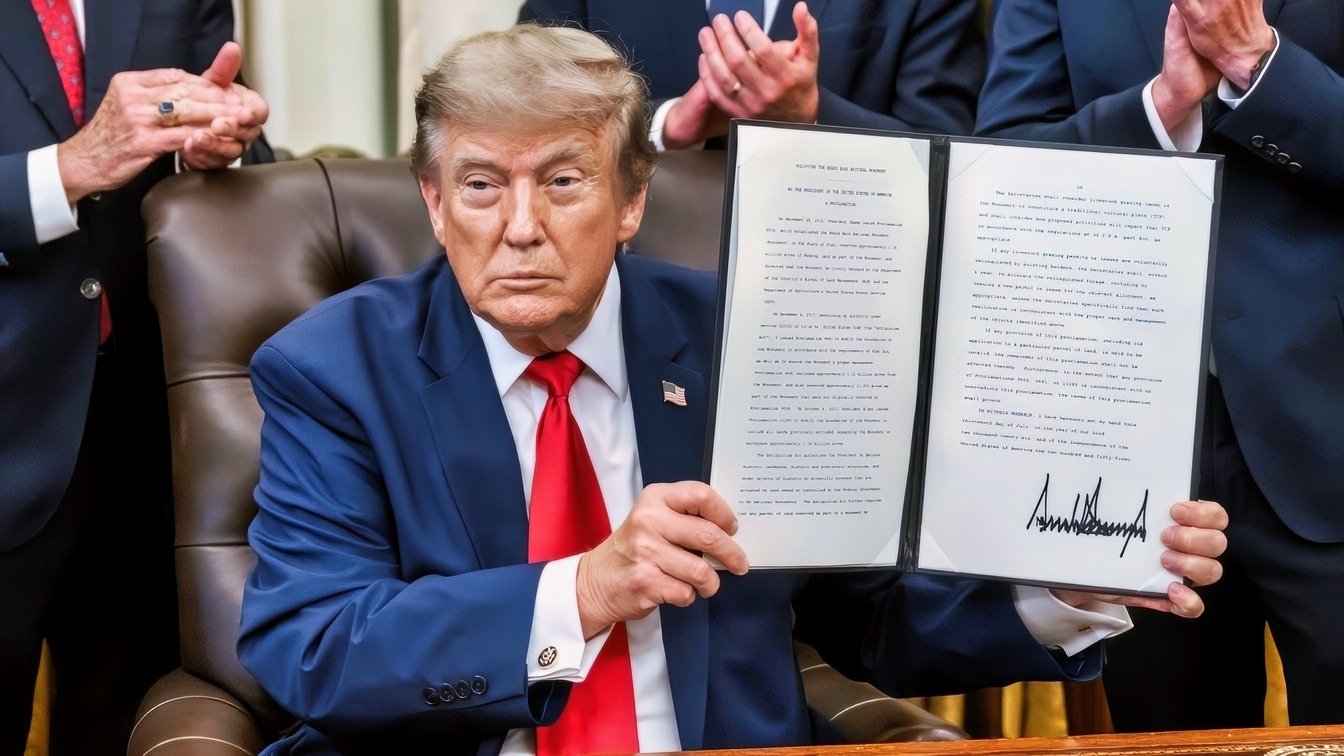
President Donald Trump is promising what he calls an “Economic D-Day” against Iran, but the details of Washington’s next move are still to come.
“The entire country can be taken out in one night, and that night might be tomorrow night,” Trump told a White House press conference on Thursday.
The Iran War Could Start Again Next Week
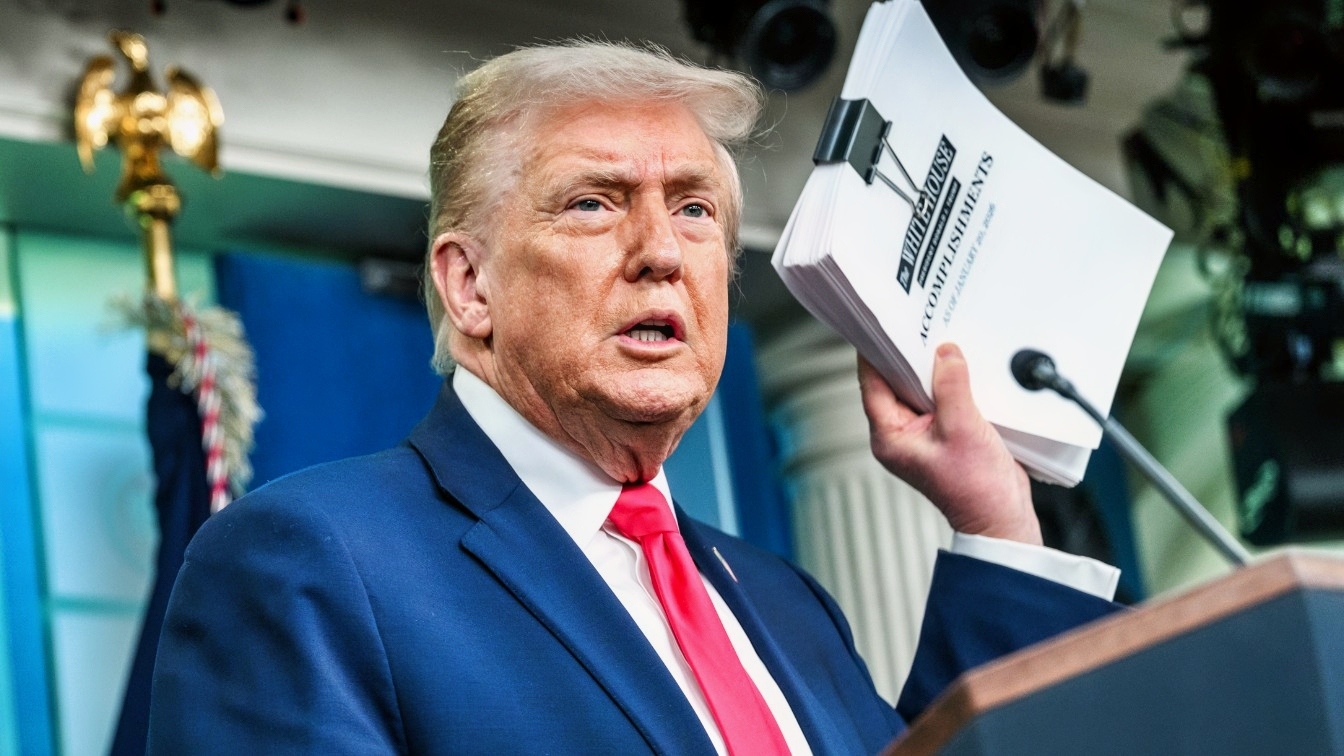
President Donald Trump addresses members of the media in the James S. Brady Press Briefing Room, Tuesday, January 20, 2026. (Official White House Photo by Joyce N. Boghosian)
He also suggested that if a deal was not reached by 8 p.m. next Tuesday, the U.S. would launch attacks on Iran’s infrastructure.
On Wednesday, Trump announced the “most crushing economic operation ever taken against any country,” warning that nations that allow their banks, businesses, airports, or government bodies to give Iran an economic “lifeline” would face “tremendous economic consequences.”
By Thursday, Treasury Secretary Scott Bessent had put a date on the next stage.
He told reporters that he would hold a press conference on Monday “to talk about exactly what we’re going to do” on Iran.
Trump’s Threats: Beyond Sanctions
Trump’s threat could be much broader than another round of sanctions on Iranian officials.
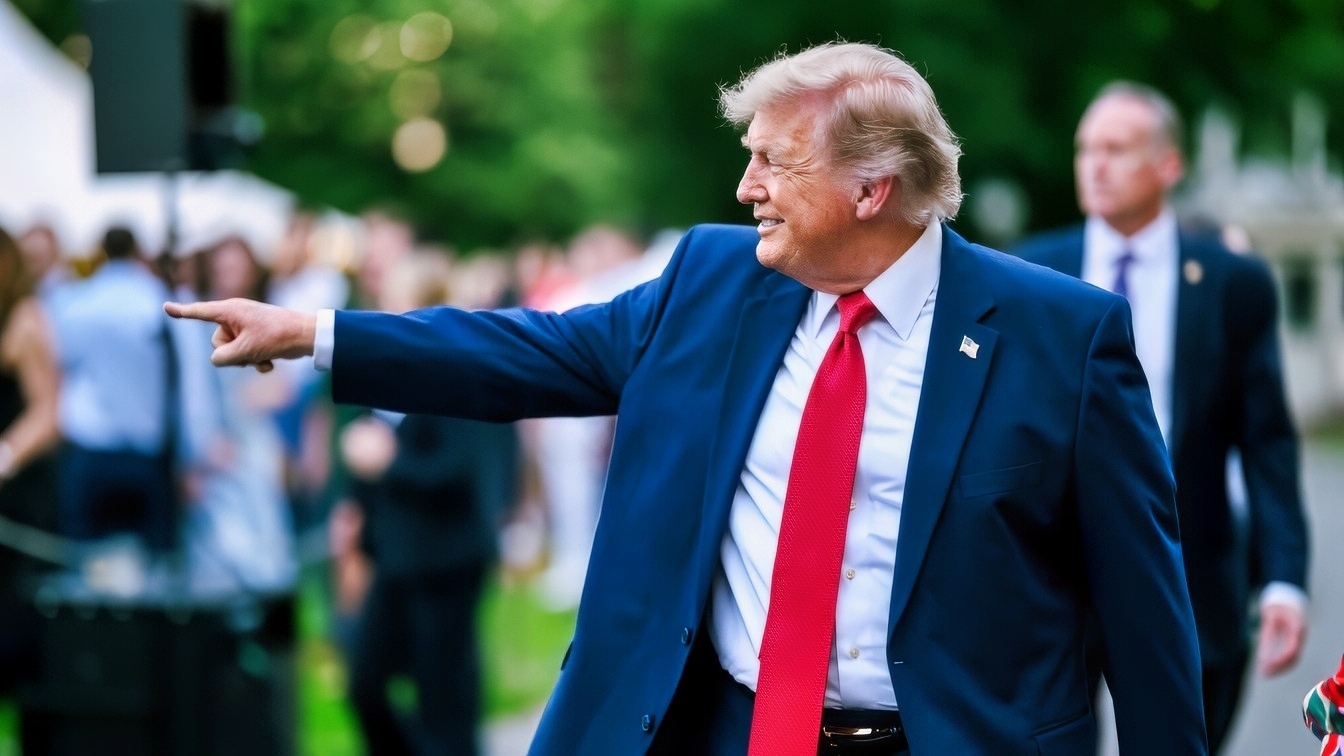
President Donald J. Trump and First Lady Melania Trump work the rope line at the Congressional Picnic on the South Lawn, Tuesday, May 19, 2026. (Official White House Photo by Daniel Torok)
It appears aimed at third countries and companies that continue trading with Tehran, raising the prospect of secondary sanctions designed to force foreign businesses to choose between Iran and access to the U.S. financial system.
China stands to lose a lot under such policies. At present, it buys more than 80% of Iran’s shipped oil, according to 2025 data from analytics firm Kpler, and purchased an average of about 1.38 million barrels per day last year.
Many non-state Chinese refiners handle such trade, minimizing the risk of sanctions-related issues.
Elements of this complex global network have already faced Washington’s wrath.
Back in April, the U.S. Treasury Department sanctioned a Chinese refinery that had purchased billions of dollars’ worth of Iranian oil, while continuing to threaten Chinese banks with secondary sanctions.
On Thursday, Bessent refused to comment on whether Beijing would suffer direct consequences and suggested China had an interest in peace, given its reliance on Gulf oil.

President Donald Trump signs an executive order on Delivering Most-Favored-Nation Prescription Drug Pricing to American Patient at a press conference with Health and Human Services Secretary Robert F. Kennedy Jr., Monday, May 12, 2025, in the Roosevelt Room. (Official White House Photo by Joyce N. Boghosian)
“Keep in mind that the Chinese get 50 percent (of their) energy from inside the Gulf. So it would do them a big service to get with the program,” he told the press.
Turkey’s Lack of Delight
Turkey may also be hit by major economic sanctions on Iran. Ankara currently maintains around $5 billion to $6 billion worth of trade with Tehran.
Despite the countries’ long-running political rivalry, Turkey imports around 13 percent of its natural gas from Iran.
Then there is Iraq. Last year, Baghdad traded over $10 billion with its eastern neighbor. It also shells out up to $5 billion annually for Iranian gas.
The United Arab Emirates, historically one of Iran’s key trading partners, suspended trade, commercial exchanges, and financial transactions with Iran this week after accusing Tehran of launching missiles in its direction. Iran has rejected the claim.
‘Economic Fury’ Ensues
Since the 1979 seizure of the U.S. Embassy in Tehran, Washington has imposed various restrictions on activities with Iran.
The new campaign builds on months of U.S. sanctions under the Treasury Department’s so-called “Operation Economic Fury.” Since the war began on February 28, Washington has imposed additional measures on Iran’s maritime, energy, and financial sectors and launched a naval blockade.
Treasury actions have targeted oil-shipping networks, insurers, cryptocurrency exchanges, and foreign companies accused of helping Iran procure weapons.
But will further escalation in sanctions really change the situation much?
Regardless of what the U.S. does now, Iran is clearly under economic pressure.
The International Monetary Fund (IMF) currently forecasts that Iran’s consumer-price inflation will average 68.9% this year.
Meanwhile, real GDP is set to shrink by 5.4%. The IMF also puts the country’s population at just short of 88 million. For these millions of ordinary Iranians, the price of food in particular is prompting concern.
Iran Blasts ‘Economic Terrorism’
Iranian Foreign Minister Abbas Araqchi has rebuffed Trump’s fresh threats, claiming that “failed policies” simply “bring more failures” and turn more Iranians against the U.S.
On Thursday, Bessent said the Trump administration’s move toward economic pressure could decrease the likelihood of large-scale military escalation.
Prices continue to climb, with Brent crude reaching above $93 a barrel on Thursday — its highest level in more than three weeks.
Whether Trump’s “Economic D-Day” will actually ensue remains to be seen.
About the Author: Georgia Gilholy
Georgia Gilholy is a journalist based in the United Kingdom who has been published in Newsweek, The Times of Israel, and the Spectator. Gilholy writes about international politics, culture, and education.


