

The Iranian energy crisis has produced an outcome that few analysts anticipated. China, despite being the world’s largest energy importer, has emerged as one of the principal strategic beneficiaries of the conflict.
Rather than being crippled by disruptions in the Strait of Hormuz, Beijing has used years of preparation to cushion the blow while turning the crisis into an economic and geopolitical opportunity.
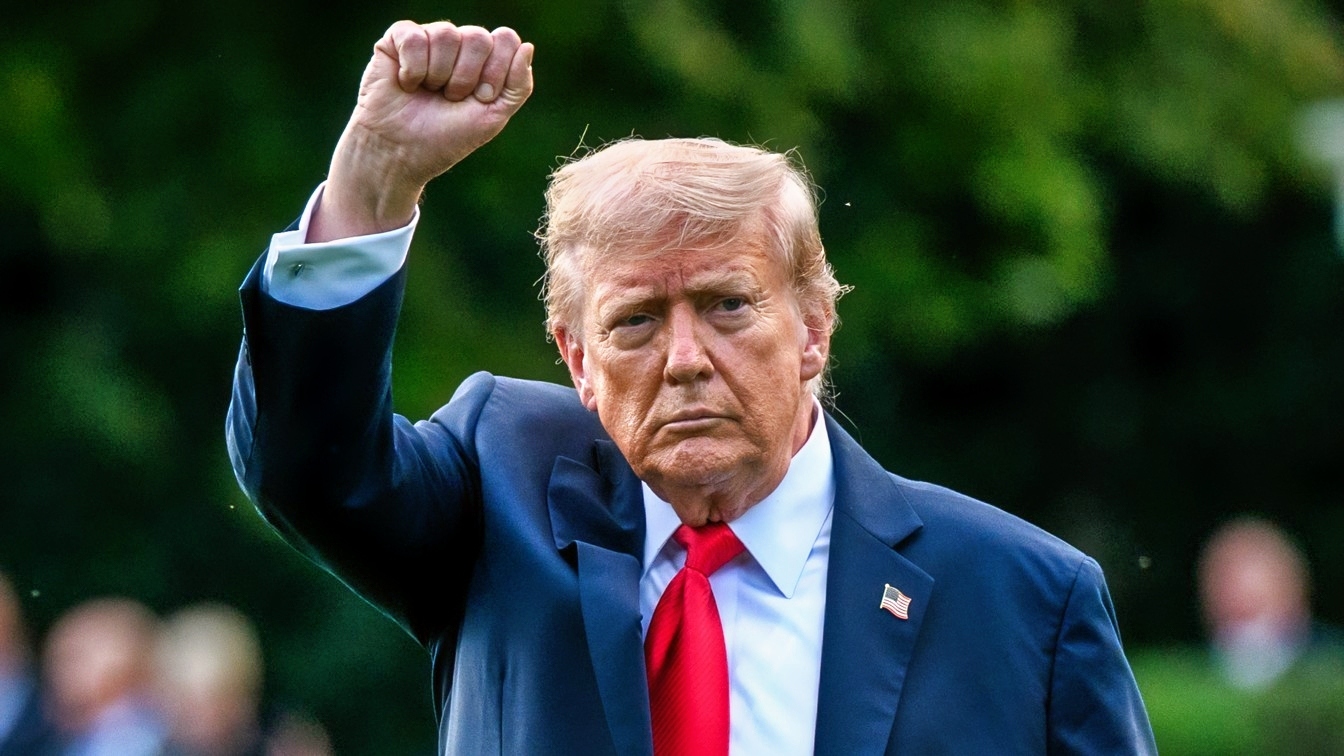
President Donald Trump boards Marine One on the South Lawn of the White House en route to Joint Base Andrews, Maryland on Thursday, September 11, 2025, for a trip to New York. (Official White House Photo by Molly Riley)
And that opportunity has accelerated the transfer of power from the United States to the People’s Republic of China (PRC).
Beijing viewed the Iran War as proof of concept for whether the country could survive a protracted geopolitical crisis involving massive disruptions to the basic inputs that all modern economies require to function.
The Chinese experiment worked.
Unlike the United States and much of the rest of the world, which have been teetering on a knife’s edge of collapse since the Iran War started (and the blockades of the Strait of Hormuz commenced), China weathered the oil disruptions well.
For the last two months, China has drastically withdrawn from global oil markets–despite being the top importer of oil in the world.
Thanks to China’s vast Strategic Petroleum Reserve (SPR), which numbered as many as 1.4 billion barrels of oil back in December 2025 (making it the world’s largest SPR), Beijing comfortably relied upon its stockpile.
A recent report from Semafor highlights the astonishing depth of China’s SPR.
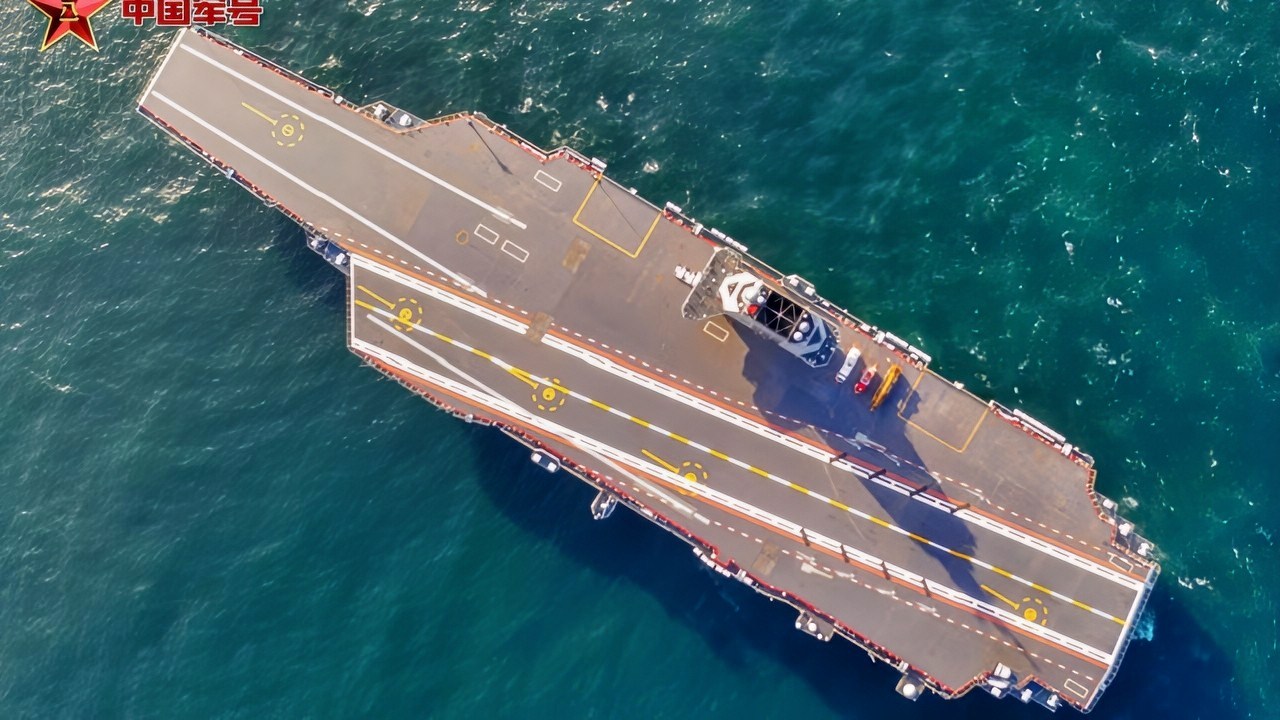
CV-18 Fujian aircraft carrier from China. Image Credit: Creative Commons.
According to the news site, Beijing had accumulated roughly 110 days of crude import coverage, allowing it to reduce purchases from global markets as prices spiked drastically.
That buffer insulated China’s economy while many competitors scrambled for scarce cargoes.
That move by Beijing was not taken lightly. It reflected years–decades, even–of energy preparation. What’s more, it was a signal to the rest of the world that China had endurance that Washington assumed it lacked.
Every barrel China did not buy on the global market was available to everyone else.
So, Beijing’s massive SPR did not merely protect China–it reduced pressure on global energy markets while competitors exhausted themselves bidding for increasingly scarce supplies.
Now, China has emerged looking stronger than ever before.
The Americans, meanwhile, are emerging from the Iran War looking weak and depleted in the eyes of much of the Global South–where both Washington and Beijing are vying for greater influence.
China’s Renewable Strategy Was Industrial–Not Ideological
Another reason China was able to withstand the ongoing disruptions to global energy flows through the Strait of Hormuz was its substantial investments in advanced alternative energy systems.
Unlike the West’s endless quest for renewable energy sources, which has yielded few viable alternatives to conventional petroleum, China has focused on developing and scaling the underlying technology.
What’s more, China did not care about the methods of production, so long as they met or surpassed existing demand.
In China, geothermal, hydro, nuclear (including fusion development), space-based solar power, and wind energy are all priorities for society.
And thanks to Beijing’s substantial investment in these capabilities, China was better able to endure the disruptions caused by the Iran War.
And because of how well China fared during this crisis from an energy perspective, other countries that were less well insulated from the ravages of instability in the global energy market are looking to China as the world’s leader in renewable energy.
Solar power, wind farms, battery storage, and yes, China’s dominant position in the electric vehicle (EV) market make China an attractive business partner in this domain.
Major US military partners, such as Egypt, are increasingly turning to Chinese-produced alternative energy systems to reduce their dependence on imported fuels.
That story is playing out across the Global South, giving China a massive boost in the competition to win it.
Beijing Gains Diplomatic Influence
As Washington became more bellicose during the Iran War, Beijing got quieter. Behind the scenes, reports indicated that they worked through Pakistan (and others) to smooth the hard edges of the conflict and to push for a negotiated settlement before things went over an economic cliff.
Even without those efforts, China’s prestige and influence rose during the war because Beijing advocated restraint, called for ceasefires, and avoided direct military confrontation.
That allows China to reinforce a long-running diplomatic narrative: that the United States brings instability to the Middle East, while China presents itself as a predictable economic partner focused on trade and development.
And that messaging is resonating deeply with the Global South, which is increasingly wary of the United States.
China Still Faces Risks
China is not immune to the ravages of the crisis, of course.
As the world’s largest oil importer, irrespective of its alternative energy profile, China was placed in a dangerous spot. What’s more, China’s natural gas reserves were not as big as its oil reserves were.
Beijing still has significant investments in the Middle East that are under severe duress, so long as the Iran War continues in any form.
What’s more, there remains a concern that the disruption to the oil markets will outlast China’s impressive, albeit declining, SPR.
Nevertheless, China weathered the energy storm well, all things considered.
Beijing has demonstrated that careful strategic planning can convert geopolitical crises into real opportunities for expanding both economic influence and diplomatic leverage.
The Broader Strategic Lesson
The real lesson of the Iran War is not that China escaped the crisis unscathed. It didn’t.
The lesson is that Beijing spent decades preparing for exactly this kind of geopolitical shock while Washington assumed such a crisis would never come.
Strategic petroleum reserves, industrial capacity, diversified energy production, and resilient supply chains gave China room to maneuver while many of its competitors struggled simply to keep their economies running. That preparation transformed a potential vulnerability into a strategic advantage.
The war did not create China’s rise. It merely accelerated it. The unipolar moment that followed the Cold War was already fading.
The Iran War simply revealed how far along the transition was.
The emerging international order may be multipolar in structure. China, not the United States, is increasingly the center of that new, still-forming multipolar order.
About the Author: Brandon J. Weichert
Brandon J. Weichert is Senior National Security Editor. He also manages The Weichert Brief on Substack. Weichert also hosts “National Security Talk” on Rumble. He is the author of four bestselling national security books, the most recent of which is A Disaster of Our Own Making: How the West Lost Ukraine (Encounter Books). Follow him via Twitter/X @WeTheBrandon.


Pingback: The Great Chinese Oil Mystery - todaytrendnews7.com