

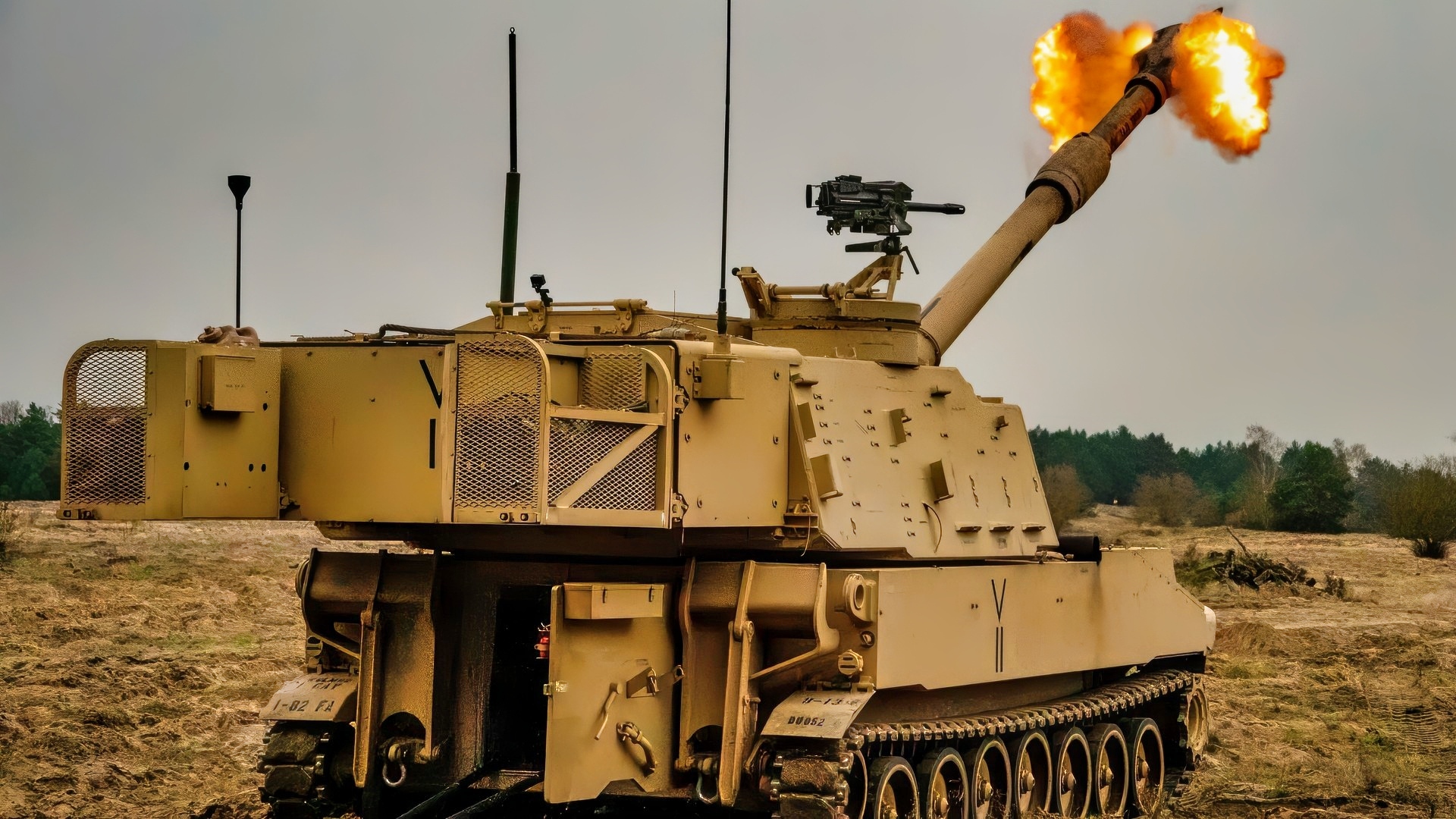
Ukraine is preparing for winter, and current forecasts suggest this year’s winter will be one of Kyiv’s hardest yet.
Ukraine is currently facing a critical shortage of air defense missiles. Despite attempts to secure more from the U.S. and Europe, PAC-3 interceptors are still in very high demand thanks to the war in Iran and rising tension across the globe in general.

Putin Speaking to Large Crowd in 2019 Russian Federation Photo
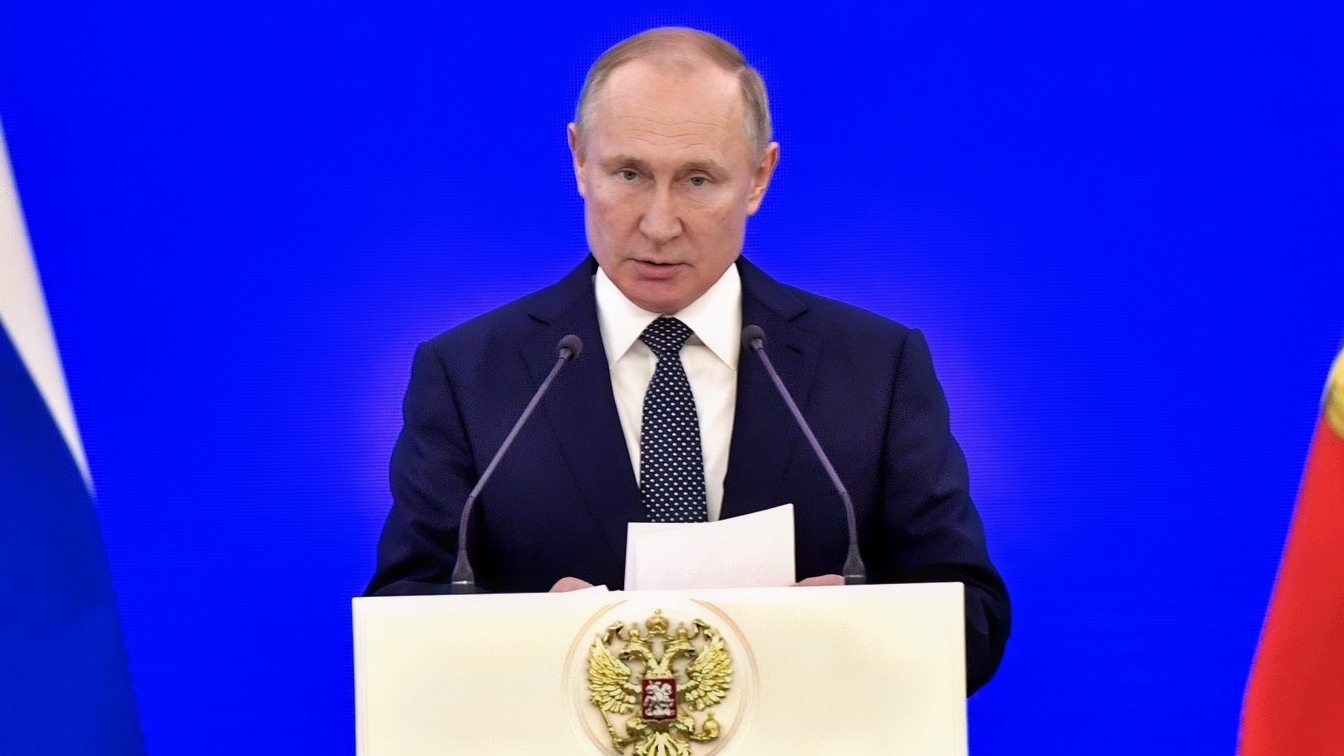
Putin Back in 2019 Russia Federation Photo
This is quite troubling for Ukraine, which anticipates a renewed Russian missile campaign against the country’s energy infrastructure. Already, Kyiv’s defenses are spread thin after constant Russian drone/missile strikes against the capital and other targets across the country.
With each passing attack, its defenses grow thinner, and the prospects of a harsh winter become more of a reality.
Preparing for a Rough Winter
Since the spring, Ukrainian authorities have been working tirelessly to restore power to the country after last year’s attacks against energy infrastructure. Every winter, the Russians launch a wide-scale campaign to de-energize Ukraine by hitting power plants, transformers, substations, and other critical infrastructure.
In July, President Zelenskyy confirmed Sergii Koretskyi as Ukraine’s Prime Minister. Previously, Koretskyi served as the CEO of Naftogaz, one of Ukraine’s largest state-owned gas companies.
The company, according to Zelenskyy, played a critical role in helping the country survive the previous winter, and now, under Koretskyi’s leadership, the country is preparing for another harsh end to the year.
Further exacerbating fears in Kyiv is the chronic shortage of air defense missiles, which makes it much more difficult to protect critical infrastructure from Russian munitions.
In an interview with CNBC, Iryna Terekh, CEO of the Ukrainian drone maker Fire Point, offered her candid opinion on the situation. “Winter is coming, obviously, and the last winter was very hard for Ukraine and for big cities in general.
This one would be no easier — and probably even harder,” she said. Fire Point has been trying to develop its own ballistic missile interceptor to fill the gap left by PAC-3 shortages.
However, due to the project’s complexity, domestic interceptors are unlikely to be fielded in the next few months. “We are trying to squeeze in the program that usually takes 20 to 30 years to develop in a few years, and this is not something that you can do within a matter of three months before the winter,” Terekh said.
Searching for Interceptor Missiles
Ukraine has been trying to obtain PAC-3 interceptor missiles from the United States and its European partners, but has thus far been unable to obtain any large-scale deliveries.
At the NATO Summit in Ankara, President Trump promised to grant Kyiv a license to produce Patriot interceptors domestically, which would allow Ukraine to produce PAC-3s at a steady rate, at least after the war.
However, the American President seems to have rescinded his intent to grant Ukraine a Patriot license. “It’s a very extraordinary weapon, and… we have to be a little bit careful about who we license it to.
We don’t really license equipment.” Trump said in an interview with The Economist. While many have criticized Trump for refusing to support Ukraine, a license to Kyiv was never realistically going to work for myriad reasons that TWZ has written about.
This leaves Kyiv with the option of either producing its own interceptors or receiving interceptor missiles from its allies. As said earlier, a domestic interceptor is unlikely to materialize soon, especially since Russia keeps striking Ukraine’s industrial sites.
This leaves Kyiv at the mercy of its Western supporters.
The problem is that PAC-3 interceptors are in high demand, and the current production rate is not enough to supply everyone in a timely manner. The U.S. is the primary customer of Patriot missiles, but it is unlikely to give any to Kyiv anytime soon thanks to the ongoing war with Iran.
According to some reports, the U.S. has used around 65% of its Patriot inventory since May and will require at least 3 years to bring its stocks back to pre-war levels.
Not Enough Patriots to Go Around
Europe, meanwhile, has already donated a significant portion of its domestic stocks to Ukraine.
However, NATO is currently concerned about its own defense as it prepares for a potential confrontation against Russia.
Since 2022, the alliance has sought to rearm Europe in the event of a confrontation with the East, spurring efforts to produce PAC-3s on the continent. After a Russian cruise missile flew into Poland, those fears have only been exacerbated.
Unfortunately, even with efforts to ramp up production, there simply aren’t enough missiles to arm Ukraine and Europe at the same time.
As it stands, any European nation that donates missiles to Kyiv does so at the risk to its own national security.
Russia, meanwhile, is in a pretty good spot, all things considered.
Despite several Ukrainian drone strikes against military-industrial facilities, the Russians are still producing missiles of all types at high rates. According to Ukrainian intelligence, Moscow is producing around 55- 60 9M723 Iskander ballistic missiles per month, with production of RM-48U ballistic missiles also at roughly 50 per month.
These production rates, according to Ukraine, allow Russia to launch roughly 100 ballistic missiles at Ukraine per month, and this doesn’t factor in attack drones and cruise missiles, which Moscow is also producing at an alarming rate.
Despite successful attacks against Wildberries warehouses, Russia’s ability to deliver devastating strikes across all of Ukraine remains undeterred.
About the Author: Isaac Seitz
Isaac Seitz, a Defense Columnist, graduated from Patrick Henry College’s Strategic Intelligence and National Security program. He has also studied Russian at Middlebury Language Schools and has worked as an intelligence Analyst in the private sector.


