


Key Points and Summary – The YF-118G “Bird of Prey,” a top-secret project developed in the 1990s at Area 51, was a crucial but underappreciated testbed for the stealth technologies now common in fifth-generation aircraft and drones.
-Financed internally by McDonnell Douglas (later Boeing) for a remarkably low $67 million, this “alien-looking,” single-engine jet proved that advanced, low-observable designs could be developed quickly and affordably.
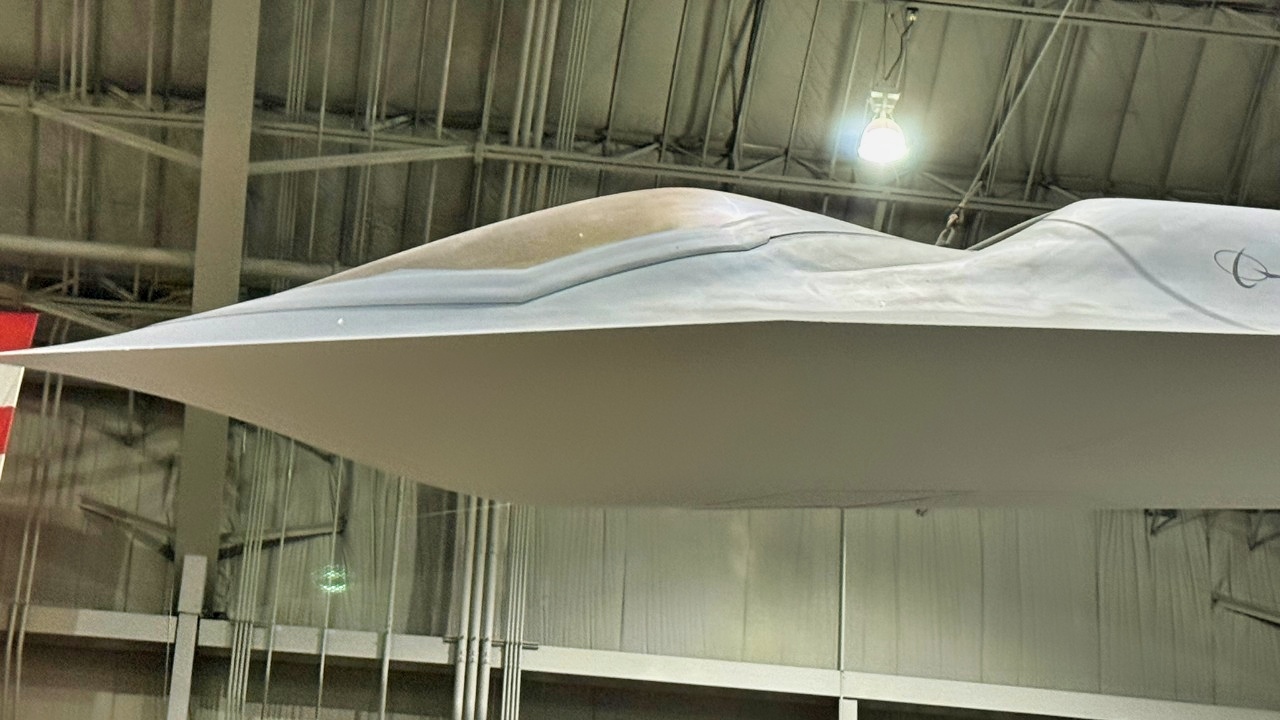
YF-118G USAF Museum. Image Credit: National Security Journal.
-While never intended for production, the “Bird of Prey’s” radical tailless, blended-wing-body airframe and innovative stealth techniques directly influenced the development of future unmanned air vehicles like the X-45.
–National Security Journal was able to visit the YF-118G at the U.S. Air Force Museum in Dayton Ohio and took the photos included in this article.
The YF-118G Stealth Fighter Is a Legend You Can See in Dayton, Ohio
The YF-118G “Bird of Prey” was a small test aircraft originally developed by McDonnell Douglas’s Phantom Works but later under Boeing.
Only one prototype of this aircraft was ever built, and it was never intended to enter into full scale project. Instead, the YF-118G was a test bed for stealth technologies that would later be incorporated into future projects. Despite its short and relatively obscure history, the Bird of Prey proved the feasibility of upcoming stealth technology and proved that it could be incorporated in relatively cost-effective manner.
The Bird of Prey Takes to the Skies
Work on the YF-118G began with McDonnell Douglas’s Phantom Works, the company’s advanced development division. After McDonnell Douglas merged with Boeing in 1997, the project continued under Boeing’s Integrated Defense Systems.
The program began in 1992 and was conducted under strict secrecy at the highly classified Groom Lake facility, better known as Area 51, in Nevada. The project was internally funded, with a relatively modest budget of $67 million. This low-cost approach was intentional, as the program aimed to demonstrate that advanced stealth aircraft could be developed quickly and affordably using off-the-shelf components and innovative design techniques.
The Bird of Prey first took to the skies on September 11, 1996. Over the next three years, it completed 38 test flights before the program concluded in 1999. The aircraft remained classified until October 18, 2002, when it was publicly unveiled by Boeing and the U.S. Air Force. The decision to declassify the project came after the technologies it tested had already been incorporated into newer systems, particularly UAVs.
Design and Specs
The design of the YF-118G was radical and futuristic, even by stealth aircraft standards. Its name, Bird of Prey, was inspired by the Klingon spacecraft from the Star Trek franchise, a fitting reference given its alien-like appearance.
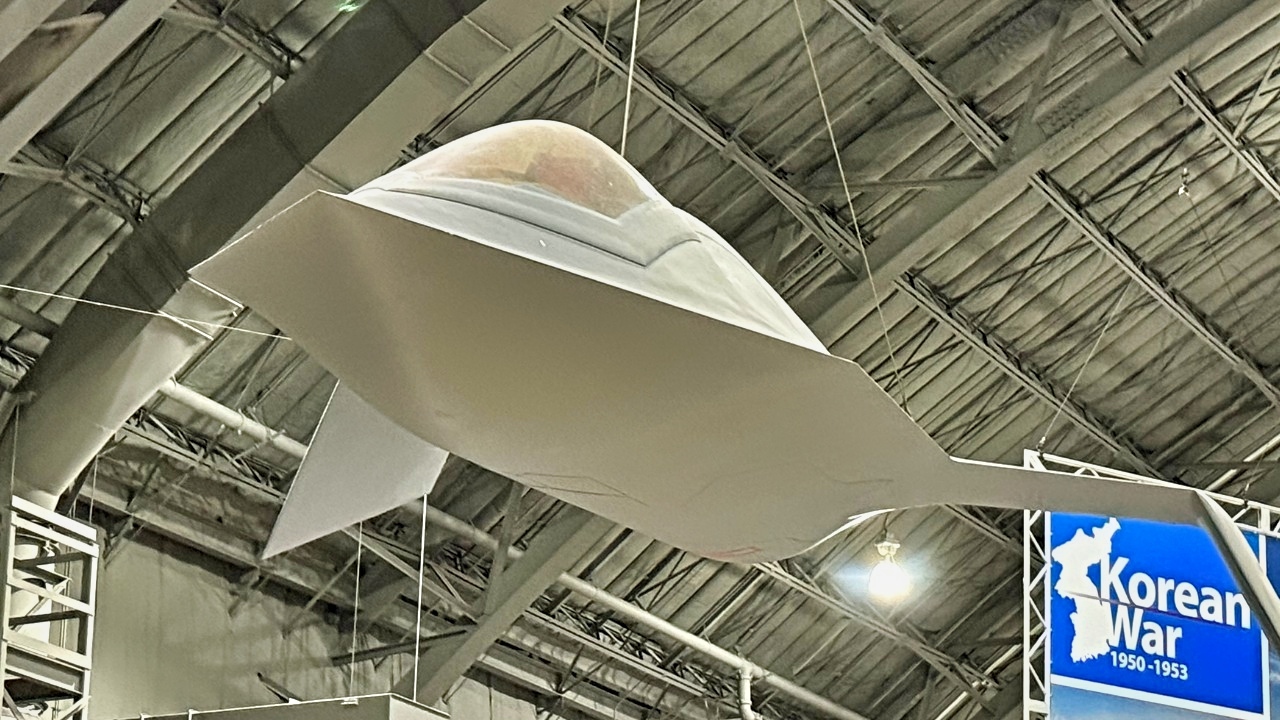
YF-118G Bird of Prey Hanging Above F-22. Image Credit: National Security Journal.
The aircraft featured a blended-wing-body configuration, with smooth, curved surfaces that helped scatter radar waves and reduce its radar cross-section. It lacked traditional vertical and horizontal stabilizers, relying instead on its aerodynamic shape and drag rudders for control. This tailless design would later become a hallmark of stealth UAVs such as the Boeing X-45 and Northrop Grumman X-47.
In terms of specifications, the Bird of Prey was a relatively small and lightweight aircraft. It measured approximately 47 feet in length, with a wingspan of 23 feet and a height of 9 feet. Its maximum takeoff weight was around 7,400 pounds.
It was powered by a single Pratt & Whitney JT15D-5C turbofan engine and was capable of subsonic speeds. Details about its range and service ceiling remain classified, but it was designed primarily for low-speed, low-altitude testing of stealth technologies.
A Testbed for Stealth Technologies
One of the most notable aspects of the Bird of Prey was its emphasis on stealth. The aircraft was designed to be difficult to detect both visually and by radar. Its shape, surface materials, and internal systems layout were all optimized for low observability.
The engine intake was shielded to minimize infrared and radar signatures, and the aircraft may have tested active camouflage technologies, although details about this remain speculative.
According to the U.S. Air Force, the Bird of Prey tested methods to make aircraft “less observable to the eye and to radar,” validating stealth techniques that would later be used in operational platforms.
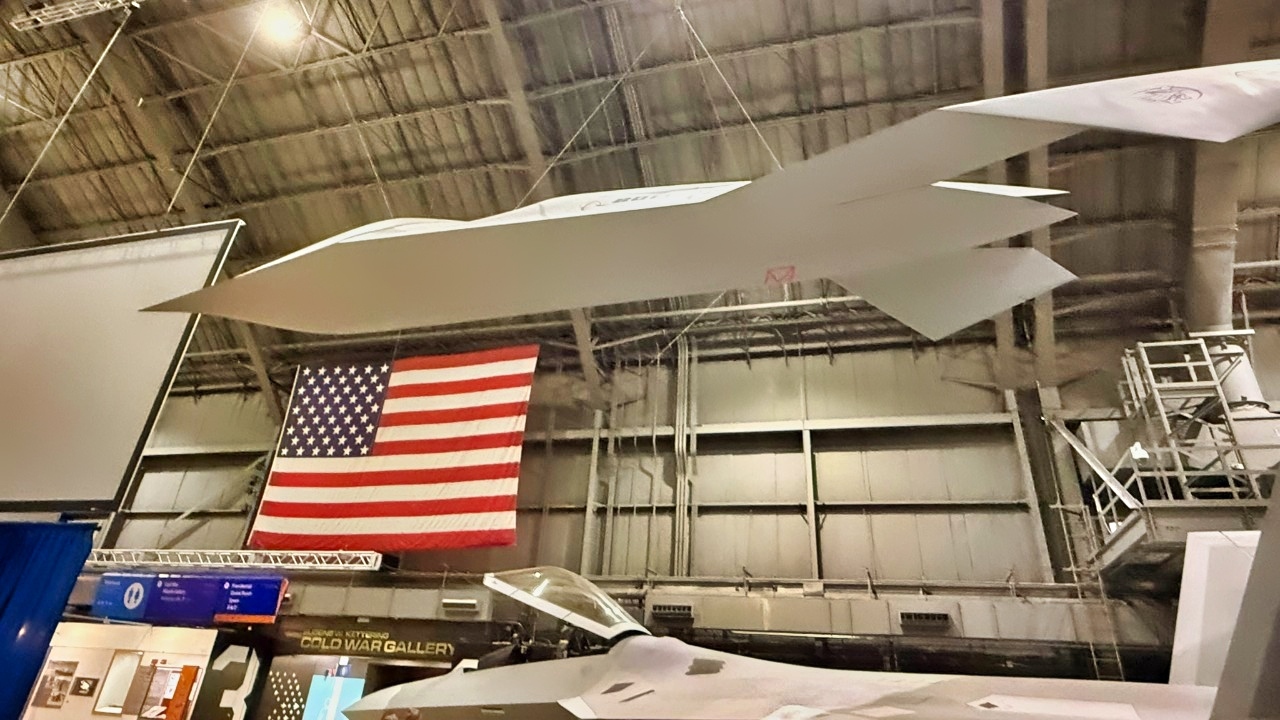
YF-118G Flying High July 2025. Image Credit: National Security Journal.
The Bird of Prey was a study in simplicity and cost-effectiveness. Unlike many experimental aircraft, it used manual hydraulic controls instead of a fly-by-wire system. This decision reduced complexity and cost, and the aircraft was aerodynamically stable enough to be flown without computer assistance (a rare trait among stealth aircraft).
A commercial off-the-shelf turbofan engine powered it, further emphasizing the program’s focus on affordability and rapid prototyping. By using existing components, engineers were able to concentrate on stealth and structural innovations rather than propulsion.
Just 1 Mission: Make Stealth Even Better
The YF-118G remained a black project throughout its development and testing. It was never intended for operational service, and its existence was not publicly acknowledged until several years after the program ended. The aircraft was given the designation YF-118G as a cover, although it was never part of the official X-plane series. The “YF” prefix typically denotes a prototype fighter, but in this case, it was used to obscure the aircraft’s true purpose.
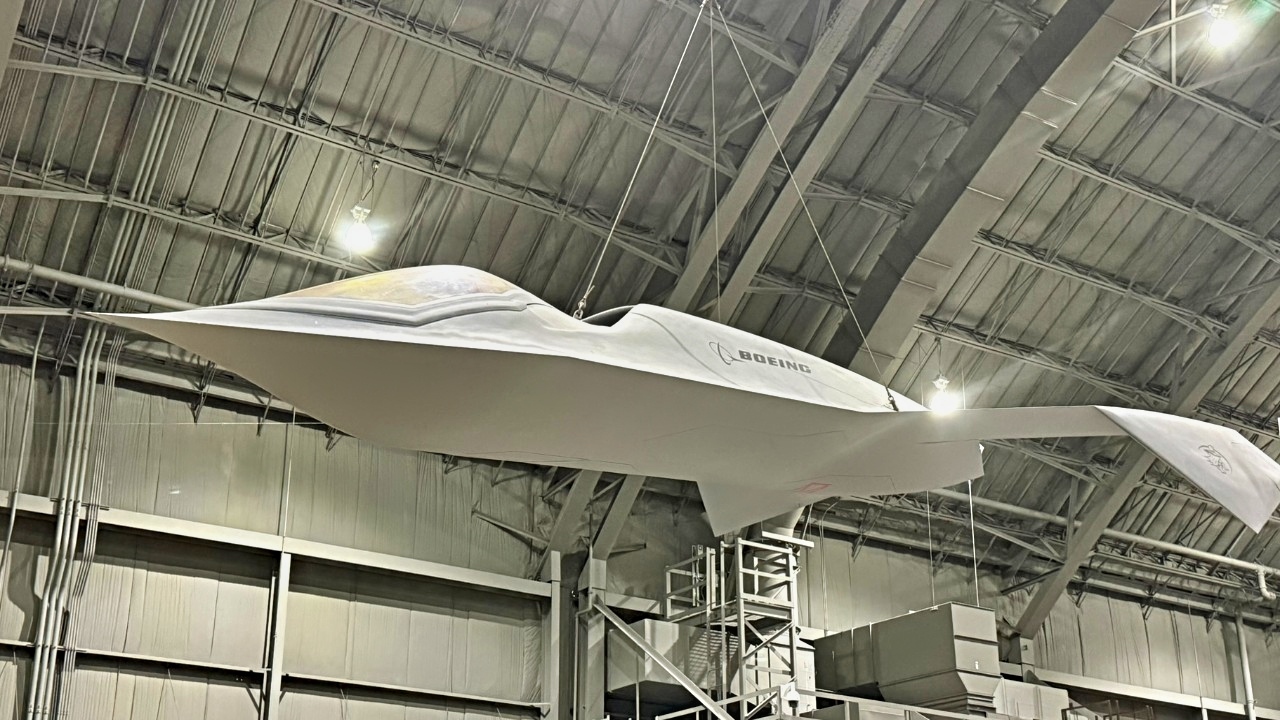
YF-118G Bird of Prey. Image Credit: National Security Journal.
Despite its limited flight history and the fact that only one prototype was built, the Bird of Prey does not get enough recognition for its contributions. The project tested a number of stealth technologies that are now commonplace in fifth-generation aircraft.
The technologies and design philosophies it tested were directly applied to later stealth UAVs, particularly the Boeing X-45A, which was one of the first unmanned combat air vehicles developed for the U.S. military.
The Bird of Prey also demonstrated the feasibility of rapid prototyping and low-cost stealth development, influencing how future aircraft programs were structured. It showed that advanced capabilities could be achieved without the massive budgets typically associated with military aviation projects.
Today, the sole YF-118G prototype is preserved at the National Museum of the United States Air Force at Wright-Patterson Air Force Base in Ohio. It was placed on public display on July 16, 2003, and can be seen in the museum’s Modern Flight Gallery, suspended above an F-22 Raptor.
This public display serves as a rare glimpse into the world of the U.S.’ secret projects and the cutting-edge technologies that often remain hidden from public view.
About the Author: Isaac Seitz
Isaac Seitz, a Defense Columnist, graduated from Patrick Henry College’s Strategic Intelligence and National Security program. He has also studied Russian at Middlebury Language Schools and has worked as an intelligence Analyst in the private sector.
More Military
We Almost Touched the F-117 Stealth Fighter


