

MANILA – Russia has paid North Korea up to $ 14.4 billion in military aid since 2023. The figure is roughly equivalent to North Korea’s entire annual GDP. Most of the payment came for shipments of millions of artillery shells, rockets, and hundreds of KN-23 ballistic missiles. Russia paid over $600,000,000 for North Korean troops deployed to fight in Russia’s Kursk region. North Korea sent 10,000 to 11,000 troops to Kursk by late 2024. Approximately 1,000 of those troops were killed in the first 3 months.
North Korea Is Fueling the Ukraine War
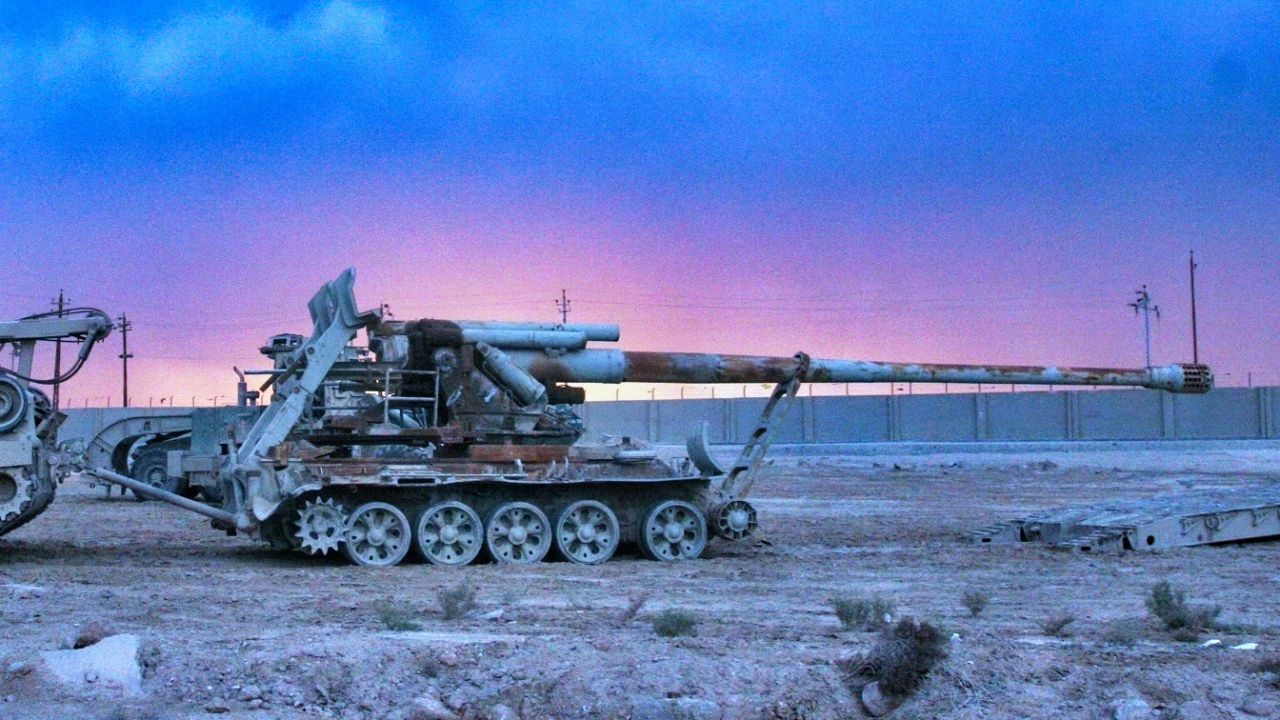
North Korea Artillery. Image Credit: Creative Commons.

North Korea Soldiers. Image Credit: KCNA/North Korean State Media.
Japanese and South Korean (ROK) news outlets – citing South Korean intelligence and research institutes – estimate that the Democratic People’s Republic of [North] Korea (DPRK) has enjoyed a financial windfall in the billions from 2023 to 2026.
This sudden influx of cash is estimated at between US$ 7 billion and US$ 13.8 billion – although other estimates place the total as high as US$ 14.4 billion. These sums represent the earnings by the North Korean state since 2023 from providing military aid to Russia for its war in Ukraine.
To put these numbers into perspective, this economic upsurge is roughly equivalent to the DPRK’s annual gross domestic product. Moscow is thus giving the North Korean economy a geometric plus-up that it could not have earned from any of its traditional sources of revenue.
The DPRK has been under pressure from a heavy and multi-dimensional international sanctions regime for decades now. This an elaborate set of restrictions designed to keep the isolationist state from continuing to develop its nuclear weapons and ballistic missile programs.
What the DPRK has earned from being an increasingly indispensable supplier of military aid to Moscow has largely come in the form of payments for arms exports. These included massive shipments of munitions and troops being sent to fight against the Ukrainian military. Most of that military manpower was sent to fight in the Kursk region of Russia, which was invaded by Ukrainian forces in August 2024.
Between 10,000 and 11,000 DPRK troops were deployed to Kursk by late 2024 to assist the Russian military in expelling Ukrainian forces from the region. However, these troops suffered significant casualties in the first three months after their arrival in Russia in October 2024.
Largely due to their inexperience in fighting against an adversary using a high volume of battlefield drones, the Korean People’s Army (KPA) units lost 40 percent of the 11,000 personnel deployed. It is estimated that 1,000 of those troops perished, while 3,000 or more were too severely injured to continue fighting.
Those DPRK troops that suffered significant losses were special forces units engaged in direct combat and other units assigned to mine-clearing operations.
Main Money Makers
At the top of the list of the biggest money makers for the DPRK were arms shipments sent to Russia, which are estimated to have earned Pyongyang between $7-13.8 billion. Most of this came from shipments of millions of artillery shells, rockets, and hundreds of the short-range KN-23 ballistic missiles.
Moscow is also estimated to have paid over $600 million for the KPA troops sent to Russia. This contingent was a mix of special forces troops, combat engineers, and drone operators operating in the combat zone.
In addition to cash payments for both munitions and troops, the DPRK received food, shipments of energy resources, and- more importantly for Pyongyang’s strategic weapons programs – advanced military technology. This represents capabilities that support the design of satellites, submarines, and ballistic missiles.
There are also overall economic benefits for the DPRK, as well as second-order effects of this sudden inflow of cash and resources.

HWASONG-18 ICBM North Korea. Image Credit: North Korean state media.

Russian President Vladimir Putin (R) meets with North Korea’s leader Kim Jong Un in Vladivostok, Russia April 25, 2019.
Estimates indicate that the country enjoyed 3.7 percent economic growth in 2024, within one year of the start of these aid shipments to Russia. There are also very visible signs of economic improvement, although they are largely limited to life in the capital, Pyongyang, which is not representative of the rest of the country.
Some of these estimates have been calculated by the Seoul-based Institute for National Security Strategy, which has connections to the ROK’s National Intelligence Service. Other reports are from Nikkei Asia’s economic analysts. They assess that payments from Russia have significantly boosted Pyongyang’s economy and its defense technological capabilities.
Bypassing Sanctions
But in addition to providing hard currency, defense technology, and energy supplies, Russia’s payments have had another, less direct benefit for the DPRK regime. Russia is now supplying capabilities, particularly in defense production, that Pyongyang has been struggling to get its hands on and achieve some competency with for decades.
As such, Russian aid has rendered major segments of the sanctions regime imposed on the DPRK irrelevant, as the items Russia now provides are components or processes the regime no longer needs to acquire illegally.
“We know the DPRK has some number of nuclear weapons, but they have yet to develop a reliable delivery system that would allow that warhead to actually hit a target somewhere with any accuracy,” said a former US intelligence officer familiar with the North Korean efforts to build a modern-design ballistic missile. “Russian aid they are receiving now is eventually going to close that gap for them.”
The big unknown is the true size of the DPRK economy and how to accurately assess the full impact of Russian payments, as well as the technologies or commodities transferred in their place. Economic transparency in the country is virtually non-existent as Pyongyang does not release statistical data.
The UN estimates that the DPRK’s 2024 GDP was $17.2 billion, while South Korea’s central bank estimated it at $25.3 billion, which is a considerable margin of difference. A paper on DPRK economic statistical data points out that “considering the difficulties associated with obtaining reliable statistics even in transparent, well-documented economies, the accuracy of data concerning a state that treats even minimal economic information as a matter of national security remains highly uncertain.”
About the Author: Reuben F. Johnson
Reuben F. Johnson has thirty-six years of experience analyzing and reporting on foreign weapons systems, defense technologies, and international arms export policy. Johnson is the Director of Research at the Casimir Pulaski Foundation. He is also a survivor of the Russian invasion of Ukraine in February 2022. He worked for years in the American defense industry as a foreign technology analyst and later as a consultant for the U.S. Department of Defense, the Departments of the Navy and Air Force, and the governments of the United Kingdom and Australia. In 2022-2023, he won two consecutive awards for his defense reporting. He holds a bachelor’s degree from DePauw University and a master’s degree from Miami University in Ohio, specializing in Soviet and Russian studies. He lives in Warsaw.


Swamplaw Yankee
May 23, 2026 at 4:19 am
A grave topic in the World War Xi that is underway. The flow of materials from the PRC controlled axis is not perceived by the USA MSM. Or, it is not graphically presented for consumption.
“Plain” manufacturing is used by the PRC Han intelligence as a proven way to avoid weak and/or partial sanctions efforts coming out of the USA.
The reality is that foreign troops numbers remain muddied. How many times have the Koreans “refreshed” their officers + troops? Did more than a million pass thru for say, quarterly training. What about the Korean ‘guest’ workers that appear in video pod casts?
Add in Troops from Tehran, Cuba + the PRC. Are these huge numbers of foreign troops just unpaid volunteers fighting for Putin?
The FAR EAST of the Kremlin Federation seems to generate video that depicts very large numbers of PRC ‘guest’ workers in construction, factories, forestry, etc.
What are the monthly numbers + who publishes them?
Ad rem: If the WEST poured in just half of the ‘GUEST’ worker numbers into Ukraine, the invasion of Ukraine would be ending. 50% of the number of millions of workers currently inside the Kremlin Muscovy war machine would mean that many internal civilian jobs inside Ukraine could be filled with Canadian, EU or UK ‘guest’ workers. The Ukrainian army would be revitalized with its own citizens.
As the meat grinder line of Genocide on Ukrainians reverses, the international legal community must prepare to identify and prosecute these North Koreans who pretend + dent that they are not mass atrocity Genociders.
The International legal community must prepare themselves to identify Cuban, African, Middle East perpetrators of mass atrocities for identification and prosecution. The most visible international criminals are the PRC Han.
Any discussion of PEACE or CEASE Fire with Putin must ALWAYS begin with demands for immediate gold bullion from the Kremlin Muscovy for the massive funding needed to process and prosecute blatant international war criminals blatantly pretending that their PRC + Kremlin Halloween costumes magically exempt them from International War Criminal penalties.