


In May 1989, Soviet Air Force Captain Alexander Zuyev defected to NATO by stealing a Mikoyan MiG-29 Fulcrum fighter jet. Zuyev was an elite Soviet fighter ace stationed at a Black Sea airbase. He had grown disillusioned with the Soviet system during the Gorbachev era. Zuyev served his squadron mates cake laced with sedatives.
He Drugged His Comrades, Stole a MiG-29, and Escaped the Soviet Union: Alexander Zuyev’s Incredible Cold War Defection
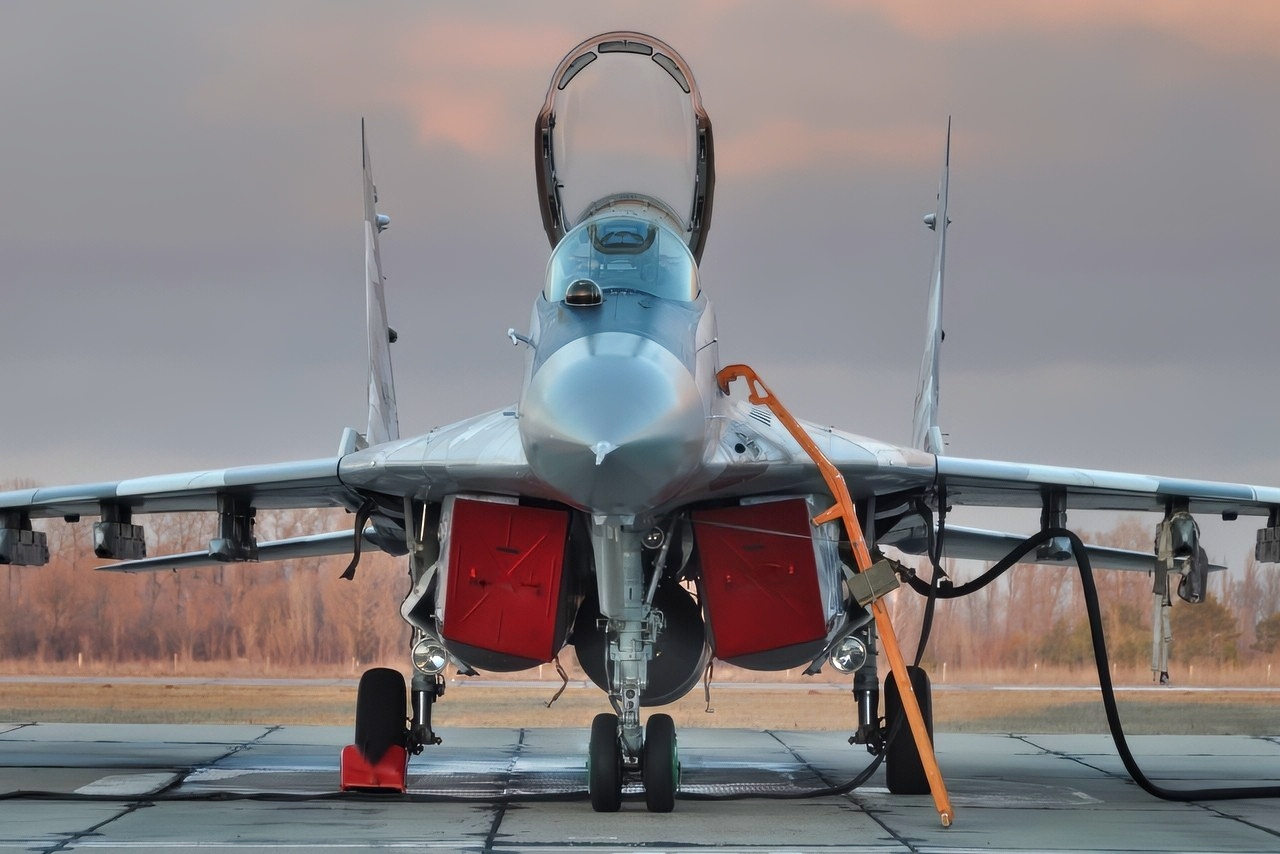
MiG-29 Fighter. Image Credit: Creative Commons.

MiG-29 Fighter. Image Credit: Creative Commons.
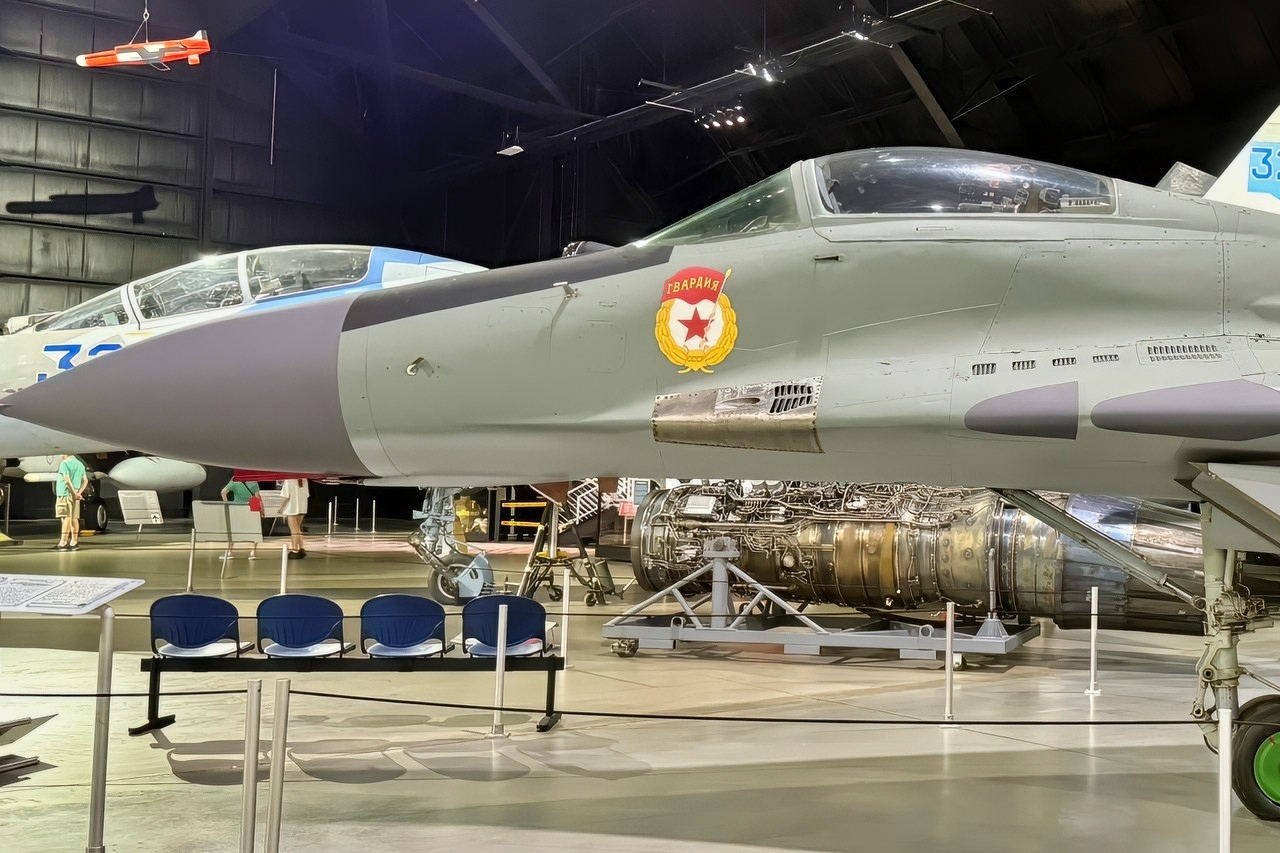
MiG-29 National Security Journal Photo Taken in July, 2025.
The Cold War was a dynamic period in history. Yes, it was nuclear brinkmanship between the two superpowers of the day, the United States and the Soviet Union, that defined that conflict. But it was an age of rapid technological innovation, quantum leaps in new ideas and capabilities, as well as an age of heroism. It was more than a political and military struggle.
The Cold War Was a Battle Between Good and Evil
The Cold War was essentially one of the greatest morality plays in human history. At its core, the fight was greater than the questions that define today’s international relations. For the Cold Warriors of the twentieth century, the main fight was between good and evil: between those who believed in collectivist tyranny and those who resisted it with individual heroism.
And the battle lines, despite being geographically well defined, were not so clear. Many lived in the Soviet Union who hated their regime and resisted it with every fiber of their being. From political dissidents, like the great Alexander Solzhenitsyn, wallowing in a cold, dark cell in the Siberian wilds, refusing to bow to the communists who had usurped the rightful government of Russia in 1917, to men like Soviet Air Force Captain Alexander Zuyev, the Cold War was an age of heroes.
Alexander Zuyev’s Great Escape
In fact, the story of Soviet Air Force Capt. Zuyev in May 1989 sounds like something pulled from the storyline of a great Hollywood escape film. Zuyev, a disillusioned Soviet fighter ace, concocted a scheme to flee the repressive (and by then collapsing) Soviet Union. And he plotted to escape by stealing his advanced Mikoyan MiG-29 warplane.

MiG-29 Fighter. Image Credit: Creative Commons.

MiG-29 Fighter U.S. Air Force Museum July 2025. Image Credit: National Security Journal.
Zuyev’s plot went something like this. He’d serve his comrades at the Black Sea airbase some cake. After all, even godless Commies can’t resist a good cake! Once his fellow pilots ingested the cake, they’d start to feel woozy and collapse. That’s because Zuyev embedded sedatives in their cake. It got better, though. Zuyev then went about sabotaging as much of the airfield’s critical operations in the course of his escape as he could. In fact, the disgruntled Soviet fighter ace even got into a gunfight with the base guards.
From there, Zuyev hopped in his MiG-29–one of the most advanced fighters in the Soviet Air Force–and took off, screaming across the Black Sea straight for NATO territory. Zuyev was not some mad bomber looking to start World War III with NATO. Instead, he was speeding toward NATO territory so that he could request asylum and live the remainder of his days in freedom.
Why the MiG-29 Fulcrum Terrified NATO
To understand the implications of Zuyev’s great escape, it’s key to comprehend how important the MiG-29 was for the Soviet Air Force in 1989–and why the Americans were desperate to get their hands on a fully operational model. Indeed, NATO intelligence analysts of the day viewed the MiG-29 as the most dangerous fighter aircraft in the world.
Developed by the iconic Soviet Mikoyan design bureau, the MiG-29 countered aircraft such as America’s legendary F-15 Eagle and F-16 Fighting Falcon. Mikoyan built the MiG-29 to be fast, maneuverable, heavily armed, and purpose-built for a brutal, high-intensity great-power war over the skies of Europe.
A MiG-29 could exceed Mach 2.25, operate from austere airfields, and carry advanced Soviet infrared missiles (like the R-73). NATO pilots feared the R-73 missile because of its high off-boresight targeting capability. Combined with the MiG-29’s helmet-mounted sight system, Soviet pilots theoretically could lock onto targets at angles Western pilots initially struggled to match.
From Loyal Soviet Pilot to Defector
Zuyev, meanwhile, was once one of the most respected fighter pilots in the Soviet Air Force. He had not started his career as an ardent anti-communist. In fact, the fighter ace had quickly risen through the ranks of the Soviet Air Force to fly some of the most elite aircraft in the Red Air Force. Over time, though, Zuyev grew tired of the drab, miserable life in the Soviet Union. He became deeply disillusioned.
According to his autobiography, Fulcrum, Zuyev increasingly viewed the Soviet Union as corrupt, stagnant, dishonest, and fundamentally broken. That view led to Zuyev’s self-described obsession with escaping to the West.
Luckily for Zuyev, his disillusionment coincided with the rise of Mikhail Gorbachev as leader of the Soviet Union, who was a reformer. Gorbachev’s reforms included the Glasnost and Perestroika policies that had opened the Soviet Union somewhat up to the wider world.
Once that slight openness was allowed, those who could see–such as an elite fighter pilot stationed on the potential frontlines of any major war with the West–understood how visibly deteriorated the USSR had become. There were immense morale problems, rampant alcoholism, uncontrolled corruption, ethnic tensions throughout the USSR, and an overall declining faith in communist ideology.
Alexander Zuyev embodied the decline and collapse of the Soviet Union in that he had lost all hope and faith in the Soviet system that had, in his view, become totalitarian and inhuman.
The Dangerous Dash Across the Black Sea
Once Zuyev reached his MiG-29, he managed to get airborne. Then, Zuyev faced another problem: survival. The Black Sea crossing was dangerous because Soviet radar and interceptors could track him. Turkish defenses also might not immediately recognize his intentions. So, Zuyev flew his MiG-29 low to avoid detection before approaching Turkey.

MiG-29 Fighter. Image Credit: Creative Commons.
The disillusioned Soviet fighter ace landed his pilfered plane near Trabzon, Turkey. Turkish authorities promptly detained him. The Soviet Air Force demanded the aircraft almost immediately.
Contrary to what many people believed, the Turks did not hand over the MiG-29 to the Americans. Ankara returned the bird to the USSR relatively quickly. After all, Turkey was balancing its NATO obligations against the need to avoid a major diplomatic crisis with their Black Sea neighbor, the Soviet Union.
Even limited access afforded to the US and NATO, though (along with briefings by Zuyev), was enough to provide Western intelligence services with valuable information. What’s more, the propaganda damage to the Reds was enormous.
The Defection That Exposed Soviet Weakness
To Western observers, the incident reinforced the image of a collapsing superpower whose own officers no longer believed in the system they served. Soviet media struggled to do damage control. State narratives depicted Capt. Zuyev is mentally unstable and potentially compromised by Western intelligence. Nothing the Soviet propagandists could say or do could change the accurate perception that Zuyev’s defection gave the West: the Soviet Union was dying from within and would soon implode.
As for the MiG-29 itself, the West learned some valuable insights. First, Western intelligence determined that their initial fears of the MiG-29 were overwrought. Yes, the MiG-29 was formidable in visual-range combat.
But Western intelligence analysts quickly discovered a major Soviet weakness.
Among those weaknesses were insufficient pilot training hours, unreliable radar, primitive avionics (compared to Western systems), limited situational awareness, maintenance complications, and a heavy reliance on ground-controlled interception doctrine within the Soviet Air Force.
The Soviet aircraft itself was dangerous. But the broader Soviet military ecosystem surrounding it was increasingly brittle, like the USSR itself.
Zuyev’s Life in America–and His Tragic End
After departing Turkey, Zuyev moved to the United States. As noted above, he later wrote his memoir, Fulcrum, which became one of the more fascinating firsthand accounts of late Soviet military aviation culture. Critics noted that Zuyev’s book successfully blended technical aviation detail with insights into Soviet life, ideology, and the psychology of serving inside a declining superpower.
Sadly, Zuyev perished in 2001 while piloting an old Soviet Yakolev Yak-52 trainer aircraft over Washington State.
What Alexander Zuyev’s Escape Really Meant
What the Zuyev affair taught the world was that the Soviet Union, the “Evil Empire,” as President Ronald Reagan had dubbed it, was brittle. A superpower, like the USSR, can build terrifying weapons. It can deploy Mach 2 fighters, threaten nuclear war, and field massive armies. But once the people operating those systems stop believing in the state itself, the entire structure implodes.
Alexander Zuyev’s stolen MiG-29 was one of the clearest warnings that the Soviet Union was nearing its end. Once Western observers, however briefly, got a look at the powerful MiG-29, after Zuyev’s debriefing, the Western powers knew they’d win the Cold War.
A Warning for America?
Today, as the United States finds itself in another generational competition, this time with China, some fear that the United States could be playing the role that the Soviet Union did in the previous Cold War: a massive, hulking, military power that might be weaker on the inside than it’s letting on publicly.
About the Author: Brandon J. Weichert
Brandon J. Weichert is the Senior National Security Editor at 19FortyFive.com. Recently, Weichert became the editor of the “NatSec Guy” section at Emerald. TV. He was previously the senior national security editor at The National Interest. Weichert hosts The National Security Hour on iHeartRadio, where he discusses national security policy every Wednesday at 8 p.m. Eastern. He hosts a companion show on Rumble entitled “National Security Talk.” Weichert consults regularly with various government institutions and private organizations on geopolitical issues. His writings have appeared in numerous publications, among them Popular Mechanics, National Review, MSN, and The American Spectator. And his books include Winning Space: How America Remains a Superpower, Biohacked: China’s Race to Control Life, and The Shadow War: Iran’s Quest for Supremacy. Weichert’s newest book, A Disaster of Our Own Making: How the West Lost Ukraine, is available for purchase at any bookstore. Follow him via Twitter/X @WeTheBrandon.


