

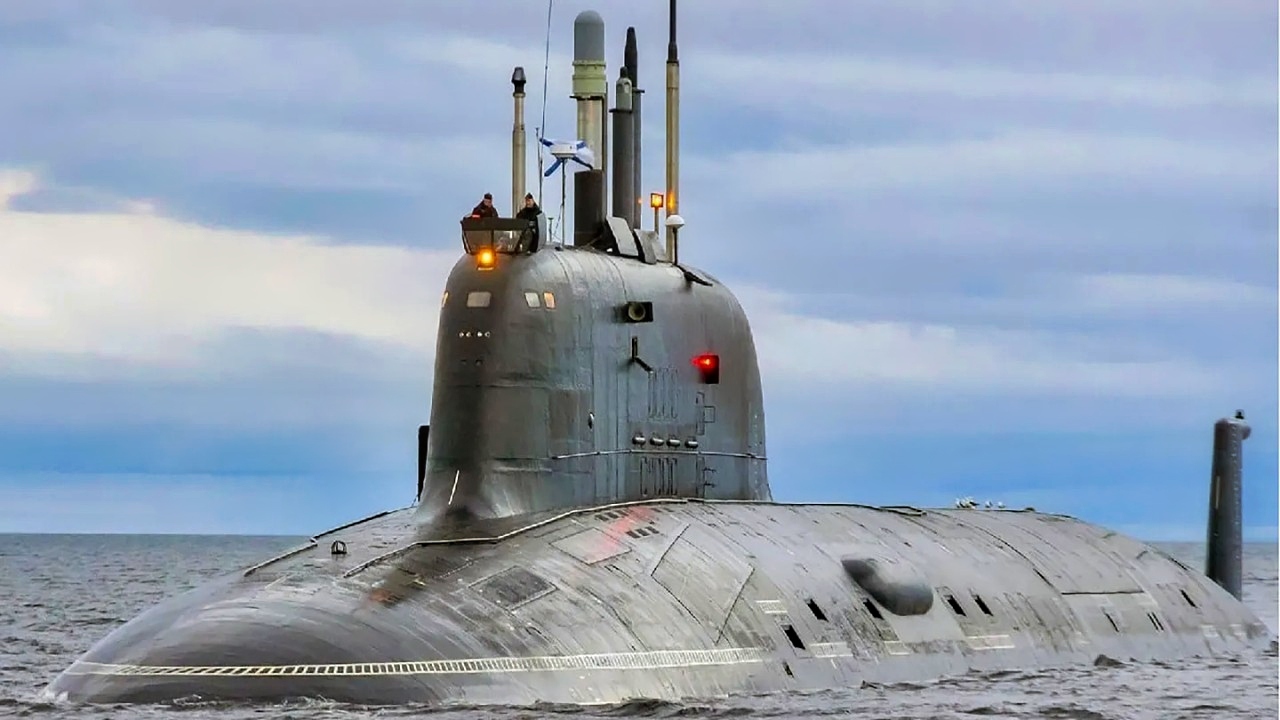
The Soviet K-219 nuclear ballistic missile submarine sank in the North Atlantic off the coast of Bermuda in October 1986. The Yankee-class submarine rests 18,000 feet down. Its nuclear reactor and nuclear ballistic missiles are still aboard. The disaster began with a faulty missile silo seal. Seawater leaked into one of the missile silos. The water mixed with R-27 liquid-fueled missile propellant. An explosion ripped open the missile tube and released toxic gases. Soviet sailor Sergi Preminin manually shut down the submarine’s reactor after automatic safety systems failed. Preminin became trapped inside and died.
How Russia Lost a Nuclear Submarine Near Bermuda
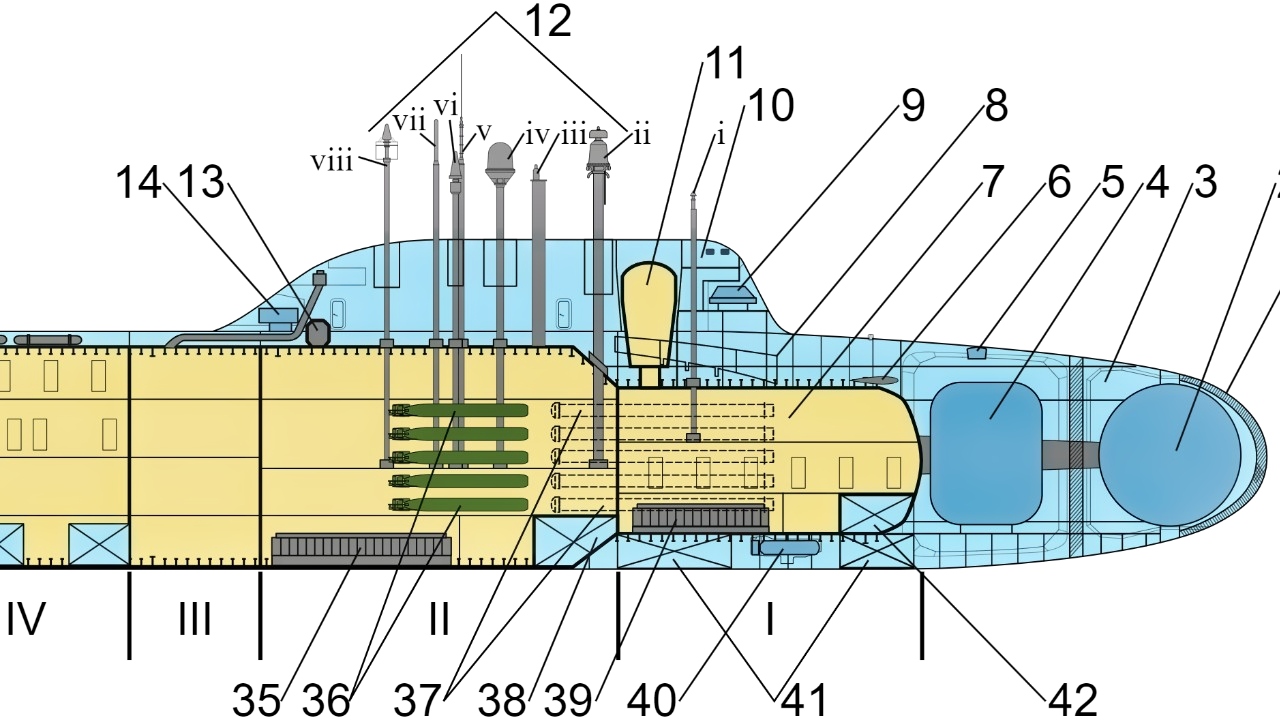
Yasen-Class Submarine from Russia. Image Credit: Creative Commons.
Submarine disasters have captured the imagination virtually since their application to warfare. Silent, deep-diving vessels in one of the world’s most austere environments, submariners face the real risk of anonymous, watery graves sometimes thousands of feet below the surface. One of the lesser-known submarine disasters of the Cold War involved the Soviet submarine K-219, a nuclear-powered Yankee-class submarine.
K-219
The Soviet ballistic missile submarine K-219 sank in the North Atlantic, off the coast of Bermuda, in October 1986, following a chain of mistakes and accidents that began with a faulty missile silo seal.
K-219 was underway as part of a normal nuclear deterrence patrol when seawater began to leak into one of the missile silos. The submarine carried liquid-fueled R-27 ballistic missiles that would be the source of the submarine explosion that ultimately sank K-219 when seawater mixed with missile propellant.
The explosion aboard K-219 ripped open the missile tube and released toxic gases into the submarine. Though K-219 would surface, the situation on board did not improve. Several crewmen died during the initial blast, but perhaps the best-known part of the disaster was when Sergi Preminin, a Soviet sailor, manually shut down the submarine’s reactor after realizing that automatic safety systems had failed. Though Preminin ultimately prevented a much more dangerous reactor catastrophe, he became trapped and died within the submarine.
Save the Ship!
K-219 did not immediately sink, and for a time, Soviet authorities hoped that K-219 could be towed back to home waters and repaired.
Unusually, K-219’s captain, Igor Britanov, refused orders from Moscow that would have seen his crew back aboard the submarine following their initial evacuation.

Mike-Class Submarine from Russia. Image Credit: Creative Commons.

Akula-Class Submarine from Russian Navy. Image Credit: Creative Commons.
His decision would prove to be prescient, as K-219 ultimately flooded and sank, resting on the sea floor about 18,000 feet down with its nuclear reactor and nuclear missiles still aboard.
Mysterious Waters
A swirl of rumors and accusations would surround the events leading to the sinking of the K-219. Soviet authorities initially claimed that the submarine had collided with the USS Augusta, a Los Angeles-class nuclear-powered attack submarine — a weighty accusation during the Cold War.
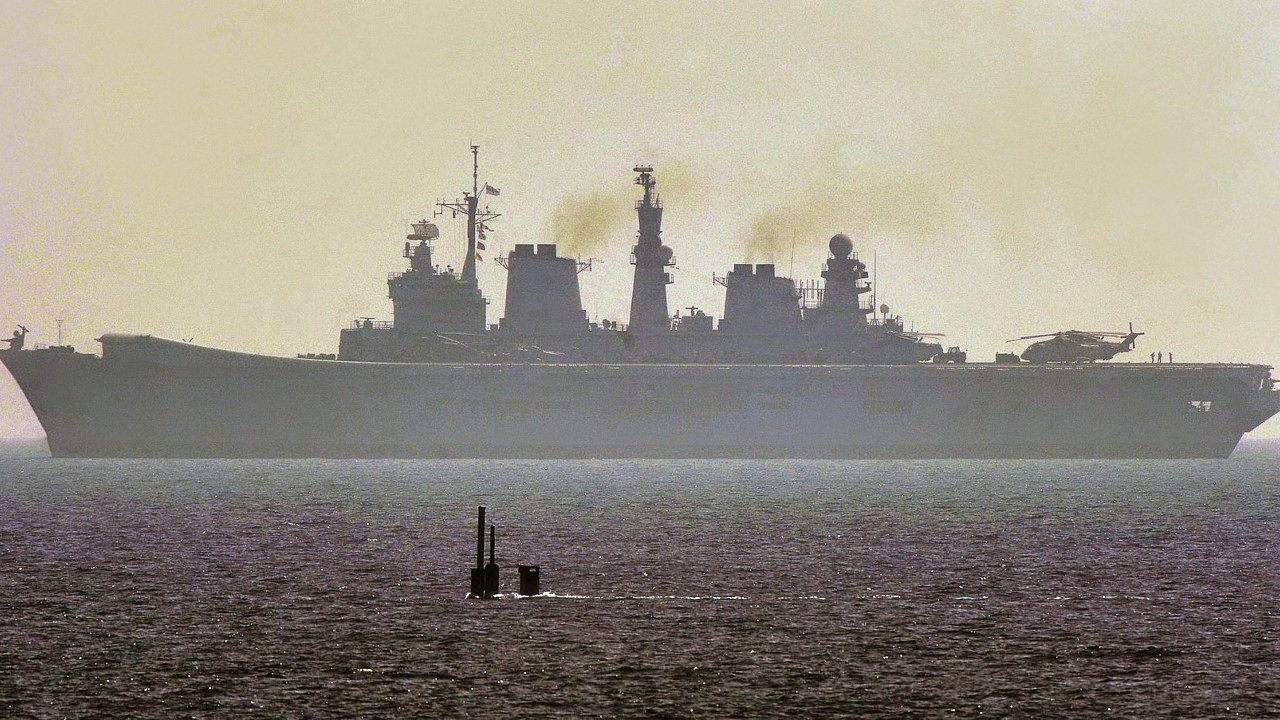
Los Angeles-Class Submarine USS Dallas

Los Angeles-Class. Image Credit: Creative Commons.

APRA HARBOR, Guam (Jan. 17, 2023) – The Los Angeles-class fast-attack submarine USS Key West (SSN 722) departs Apra Harbor, Guam, Jan. 17. Key West is one of five submarines assigned to Commander, Submarine Squadron 15. Commander, Submarine Squadron 15 is responsible for providing training, material and personnel readiness support to multiple Los Angeles-class fast attack submarines and is located at Polaris Point, Naval Base Guam. (U.S. Navy photo by Lt. Eric Uhden)
The accusation would have shifted the blame away from Soviet weapons design, maintenance schedules, and build quality, placing it squarely on overly aggressive U.S. Navy patrol tactics. In reality, however, Soviet naval training standards are thought to have been strained, making an accident, if not an inevitability, then a distinct possibility.
As one analysis written by a former Soviet submariner and U.S. Navy officer explained, at the time of the K-219 disaster, “cruise training had never been so chaotic. The Cold War was ongoing, and the Soviet Navy – plus the Strategic Rocket Forces – bore the brunt of the two superpowers’ nuclear standoff. The Soviet Union’s response to the American deployment of Pershing ICBMs and cruise missiles on the front line in Europe was to build up the forces of the VMF (Navy) of the USSR, and to extend RPK-SN patrolling up to the immediate shore of the United States.”
“Thus, the number of deterrent patrols for RPK-SNs rose to two or three each year.
The ships had reached the limit of their capabilities, and the repair base was far from adequate for the fleet’s new tasks. For Soviet submarines, several operational cruises each year, unused leave, and muddled training all became the norm. Under the pressure of these conditions, senior commanders had to close their eyes to the fact that non-proficient crews were going out to sea on unfamiliar boats. Discussion of crew proficiency and cohesiveness was not allowed.” Under these conditions, it would only be a matter of time before disaster struck.
Controversy in Hollywood
In the 1997 book Hostile Waters, the events surrounding the sinking of the K-219 are described, and it was followed by a film of the same name, produced by HBO later that year.
Both the book and the film production followed Soviet accusations that attribute the K-219’s sinking to a collision with the USS Augusta. So great was the indignation at the Soviet accusation that the United States Navy took the unusual step of issuing a statement eschewing any responsibility for what had occurred.
“The United States Navy normally does not comment on submarine operations, but in this case, because the scenario is so outrageous, the Navy is compelled to respond.
The United States Navy categorically denies that any U.S. submarine collided with the Russian Yankee submarine (K-219) or that the Navy had anything to do with the cause of the casualty that resulted in the loss of the Russian Yankee submarine.”
Years later, Soviet Captain Britanov would also deny that his submarine had collided with an American submarine, and former Soviet Navy commander Admiral Valdimir Chernavin later described the accident as the result of a missile tube malfunction rather than an underwater collision.
Political Fallout
Preminin, the sailor who died securing the submarine’s reactor, was posthumously awarded the Order of the Red Star, one of the Soviet Union’s highest military honors.
Though Captain Britanov faced a number of charges after the loss of the submarine, including sabotage, treason, and negligence in the line of duty, the charges against him were ultimately dropped thanks to a shakeup within the Soviet Union’s senior defense leadership following an unrelated scandal.
Though the incident was never officially resolved through a joint Soviet-American investigation, the collision theory eventually lost credibility, and the weight of the evidence points to an internal mechanical failure and subsequent chemical reaction, which is today the dominant theory of what happened.
About the Author: Caleb Larson
Caleb Larson is an American multiformat journalist based in Berlin, Germany. His work covers the intersection of conflict and society, focusing on American foreign policy and European security. He has reported from Germany, Russia, and the United States. Most recently, he covered the war in Ukraine, reporting extensively on the shifting battle lines in Donbas and writing about the war’s civilian and humanitarian toll. Previously, he worked as a Defense Reporter for POLITICO Europe. You can follow his latest work on X.


sand_cat
May 13, 2026 at 12:48 pm
So which was it: “Yankee” or “Yasen”? The article mentions both, and both could be carrying nuclear missiles: ballistic for Yankee and cruise for Yasen? They are completely different vessels.