

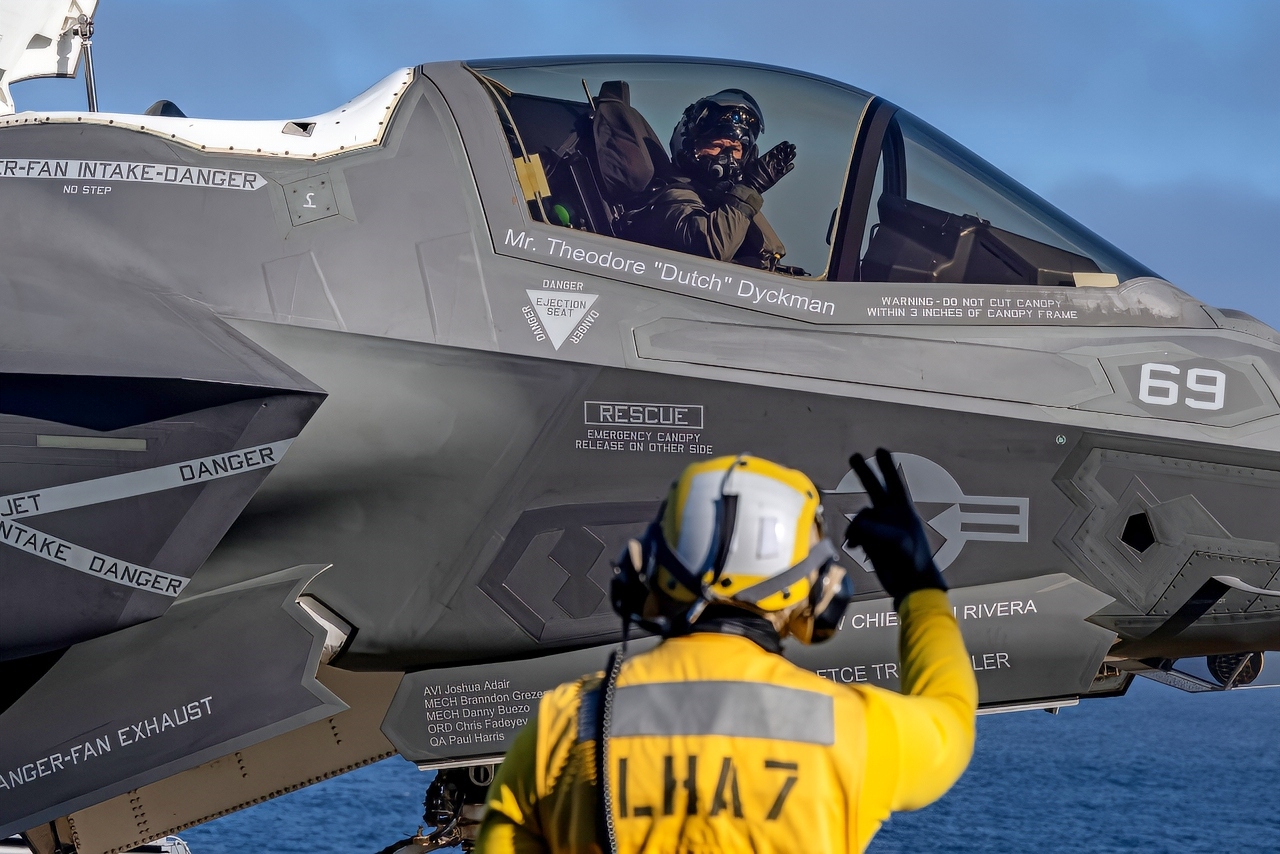
Key Points and Summary – India will not buy the U.S. F-35, despite its technical superiority over the Russian Su-57. While the F-35’s stealth is combat-proven, three key factors make a deal impossible.
-First, Washington will not grant the technology transfer and domestic production rights that India’s “Make in India” policy demands.
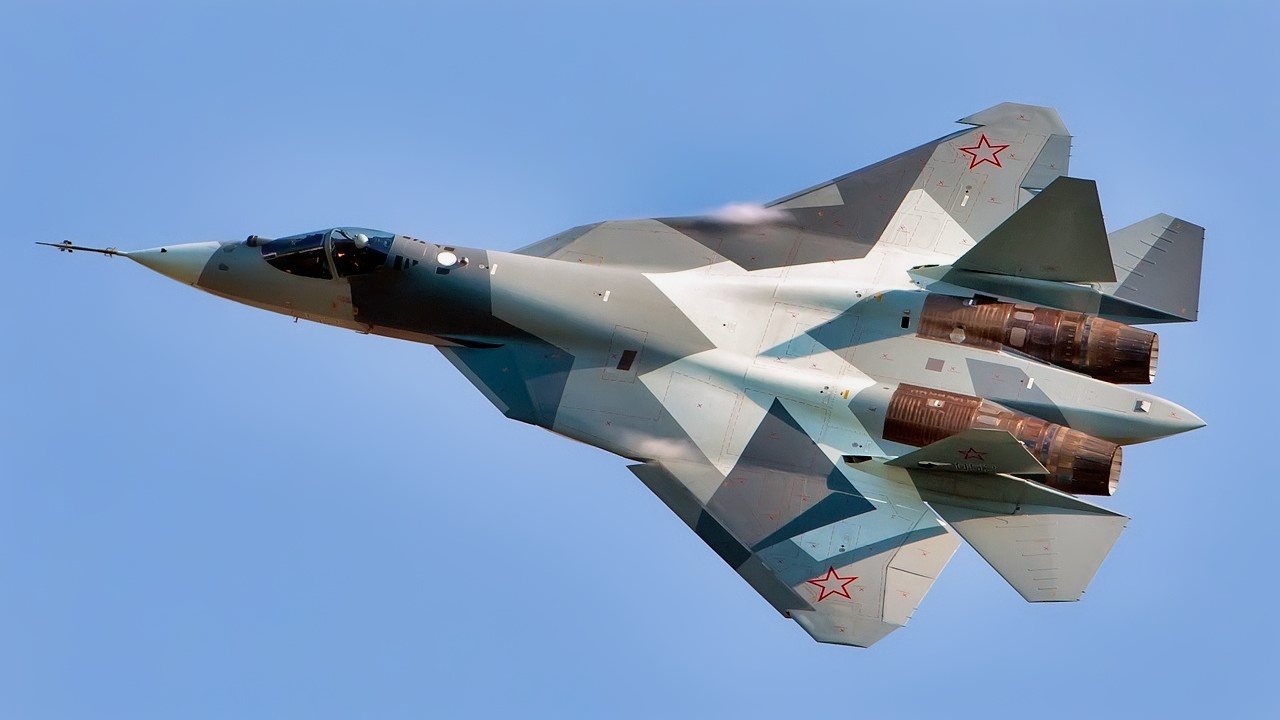
Russia PAK-FA or Su-57 Felon. Image Credit: Creative Commons.
-Second, India’s operation of the Russian S-400 air defense system is a security deal-breaker for the U.S.
-Finally, recent U.S. tariffs have strained relations.
-Instead, India will likely license-produce the inferior Su-57 as a stopgap for its own domestic fighter program
Would India Buy The F-35?
Earlier this year, U.S. President Donald Trump suggested that India should purchase the fifth-generation Lockheed Martin F-35 Lightning II.
New Delhi all but slammed that door shut on that invitation after Trump also announced a 50 percent tariff on Indian goods that went into effect in August. The tariff was presented as a response to India’s continued purchases of Russian oil – purchases that finance the ongoing war in Ukraine.
While Washington has been trying to woo New Delhi away from Moscow, India remains Russia’s biggest foreign customer of military equipment. Tariffs notwithstanding, that isn’t going to change anytime soon.
Proposal Stage, No Formal Process Started
India will not buy F-35 fighter jets; the offer was at the proposal stage, and India’s government has indicated no formal process has begun. New Delhi cites the aircraft’s high costs and high maintenance needs, as well as a lack of technology transfers as part of the deal, and a preference for its own indigenous programs, such as the Tejas and Advanced Medium Combat Aircraft – programs in line with its Make in India initiative.
The U.S. has also offered to sell the MH-60R Seahawk helicopter and the P-8I maritime patrol aircraft. These could begin the process of establishing consistent U.S. military sales to India. But the F-35 is another deal.
Indian Government Split on F-35
India’s main opposition party, the Congress Party, has used Trump ally and billionaire Elon Musk’s past criticism of the F-35 to argue against purchasing the fighter.
“The F-35, which Elon Musk has described as ‘junk’, why is Narendra Modi hell-bent on buying it?” asked a post on Congress’ official X account back in February, adding that the aircraft was too expensive and had high operational costs.
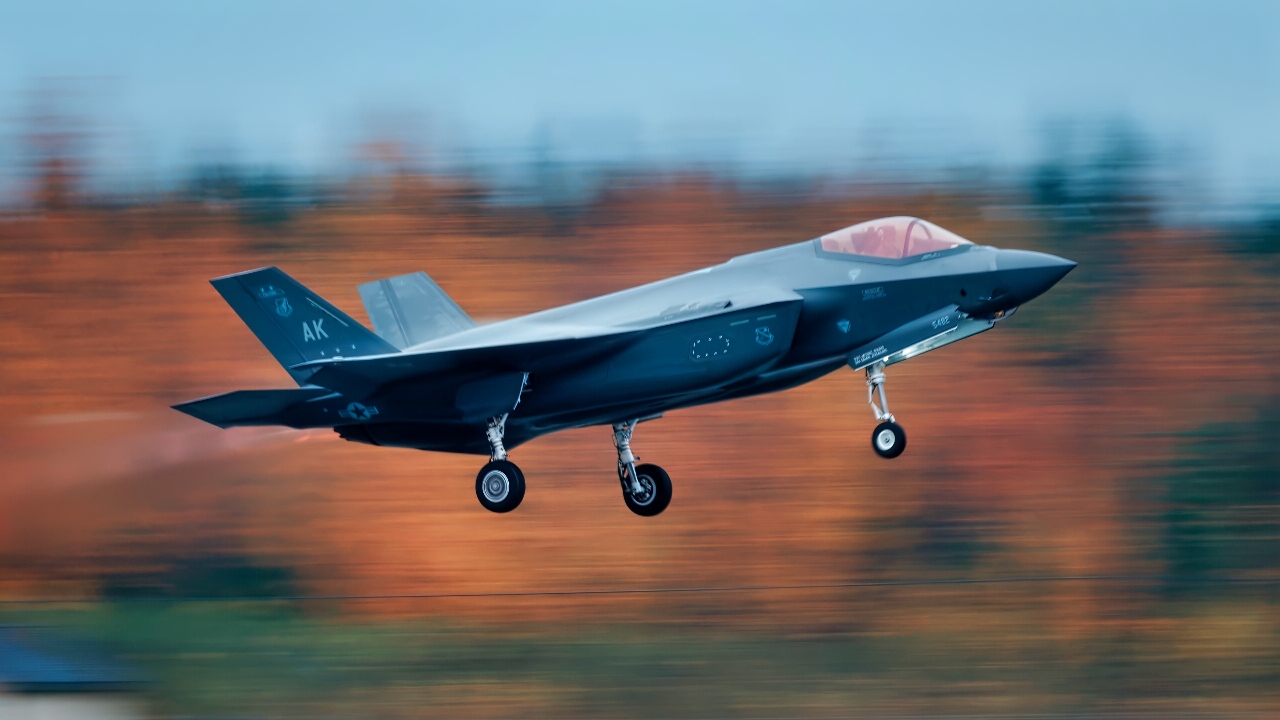
A F-35 Lightning lll assigned to the 354th Fighter Wing takes off from Eielson Air Force Base, Alaska September 19, 2024. The F-35 was participating in a multiple aircraft exercise for the 354th FW. (U.S. Air Force Photo by Senior Sean Lamb)
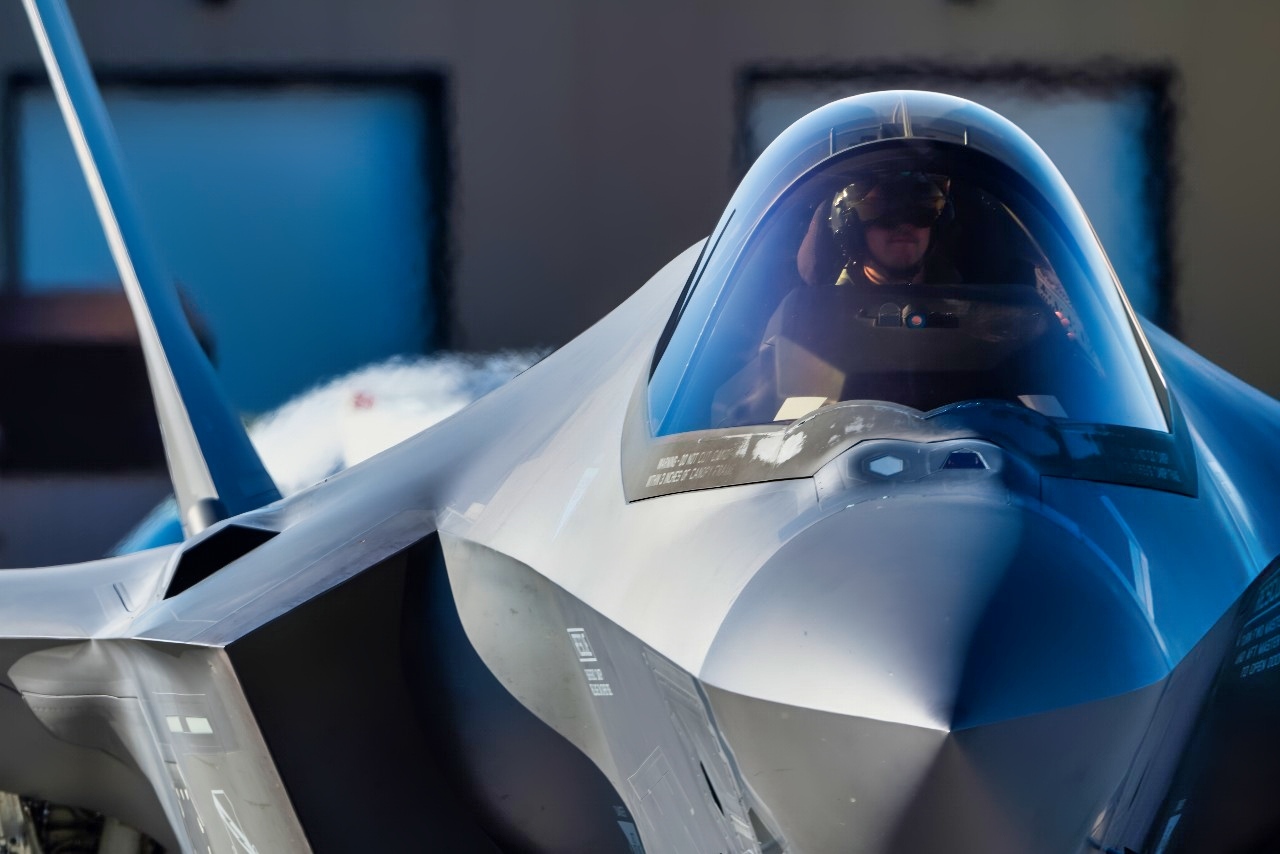
An F-35A Lightning II fighter jet, a single seat, single engine, all-weather stealth multirole fighter aircraft, assigned to the 466 fighter squadron prepares to taxi across the flightline at Hill Air Force Base, Utah, Oct. 5, 2024.
While the F-35 still has its detractors, Israeli air raids over Iran in October 2024 and June 2025 offer proof of what an outstanding aircraft it is. Those raids set back Iran’s nuclear program by years and wiped out the Islamic Republic’s air defenses, yet they resulted in no F-35 losses.
The Su-57 Is Not The Answer For India’s Needs:
Although the myth persists that the F-35 is a bad aircraft, there can be no doubt that the Lightning II is superior to Russia’s Su-57.
However, the Indian government is in talks with Russia to buy a license to produce the Su-57 domestically. While the Su-57 offers improvements over previous Russian aircraft, its radar cross-section is significantly larger than that of other fifth-generation fighters, and delays, budget issues, and reliance on older engines have plagued the aircraft’s development.
The F-35 has a frontal radar cross-section of 0.0001 square meters, thanks in large part to its advanced fiber-matte radar-absorbent material. In comparison, it is believed the Su-57 has a radar cross-section ranging from 0.1 to 1 square meter. This would mean the Su-57 has a radar cross-section 1,000 times bigger than the F-35’s. Its detectability by radar is in fact more comparable to that of a fourth-generation fighter.
That might be an exaggeration, and Alex Hollings says the Felon’s radar signature is more likely to be 20 to 30 times that of an F-22 Raptor; this is still a massive difference in stealth.
The F-35 “Is Like a Ninja” With Its Stealth
While India might value the superior speed of the Su-57, the F-35’s stealth would be an enormous advantage if India’s air wars with Pakistan reignite.
“The F-35 is like a ninja, nearly impossible to detect on radar. Its radar cross-section is just 0.0015 square meters — as tiny as a pigeon flying in the sky. The Su-57, while stealthy from the front, has detectable signatures from the sides and rear,” wrote aviation journalist Nikha P. Shekhar. “The F-35 Lightning II represents the most advanced fifth-generation stealth fighter available on the global market. It is designed with stealth, sensor fusion, and advanced avionics at its core, giving it a significant edge in modern air warfare.”
Shekhar continued, citing retired Indian Army Gen. MM Naravane: “Its ability to operate in contested airspace without being detected by radar is a major advantage against technologically advanced adversaries like China.”
Why The Indian Government Will Balk At The F-35
While the F-35 would better suit India’s needs, the Modi government will not be buying it.
First, India wants to develop a domestic aircraft industry. New Delhi wants to build its own fifth-generation fighters, and until the designs for them come online, the Su-57 will suffice. The U.S. will not offer New Delhi the opportunity to build F-35s in India, and that alone will quash any potential deal. India wants to be a builder rather than a buyer.
Plus, the Russians are offering technology transfers of the Su-57, and India will be able to use that technology for its own future aircraft designs. Washington will not agree to anything similar.
Finally, Indian air defenses use the Russian S-400 air defense system.
Washington kicked Turkey out of the F-35 program for buying the S-400, stating that the platforms were incompatible and Turkey’s use of both would compromise the F-35’s security. It is inconceivable that Washington would allow India to operate the F-35 when Ankara, a NATO ally, cannot.
About the Author: Steve Balestrieri
Steve Balestrieri is a National Security Columnist. He served as a US Army Special Forces NCO and Warrant Officer. In addition to writing on defense, he covers the NFL for PatsFans.com and is a member of the Pro Football Writers of America (PFWA). His work was regularly featured in many military publications.
More Military
The M10 Booker Light Tank Is Dead
SR-72 Darkstar Might Never Fly


