


Key Points and Summary – This analysis provides a head-to-head comparison of the U.S. F-35A and China’s J-20 stealth fighters.
-The F-35 holds the advantage in overall stealth, superior sensor fusion, and networked warfare capabilities, likely making it the victor in a close-range dogfight.
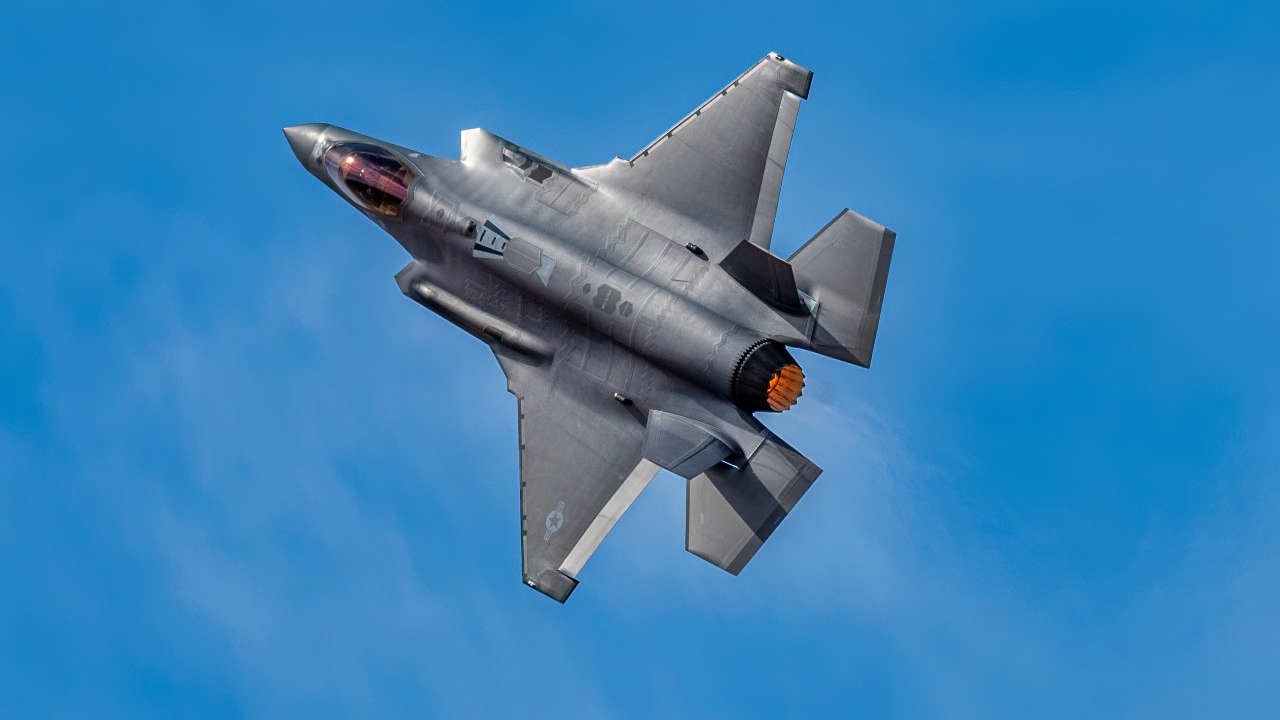
A U.S. Air Force F-35A Lightning II aircraft flies during the Heritage Flight Training Course at Davis-Monthan Air Force Base, Arizona, Feb. 28, 2025. The F-35 is designed to provide the pilot with unsurpassed situational awareness, positive target identification and precision strike in all weather conditions. (U.S. Air Force photo by Senior Airman Jasmyne Bridgers-Matos)
-However, the J-20 boasts superior speed, range, and payload, and its longer-range air-to-air missiles could give it the edge in a beyond-visual-range (BVR) engagement.
-The article concludes that neither jet is decisively superior; the winner would depend entirely on the specific combat scenario, tactics, and support systems in play.
J-20 vs. F-35A: Who Wins?
The F-35 Lightning II is one of the most advanced and capable fighter jets currently in service worldwide. It has received worldwide recognition for its advanced stealth features, avionics, and overall versatility. The Chengdu J-20 Mighty Dragon, on the other hand, is China’s premier stealth fighter. It is currently China’s only fifth-generation fighter, though other prototypes are presently undergoing air trials. In a war between the U.S. and China, the F-35 and J-20 would more than likely find themselves in a battle against each other.
Which fighter is most likely to win in a one-on-one scenario?
Clash of the Stealth Titans
The F-35A is a multirole stealth fighter developed under the Joint Strike Fighter program. It was designed to perform a wide range of missions, including air-to-air combat, ground attack, and electronic warfare.
It was built for stealth, sensor fusion, and network-centric warfare. The aircraft is powered by a single Pratt & Whitney F135 engine, which provides excellent thrust and fuel efficiency. The F-35A is widely deployed among U.S. forces and allied nations, making it a cornerstone of Western air power and coalition operations.
In contrast, the J-20 was developed by China’s Chengdu Aerospace Corporation with a focus on air superiority and strategic strike missions. It is a twin-engine fighter, currently using the WS-10C2 engine in most operational variants, though newer models are expected to feature the more powerful WS-15.
The J-20 is larger than the F-35A and designed for long-range engagements, with a particular emphasis on countering Western air dominance in the Asia-Pacific region. Unlike the F-35A, the J-20 is operated solely by the People’s Liberation Army Air Force (PLAAF), reflecting China’s strategic autonomy.
Stealth is a critical factor in modern air combat, and both aircraft incorporate low-observable technologies.
The F-35A is widely considered to be one of the stealthiest fighter in operation due to its smaller radar cross-section, advanced radar-absorbent materials, and internal weapons bays. Its stealth is optimized for penetrating heavily defended airspace and surviving in contested environments.
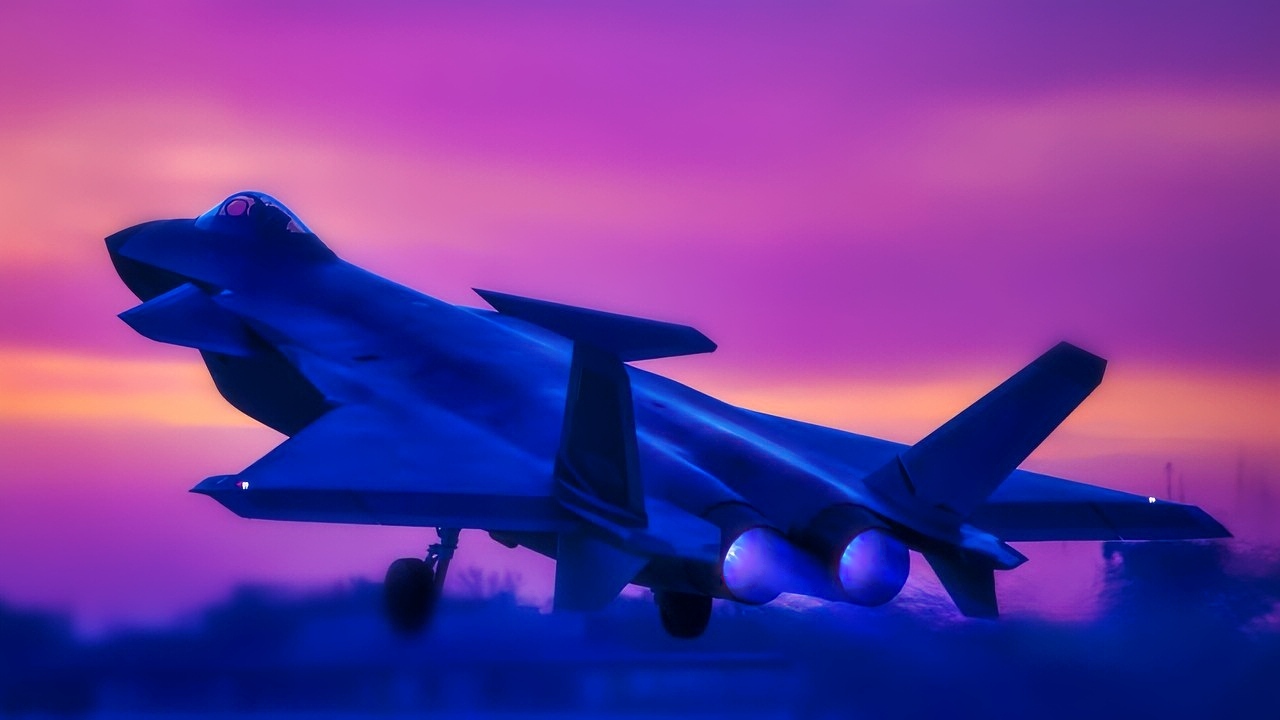
J-20 Fighter from China. Image Credit: PLAAF.
The J-20 also features stealth shaping and radar-absorbing coatings, and recent upgrades have improved its infrared suppression and sensor coverage.
However, its larger size and design suggest a somewhat higher radar cross-section compared to the F-35A.
Who Has Better Avionics?
Avionics and sensor systems are another area where the F-35A excels. It features the AN/APG-85 AESA radar, Electro-Optical Targeting System (EOTS), Distributed Aperture System (DAS), and advanced electronic warfare capabilities.
These systems are integrated through sophisticated sensor fusion, giving the pilot a comprehensive view of the battlespace. The F-35A’s Block 4 upgrades, though delayed, promise even more advanced capabilities, including new sensors, expanded weapons integration, and improved radar performance.
However, the J-20 is not to be underestimated in the realm of avionics. The fighter is equipped with its own AESA radar, infrared search and track (IRST) system, and a new-generation EOTS with spherical coverage.
China is also investing heavily in artificial intelligence to enhance electronic warfare, autonomous operations, and coordination with unmanned systems. The J-20S variant, which includes a second crew member, is designed to improve electronic warfare capabilities and enable better control of loyal wingman drones.
Armaments and Engine Performance
In terms of weapons and payload, the F-35A typically carries four AIM-120 AMRAAMs internally, though external pylons can be used for additional ordnance. New developments such as the “Six-in-the-Bay” Sidekick racks will allow it to carry six missiles internally. It is also integrating advanced munitions like the AGM-158C LRASM and GBU-53 Stormbreaker-II.
The J-20, with its larger internal bays and external hardpoints, can carry up to eight missiles. It is armed with long-range PL-15 and PL-XX air-to-air missiles, which are designed to engage targets at distances beyond the reach of most Western missiles.
Although primarily an air superiority fighter, the J-20 has demonstrated air-to-ground capabilities in recent exercises.
In terms of engine performance, the J-20 has the F-35 beat. The F-35A has a maximum speed of Mach 1.6+, a combat radius of approximately 1,100 kilometers, and limited supercruise capability.
The J-20, on the other hand, can reach speeds of Mach 2+, has a combat radius of around 2,000 kilometers, and is reportedly able to achieve true supercruise with the WS-15 engine. The J-20 also has a higher maximum payload and slightly higher service ceiling. These characteristics make the J-20 better suited for long-range missions and strategic engagements.
Who Wins in 4 Words: No Easy Victory Here
In a hypothetical combat scenario, the outcome would depend heavily on the context.
In a wider integrated battlefield, the F-35A’s superior avionics would likely give it the edge in any fight.
Its ability to operate seamlessly with other platforms and share data in real time is a major advantage. In a long-range Pacific engagement, the J-20’s extended range, heavier payload, and advanced missiles could allow give it the edge, especially if supported by electronic warfare assets.
In a one-on-one dogfight, the F-35A would likely have the advantage due to its agility and maneuverability, but the J-20 could prevail in beyond-visual-range (BVR) combat thanks to its longer-range missiles and higher altitude launch capability.
Ultimately, neither aircraft is decisively superior across the board. The F-35A is more mature, widely deployed, and technologically integrated, making it a formidable multirole fighter. The J-20 is rapidly evolving, with impressive range, payload, and strategic flexibility.
The winner in a battle would depend on the mission profile, support assets, and tactical environment. Both aircraft represent the cutting edge of their respective nations’ aerospace capabilities and will likely shape the future of air combat for decades to come.
About the Author: Isaac Seitz
Isaac Seitz, a Defense Columnist, graduated from Patrick Henry College’s Strategic Intelligence and National Security program. He has also studied Russian at Middlebury Language Schools and has worked as an intelligence Analyst in the private sector.
More Military
China’s New J-20S Is the Double Trouble Problem for the F-35
The F-35 Is the iPhone of Stealth Fighter Planes


Ghost_Tomahawk
September 6, 2025 at 5:40 pm
The F35 loses because it REALLY can’t dog fight due to low speed and less munitions. It also would never get to dog fight because the J20 can hit it from longer range.
F35 is garbage.
George Taylor
September 6, 2025 at 5:59 pm
Is this a recycled article? It states the Chinese only have on 5th gen airframe yet they flew multiple J-35’s of both land and sea based variants on the recent VJ day parade.
Bubba
September 6, 2025 at 7:07 pm
That’s the longest story of “Four words” I’ve ever read .
So in other words of my own , the “Chinese fighter Wins” !
Only took three words !
James
September 7, 2025 at 1:27 am
CCP bots are just overwhelming this website. The “5th Gen” paper tiger that China boast haven’t even done a single combat sortie. It’s all on commie paper which absolutely garbage source. And no one does dogfight anymore, real life is not top gun.