


Article Summary – This piece explains why the U.S. occasionally brings its most secretive assets—Ohio-class ballistic and cruise-missile submarines—deliberately into public view.
-It revisits the 2010 “462 Tomahawks” moment, when three SSGNs surfaced around Asia and the Indian Ocean to signal U.S. displeasure with Chinese missile tests.

NAVAL BASE GUAM (April 23, 2025) – The guided-missile submarine USS Ohio (SSGN 726) transits Apra Harbor, Naval Base Guam, April 23, 2025. Ohio, homeported in Bangor, Washington, and assigned to Submarine Squadron 19, is conducting routine operations in the U.S. 7th Fleet area of operations. U.S. 7th Fleet is the U.S. Navy’s largest forward-deployed numbered fleet and routinely interacts and operates with allies and partners in preserving a free and open Indo-Pacific region. (U.S. Navy photo by Lt. James Caliva)
-More recent appearances by boats like USS Tennessee and USS Maryland near Norway and the Azores show a similar pattern: highly visible, low-risk deterrence aimed at Russia and reassurance for NATO allies.
-In an era of great-power rivalry, surfacing boomers has become a quiet but powerful form of strategic messaging.
Why U.S. ‘Invisible’ Missile Submarines Keep Suddenly Showing Up in Public
Unlike bombers and fighter aircraft, which are used as overt displays of force, nuclear-powered submarines and huge missile boats are rarely used in this way.
Their innate invisibility is their greatest strength.
Forrest Morgan, an analyst for the RAND Corporation, stated that missile boats are usually counterproductive to “crisis stability” because of their invisibility.
But he wrote that the United States, “in July 2010, three SSGNs surfaced nearly simultaneously in Western Pacific and Indian Ocean waters, allegedly to signal U.S. displeasure over Chinese missile tests in the East China Sea.”
The United States took this action in a coordinated, deliberate manner, despite its attempt to pass off the surfacing of the three boomers as a coincidence.
Sending China A Clear Message
The U.S. Navy keeps the locations of its submarines a secret. The fast attack guided missile submarines (SSGNs), and the “boomers” that fire nuclear-tipped ballistic missiles (SSBNs) remain silent, deadly, and deep almost all the time.

China J-20 With Parachute. Image Credit: PLAAF.
They rarely come to the surface. However, sometimes, the Navy surfaces them to remind a potential enemy that its continued belligerence is foolhardy. This is what happened in 2010. China had been acting with increasing belligerence, and it was testing its missiles in the East China Sea, rattling its saber toward the US.
This came at a crucial time, as China was rapidly expanding its naval capabilities. Between 2000 and 2010, the People’s Liberation Army Navy (PLAN) doubled its fleet size from approximately 100 maritime platforms to over 200.
The USS Ohio, USS Michigan, and USS Florida—each armed with 154 Tomahawk cruise missiles—appeared off the Philippines, South Korea, and Diego Garcia.
Greg Torode from the South China Morning Post reported the story.
“The appearance of the USS Michigan in Pusan, South Korea, the USS Ohio in Subic Bay, in the Philippines, and the USS Florida in the strategic Indian Ocean outpost of Diego Garcia not only reflects the trend of escalating submarine activity in East Asia but carries another threat as well. …
“Between them, the three submarines can carry 462 Tomahawks, boosting by an estimated 60 percent-plus the potential Tomahawk strike force of the entire Japanese-based Seventh Fleet — the core projection of U.S. military power in East Asia. …
“One veteran Asian military attaché, who keeps close ties with both Chinese and U.S. forces, noted that “460-odd Tomahawks is a huge amount of potential firepower in anybody’s language.”
“It is another sign that the U.S. is determined to not just maintain its military dominance in Asia, but to be seen doing so — that is a message for Beijing and for everybody else, whether you are a U.S. ally or a nation sitting on the fence.”
In doing so, at that time, the United States was sending Beijing a clear message, “you can rattle your saber all you want with your missile testing, but if you go too far, there are 462 reasons that you’ll regret it.
China’s Government Took Notice But Didn’t Overreact
The US intention was clear. “There’s been a decision to bolster our forces in the Pacific,” said Bonnie Glaser, who worked for the Center for Strategic and International Studies at that time.
She added, “There is no doubt that China will stand up and take notice.”
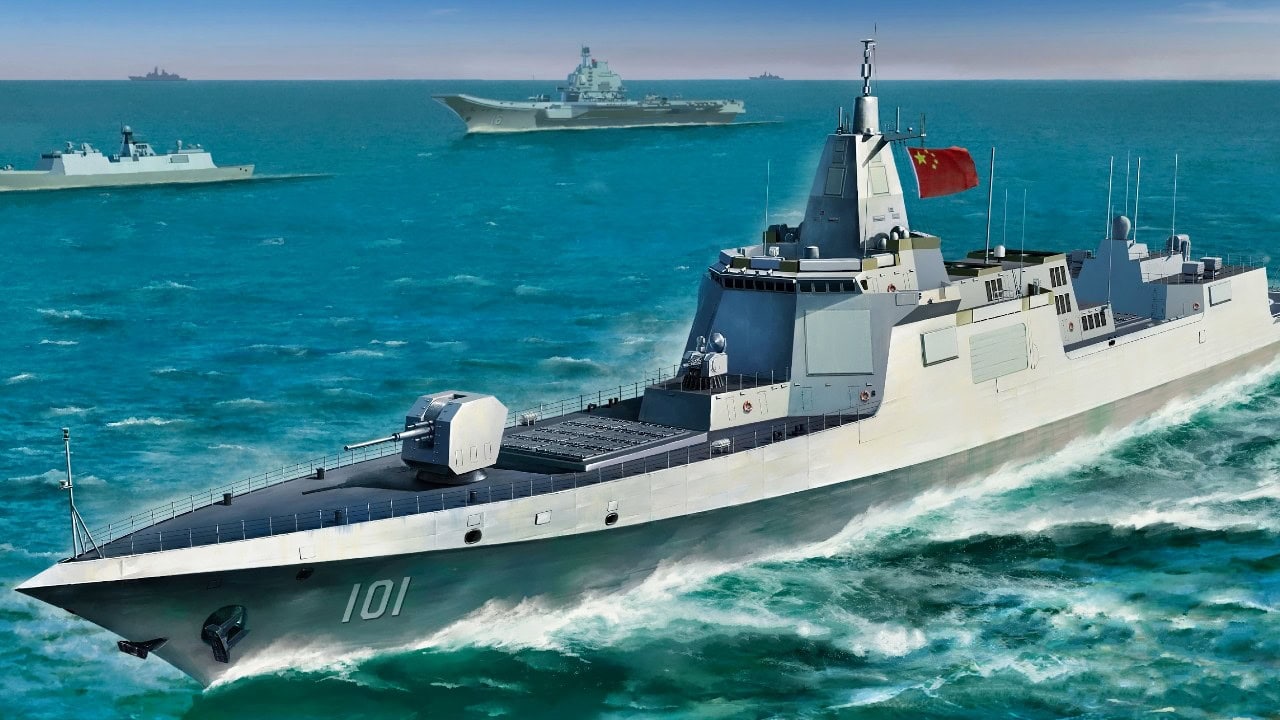
China’s Navy Graphic Artist Image Creative Commons.
The Tomahawks’ arrival “is part of a larger effort to bolster our capabilities in the region,” Glaser said. “It sends a signal that nobody should rule out our determination to be the balancer in the region that many countries there want us to be.”
The Chinese didn’t react with their standard anti-American rhetoric, but quietly.
“At present, common aspirations of countries in the Asian and Pacific regions are seeking for peace, stability, and regional security,” Wang Baodong, spokesman for the Chinese embassy in Washington, said.
“We hope the relevant U.S. military activities will serve for the regional peace, stability, and security, and not the contrary.”
US Continues To Flex Its Muscles With Recent Surfacings
The Ohio-class nuclear ballistic missile submarine, the USS Maryland, recently surfaced in the North Atlantic Ocean near Portugal’s Azores islands, the Navy confirmed recently.
U.S. nuclear submarines are becoming more visible in certain areas, particularly in the Atlantic and Pacific, as part of a strategy to demonstrate naval strength and deter potential adversaries. This increased visibility is not necessarily indicative of a change in operational patterns but rather of a shift in how the Navy communicates its presence.
In June 2024, the nuclear-powered submarine USS Tennessee (SSBN 734) surfaced in the Norwegian Sea, accompanied by the USS Normandy (CG 60), a P-8A Poseidon maritime patrol and reconnaissance aircraft, and an E-6B Mercury strategic communications plane.
Strategic Deterrence and Signaling
The U.S. Navy is using the surfacing of nuclear submarines, especially Ohio-class submarines, to signal its capabilities and commitment to allies, particularly in regions like the North Atlantic and around Europe, and not just in the Indo-Pacific. This is seen as a message to potential adversaries, such as Russia.
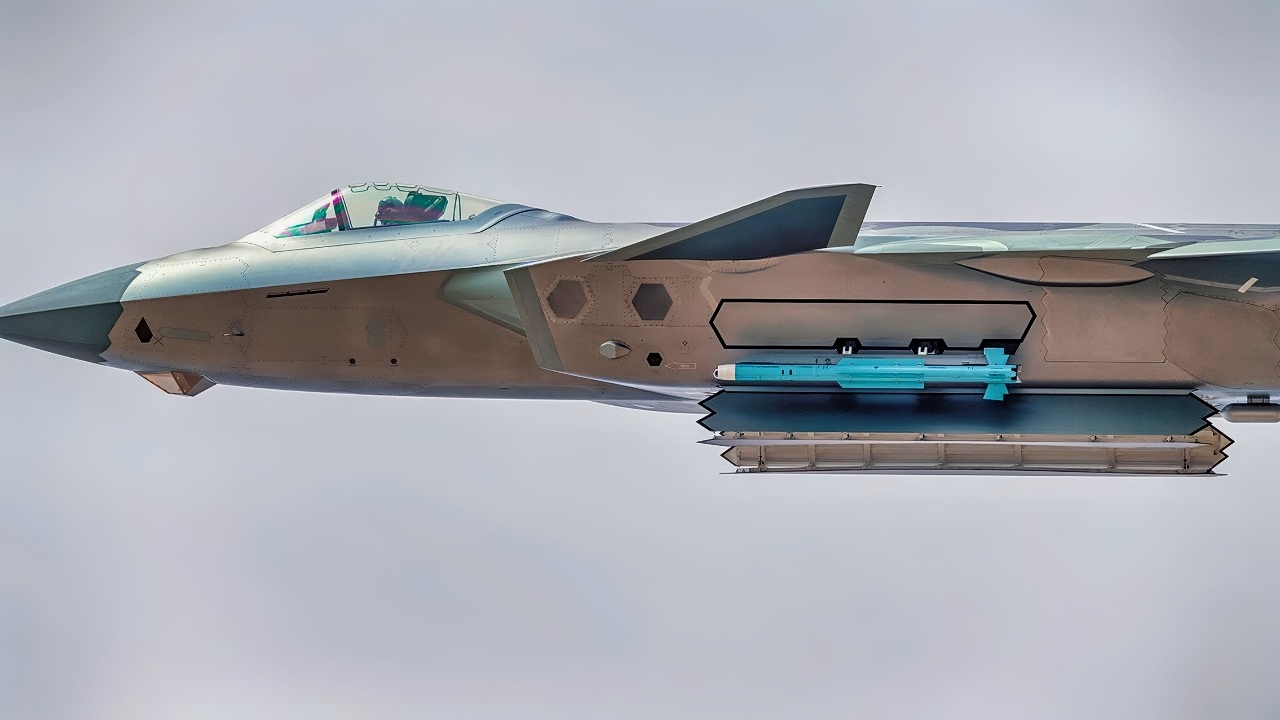
China J-20 Weapons. Image Credit: Chinese Weibo.
Publicly revealing submarine deployments, even if not routine, can be a strategic move. It allows the Navy to showcase its readiness and presence without disclosing specific operational details.
The increased visibility of U.S. submarines near Norway and other NATO allies reflects enhanced cooperation between the U.S. and its partners in the region. And it is used as a message to our increasingly aggressive adversaries that the US will support our allies.
The choice for a Norwegian deployment and surfacing highlights the broader strategic significance of this region, which is a significant corridor for Russian submarines and other naval vessels heading to the Atlantic, as well as the High North more generally.
While the surfacing of missile submarines is still a rare occurrence, it is a lower-risk move that signals strength and deterrence without ratcheting up tensions that could lead to disaster. We’ll probably continue to see more of these types of operations in the near future.
About the Author: Steve Balestrieri
Steve Balestrieri is a National Security Columnist. He served as a US Army Special Forces NCO and Warrant Officer. In addition to writing on defense, he covers the NFL for PatsFans.com and is a member of the Pro Football Writers of America (PFWA). His work was regularly featured in many military publications.
More Military
The Navy Wanted 29 Stealth Seawolf-Class Nuclear Attack Submarines. It Got Only 3
The F-35 Stealth Fighter Costs More Than Some Countries
$120,000,000,000 ‘Floating Coffin’: Is the Age of the Aircraft Carrier Sinking Fast?
Disaster? Why the B-1B Lancer Bomber Would Be Annihilated In a China War


