

Article Summary – Critics argue that in an era of cheap drones and long-range “carrier-killer” missiles, $13-billion Ford-class carriers are oversized targets.
-But that’s only half the story.
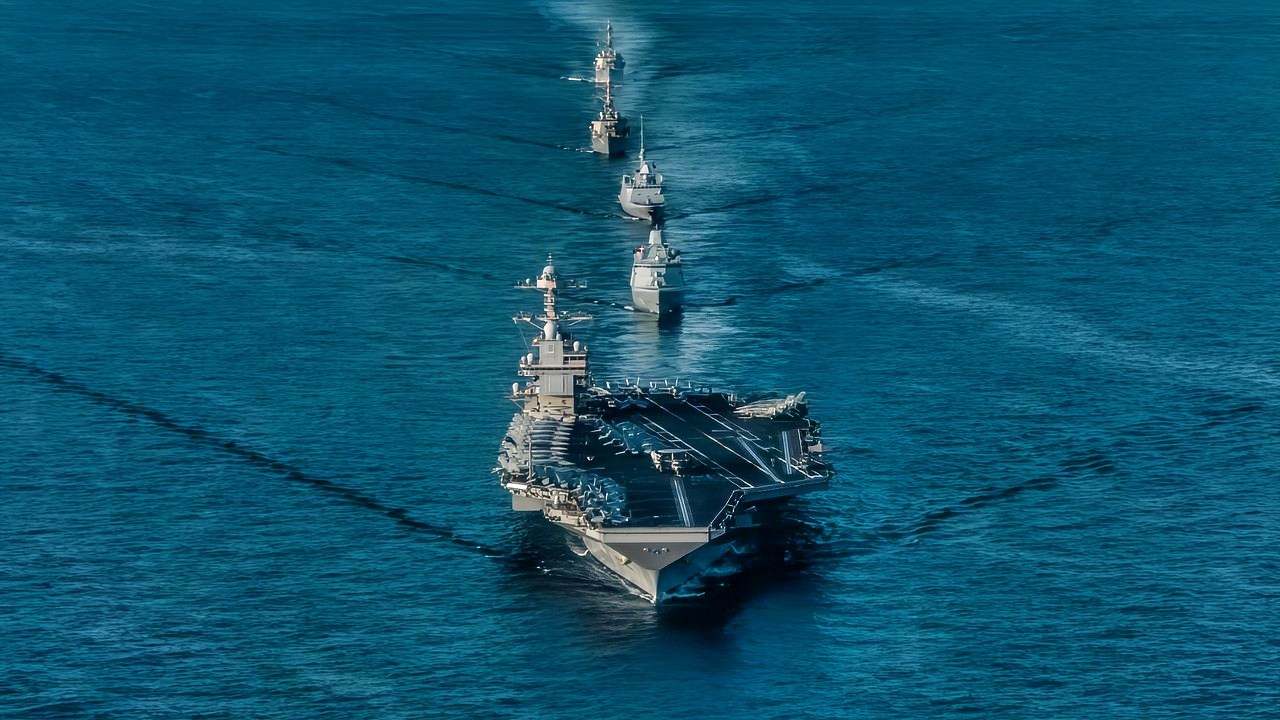
USS Gerald R. Ford Aircraft Carrier Training. Image Credit: U.S. Navy.
-Rather than retire the supercarrier, the U.S. Navy is reshaping its role—turning Ford into a global hub for manned-unmanned teaming, launching refueling drones, future UCAVs, and networked ISR platforms at scale.
-EMALS and advanced arresting gear were built with that future in mind. Backed by a carrier strike group and operating from international waters, Ford still offers unmatched reach, flexibility, and deterrence in a world where presence and persistence matter more than ever.
Yes, the Ford-Class Aircraft Carrier Is Worth It
Artificial intelligence is now in most people’s homes – and in most militaries.
Between automation and long-range missiles, the roles of some of the world’s most advanced military hardware are beginning to change, driven by novel technologies that are reshaping how humans think and operate.
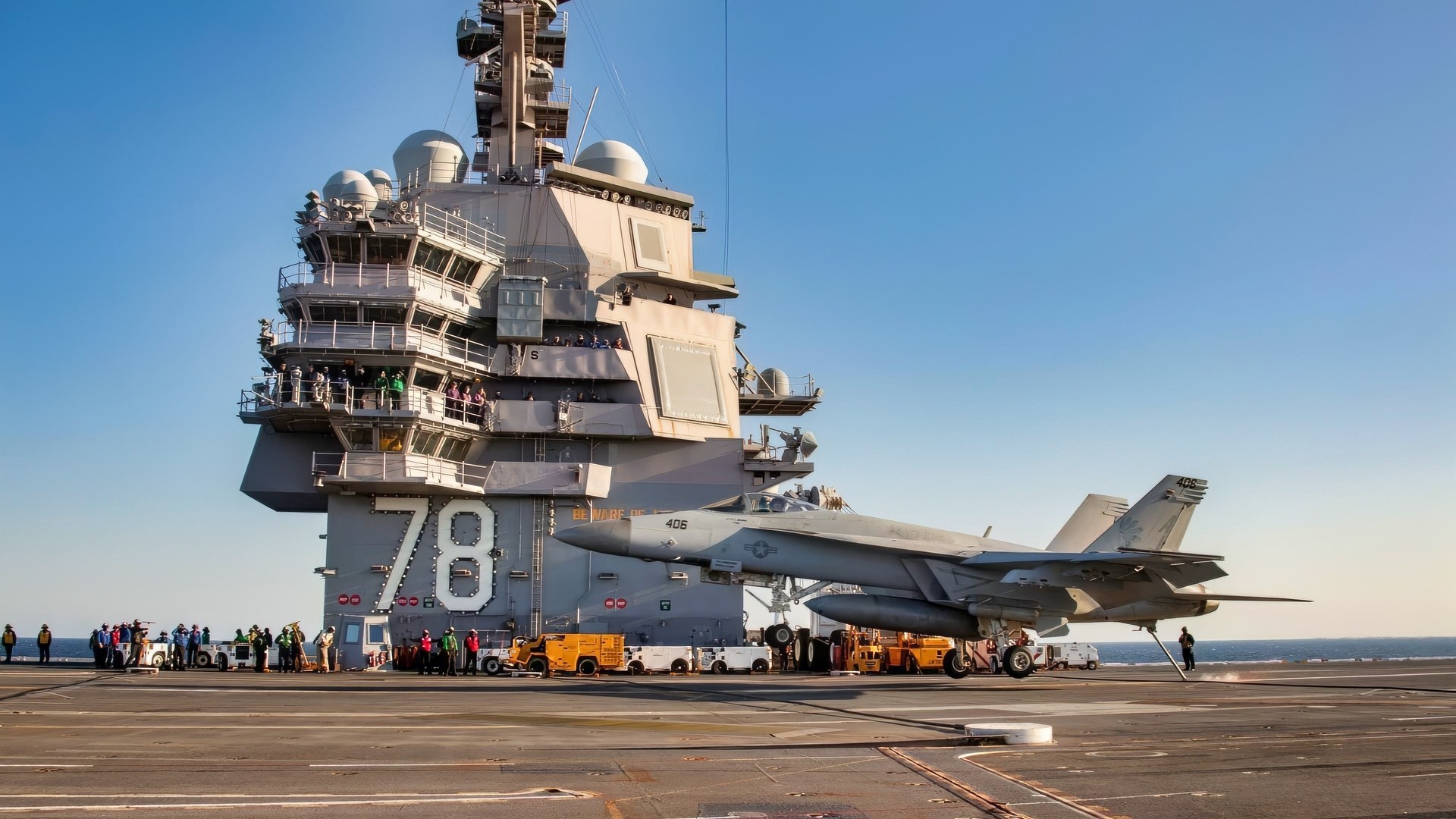
USS Gerald R. Ford Training. Image Credit: U.S. Navy.
Among the most surprising changes emerging as a result of this new technology?
A total rethink of the value of the world’s most advanced aircraft carriers.
The Gerald R. Ford-class aircraft carrier program of the United States Navy, with its estimated $120 billion research and development, construction, and initial operations costs, has now become a focal point in the debate over the role large surface warships will play in the future.
As increasingly affordable drones and missiles increasingly dominate the skies of combat zones and near-peer adversaries begin to field them in huge swarms, advanced threats are facing entirely new challenges.
Ukraine has proven that cheap drones can take out Russia’s most high-value aircraft, and China’s continued development of long-range missiles mean American naval assets are under perhaps the greatest threat ever.
It sounds like aircraft carriers could be on their way out, leaving the Ford-class shrouded in questions and uncertainty.
But the counter-argument, I’d say, is compelling: what if the aircraft carrier instead evolves into a central hub for manned-unmanned teaming operations?
And what if America’s largest surface vessels could retain their unrivalled global reach and adaptability?
The Drone and Missile Revolution Is Here
The nature of global maritime combat operations is undergoing its most significant shift in a generation.

Ford-Class Aircraft Carrier. Image Credit: Creative Commons.
Naval forces are now confronting a more diverse range of threats; beyond traditional warships and submarines, cheap aerial systems and long-range missiles now pose a level of threat America’s adversaries could not previously reach.
The implications are significant, too: not only are America’s aircraft carriers at greater risk, but timelines are now being compressed.
In the Black and Red Seas, for example, small, inexpensive sea drones, unmanned surface vessels (USVs), and aerial drones are already causing operational headaches for traditional naval strike groups.
Think of this: a single $1 million drone or USV can force hundreds of millions of dollars in defensive expenditure, or even risk damage to a warship.
In the Ukraine example, the impact is shocking – even if it doesn’t directly apply to naval vessels.
117 cheap first-person view (FPV) drones were used in Operation Spider’s Web, with each costing as little as a few hundred dollars. According to Ukrainian officials, the total damage inflicted by the operation was around $7 billion.
For high-value assets like the Ford-class carriers, this raises some extremely serious questions. Platforms like this require large crews, complex logistics, and established basing or strike-group support that may no longer be able to maneuver as freely as they used to. Anti-ship missiles like China’s DF-21D and DF-26 “carrier killers” are frequently cited as game-changers for China. And they could well be.
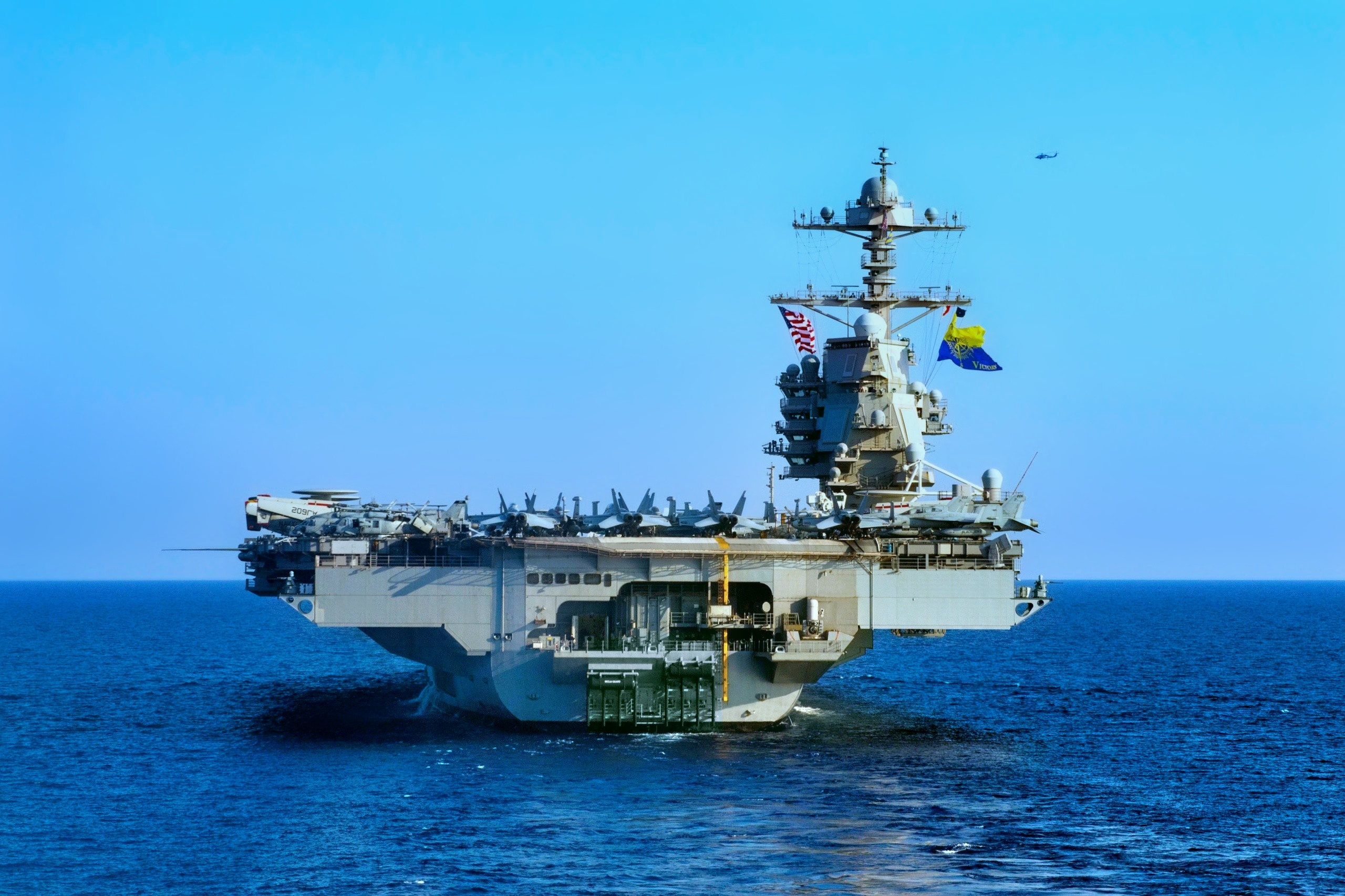
Ford-Class Aircraft Carrier. Image Credit: Creative Commons.
It changes the dynamics thus: if the U.S. invests $13 billion or more per hull, does it make financial sense, is a swarm of drones or a salvo of missiles a threat to it?
The Ford-class is the most expensive warship ever built, with a total program cost of up to $120 billion. And as it rolls out, it faces risks that challenge its most advanced defensive systems – and its entire strategic purpose.
In today’s environment, increasingly dominated by drones and long-range anti-ship missiles, survivability may no longer lie solely in large flagship systems.
Instead, it may be in the numbers. As the Navy itself acknowledges, protecting large carriers in contested waters will now require advanced defensive layers and a totally new doctrine.
So, the drone-missile era is already significantly complicating the viability of platforms that were optimized for launching manned strike aircraft.
One might therefore conclude that the Ford program is an expensive bet on yesterday’s war-fighting model – but there’s still more to this story.
A Future for the Ford-Class?
There is clearly a good argument that the Ford-class and large surface vessels more generally could lose their status as America’s most crucial global power-projection assets.
But there’s also an argument that the Ford-class in particular could complement an entirely new doctrine: could this massive new supercarrier become a floating drone and manned-unmanned operations hub with totally unmatched global reach?
Yes, it could. And it likely will.
The Ford-class and its support infrastructure are being designed and adapted for unmanned operations. It’s a reality the Navy cannot ignore, and is not ignoring.
The Navy is deploying the MQ-25 Stingray carrier-based refueling drone, and it is working toward integrating unmanned combat air vehicles (UCAVs) into the carrier air wing.
Meanwhile, advanced systems aboard the Ford, such as its Electromagnetic Aircraft Launch System (EMALS) and advanced arresting gear, were chosen in part to accommodate both unmanned aircraft and manned jets.
Beyond the tech, the Ford-class is also designed with reach and flexibility in mind – and no other platform even comes close.
Consider this: the U.S. Navy operates 11 carriers and intends to maintain that number – and a carrier strike group can be positioned within days to weeks in nearly any global theater.
Those strike groups provide air power, ISR, strike, humanitarian assistance, and power projection/deterrence.
Unmanned systems – whether aerial, surface, or subsurface – expand this reach even further, but can never fully substitute for a forward-deployed platform in international waters. Without the Ford-class, those capabilities are nowhere near as useful.
The Ford-class will face evolving challenges as automation and AI tech continue to develop, but this platform could ultimately prove to be worth every penny.
About the Author:
Jack Buckby is a British author, counter-extremism researcher, and journalist based in New York who writes frequently for National Security Journal. Reporting on the U.K., Europe, and the U.S., he works to analyze and understand left-wing and right-wing radicalization, and reports on Western governments’ approaches to the pressing issues of today. His books and research papers explore these themes and propose pragmatic solutions to our increasingly polarized society. His latest book is The Truth Teller: RFK Jr. and the Case for a Post-Partisan Presidency.
More Military
Taiwan’s F-16V Fighter Was Built to Fight China’s Air Force
5 Places World War III Could Break Out in 2026
The X-37B Space Plane Is Breaking All the Rules and Makes Chinese Generals Sweat


