

The “Fat Leonard” scandal is the largest corruption scandal in US Navy history. Centered on Leonard Glenn Francis, a 350-pound Malaysian defense contractor who operated Glenn Defense Marine Asia (GDMA), the scandal entailed the decades-long bribery of Navy personnel using cash, luxury travel, prostitutes, and lavish dinners. The scandal was not just a financial fraud committed against the US taxpayer—but also a major operational and intelligence compromise inside the US Navy’s Pacific command structure.
Who Was Fat Leonard?

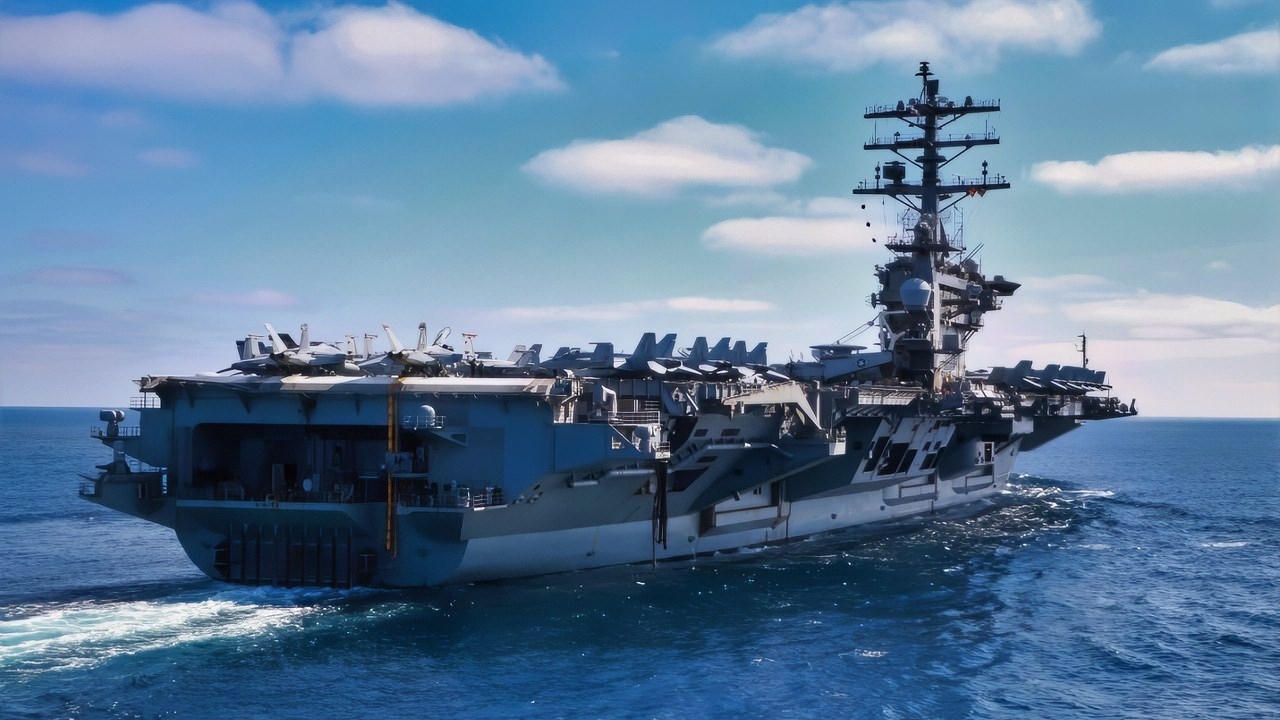
PHILIPPINE SEA(Feb. 22, 2016) USS John C. Stennis (CVN 74) sails through the Philippine Sea. Providing a ready force supporting security and stability in the Indo-Asia-Pacific region, Stennis is operating as part of the Great Green Fleet on a regularly scheduled 7th Fleet deployment. (U.S. Navy photo by Mass Communication Specialist Seaman Cole C. Pielop/Released) .

110630-N-ZZ999-002.ATLANTIC OCEAN (June 30, 2011) The Virginia-class attack submarine USS California (SSN 781) underway during sea trials. (U.S. Navy photo by Chris Oxley/Released).
Nicknamed “Fat Leonard,” Leonard Glenn Francis was a defense contractor based in Singapore who provided “husbanding services,” i.e., refueling, tugboats, sewage removal, and logistics support. Cleverly, Francis embedded himself into the logistics ecosystem supporting the Navy’s 7th Fleet in Asia, cultivating close relationships with US Navy officers and reaping the financial benefits.
How the Scheme Worked
Francis provided US Navy officers with exactly the type of perks you’d expect: Michelin-star dinners, expensive liquor, cigars, luxury hotel suites, and of course, prostitutes and sex parties.
And the moment an officer accepted one of the perks, Francis would hold the lapse over the officer’s head, threatening to expose him if certain extractions weren’t offered. So, the compromised officers leaked classified ship schedules, logistics information, competitor pricing bids, etc.
Officers even manipulated the fleet, redirecting aircraft carriers and warships towards GDMA-controlled ports.
While in port, GDMA committed billing fraud by issuing inflated invoices that overcharged the Pentagon for basic services.
The estimated fraud? At least $35 million. Francis transformed Navy logistics into a corruption pipeline using personal compromise and insider access.
The Intelligence Compromise
Francis targeted the USS Blue Ridge, an important command ship for the 7th Fleet with access to ship movement schedules, operational planning, and submarine movements. A corrupt NCIS agent, John Beliveau, leaked confidential investigative files.
The result was that Francis, a foreigner, often knew that investigations were underway and where ships would deploy. And Francis, extracting as much leverage as possible, kept detailed records of individual vulnerabilities, including financial problems and sexual misconduct. The scandal wasn’t just an incident of corruption but a potential counterintelligence disaster.
Scope of the Fallout
Once discovered, the Navy prompted a massive review. 440 Navy personnel were scrutinized, including 60 admirals. Thirty-four defendants were charged, culminating in the first-ever conviction of an active-duty admiral with a federal felony.
Promotions and retirements were delayed for years, and leadership was frozen in administrative paralysis. The scandal went beyond the 7th Fleet, affecting an entire generation of Navy leadership.
The Case Collapses
Overall, the criminal case looked strong from the onset; the government had emails, invoices, travel records, and testimony from cooperating officers. Plenty to indict the personnel involved, it seemed. And Francis himself pleaded guilty in 2015. Prosecutors believed they had one of the strongest public corruption cases in Pentagon history. But the prosecutors botched the handling of evidence.
Under Brady v. Maryland, prosecutors are legally required to share exculpatory evidence, meaning anything that is potentially helpful to the defense. This includes contradictory testimony, credibility problems, and inconsistent evidence.
But the judge found that the DOJ withheld large volumes of evidence, including material that undermined witnesses and information affecting Francis’s credibility. The issue was not just a technical paperwork mistake; the judge described the conduct as flagrant and outrageous. Confidence in the entire case eroded, allowing defense lawyers to aggressively attack the DOJ and its conduct. Multiple convictions were vacated or dismissed. Several officers initially facing prison terms effectively walked away with minimal punishment due to prosecutorial failures.
What Happened to Francis?
Francis himself pleaded guilty in 2015 and became a massive cooperating witness, helping the government pursue Navy officers. Because of various medical conditions, like severe obesity, Francis was placed under home confinement; he was kept out of prison because he was central to the wider prosecutorial effort.
Weeks before sentencing, Francis escaped; he cut off his GPS monitor and disappeared from house arrest. One of the most famous federal defendants ever simply vanished, crossing the border into Mexico before traveling through Cuba.
Francis was eventually captured in Venezuela while attempting to board an international flight and returned to the US. He was sentenced to 15 years in prison, $20M in restitution, and $35M in asset forfeiture.
About the Author: Harrison Kass
Harrison Kass is a writer and attorney focused on national security, technology, and political culture. His work has appeared in City Journal, The Hill, Quillette, The Spectator, and The Cipher Brief. He holds a JD from the University of Oregon and a master’s in Global & Joint Program Studies from NYU. More at harrisonkass.com.


