

The nuclear-powered aircraft carrier USS George Washington departed Yokosuka Naval Base on Sunday ahead of what appear to be pre-deployment sea trials and preparations for its next major Indo-Pacific patrol, as the United States continues to maintain a heavy forward naval presence across Asia amid rising tensions involving China and Taiwan.
The USS George Washington Aircraft Carrier Heads Out To Sea
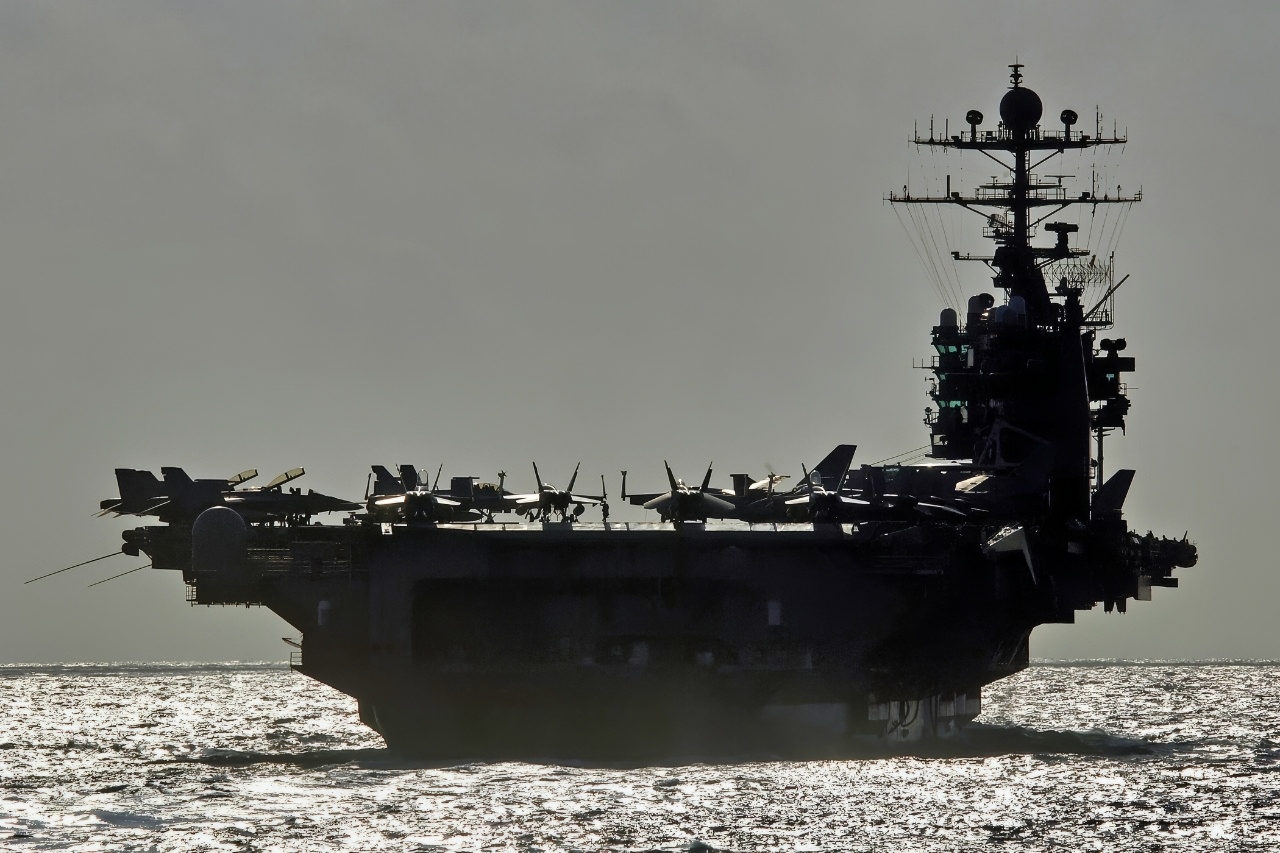
The aircraft carrier USS George Washington (CVN 73) prepares to conduct a refueling at sea with the guided missile cruiser USS Monterey (CG 61) as the two ships operate in the Caribbean Sea on April 20, 2006. The George Washington Carrier Strike group is participating in Partnership of the Americas, a maritime training and readiness deployment of U.S. Naval Forces along with navies of Caribbean and Latin American countries for enhanced maritime security.
(DoD photo by Petty Officer 3rd Class Michael D. Blackwell II, U.S. Navy. (Released))
The carrier left Yokosuka around 10 a.m. local time Sunday with roughly 3,100 sailors aboard, according to a notice released by the Yokosuka city government. U.S. Navy officials did not publicly announce the departure, which is standard practice for operational security reasons, but Japanese authorities are routinely informed whenever nuclear-powered American warships enter or leave the base.
The deployment preparations come roughly a year and a half after George Washington returned to Japan in late 2024 to resume its role as the Navy’s permanently forward-deployed aircraft carrier assigned to the U.S. 7th Fleet. The ship has already completed one regional deployment cycle after returning to Yokosuka following years of overhaul work in the United States.
The news also comes as the U.S. Navy faces growing strain across its global carrier force following extended operations in the Middle East and Venezuela, as well as increasing demands in the Indo-Pacific theater.
Conducting Sea Trials Before Deployment
Although Navy officials declined to comment publicly on the operation, the departure strongly suggests George Washington is beginning a round of sea trials before formally departing on its annual patrol. Aircraft carriers typically conduct roughly a week of operational testing before deployment to evaluate propulsion systems, combat systems, steering, anchoring procedures, and crew readiness.
Exercises like this may include high-speed maneuvering, engineering evaluations, damage control drills, and testing of the carrier’s defensive systems. Once the trials conclude, carriers often briefly return to port before beginning full deployment operations.
George Washington underwent maintenance after returning to Yokosuka in December 2025 following multinational exercises in the region, according to Japanese reports. The carrier has now entered its second period serving as America’s forward-deployed carrier in Japan, following its previous deployment from Yokosuka from 2008 to 2015.

USS George Washington. Image Credit: Creative Commons.
Unlike carriers based in the continental United States, forward-deployed carriers stationed in Japan can rapidly respond to regional crises without requiring long Pacific transit times from bases such as San Diego or Bremerton. That positioning makes Yokosuka one of the most strategically important U.S. naval facilities in the Indo-Pacific region.
Carrier Air Wing 5 Begins Landing Qualifications On Iwo Jima
At the same time, George Washington departed Yokosuka, and aviators assigned to Carrier Air Wing 5 began intensive carrier-landing qualification exercises on Iwo Jima, officially known as Iwo To. According to U.S. Naval Forces Japan, the training period began on Thursday and is scheduled to last approximately 10 days. The exercises involve pilots flying F/A-18 Super Hornets and EA-18G Growlers conducting repeated touch-and-go landings to prepare for deployment operations at sea.
Senior naval aviators are expected to complete at least six sorties, including both daytime and nighttime carrier landing qualifications. Junior pilots conduct even more extensive repetitions and may perform more than a dozen touch-and-go landings during a single sortie.
The Navy has conducted carrier landing practice on Iwo Jima since 1991 because the remote island provides conditions that closely simulate aircraft carrier operations while minimizing disruption to populated areas in mainland Japan.
Carrier qualification remains one of the most demanding tasks in naval aviation, particularly during nighttime operations conducted on moving flight decks in rough sea conditions. Carrier Air Wing 5 operates from Marine Corps Air Station Iwakuni and serves as the permanently assigned air wing for George Washington.
George Washington As U.S. Pacific Deterrence
George Washington serves as the centerpiece of the Navy’s forward carrier presence in Asia and plays a central role in American military planning involving Taiwan, the East China Sea, the Korean Peninsula, and the South China Sea.
The carrier operates under the U.S. 7th Fleet, the Navy’s largest forward-deployed fleet, which routinely conducts patrols and exercises alongside Japan, Australia, South Korea, and the Philippines.
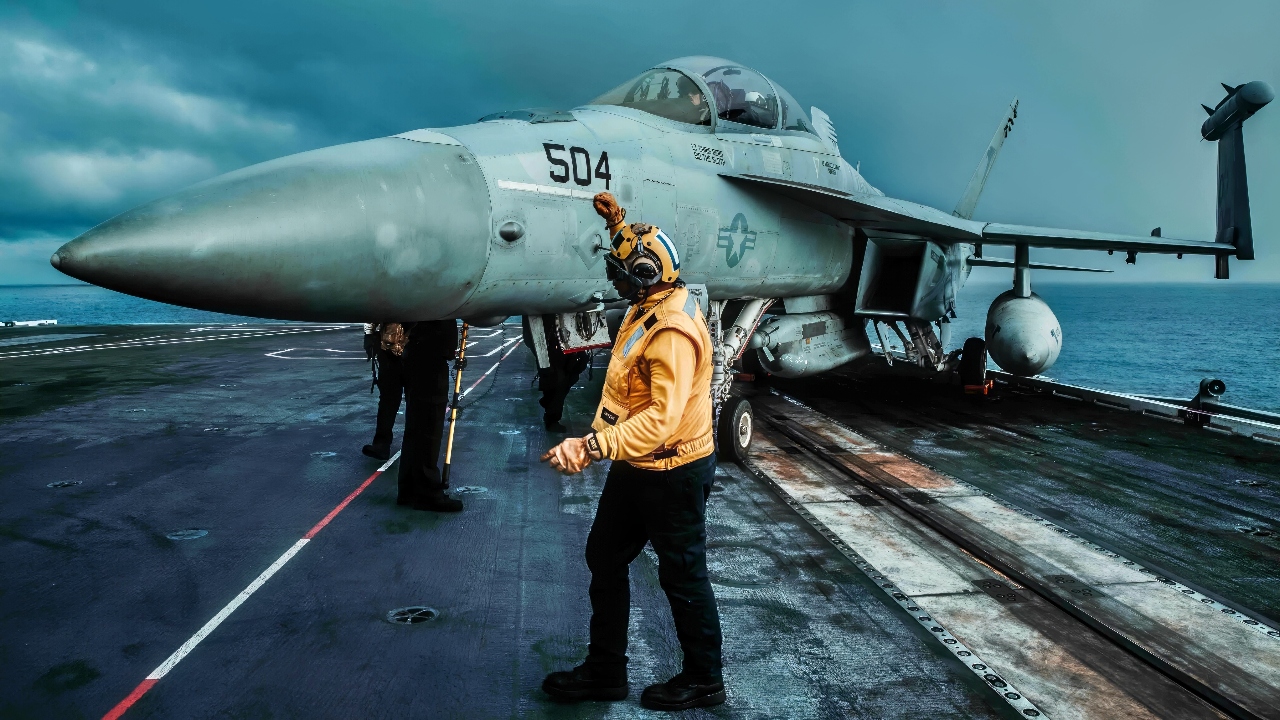
An E/A-18G Growler, attached to Electronic Attack Squadron (VAQ) 141, taxis on the flight deck of Nimitz-class aircraft carrier USS George Washington (CVN 73), while underway in the Indian Ocean, July 24, 2025. The USS George Washington Carrier Strike Group (GWA CSG) is conducting routine operations in the U.S. 7th Fleet area of operations. George Washington is the U.S. Navy’s premier forward-deployed aircraft carrier, a long-standing symbol of the United States’ commitment to maintaining a free and open Indo-Pacific region, while operating alongside allies and partners across the U.S. Navy’s largest numbered fleet. (U.S. Navy photo by Mass Communication Specialist Seaman Nicolas Quezada)
The deployment preparations also come as China continues rapidly expanding the capabilities and size of the People’s Liberation Army Navy, including the continued development of its aircraft carrier force built around the carriers Liaoning, Shandong, and Fujian.
Despite talk of carriers becoming increasingly vulnerable to long-range missiles and drones, the U.S. continues to rely heavily on forward-deployed naval forces as operational demands continue to stretch carrier availability worldwide.
USS Gerald R. Ford recently surpassed modern deployment records following extended operations in the Middle East, Venezuela, and the Mediterranean.
At the same time, the Navy continues dealing with maintenance backlogs and shipyard delays that have reduced the number of carriers immediately available for deployment. Maintaining a permanently stationed aircraft carrier in Japan, therefore, remains one of the Pentagon’s most important tools for preserving rapid-response capability in the western Pacific.
About the Author: Jack Buckby
Jack Buckby is a British researcher and analyst specializing in defense and national security, based in New York. His work focuses on military capability, procurement, and strategic competition, producing and editing analysis for policy and defense audiences. He brings extensive editorial experience, with a career output spanning over 1,000 articles at 19FortyFive and National Security Journal, and has previously authored books and papers on extremism and deradicalization.


