

When Russian tanks rolled into Ukraine in 2022, no one believed the war would reach Moscow, 500 kilometers away, behind dense air defenses. That assumption is dead. Over three years, Ukraine turned the occasional symbolic drone into a campaign that closes the capital’s airports, torches its suburbs, and burns its refineries. But the most revealing part isn’t what Ukraine has hit. It’s the one target it keeps choosing not to—and what happens if that changes?
Moscow Was Never Supposed To Be A Target — Now Ukraine Makes The Russian Capital Pay, And Washington Is Terrified Of What Comes Next in the Ukraine War

Tu-22M Bomber from Russian Air Force. Image Credit: Creative Commons.
When Russian tanks crossed into Ukraine in February 2022, almost no one believed the war would ever reach Moscow.
The Russian capital sits roughly 500 kilometers from the nearest point on the Ukrainian border, shielded by distance, by one of the densest air-defense networks on the planet, and by the simple assumption that Ukraine had neither the reach nor the audacity to strike the seat of Russian power.
That assumption is dead.
Over three years, Ukraine has methodically built the capability to put drones over the Kremlin’s own city, and what began as the occasional symbolic pinprick has become a recurring campaign that kills people in the Moscow suburbs, shuts down the capital’s airports for hours at a time, and quietly erodes the sense of safety that Vladimir Putin spent two decades constructing for the Russian elite.
The story of how Ukraine made Moscow pay is one of escalating technical sophistication, deliberate restraint, and a Washington establishment that has been frightened of where it all leads since the first administration that armed Kyiv.
The First Strikes Were A Message, Not A Campaign

Tu-160 Bomber from Russia. Image Credit: Creative Commons.
In the early phase, reaching Moscow at all was the entire point.
The strikes were rare, small, and almost theatrical, designed to prove a capability rather than inflict real damage. In late July 2023, three Ukrainian drones reached the Russian capital in the early hours, with two crashing into the Moscow City business district and damaging the facades of gleaming office towers that had symbolized post-Soviet Russian prosperity.
One airport was closed for about an hour, a security guard was hurt, and the Russian Defense Ministry dismissed it as an attempted terrorist attack.
What mattered was the symbolism, and the reporting at the time captured it precisely, describing the strikes as fueling concerns about Moscow’s vulnerability as the war dragged into its eighteenth month.
These early raids did little physical harm. They were a demonstration, a way for Kyiv to tell the Russian population that the war their government insisted was a distant “special military operation” could arrive over their own rooftops. The Kremlin’s response, then as later, was to minimize the damage publicly while the strikes themselves chipped away at the psychological wall between the war and the people in whose name it was being waged.
The Attacks Grew Into Something That Could Paralyze A City
By 2024, the pinpricks had become barrages. In September of that year, Ukraine launched what was then its largest drone assault on the capital region, an attack that killed at least one woman, wrecked dozens of homes, and set apartments ablaze in the suburbs.
Russia claimed to have downed around 20 drones over the Moscow region alone and more than a hundred across eight other regions, and the strike forced the closure of three of Moscow’s four airports for more than six hours, with around 50 flights diverted. The Moscow region is home to more than 21 million people, and for the first time, the disruption touched a meaningful slice of them.

Russian Air Force Bomber Tu-160. Image Credit: Creative Commons.
The trajectory kept climbing. By the summer of 2025, a single wave of Ukrainian drones was enough to throw the entire country’s air travel into chaos. A July 2025 attack forced the closure of Moscow’s major airports and the cancellation of at least 140 flights, with thousands of passengers stranded or sleeping on terminal floors and the disruption rippling as far as Russia’s Far East.
What had once been a one-hour closure of a single airport had become a nationwide paralysis of civil aviation, all from drones that Russia’s air defenses were ostensibly shooting down. The interceptions themselves were part of the cost, because closing the airspace to safely engage incoming drones was as disruptive as any actual impact.
The Sophistication Leap That Brought The War Home
The biggest change has been technical.
Ukraine’s long-range strike program evolved from improvised, short-range quadcopters into purpose-built long-range attack drones and domestically produced systems capable of flying hundreds of kilometers and navigating to specific targets deep inside Russia. That maturation turned the Moscow strikes from symbolic gestures into a genuine strategic campaign aimed at the infrastructure that funds and sustains the war.

Ukraine Switchblade Drone. Image Credit: Creative Commons.

Switchblade Drone. Image Credit: Industry Handout.
The clearest evidence of that leap came in May 2026, in one of the largest attacks of the entire war. On May 17, a massive Ukrainian strike killed at least four people, including three in the Moscow region, with a woman killed in Khimki when a drone hit her home and two men killed in a village just north of the capital.
In Moscow itself, at least twelve people were wounded, most of them near the entrance to the city’s oil refinery, and debris fell on Sheremetyevo, Russia’s largest airport.
Russian defenses claimed to have shot down 81 drones headed for Moscow that night alone and 556 across the country, figures that, even if inflated, describe an assault of a scale unimaginable in 2023.
The Washington Post called it the largest and most deadly attack to target the Russian capital region since the invasion.

Su-35 Fighter from Russia. Image Credit: Creative Commons.
The targeting of the Moscow refinery was not incidental. It was part of a deliberate Ukrainian campaign against the Russian energy complex and the systems that keep it running, a campaign that has reached air traffic control infrastructure deep inside the country.
In early May 2026, a Ukrainian drone strike paralyzed airports across southern Russia after hitting an air traffic control center, with major Russian carriers forced to cancel and reschedule flights. Ukraine had moved from showing it could reach Moscow to systematically degrading the economic and logistical machinery that the capital depends on.
The Targets Ukraine Has Chosen Not To Hit
For all the escalation, there is a striking pattern of restraint running through Ukraine’s campaign against Moscow, and it is as deliberate as the strikes themselves. Ukraine has overwhelmingly aimed its long-range weapons at military and economic infrastructure, oil refineries, air bases, defense plants, logistics hubs, and air traffic facilities, rather than at the symbolic seats of Russian power.
The Kremlin itself, the Russian government’s nerve center and the most potent symbol available, has not been the object of a sustained Ukrainian strike campaign, even as drones have repeatedly penetrated the airspace around it.
That restraint is strategic rather than sentimental. Kyiv understands that the political and military consequences of killing senior Russian leadership or destroying iconic state buildings could be catastrophically escalatory, and it has calibrated its targeting to inflict economic and psychological pain while avoiding the kind of strike that might hand Putin a pretext for a dramatic response.
When the question of American long-range missiles arose, Zelensky was explicit about this calibration, promising that Ukraine would use such weapons only against Russian military targets rather than against cities or symbolic sites. The promise was aimed squarely at the anxiety in Washington, an acknowledgment that the right to strike Moscow and the wisdom of striking it are two different things.
Why Both Biden And Trump Have Been Afraid Of This
The American government has worried about Ukrainian strikes on Moscow since the beginning, and that worry has shaped Western weapons policy across two very different administrations.
The through-line is a fear of escalation, the concern that arming Ukraine to hit the Russian capital could spiral into a direct confrontation between NATO and a nuclear-armed Russia. As one analysis framed it, Western policy from the Biden administration through to Trump’s has been driven by escalation concerns, with Washington fearing that giving Ukraine the capacity to strike Moscow could send events spiraling beyond its control.
That fear came to a head in October 2025, when Zelensky traveled to Washington, hoping to leave with American Tomahawk cruise missiles, weapons that could reach Moscow or St. Petersburg and that he believed could deliver a decisive blow to the Kremlin’s war economy by enabling precision strikes on oil and energy facilities deep inside Russia. Trump turned him down.
In a tense meeting, the president made clear he did not intend to provide the missiles, telling Zelensky that diplomacy was now his priority and that supplying Tomahawks could mean a big escalation. Zelensky, careful not to antagonize the man holding the weapons he needed, said only that he could not discuss the matter publicly because the United States did not want escalation.
The detail that reveals how much fear lives in the White House rather than the Pentagon came weeks later. CNN reported that the Defense Department had approved sending the Tomahawks, based on an assessment that doing so would not harm American stockpiles (this was before the Iran war, clearly), and that the Joint Chiefs had found little reason not to send them. Trump pushed against providing the weapons anyway, saying he was “not really” considering it.
The military judged the transfer acceptable. The political leadership, fixated on the risk of escalation and on preserving a diplomatic opening with Putin, overrode that judgment. The Kremlin, for its part, had spent weeks warning that Tomahawks would represent a major escalation, with Putin’s spokesman calling the prospect a matter of extreme concern and pointedly noting that some versions of the missile can carry nuclear warheads.
What Comes Next
The pressure on Moscow is going to intensify because the logic driving it has only grown stronger.
Ukraine has regained a measure of battlefield initiative, and Zelensky has argued that his deep-strike capability may be the indispensable key to peace, the one form of pressure that could force Putin to negotiate seriously rather than wait Kyiv out. His case is that Russia’s interest in diplomacy fades exactly when the threat to its interior recedes, and sharpens when Ukrainian drones are falling on Russian refineries. From that vantage, escalating the cost to Moscow is not recklessness but the most plausible path to ending the war.
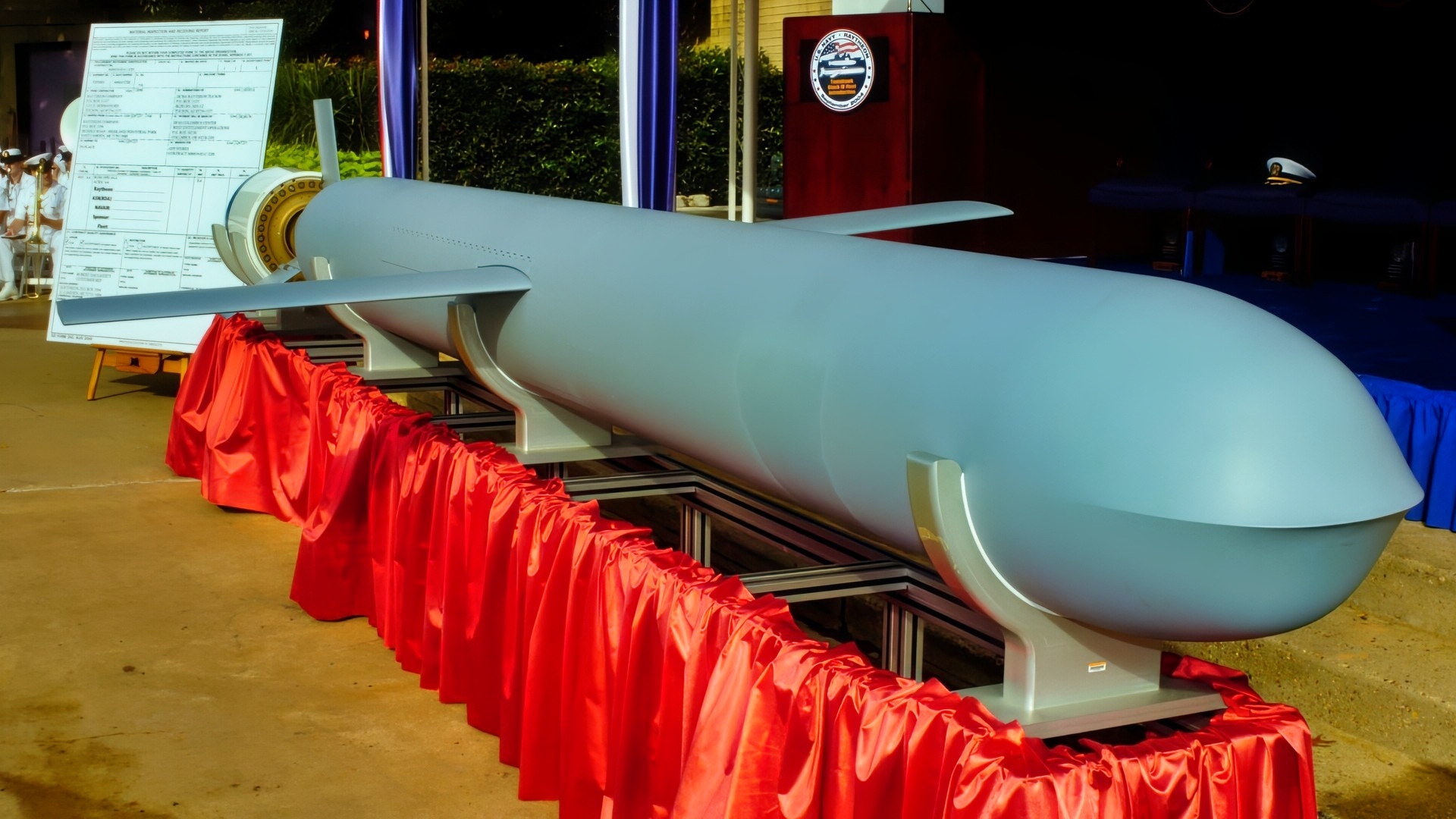
Tomahawk Block IV Missile. Image Credit: Creative Commons.

Tomahawk Launch. Image Credit: Creative Commons.

USS Iowa Tomahawk Box. National Security Journal Photo.
Even as Ukraine tightens things on Moscow, the war’s two-way escalation has only sharpened. Overnight into June 2, 2026, Russia answered with one of the largest aerial assaults of the entire war, firing 656 drones and 73 missiles at Ukraine and killing well over a dozen people, the barrage striking Kyiv, Dnipro, and other cities and including eight Zircon hypersonic missiles, the most of that near-uninterceptable weapon Russia has used in a single night. The deep-strike war now runs hard in both directions, and each capital’s campaign against the other feeds the spiral, the next one answers.
The danger is that the same escalation Zelensky sees as leverage is what Washington has spent three years trying to avoid. If Ukraine acquires longer-range and more numerous weapons, whether American-supplied or domestically built, the temptation to expand the target set in Moscow will grow, and the restraint that has so far kept the Kremlin’s most symbolic sites off the list will come under strain.
A single Ukrainian strike that killed senior Russian officials or destroyed an iconic government building could trigger exactly the kind of dramatic Russian response, conventional or otherwise, that has haunted American planners since 2022. The drones over Moscow have already punctured the Kremlin’s myth that the war is happening safely somewhere else.
The open question is whether Ukraine’s deep-strike campaign becomes the pressure that finally drags Putin to a settlement, or the spark that widens the war into something far more dangerous than a contest over Ukrainian territory.
About the Author: Harry J. Kazianis
Harry J. Kazianis (@Grecianformula) was the former Senior Director of National Security Affairs at the Center for the National Interest (CFTNI), a foreign policy think tank founded by Richard Nixon based in Washington, DC. Harry has over a decade of experience in think tanks and national security publishing. His ideas have been published in the NY Times, The Washington Post, The Wall Street Journal, CNN, and many other outlets worldwide. He has held positions at CSIS, the Heritage Foundation, the University of Nottingham, and several other institutions related to national security research and studies. He is the former Executive Editor of the National Interest and the Diplomat. He holds a Master’s degree focusing on international affairs from Harvard University.


