

China Launched 10 Nuclear Submarines Between 2021 and 2025 — Surpassing the U.S. Production Rate for the First Time
A series of reports and analyses of satellite imagery of activity at China’s submarine construction facilities indicates that Beijing is accelerating the production of nuclear-powered submarines at a pace that is beginning to draw serious attention in Washington.
The expansion of infrastructure at shipyards like Bohai is part of a larger increase in output of both attack and ballistic missile submarines. It reinforces conclusions already laid out in U.S. defense reporting about the trajectory of China’s naval modernization and its plans to build a true blue-water navy.

SOUDA BAY, Greece (March 27, 2022) The Ohio-class ballistic-missile submarine USS Georgia (SSGN 729) near Souda Bay, Greece, during training with U.S. Marines from Task Force 61/2 (TF-61/2), conducting launch and recovery training with their combat rubber raiding craft, March 27, 2022. TF-61/2 will temporarily provide command and control support to the commander of U.S. 6th Fleet, to synchronize Navy and Marine Corps units and capabilities already in theater, in support of regional Allies and Partners and U.S. national security interests. (U.S. Marine Corps photo by Sgt. Dylan Chagnon)
Not only is China increasing the number of submarines it operates, but it is also building out a full-spectrum nuclear submarine force comprised of three categories: SSNs (nuclear-powered attack submarines), SSBNs (nuclear-powered ballistic missile submarines), and increasingly, platforms that could function as SSGNs (guided missile submarines capable of land attack).
An SSN is designed to hunt ships and other submarines while conducting intelligence and escort missions, whereas an SSBN carries nuclear-armed ballistic missiles and forms part of a country’s strategic nuclear deterrent.
An SSGN, meanwhile, is designed to launch large numbers of conventional cruise missiles against both land and maritime targets. China now fields all of the foundational elements of this naval structure – and it is rapidly improving each of them.

SOUDA BAY, Greece (Sept. 7, 2019) The Ohio-class cruise missile submarine USS Florida (SSGN 728) arrives in Souda Bay, Greece, for a scheduled port visit, Sept. 7, 2019. NSA Souda Bay is an operational ashore base that enables U.S., allied, and partner nation forces to be where they are needed and when they are needed to ensure security and stability in Europe, Africa, and Southwest Asia. (Photo by Joel Diller/Released)
What China Fields Today
China’s nuclear submarine force is operational and expanding, increasingly structured around modern platforms. The backbone of its attack submarine fleet is the Type 093, or Shang-class SSN.
These boats entered service beginning in the mid-2000s and represent a significant step forward from China’s earlier Type 091 submarines. As of the mid-2020s, China is estimated to operate between 6 and 9 Type 093 variants, depending on whether newer subvariants are counted. Its submarines are capable of anti-ship and anti-submarine warfare, and later variants also appear to include vertical launch systems for cruise missiles, making Chinese submarines multirole.
Even so, there are limitations. Current Western assessments note that the Type 093 is noisier than modern U.S. submarines, with some comparisons placing its acoustic signature closer to Cold War-era designs.

Type 093B Submarine from China. Image Credit: Screengrab.
If accurate, that has direct implications for survivability in contested environments.
Meanwhile, China’s sea-based nuclear deterrent is built around the Type 094, or Jin-class SSBN. The People’s Liberation Army Navy (PLAN) operates six of these submarines, each capable of carrying up to 12 submarine-launched ballistic missiles.
Early variants were equipped with the JL-2 missile, with a range of around 7,000 to 8,000 kilometers – but more recent upgrades have introduced the JL-3, which is believed to have a range exceeding 10,000 kilometers.
That would allow Chinese SSBNs to hold targets in the continental United States at risk while also operating closer to Chinese-controlled waters, thereby reducing their exposure to U.S. anti-submarine warfare.
China does not yet field a direct equivalent to the U.S. Navy’s dedicated SSGN platforms, such as the Ohio-class cruise missile submarines. However, newer Type 093 variants equipped with vertical launch systems suggest that the PLAN is moving toward a hybrid capability in which attack submarines can also conduct land-attack missions with cruise missiles.
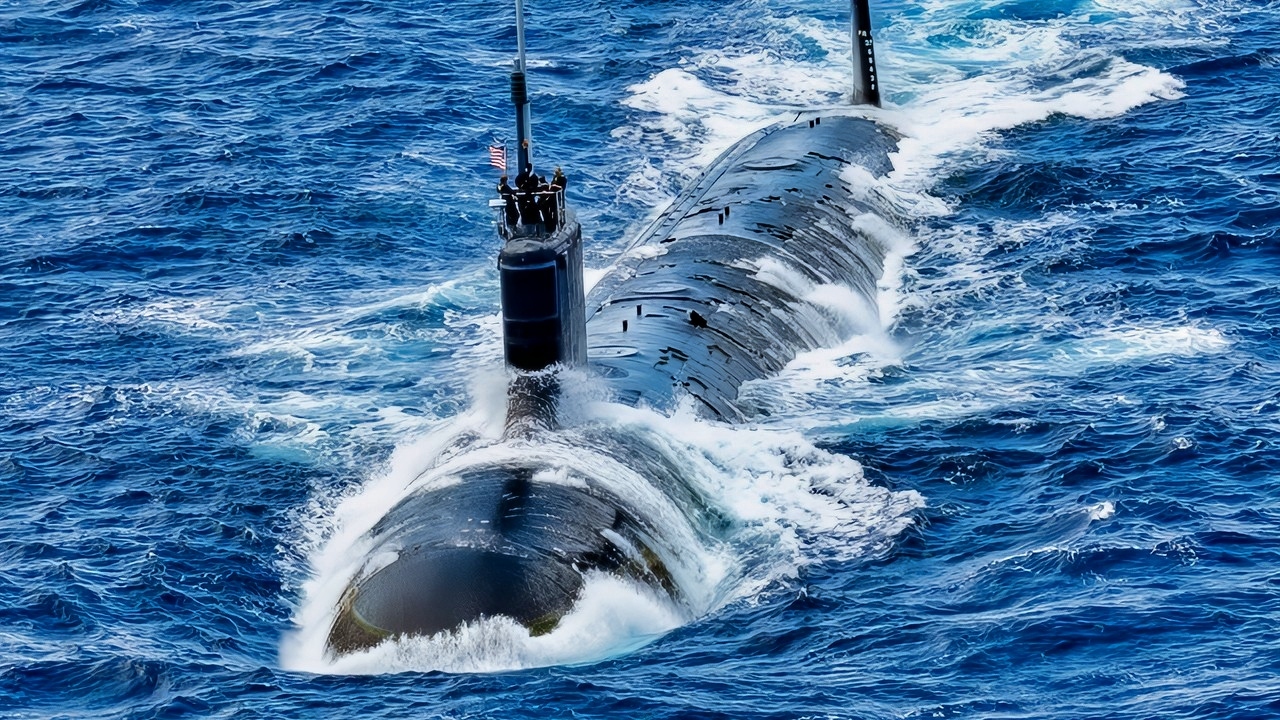
Virginia-class attack submarine USS North Carolina (SSN 777) sails in formation, off the coast of Hawaii during Exercise Rim of the Pacific (RIMPAC) 2024, July 22. Twenty-nine nations, 40 surface ships, three submarines, 14 national land forces, more than 150 aircraft and 25,000 personnel are participating in RIMPAC in and around the Hawaiian Islands, June 27 to Aug. 1. The world’s largest international maritime exercise, RIMPAC provides a unique training opportunity while fostering and sustaining cooperative relationships among participants critical to ensuring the safety of sea lanes and security on the world’s oceans. RIMPAC 2024 is the 29th exercise in the series that began in 1971. (U.S. Navy photo by Mass Communication Specialist 1st Class John Bellino)
That force indicates China is moving from operating a limited, regionally focused submarine fleet to one that can support sustained operations and nuclear deterrence.
What China Is Building Next
China’s current fleet is one part of the story, but the more important development here is what China is building to replace it. The next-generation Type 095 SSN is expected to address many of the Type 093’s shortcomings.
Early assessments suggest that it will be significantly quieter, larger, and more capable, with improvements in sonar systems, propulsion, and weapons integration. In terms of size and intended role, the Type 095 is often compared to the U.S. Virginia-class attack submarine, indicating a clear effort to close the capability gap.
At the same time, China is developing the Type 096 SSBN, which is expected to replace the Type 094 and form the core of its future sea-based nuclear deterrent. Analysis from the West suggests that China could field up to eight Type 096 submarines by around 2030, with those submarines expected to carry the JL-3 missile as standard, giving them intercontinental reach.
Emma Salisbury, a fellow at the Council on Geostrategy, said in 2023 that the Type 096 “will be more numerous, more stealthy, and may range over a wide area, all of which necessitates a rethink of U.S. capabilities and their deployment.”
A combination of Type 095 SSNs and Type 096 SSBNs suggests China is preparing to field a much more mature and survivable nuclear submarine force.

China Nuclear Submarine. Image Credit: Creative Commons.
There are also signs that China may move toward a true SSGN capability. Some analysts have suggested that existing or future submarines could be modified to carry large numbers of cruise missiles, potentially creating a platform capable of conducting long-range strike missions similar to those performed by American SSGNs.
But just as important as the platforms themselves is the rate at which China can produce them. Satellite imagery and recent defense analyses indicate that production has shifted from slow and iterative builds to sustained manufacturing. For example, at Bohai Shipyard – China’s only nuclear submarine construction facility – multiple Type 093B attack submarines have been observed in various stages of completion, with at least one seen on a transfer dock in 2025.
More significantly, analysts have assessed that between seven and eight Type 093B submarines were built in roughly three years between 2022 and 2025 – an increase in production that exceeds the total number of nuclear attack submarines China produced across the past several decades. In February 2026, IISS research revealed that China launched 10 submarines between 2021 and 2025, surpassing the United States’ production rate.
The Bohai facility has also undergone major expansion since the mid-2010s, including new construction halls with multiple parallel build bays and expanded dry dock access, allowing several submarines to be assembled simultaneously rather than sequentially.
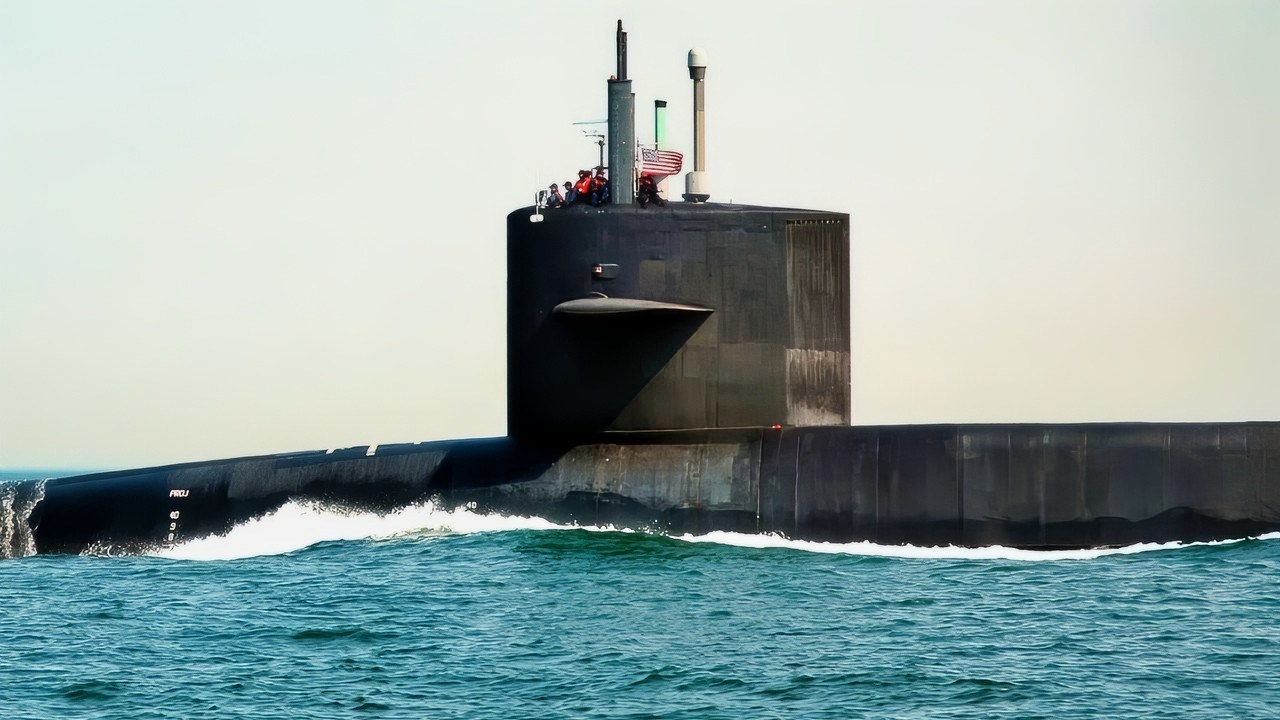
(March 31, 2006) – The guided missile submarine USS Florida (SSGN 728) conducts sea trials off the coast of Virginia. Florida will be delivered to the Fleet in April, and a Return To Service ceremony is scheduled for May 25 in Mayport, Fla. As the second of four SSBN submarines to be converted to SSGN, this nuclear-powered submarine will have the capability to: launch up to 154 Tomahawk cruise missiles; conduct sustained special warfare operations with up to 102 Special Operations Forces (SOF) personnel for short durations or 66 SOF personnel for sustained operations; and provide approximately 70 percent operational availability forward deployed in support of combatant mission requirements. U.S. Navy photo by Chief Journalist (SW/AW) Dave Fliesen.
It means that China is no longer building nuclear submarines as single, high-risk projects, but is serializing output with multiple hulls under construction at once, indicating the country’s industrial base is becoming increasingly confident and competent. The news also reveals Beijing’s strategy: to build a true blue-water navy that relies not just on its new supercarriers, but on an increasingly capable underwater force.
China’s Shift to a Blue-Water Navy
With its new submarine capability, China is leaving behind an old strategy and building a true blue-water navy. For decades, the PLAN was primarily focused on coastal defense and regional operations – but nuclear-powered submarines provide endurance and survivability that conventional forces simply cannot match. They allow China to operate farther from its shores, maintain a persistent presence at sea, and project power in ways previously not possible.
The development of a credible SSBN force is particularly important. Sea-based nuclear deterrence is widely considered the most survivable leg of a nuclear triad, because submarines are difficult to detect and track. The deployment of Type 094 submarines on deterrent patrols – and the development of the more advanced Type 096 – makes it clear that China is moving toward a more robust strike capability.
But at the same time, the expansion of SSN and potential SSGN capabilities supports China’s anti-access strategy, meaning Beijing won’t be abandoning its old strategies entirely. Submarines equipped with cruise missiles can threaten surface ships, bases, and logistics centers across the Indo-Pacific, complicating U.S. and allied operations. That has direct implications for regional security, because U.S. carrier strike groups and forward bases will become more vulnerable as China’s undersea capabilities improve.

(Sept.9, 2011) The Virginia-class submarine Pre-Commissioning Unit (PCU) California (SSN 781) gets underway from Naval Station Norfolk to conduct weapons systems acceptance trials. California is the eighth Virginia-class submarine and is scheduled to be commissioned Oct. 29. (U.S. Navy photo by Mass Communication Specialist 2nd Class William Jamieson/Released)
China’s expanding nuclear submarine fleet is giving Beijng new power-projection capabilities while simultaneously reinforcing its anti-access strategy, enabling it to operate farther from its shores and make the Indo-Pacific increasingly difficult for U.S. forces to contest.
About the Author: Jack Buckby
Jack Buckby is a British researcher and analyst specializing in defense and national security, based in New York. His work focuses on military capability, procurement, and strategic competition, producing and editing analysis for policy and defense audiences. He brings extensive editorial experience, with a career output spanning over 1,000 articles at 19FortyFive and National Security Journal, and has previously authored books and papers on extremism and deradicalization.


