

Article Summary – This piece unpacks how China’s undersea force is evolving from crude Soviet-inspired diesel boats into a “good enough” fleet built at serious scale.
-While PLAN subs still lag Western SSNs in quieting and endurance, they’re well suited to contest waters inside and just beyond the first island chain, backed by dense Chinese sensor networks.

Norfolk, VA. (May 7, 2008)-The Virginia-class submarine USS North Carolina (SSN 777) pulls into Naval Station Norfolk’s Pier 3 following a brief underway period. North Carolina was commissioned in Wilmington, N.C. on May 3, 2008. (U.S. Navy Photo By Mass Communications Specialist 3rd Class Kelvin Edwards) (RELEASED)
-At the same time, U.S. naval dominance is constrained by its own shipbuilding bottlenecks, which also complicate AUKUS plans to build nuclear boats for Australia.
-RUSI analysts argue that even incremental PLAN gains matter when China can turn them into dozens of hulls.
China’s Submarine Fleet Is Growing. Should the U.S. Navy Be Worried?
The United States has enjoyed pole position in the maritime domain since the end of the Second World War eight decades ago.
Particularly in the years following the collapse of the Soviet Union and the end of the Cold War, the United States Navy was without equal — but China is steadily eroding that lead.
Although the People’s Liberation Army Navy, or PLAN, operates a submarine fleet that is mostly conventionally-powered, increasingly sophisticated submarine builds, as well as the expanding range of Chinese ballistic missiles, threaten the United States’ lead.

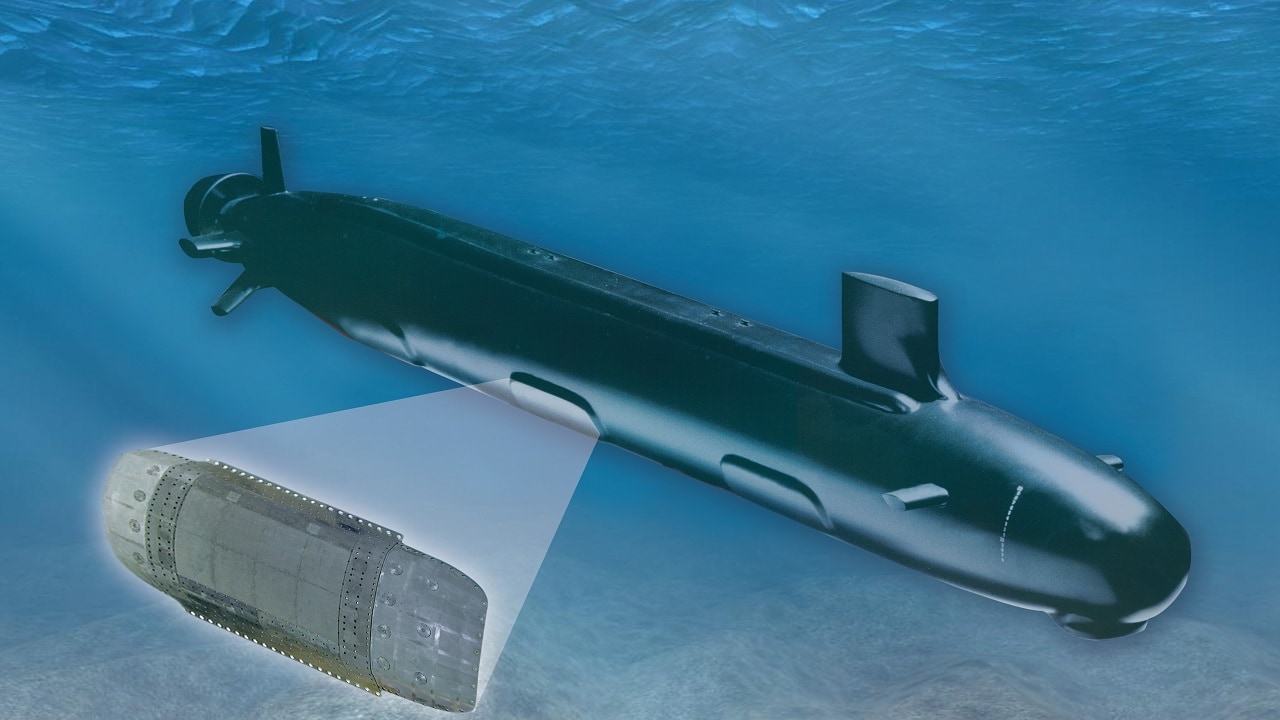
China SSN Submarine. Image Credit: Creative Commons.
As one recent paper from the Royal United Service Institute, a think tank in London, notes, “across domains, Chinese weaponry is becoming more sophisticated, which, at the very least, is closing the gap on Western systems. China’s defence policy is moving from a ‘model of quantity and scale to a model of quality and efficiency’.”
“However,” they add, sounding a note of caution, “unverified claims of technological advancement are regularly championed in PRC sympathetic publications. It is therefore a legitimate question to ask just how concerning these undersea advancements are for Western military planners and strategists.”
That astute analysis raises an important question. Are the People’s Liberation Army Navy submarines improving in steadily-increasing increments?
Or is the PLAN increasingly fielding submarines of a far greater level of sophistication?
State of Play
As the authors of the study are quick to note, China’s PLAN has more experience in fielding diesel-electric submarines than nuclear-powered ones.
Overall, the Chinese submarine fleet numbers nearly 60 subs in total, a mix of older diesel-electric submarines descended from legacy Soviet designs, as well as nuclear-powered submarines.
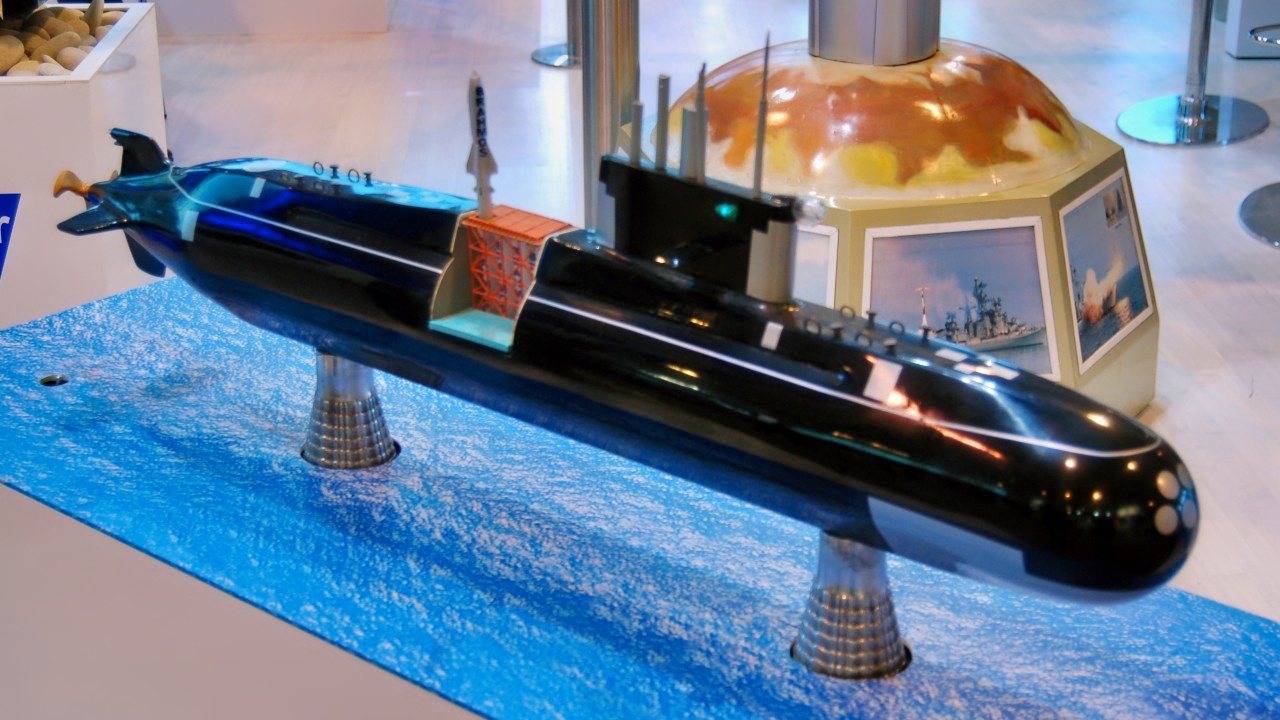
Lada-Class. Image Credit: Creative Commons.
And while China does count air-independent propulsion among some of its non-nuclear submarines — a feat that the Russians have not replicated — PLAN submarines are thought to lag behind their Western counterparts, particularly in the realm of fuel cells typically seen in advanced, conventionally-powered submarines.
But the authors note that it might not be all bad for China. The fleet that the PLAN does field is well-equipped to “contesting areas at or just beyond the first island chain, where their relative lack of endurance is less of a handicap and they enjoy an advantage in quietness over SSNs.”
Future Chinese submarine builds may incorporate ice-rated hulls, allowing the subs to operate in Arctic waters and punch through thick layers of ocean ice. China has clearly expressed its interest in gaining access to the Arctic, going so far as to call itself a near-Arctic nation. A greater patrol range, combined with longer-range ballistic missiles, could put parts of the United States within range without requiring PLAN submarines to be stationed off the American coast.
An Expanding Alliance
But while China’s underwater prowess has been a cause for concern in defense circles — one recent report characterized the submarine rivalry between China and the United States as a “submarine arms race” — another point of consternation is not the quality of American submarine builds, but their production rate in American shipyards. Production of the Navy’s newest class of warship, the Constellation-class frigates over-budget and behind schedule, despite relying on a proven Italian frigate design to streamline production and keep costs down. The production bottleneck of surface warships jeopardizes the production of submarines, too.
This has significant strategic implications for the tripartite AUKUS defense pact, an agreement for the United States and the United Kingdom to aid the Royal Australian Navy in fielding a nuclear-powered — but importantly, conventionally-armed — submarine force. Those submarines, provisionally designated the AUKUS-class, will be built in American shipyards. Pentagon policy planning tsar Elbridge Colby has questioned the wisdom of supplying Australia with submarines if their production would harm U.S. Navy readiness. Despite these headwinds, the Australian government has made good on its promise to invest billions of dollars in the American defense industrial base, specifically American shipyards.
What Happens Now?
Despite China’s advances in underwater capabilities, the RUSI authors acknowledge significant long-term constraints on its underwater power projection.
“Even newer Chinese SSNs may well fall short of the performance standards achieved by their quieter Russian and Western counterparts, something likely to be true of SSBNs as well,” the authors opined. “Furthermore, China’s constrained geography, which means that submarines can only leave the first island chain through chokepoints like the Bashi Channel (other routes of egress being too shallow) further limits Chinese submarine operations.”
Within the limits of the first island chain, China’s network of underwater, surface, and aerial sensors has the potential to significantly complicate the freedom of movement of U.S. Navy ships and submarines, as well as those of allied nations. However, as the RUSI study authors note, saturating the battle space with sensors and assets farther afield will be a challenge for the PLAN. And as the authors also note, even incremental improvements in the PLAN submarines are significant, given the sheer amount of vessels China’s shipbuilding industry can produce.
About the Author: Caleb Larson
Caleb Larson is an American multiformat journalist based in Berlin, Germany. His work covers the intersection of conflict and society, focusing on American foreign policy and European security. He has reported from Germany, Russia, and the United States. Most recently, he covered the war in Ukraine, reporting extensively on the war’s shifting battle lines from Donbas and writing on the war’s civilian and humanitarian toll. Previously, he worked as a Defense Reporter for POLITICO Europe. You can follow his latest work on X.
More Military
The Navy Wanted 29 Stealth Seawolf-Class Nuclear Attack Submarines. It Got Only 3
The F-35 Stealth Fighter Costs More Than Some Countries
$120,000,000,000 ‘Floating Coffin’: Is the Age of the Aircraft Carrier Sinking Fast?
Disaster? Why the B-1B Lancer Bomber Would Be Annihilated In a China War


