


Synopsis: The Collins-class diesel-electric submarine, once plagued by noise and mechanical failures, eventually became a symbol of Australian naval stealth.
-Most famously, HMAS Waller penetrated a U.S. carrier strike group’s screen during early 2000s exercises, securing “kills” against the USS Abraham Lincoln.
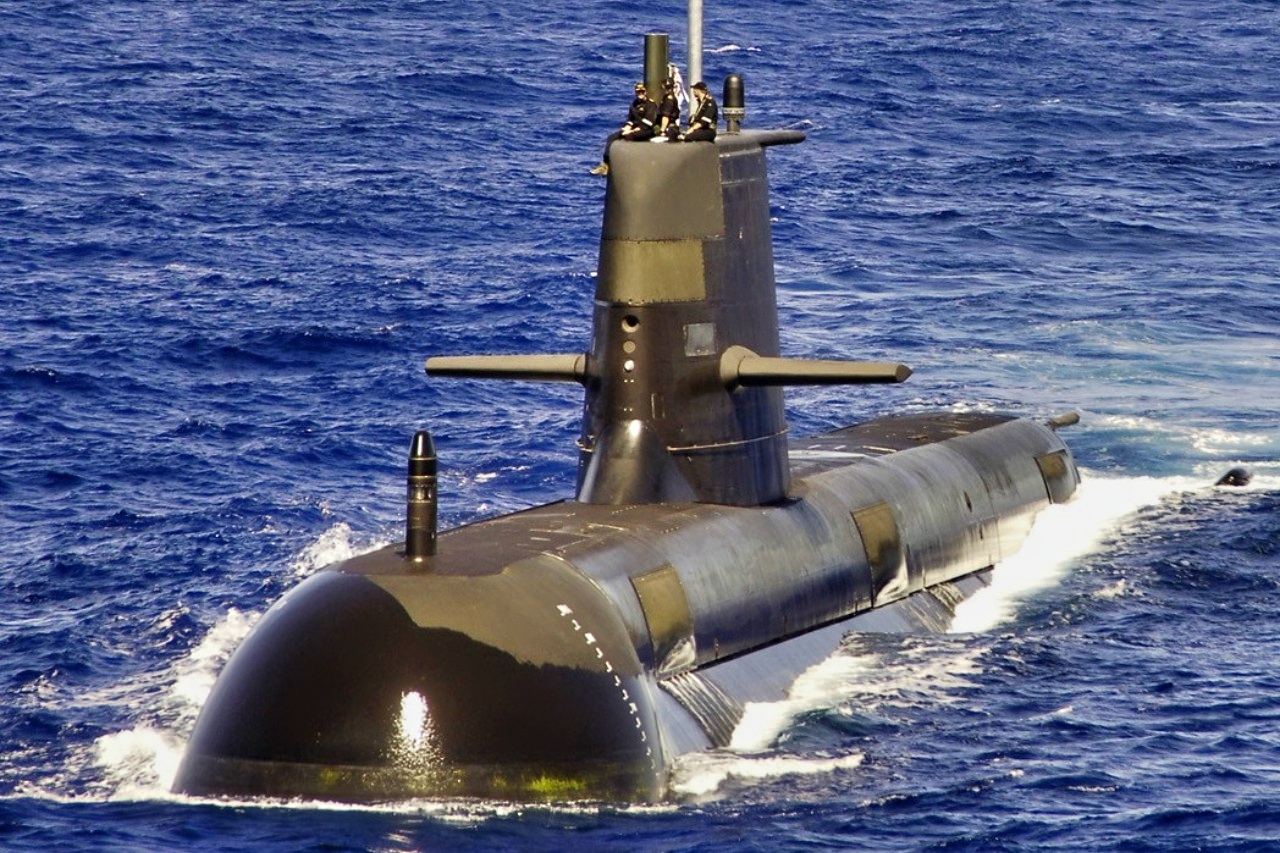
(July 25, 2006)- The Australian Submarine HMAS Rankin (Hull 6) and the Los Angeles Class attack submarine USS Key West (SSN-722) prepare to join a multinational formation with other ships that participated in the Rim of the Pacific exercise. To commemorate the last day of RIMPAC, participating country’s naval vessels fell into ranks for a photo exercise. RIMPAC includes ships and personnel from the United States, Australia, Canada, Chile, Japan, Peru, the Republic of Korea, and the United Kingdom. RIMPAC trains U.S. allied forces to be interoperable and ready for a wide range of potential combined operations and missions. Abraham Lincoln Carrier Strike Group are currently underway on a scheduled Western Pacific deployment. U.S. Navy photo by Mass Communications Specialist Seaman James R. Evans (RELEASED)
-As of February 2026, Australia is moving forward with the AUKUS partnership, preparing to bridge the gap between its aging conventional fleet and incoming nuclear-powered Virginia-class and SSN-AUKUS boats.
-While the Collins-class remains in service through the 2030s via life-extension programs, it marks the end of an era as Canberra transitions to the “crown jewel” of undersea propulsion.
How the “Noisy” Collins-Class Submarine Actually ‘Sunk’ a U.S. Navy Aircraft Carrier
The Royal Australian Navy’s Collins-class of diesel-electric submarines entered Australian service in the late 1990s.
It replaced the Oberon-class, which was less capable than its counterparts in the Royal Navy and U.S. Navy.
The new class was controversial from the start. It made a high amount of noise while underway, suffered mechanical issues, and was plagued by operational problems.
As time went on, however, Canberra upgraded the submarines and improved its submariner training pipeline, giving the class of submarines credibility within the Australian military.
It also earned respect abroad thanks to its performance when the submarines participated in multinational exercises.

The guided-missile destroyer, USS William P. Lawrence (DDG 110) sails with ships from the Royal Australian Navy (RAN), Japan Maritime Self-Defense Force (JMSDF) French Navy aircraft carrier, FS Charles de Gaulle (R 91) and its escort ships through the Gulf of Bengal during exercises La Perouse. The exercise, comprised of multiple anti-submarine warfare drills, was designed to enhance unit-level training, improve the strike group’s ability to respond to a submarine threat, and enhance interoperability between the U.S. and French navies.
The Collins-class’ peak moment came in the early 2000s, during an exercise with the most capable navy in existence: the U.S. Navy.
Australia’s Collins-class submarines notched several simulated “kills” against U.S. Navy vessels during the course of several multinational exercises in the early 2000s—including simulated torpedo strikes against an aircraft carrier, as well as nuclear attack submarines.
One of the more noteworthy incidents involved the HMAS Waller. The Collins-class submarine was participating in U.S.-led war games around Hawaii and in the waters to Australia’s north. Though the Waller initially integrated with a U.S. carrier battle group, the submarine also played an opposing enemy submarine.
While playing the adversarial role, the Waller reportedly penetrated the carrier group’s submarine screens and managed to make close-in observations of the aircraft carrier USS Abraham Lincoln (CVN-72).
Australian media lauded the submarine’s effort, though reporting at the time stressed that the feat was perhaps not representative of the submarine’s capabilities during a real conflict scenario.
“Neither achievement is a useful guide to performance unless you understand the full context,” a naval source told the Australian Financial Review.
“Photographing aircraft carriers is a submarine pastime,” a former officer added, explaining, “exercises are designed so that everybody goes home happy.”
But, at the very least, “under controlled exercise conditions,” the Australian submarine “evaded US, Japanese, Canadian, Chilean, Korean and British forces and provided photographic proof that it was well within torpedo firing range of a major and heavily defended U.S. prize.”

USS Ronald Reagan (CVN 76), USS Kitty Hawk (CV 63), and USS Abraham Lincoln (CVN 72) cruise side-by-side in the Philippine Sea June 18, 2006, during exercise Valiant Shield 2006. The joint exercise consists of 28 naval vessels, more than 300 aircraft, and approximately 20,000 service members from the Navy, Army, Air Force, Marine Corps and Coast Guard. (U.S. Navy photo by Chief Photographer’s Mate Spike Call) (Released)
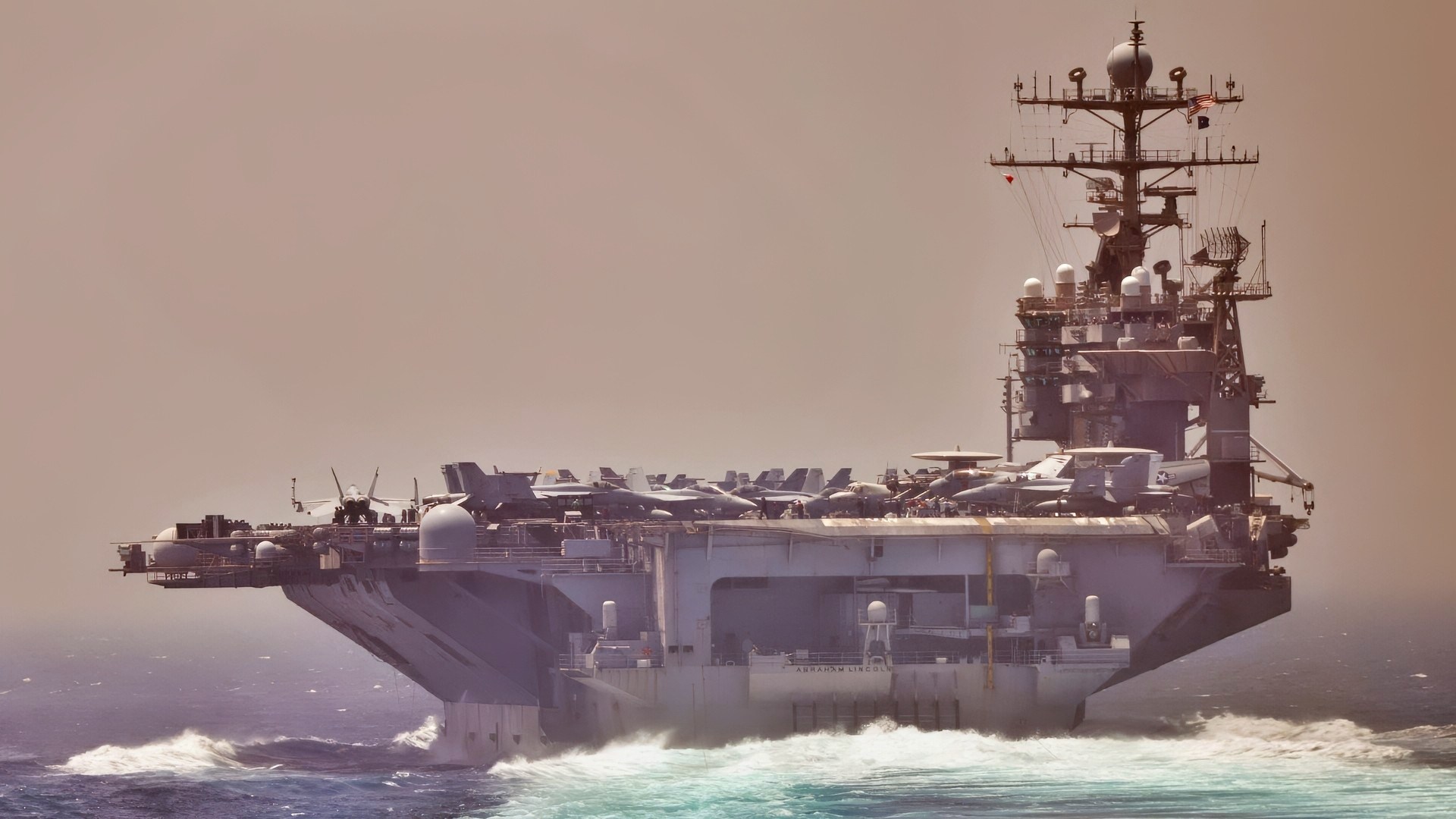
STRAIT OF HORMUZ (May 1, 2012) The aircraft carrier USS Abraham Lincoln (CVN 72), left, and the guided-missile cruiser USS Cape St. George (CG 71) transit the Strait of Hormuz. Abraham Lincoln and Cape St. George are deployed to the U.S. 5th Fleet area of responsibility conducting maritime security operations, theater security cooperation efforts and support missions as part of Operation Enduring Freedom. (U.S. Navy photo by Mass Communication Specialist 3rd Class Alex R. Forster/Released)
Submarine Changes: Out with the Old, in with the New
Fast forward to today, and the Royal Australian Navy is more than ready to ditch its Collins-class submarines.
In 2021, Australia turned heads when it revealed a trilateral defense partnership with the United Kingdom and the United States.
The agreement, known as AUKUS, was just the second time the United States has shared the crown jewel of its nuclear deterrence—the nuclear propulsion technology that powers America’s submarines.
The Australian decision to join the grouping was also a significant snub to the French. In 2016, Canberra had forged a deal with France’s Naval Group for a 12-boat diesel-electric submarine fleet, a modified variant of France’s Barracuda-class submarines.
However, overtures by the United Kingdom and the United States proved too attractive to pass up. Once realized, the deal will offer Australia a superior submarine fleet with unlimited endurance.
The decision was met with consternation in Paris. French President Emmanuel Macron went so far as to accuse Australia of deception and betrayal, saying Canberra negotiated the deal in parallel to the deal with Naval Group, and in bad faith.
He added that the deal was tantamount to a “stab in the back.” If reporting is accurate, Naval Group learned that their deal with the Australians fell through just hours before the public announcement of AUKUS.

SSN-AUKUS. Image Credit: Creative Commons.
Postscript: Australia Can Indeed Sink Aircraft Carriers and the Future Is Coming
Australia justified the decision to scrap the deal with the French as strategically necessary and therefore justified.
AUKUS, meanwhile, is not quite the end of the line for the Collins-class. Before Australia can accept nuclear-powered submarines into service, Canberra needs to broaden its defense industrial base to sustain the subs.
Its sailors must also become familiar with nuclear submarine safety, technology, and operations.
In the meantime, the Collins-class will remain in service until the late 2030s thanks to a comprehensive life extension program.
They probably won’t score any hits, real or simulated, until then. Still, the submarines have had a pretty good voyage, all things considered.
About the Author: Caleb Larson
Caleb Larson is an American multiformat journalist based in Berlin, Germany. His work covers the intersection of conflict and society, focusing on American foreign policy and European security. He has reported from Germany, Russia, and the United States. Most recently, he covered the war in Ukraine, reporting extensively on the war’s shifting battle lines from Donbas and writing on the war’s civilian and humanitarian toll. Previously, he worked as a Defense Reporter for POLITICO Europe.


