


Summary and Key Points: The Nimitz-class aircraft carrier remains the backbone of American naval dominance, even as the Ford-class enters the fray. However, these supercarriers are getting old.
-Recently, dual-carrier operations in the Pacific demonstrated how upgraded Nimitz ships are integrating with the F-35C and JPALS landing technology to counter China’s expanding navy.

A U.S. Navy MH-60S Seahawk helicopter with Helicopter Sea Combat Squadron (HSC) 9 transfers ammunition between aircraft carriers USS George H.W. Bush (CVN 77), foreground, and USS Harry S. Truman (CVN 75) in the Atlantic Ocean Feb. 17, 2011. (U.S. Navy photo by Mass Communication Specialist 3rd Class Leonard Adams/Released)
-With Aegis Baseline 10 networking and new laser defenses, these “Cold War” legends are evolving into high-tech hubs capable of outmatching near-peer threats.
-While the Ford-class offers a 33-percent higher sortie rate, the Nimitz’s layered defenses and improved interoperability ensure the U.S. Navy maintains a lethal advantage in the South China Sea.
Why the US Navy is Betting on Upgraded Nimitz Carriers to Deter China’s Massive Navy
The distinguished and successful combat performance of the Nimitz-class carriers has earned the ships a permanent resting place in the annals of Naval history, as they have projected power, propelled and sustained air attacks, and operated as a powerful “deterrent” and symbol of American power.
These carriers have not only launched successful war campaigns but also safeguarded international waterways for decades.
Protecting free commerce and movement on the seas is one of the Navy’s key, yet often lesser recognized missions, given the large percentage of international trade that takes place over water. This is one key reason why the US Navy does a lot of forward operations, placing carriers in critical, high-value areas of great significance to world waterway travel.

Aug. 8, 2017 – The Arleigh Burke-class guided-missile destroyer USS Donald Cook (DDG 75) maneuvers between the Ticonderoga-class guided-missile cruiser USS Philippine Sea (CG 58), left, and the Nimitz-class aircraft carrier USS George H. W. Bush (CVN 77), right, for a photo exercise during exercise Saxon Warrior 2017, Aug. 8. Saxon Warrior is a United States and United Kingdom co-hosted carrier strike group exercise that demonstrates allied interoperability and capability to respond to crises and deter potential threats. (U.S. Navy photo by Mass Communication Specialist 1st Class Theron J. Godbold /Released)
The deterrence mission, however, is of course never to be overlooked, particularly in today’s threat environment wherein China not only threatens Taiwan but operates a larger Navy than the US.
Of course, this does not mean it is superior, but the Chinese naval threat is increasingly being taken extremely seriously at the Pentagon.
It is likely one reason why the US Navy recently conducted dual-carrier operations in the Pacific to “scale” the potential for a massive-scale, networked air attack campaign. Improved interoperability, networking, and tactical air-to-surface mission coordination multiply the scale, scope, and operational envelope.
Nimitz-Class Aircraft Carriers Support the Ford-Class
As for the Nimitz, some may wonder how they will compare to the Ford-class once it is more fully operational, yet upgrades to the Nimitz carriers are not to be overlooked.
There are several critical areas where the Nimitz carriers have been adapted to a new, more serious, and changing threat environment.
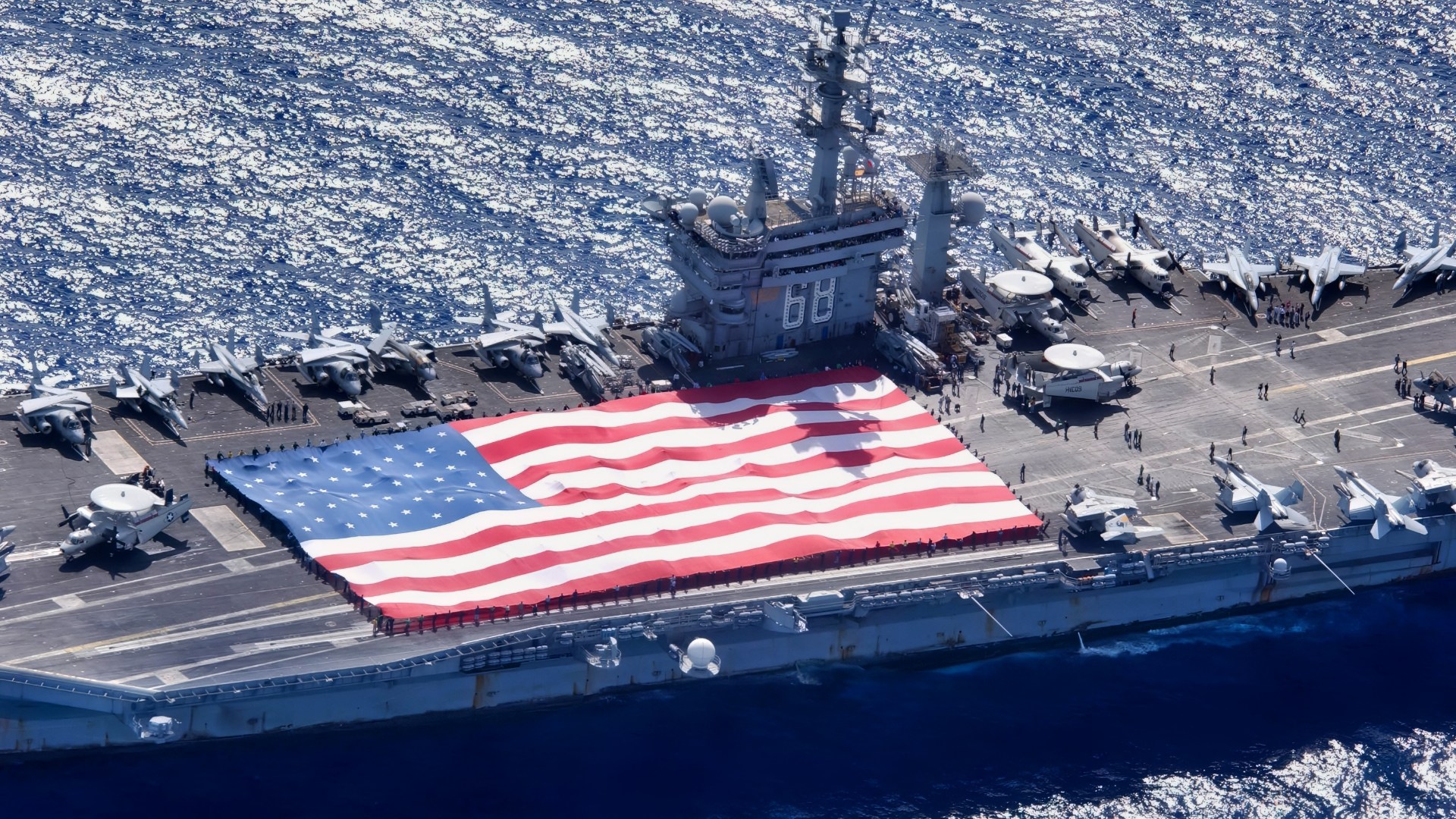
Pacific Ocean (November 3, 2003) — During Tiger Cruise aboard USS Nimitz (CVN 68), Nimitz and Carrier Air Wing Eleven personnel participate in a flag unfurling rehearsal with the help of fellow tigers on the flight deck. The Nimitz Carrier Strike Force and Carrier Air Wing Eleven (CVW-11) are in route to Nimitz homeport of San Diego, California after an eight-month deployment to the Arabian Gulf in support of Operation Iraqi Freedom. U.S. Navy photo by Photographer Mate 3rd Class Elizabeth Thompson
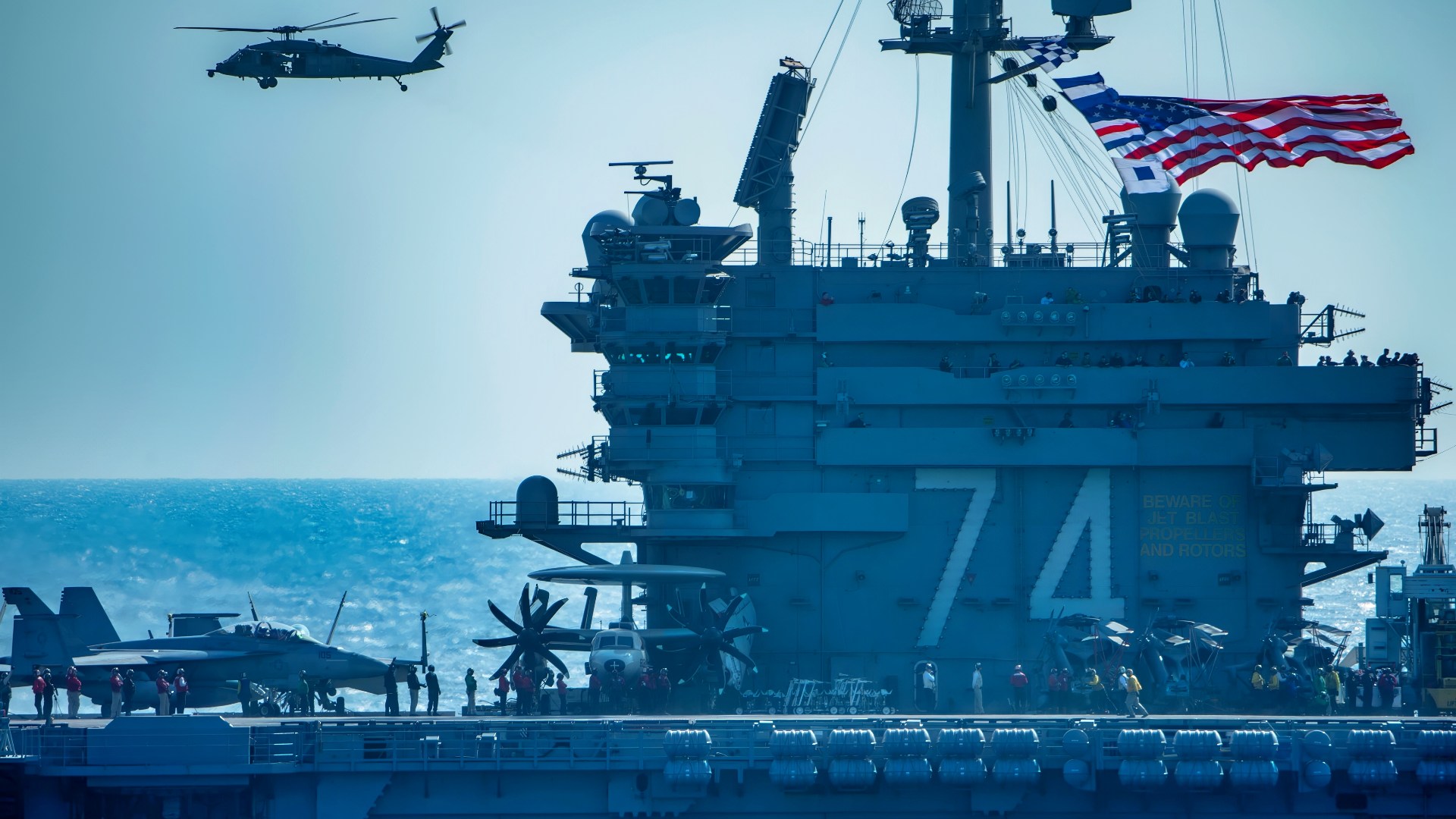
ANDAMAN SEA (Oct. 12, 2012) The Nimitz-class aircraft carrier USS John C. Stennis (CVN 74) moves into formation in the Andaman Sea. Ships and aircraft of the George Washington and John C. Stennis carrier strike groups are conducting exercises to increase interoperability, readiness, and the capability to respond quickly to various potential crises in the region, ranging from combat operations to humanitarian assistance. The U.S. Navy is constantly deployed to preserve peace, protect commerce, and deter aggression through forward presence. Join the conversation on social media using #warfighting. (U.S. Navy photo by Mass Communication Specialist 3rd Class Kenneth Abbate/Released)
For example, they have received cutting-edge GPS-enabled aircraft-carrier landing technology called the Joint Precision Approach and Landing System.
While pilots have succeeded in landing in difficult and dangerous conditions for many years, JPALs introduces a new measure of precision when it comes to a pilot’s “glide scope” and descent onto a carrier deck. This can be extremely helpful for pilots who “bank: and seek to land in rough sea conditions, high winds, or under enemy fire. JPALs are also part of a series of modifications that help aircraft carriers accommodate the now-operational F-35C, the first-of-its-kind sea-launched stealth fighter.
Carrier Defenses
Some of the largest improvements to the Nimitz-class, however, may come in the realm of layered ship defenses.
There are several key reasons for this, the first and potentially most apparent of which is an increased ability to network with destroyers, cruisers, and other ships in its Carrier Strike Group.
This enables vastly improved protection for carriers, as Aegis-capable destroyers can perform cruise and ballistic missile defense at ranges sufficient to alert carriers to incoming threats and, in many cases, intercept them. Carrier-layered defenses also include advanced applications of EW, interceptor weapons such as Close-In-Weapons-Systems, and shorter range offensive and defensive weapons such as SeaRAM.
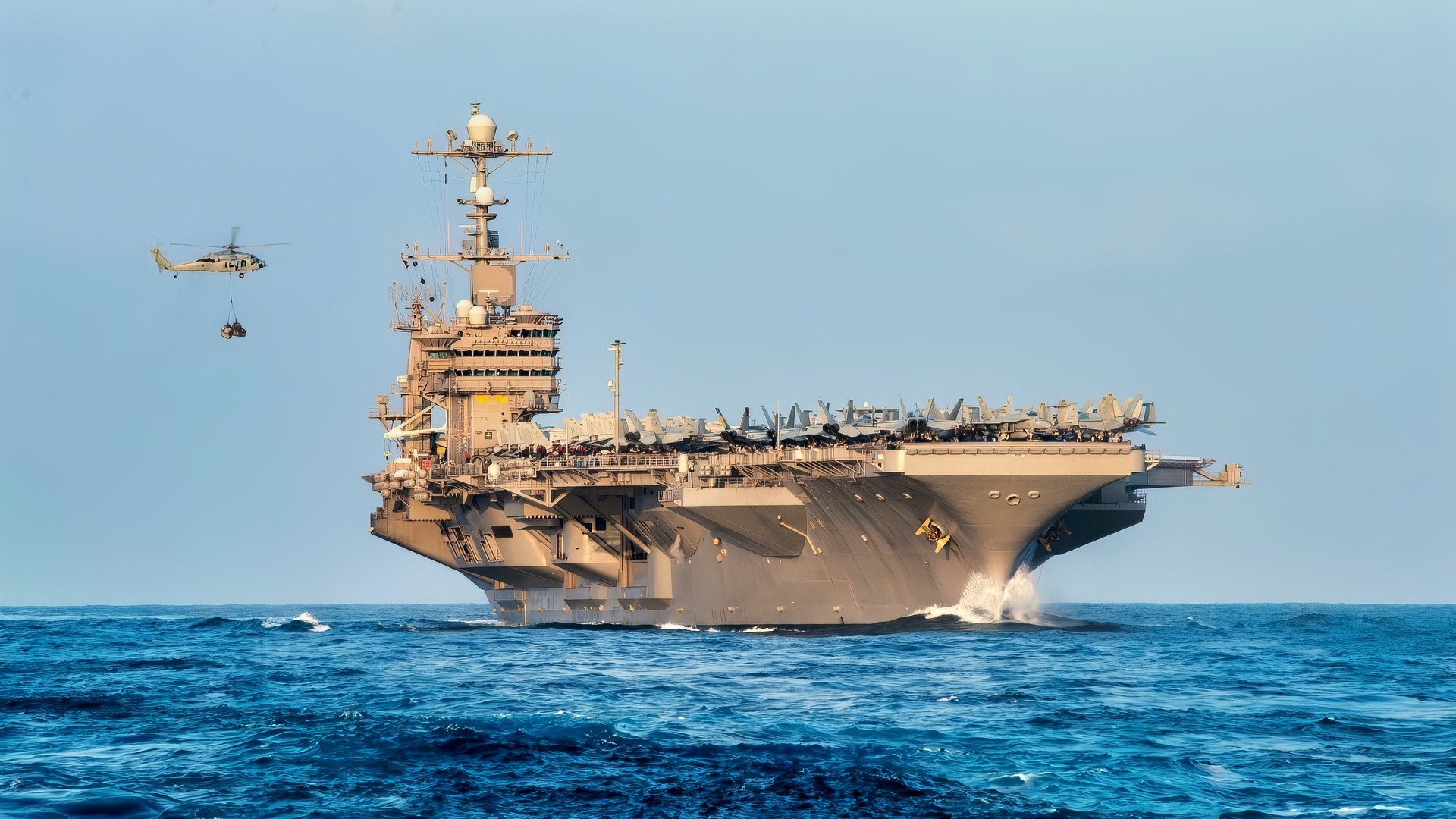
(Aug. 1, 2016) – The Nimitz-class aircraft carrier USS John C. Stennis (CVN 74) receives stores while conducting a vertical replenishment at sea, during Rim of the Pacific 2016. Twenty-six nations, more than 40 ships and submarines, more than 200 aircraft and 25,000 personnel are participating in RIMPAC from June 30 to Aug. 4, in and around the Hawaiian Islands and Southern California. The world’s largest international maritime exercise, RIMPAC provides a unique training opportunity that helps participants foster and sustain the cooperative relationships that are critical to ensuring the safety of sea lanes and security on the world’s oceans. RIMPAC 2016 is the 25th exercise in the series that began in 1971. (U.S. Navy photo by Mass Communication Specialist 2nd Class Ryan J. Batchelder)
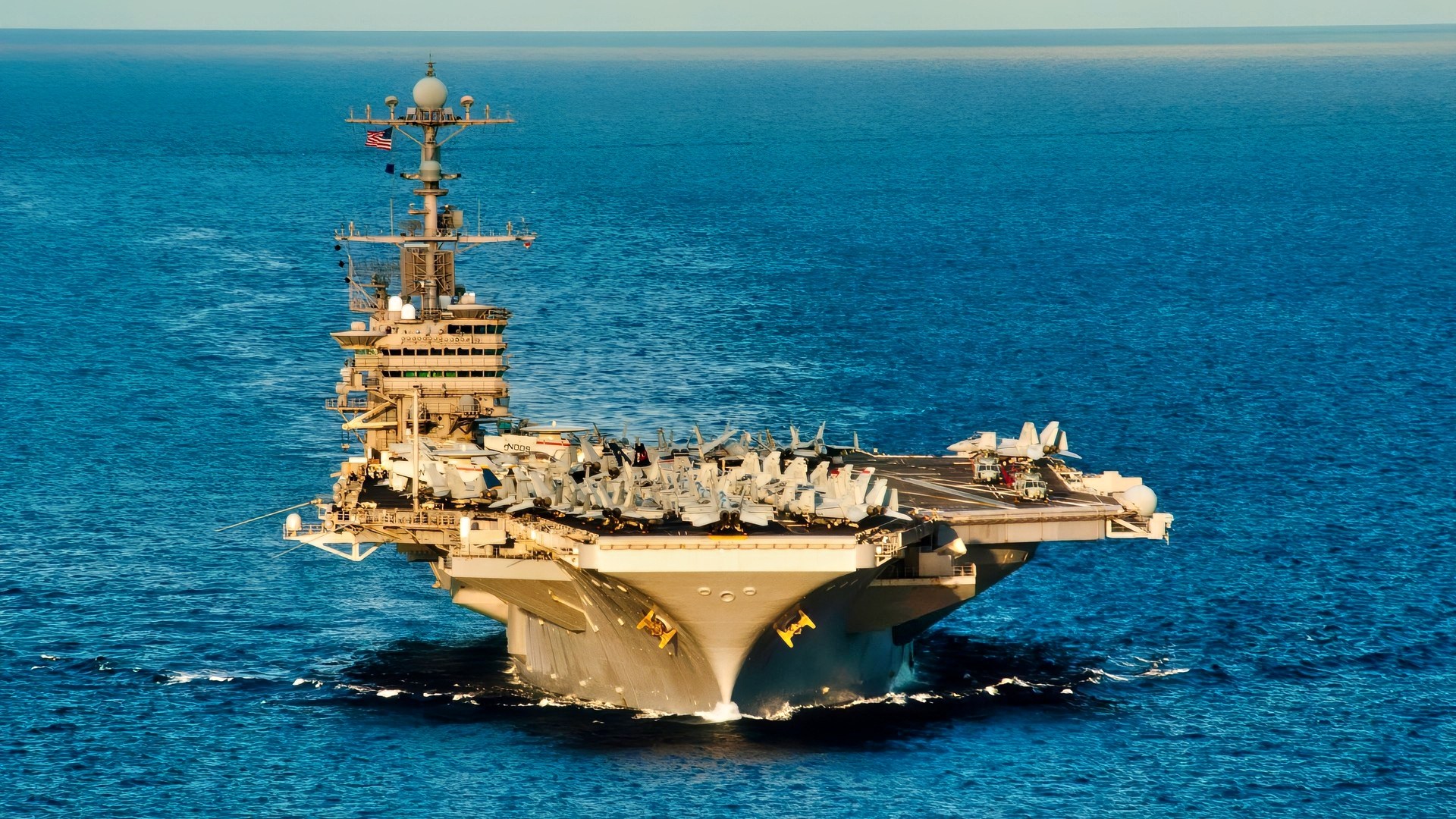
ARABIAN SEA (Dec. 14, 2018) The Nimitz-class aircraft carrier USS John C. Stennis transits the Arabian sea with the Essex Amphibious Ready Group (ARG) and 13th Marine Expeditionary Unit (MEU). The John C. Stennis Carrier Strike Group, Essex ARG, and 13th MEU are conducting integrated operations in the Arabian Sea to ensure stability in the Central Region, connecting the Mediterranean and the Pacific through the western Indian Ocean and three strategic choke points. (U.S. Navy photo by Mass Communication Specialist 3rd Class Tyler Diffie)
The other large surge forward in aircraft carrier survivability and warfighting prowess relates to the rapid adoption of networking technologies.
Ships in a Carrier Strike Group, such as destroyers and cruisers, now offer new dimensions of protection to carriers through technologies such as the Aegis 10 Combat System, which combines ballistic and cruise-missile radar into a single system that can cue fire control and launch defensive interceptors.
An SM-6, for example, can now, due to a software upgrade, track and destroy moving targets by adjusting course in flight.
Lasers & EW
US Navy destroyers are increasingly being armed with scalable lasers able to operate as both optical sensors and weapons to incinerate or simply disable an enemy aircraft, drone, or incoming missile.
There have also been breakthroughs in electronic warfare, with weapons able to find and “jam” or disable enemy communications or weapon guidance systems.
EW technologies are increasingly capable of deconflicting a cluttered spectrum to “frequency hop” to counter enemy “jamming,” identify hostile versus friendly electronic signa,ls or launch a series of difficult-to-detect narrow “pencil beam” kinds of electronic beams to disable or jam an enemy system.
There are also upgraded close-in ship defenses increasingly able to track and intercept threats much more quickly, often using AI-enabled advanced algorithms to identify and destroy threats at exponentially greater speeds.
Ford-class Future
As for whether upgraded Nimitz-class carriers will compete with or rival the Ford class, there are several key variables to consider.
Nimitz would perform quite well alongside the Ford class.
Yet, the primary difference lies in Ford’s 33-percent higher sortie rate, enabled by a larger deck and megawatt generators that provide unprecedented on-board electrical power.
This can help store energy and also power up and sustain power-reliant emerging weapons systems such as lasers, new EW applications, and radar and fire control systems.
About the Author: Kris Osborn
Kris Osborn is the President of Warrior Maven – Center for Military Modernization. Osborn previously served at the Pentagon as a highly qualified expert in the Office of the Assistant Secretary of the Army—Acquisition, Logistics & Technology. Osborn has also worked as an anchor and on-air military specialist at national TV networks. He has appeared as a guest military expert on Fox News, MSNBC, The Military Channel, and The History Channel. He also has a Masters Degree in Comparative Literature from Columbia University.


