

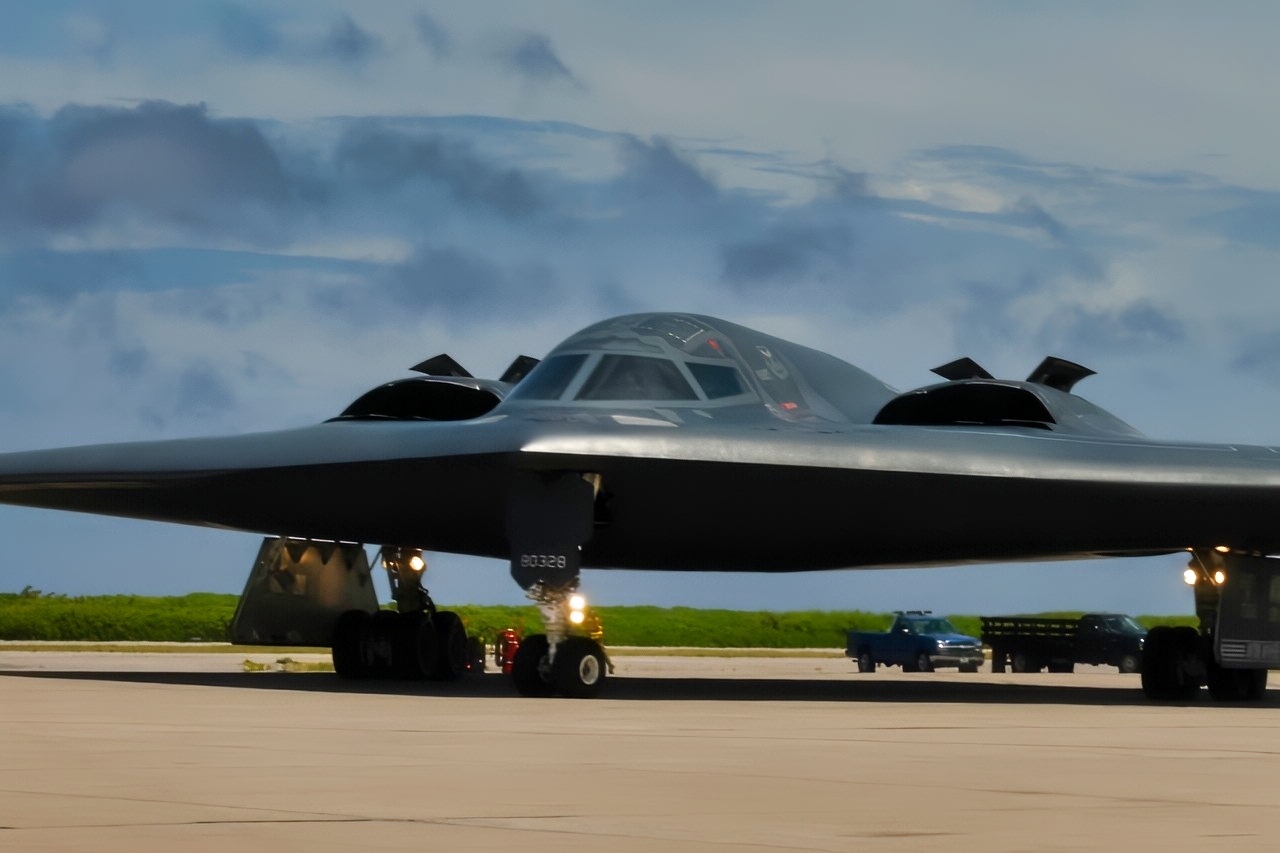
PUBLISHED on August 15, 2025, 8:42 PM EDT – Key Points and Summary: The U.S. Air Force originally planned to build as many as 139 B-2 Spirit stealth bombers, a fleet that would have provided an overwhelming strategic advantage.
-However, due to the staggering $2.1 billion per-unit cost and the end of the Cold War, the program was slashed to just 21 aircraft.
Three Whiteman Air Force Base 393rd Expeditionary Bomb Squadron B-2 Spirit stealth bombers sit on the runway during Red Flag-Nellis 22-1 on Jan. 26, 2022, at Nellis Air Force Base, Nevada. Red Flag-Nellis 22-1 provides realistic combat training that saves lives by increasing combat effectiveness. (U.S. Air Force photo by Senior Airman Michael A. Richmond)
-While the B-2 proved its immense value in recent strikes like “Operation Midnight Hammer” against Iran, the small fleet size limits its operational flexibility.
-The high cost, driven by the short production run, serves as a key lesson for the upcoming B-21 Raider program.
What If 139 B-2 Stealth Bombers Had Been Built?
The U.S. Air Force would be much weaker without the B-2 Spirit stealth bomber.
The Spirit’s ability to strike anytime and anyplace by outfoxing enemy air defenses, delivering massive ordnance many thousands of miles away, and returning home safely after a 36-hour flight, gives the U.S. a capability no other military can boast.
B-2s Bring the Pain to Iran
The B-2 showed its mettle in June during a bunker-busting mission against Iranian nuclear infrastructure. Three nuclear sites were hit during Operation Midnight Hammer.
The installations were significantly damaged, reportedly placing them out of action for at least two years. No B-2 was lost as the bombers safely navigated a large number of enemy surface-to-air missiles. It was one of the most successful B-2 missions in history.
But There Are Only 19 Operational
One drawback of the B-2 program is its lack of numbers; there are only 19 B-2s in service. This is not totally constraining though. Sometimes the Air Force can conduct a ruse against the enemy using B-2s.

A U.S. Air Force B-2 Spirit is prepared for operations ahead of Operation MIDNIGHT HAMMER at Whiteman Air Force Base, Missouri, June 2025.
During the Iran mission noted above, the Department of Defense created a diversion by sending one flight of B-2s to Guam.
This decoy mission was released to the public, and it likely lulled the Iranians into thinking an attack on their nuclear sites was not imminent. When seven B-2s were sent to Iran for bombing runs, they achieved strategic and tactical surprise against Tehran.
139 B-2s Would Have Been Awe Inspiring
This operation took almost the entire fleet to conduct. But what if the United States had 100-plus more? As many as 139 B-2s were once planned for the Air Force.
Defense strategists thought that such a huge force would change the aerial balance of power against adversaries and give the U.S. nuclear triad a significant boost. The Air Force later cut the number of B-2s it requested to 75.
Spread B-2s Around the World
The latter number would have still been an overwhelming force. The B-2 can strike at any time, but it must take off from Whiteman Air Force Base in Missouri.
What if the B-2 could have been forward-deployed at all times in Guam, ready to overawe the Chinese, or in Qatar to keep a permanent watchful eye on the Middle East?
With such numbers, some B-2s could also land and take-off from Germany, bringing the nuclear-capable stealth bomber to Vladimir Putin’s doorstep.
They Were Just Too Expensive
The problem was that the cost to build so many B-2s was absurdly high. Each bomber cost a staggering $2.1 billion, and that doesn’t cover maintenance.
You can do the math, too, but 139 B-2s would have cost around $300 billion. The U.S. military was not able to fork over that much funding in the 1990s. At the time, the Soviet Union had broken up, and the Communist menace had abated. There just wasn’t a need for that many B-2s.

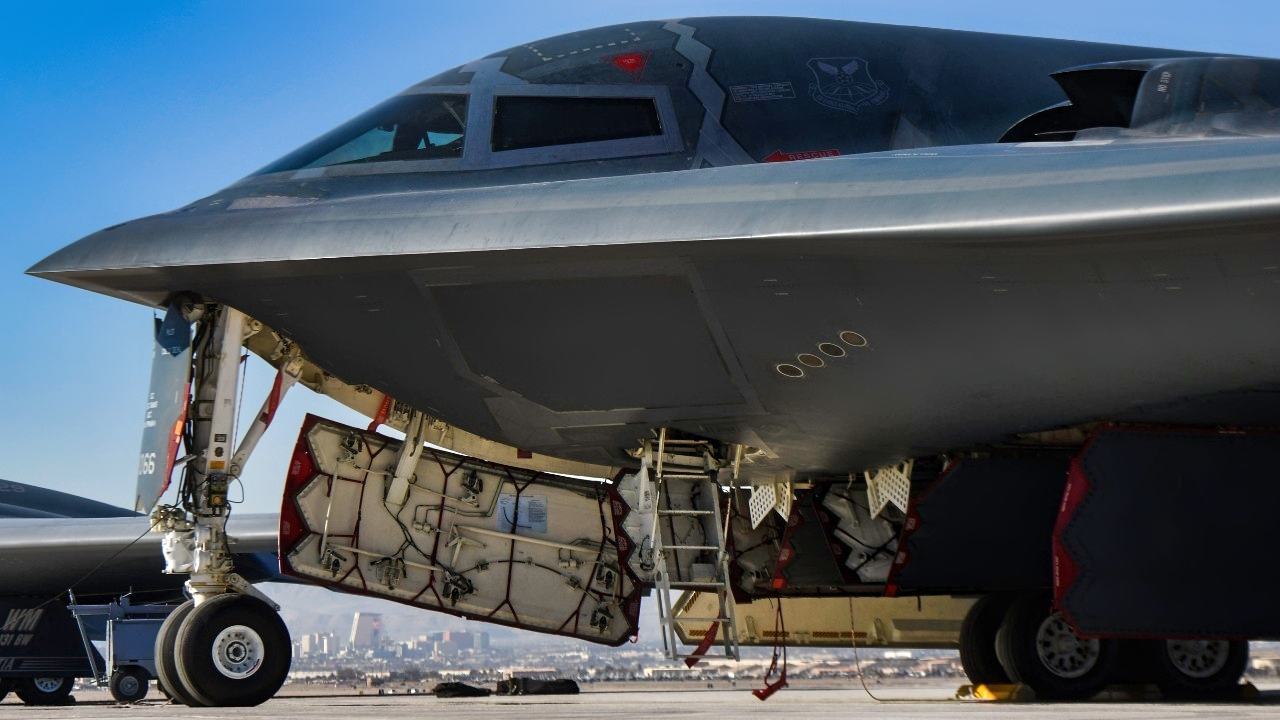
B-2 Bomber at USAF Museum National Security Journal Image. All Rights Reserved.
It would have been nice, though. The B-2 is a special airplane that can bring the fight to the enemy like no other. The bomber is a massive enactor of nuclear deterrence and can deliver overwhelming force to the fight. It is disappointing that only 19 are on active duty.
The Iranian strike shows that stealth technology is still effective. Pilots can fly for more than a day and a half on a single mission without being detected, and the airplane can deliver accurate strikes thousands of miles away on other continents. It may be just as capable as an intercontinental ballistic missile, or a strike from a nuclear-powered ballistic-missile submarine.
However, the B-2 was a stubborn airplane to construct. The radar-absorbing coating required ample research and development; this was painstakingly slow and expensive.
The bomber also needs extensive care by maintainers. Secretary of Defense Dick Cheney, who served under President George H.W. Bush, capped the number at 21. One crashed in 2022, and another is not operational.
There is a chance the Trump administration will have to order another bunker-busting attack on Iranian nuclear sites in the coming years. There is a question about whether all enriched weapons-grade uranium was destroyed during Midnight Hammer. Iran could still use any remaining supply to produce a nuclear weapon.
B-2s could be deployed again to prevent this. They would also be instrumental against China, should a shooting war take place. B-2s would focus on suppressing enemy air defenses in a Day One attack against the People’s Republic.
Here Comes the B-21 Raider
The B-2 is a great airplane, and it is a pity that more were not built. Still, 19 are sufficient to make the enemy pay.
Plus, the new B-21 Raider stealth bomber will come online in the 2030s.
There will be at least 100 B-21s, if the Air Force has its way.
This time, the Department of Defense will keep the purse strings open. Bean counters, strategists, Members of Congress, and whoever occupies the White House will know that stealth bombers are all-important, and you will see many more than 19 B-21 bombers in the future.
About the Author: Dr. Brent M. Eastwood
Brent M. Eastwood, PhD is the author of Don’t Turn Your Back On the World: a Conservative Foreign Policy and Humans, Machines, and Data: Future Trends in Warfare plus two other books. Brent was the founder and CEO of a tech firm that predicted world events using artificial intelligence. He served as a legislative fellow for U.S. Senator Tim Scott and advised the senator on defense and foreign policy issues. He has taught at American University, George Washington University, and George Mason University. Brent is a former U.S. Army Infantry officer. He can be followed on X @BMEastwood.
Military Matters
The F-22 Raptor Just Keeps Getting Better


