

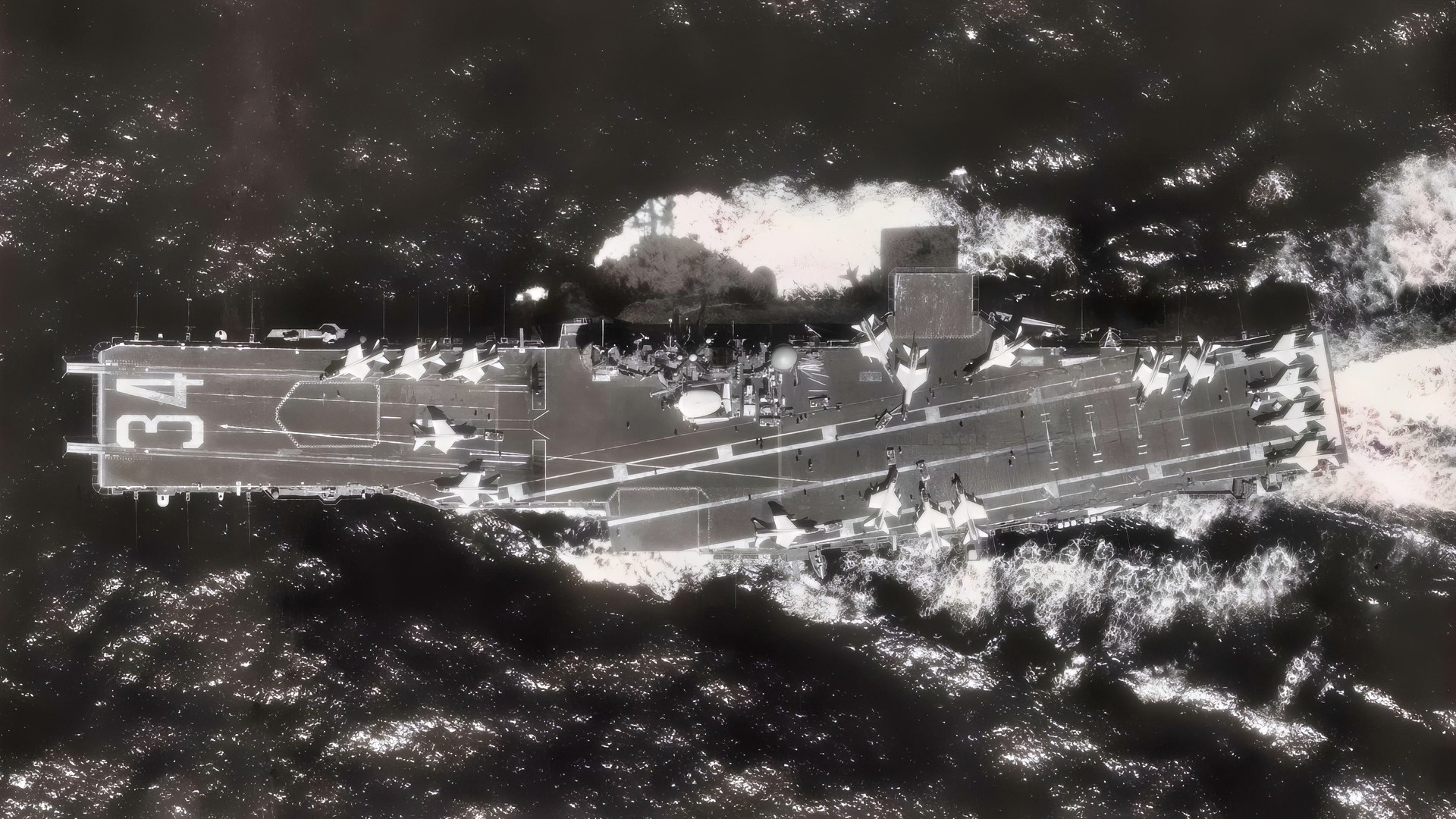
Key Points and Summary – In October 1966, the Essex-class aircraft carrier USS Oriskany was preparing for flight ops off Vietnam when a routine ordnance evolution turned catastrophic.
-Two sailors accidentally ignited a Mk 24 flare and, in panic, tossed it into a locker packed with some 700 magnesium flares.

USS Oriskany Aircraft Carrier Sinking in controlled demolition. Image Credit: Creative Commons.
-The chain reaction produced a 2,400°C fire that roared through nearby compartments, killing 44 sailors—many of them aviators—and injuring 156 more.
-Despite the devastation, “Mighty O” was repaired, returned to combat, and later earned seven battle stars before decommissioning.
-In 2006, she was sunk off Pensacola as the largest artificial reef ever created in U.S. waters.
This Vietnam-Era Aircraft Carrier Disaster Has a Message the Navy Still Teaches
One of the worst things that can afflict a naval vessel is a shipboard fire, whether intentional or accidental. Accordingly, every U.S. Navy sailor is taught firefighting fundamentals during his/her seven weeks of boot camp.
Two of the most infamous unintentional fires to befall the Navy during the Vietnam War were those onboard the USS Forrestal (CVA-59) on July 29, 1967, which killed 134 men; and the USS Enterprise (CVN-65) on Jan. 14, 1969, which claimed 28 lives.
However, another tragic flattop fire in the 1960s predated those incidents.
National Security Journal now looks at the USS Oriskany (CVA-34) disaster.
USS Oriskany (CVA-34) Initial History and Tech Specs
Affectionately nicknamed the “Mighty O” (akin to the “Big E” moniker for the Enterprise) and officially named for the Battle of Oriskany during the Revolutionary War, CVA-34 was an Essex-class carrier—the 20th century’s most numerous class of capital ship. These warships bore a hull length of 888 feet and a displacement of 31,300 tons. Though nowhere near as big as the “Big E” (or the later Nimitz-class supercarriers, for that matter), they accommodated roughly 2,600 commissioned officers and enlisted seamen, as well as potentially up to 90-100 aircraft.
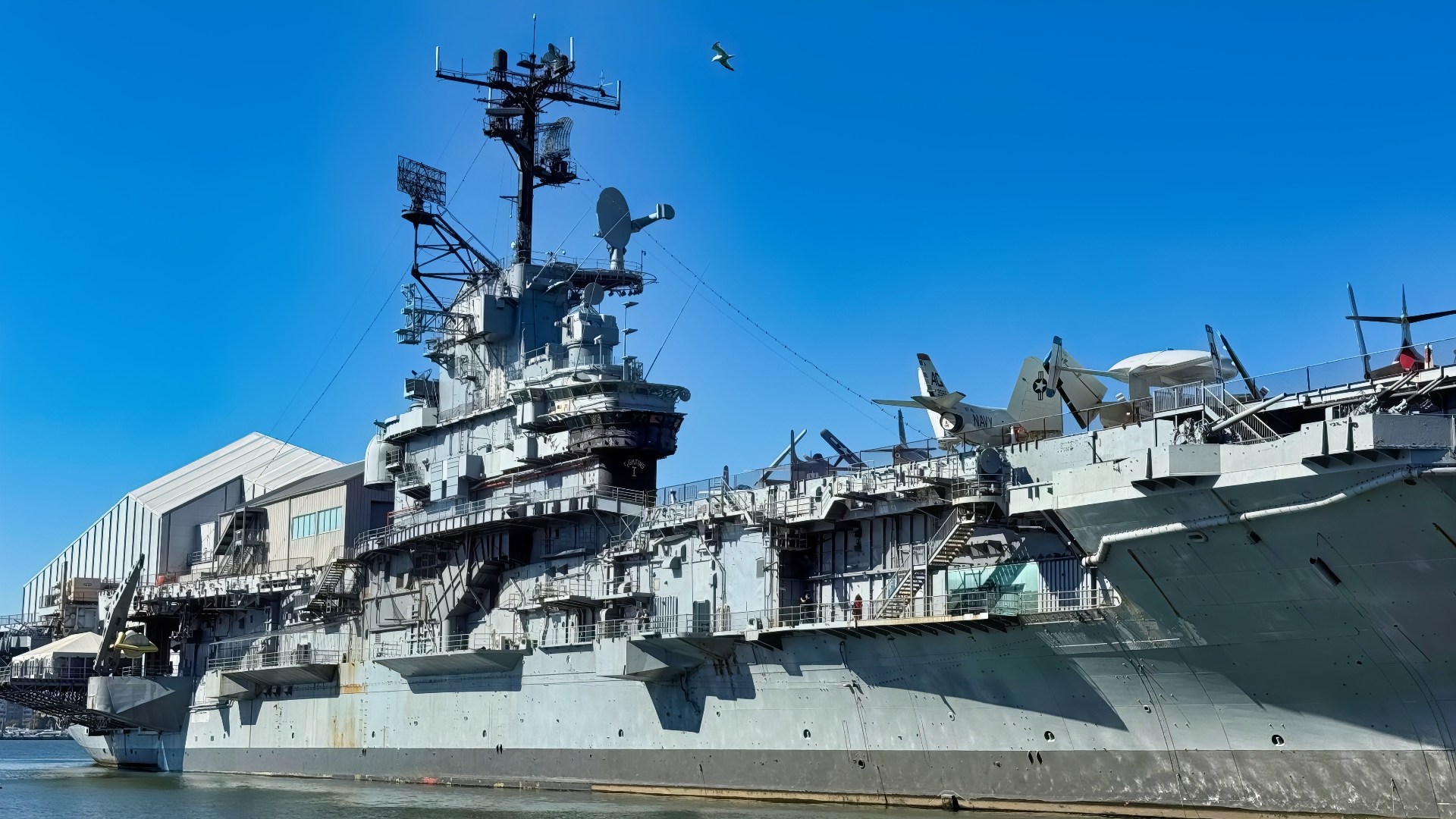
Essex USS Intrepid Carrier. Image Credit: National Security Journal.
Initially designated simply CV-34, the Oriskany was laid down at New York Naval Shipyard (now known as Brooklyn Navy Yard) on May 1, 1944; launched on Oct. 13, 1945; and commissioned on Sept. 25, 1950.
She was initially decommissioned on Jan. 2, 1957, but was recommissioned on March 7, 1959.
Mighty O’s Tragedy
The tragedy transpired on Oct. 26, 1966, off the Gulf of Tonkin, during which time the Oriskany was on her second Vietnam deployment and third wartime deployment.
At 7:28 a.m., the aircraft carrier was preparing to begin flight operations and stowing ordnance from night operations; an alarm was sounded for a fire in compartment A-107-M.
The cause? A lit flare, locked in a flare locker.
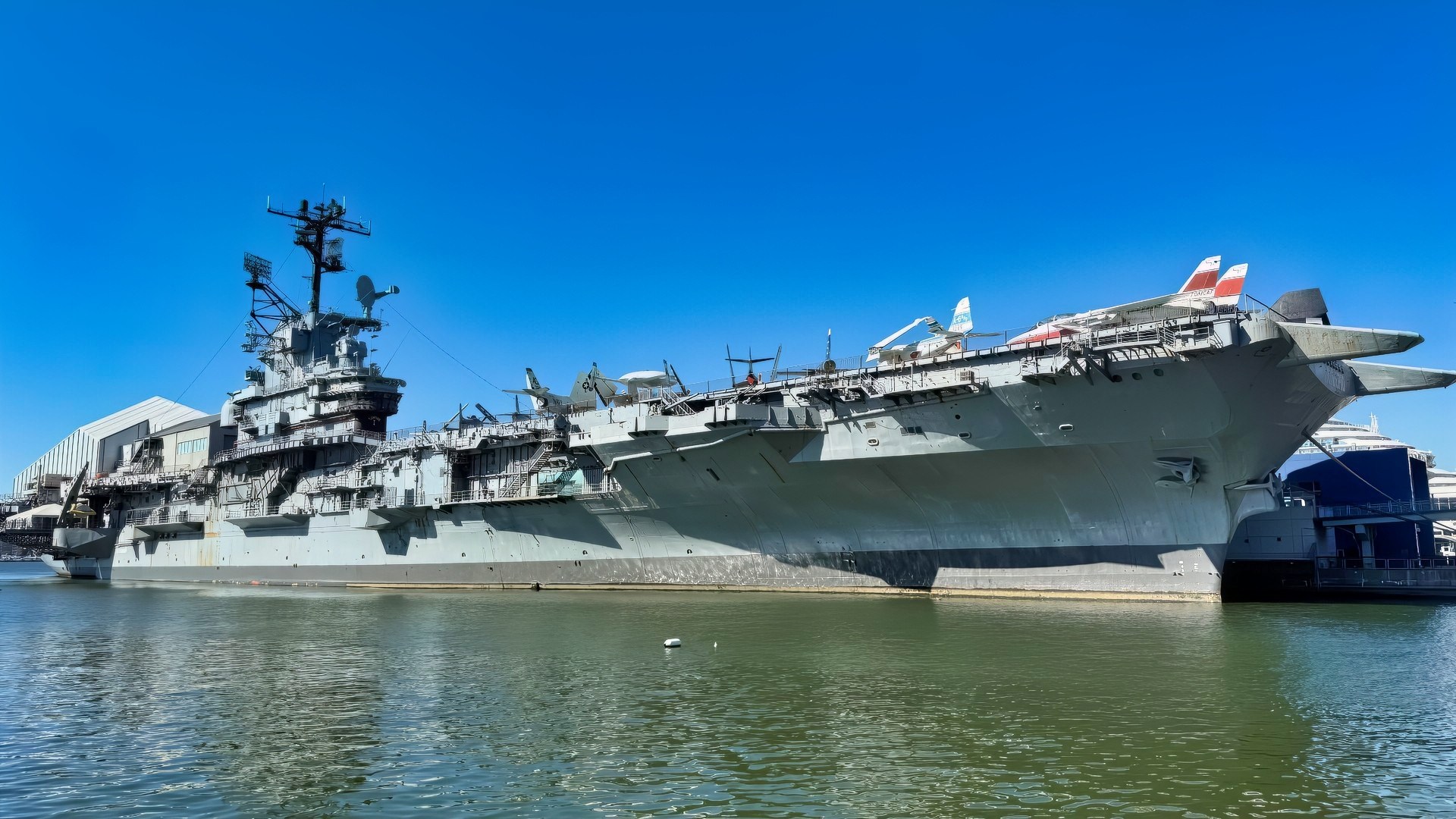
Essex-Class USS Intrepid Aircraft Carrier. Image Credit: National Security Journal.
Two seamen who were loading a stack of Mk 24 magnesium parachute flares into the flare locker accidentally ignited one of them. Then, in their panic, they threw it into the flare locker and closed the hatch. This touched off a chain reaction of all 700 magnesium flares stored in the enclosed space, igniting a fire that raged at 2,482 degrees Celsius.
In the words of Lieutenant Commander Dale Barck, a pilot in a detachment of Helicopter Combat Support Squadron (HC) One, “It was my turn to take the early launch. I was turned up in the little H-2 [helicopter], when I saw a pink-white cloud coming up on the starboard side, followed by [Commander Richard Bellinger] running down the flight deck stark naked—he had squeezed out of a porthole!”
All in all, 44 of the Oriskany’s crew (mostly aircrew) lost their lives, and an additional 156 sailors were injured. Five of Barck’s fellow HC-1 chopper pilots were killed in the blaze, including Ensign Daniel Kern, his own co-pilot during the SS August Moon rescue just six weeks prior.
Speaking of that SS August Moon rescue, another one of the ill-fated HC-1 pilots, Lieutenant Josslyn Blakely Jr., would be posthumously awarded the Navy and Marine Corps Medal (the Navy’s highest non-combat award for heroism) for his role in that rescue mission. By eerie coincidence, 44 was also the number of lives saved by the Oriskany’s whirlybird drivers during the August Moon incident. (The British-registered 10,240-ton ore carrier had run aground on the Pratas Island reef.)
The highest rank & pay grade amongst the dead was that of Commander (CDR)/O-5, held by seven individuals:
-Richard E. Donahue, age 37
-Jack H. Harris, age 40
-Harry W. Juntilla, age 42
-Rodney B. Carter, age 40
-George K. Farris, age 35
-John J. Nussbaumer, age 38
-Clyde R. Welch, age 38
By contrast, the most junior sailor to perish in that disaster was Airman Apprentice Greg Eugene Hart, only 17 years old at the time. If Greg were still alive today, he’d be celebrating his 72nd birthday this very month.
In addition, three aircraft were destroyed, and three more were damaged.
USS Oriskany Aircraft Carrier: Where Is She Now?
CVA-34 was eventually repaired and returned to service.
She provided a total of 26 years of faithful service to the Navy until finally being decommissioned for the last time on Sept. 30, 1976. Over the course of her illustrious quarter-century career, the Oriskany earned two battle stars for service in the Korean War and five battle stars for service in the Vietnam War.
Alas, the Oriskany wasn’t preserved for posterity as a floating museum.
However, at least she had a more memorable fate than simply being sold for scrap.
She was sunk on May 17, 2006, approximately 22.5 nautical miles southeast of Pensacola Pass at a depth of 212 feet, as part of a joint effort between U.S. Navy, the Florida Fish and Wildlife Conservation Commission, and Escambia County. A
s a result of that sinking, the Oriskany made history as the first naval warship and largest artificial reef ever to be intentionally sunk in U.S. coastal waters.
Not quite going out in a blaze of glory, but leaving a lasting legacy all the same.
Fair winds and following seas, sailors of the USS Oriskany, we have the watch.
About the Author: Christian D. Orr, Defense Expert
Christian D. Orr is a Senior Defense Editor. He is a former Air Force Security Forces officer, Federal law enforcement officer, and private military contractor (with assignments worked in Iraq, the United Arab Emirates, Kosovo, Japan, Germany, and the Pentagon). Chris holds a B.A. in International Relations from the University of Southern California (USC) and an M.A. in Intelligence Studies (concentration in Terrorism Studies) from American Military University (AMU). He is also the author of the newly published book “Five Decades of a Fabulous Firearm: Celebrating the 50th Anniversary of the Beretta 92 Pistol Series.”


