


Russia developed the T-95 “Object 195” tank for approximately 22 years. The Russian T-95 tank was canceled without ever entering combat. The Russian T-95 program was originally devised in 1988 as “Improving-88.” The Russian T-95 tank was designed to replace the Russian T-72 tank. The Russian T-95 tank featured a 152mm smoothbore gun. The Russian T-95 tank’s 152mm cannon could outfire the U.S. M1A2 Abrams.
Russia’s T-95 Tank Failure Was No Failure
The Russo-Ukrainian war has been a cemetery for tanks. The Russian side has lost thousands, and their armored beasts are just not that beastly.
Anti-tank missiles and first-person view kamikaze drones have taken their toll, and Russia has been forced to activate older Soviet-era tanks that were in storage.
Perhaps the Russians could have been jolted by the T-95 tank, which could have bolstered the tank corps. This was supposed to be a modern marvel with the kind of features that would make tankers smile and be ready to take on all comers.

T-95 Tank X Screenshot Image.
Just Not Good Enough For Combat Use
But the T-95 had little luck during its development. Also known as the “Object 195,” it never entered combat and failed to move the needle in the combat operation against Ukraine.
Multi-decade Project
Russia began work on the T-95 as early as the end of the Cold War. Originally devised in 1988, this program was called “Improving-88.” The trusty old T-72 needed to be replaced.
And the Russians wanted a modern tank that would be more survivable, better protect the crew, and bring greater firepower to the fight.
Innovations Showed Promise
Russian designers and engineers had some bright ideas.
Why not pull all the crew into the hull? This could keep the men alive in battle, allow the tank to withstand enemy armor hits and keep on ticking, and enable the Russian tankers to fight back in style.
Even better, technicians wanted a remote-control turret. This would enable a high rate of accurate, sustained fire to bring death and destruction to the enemy.
The tankers would be in an armored capsule, and the ammunition would be better protected from a vicious strike that could cook the tank.
The New Smoothbore Gun Could Outshoot the Competition
That reinforced turret had a powerful smoothbore 152mm gun. This was highly accurate and tested well during the evaluation stage.
It was better than the less adept 125mm gun on the T-72. The Russian 152mm cannon could even outfire an M1A2 Abrams. There was also a 30mm autocannon and the Kord 12.7mm machine gun.

An M1A1 Abrams tank from 1st Tank Battalion, 3rd Marines, maneuvers before a live fire assault at Shoalwater Bay Training Area, Queensland, Australia, on May 25, 2001 for Exercise Tandem Thrust 2001. Tandem Thrust is a combined military training exercise involving more than 18,000 U.S., Australian, and Canadian personnel who are training in crisis action planning and execution of contingency response operations.
(DoD photo by Sgt. Bob O’Donahoo, Australian Army. (Released))

Soldiers from 2nd Battalion, 70th Armor Regiment, 2nd Armored Brigade Combat Team, 1st Infantry Division, fire at a target while conducting the defensive position live fire portion of the Strong Europe Tank Challenge at the Grafenwoehr Training Area, Germany, on June 5.The Strong Europe Tank Challenge is an annual training event designed to give participating nations a dynamic, productive and fun environment in which to foster military partnerships, form Soldier-level relationships, and share tactics, techniques and procedures. The participating nations this year are Austria, France, Germany, Poland, Sweden, Ukraine, United Kingdom and the United States.

U.S. Marine Corps M1A1 Abrams tank provides suppressive fire against simulated insurgents during day 18 of the Integrated Training Exercise 13-1 at Twentynine Palms Marine Corps Base, Calif., Jan 22, 2013. The ITX is the training exercise that Marines come to prior to deploying. (U.S. Air Force photo by Staff Sgt. Stephany Richards)
Critical Part of an Armored Column That Could Slice Through the Enemy
The T-95 had a more powerful engine, providing better speed and maneuverability than the T-72. The newer tank would be able to identify, track, and target with an improved fire control system. The tank was agile enough to drive to the pointy end of the armored spearhead to collect intelligence and reconnaissance data in armored-cavalry mode.
New Armor Mitigated Dangerous Threats
There would still be the problem of succumbing to anti-tank guided missiles. To counteract this threat, the T-95 featured an Arena Active Protection System. This was state-of-the-art toward the end of the Cold War, and the Russians envisioned that by the late 1990s and early 2000s, the T-95 would lead armored columns with heavy firepower and a high level of violence of action.
The Luck Ran Out of the Program
Then the inevitable problems cropped up that the Russian defense industrial base did not foresee. The targeting system was faulty. The gun stopped testing well. The armor took a lengthy period to integrate onto the chassis.
By 2008, the T-95 was still not complete. Two years later, the Russians abandoned the T-95, and the program was canceled.
Tank Maker Negatively Affected Because of Graft
One reason was that the main tank manufacturer, Uralvagonzavod (UVZ), was struggling. It had already invested much time, effort, and money in the T-90 main battle tank. Funding from the Russian military was drying up, and the T-95 lacked the political will to make it a priority.
UVZ could not see a path forward to produce the T-95 in numbers. It tried to export the T-90, hoping that a large buy from India would give the company the kind of profits that could have been plowed back into the T-95 program, but it was too little, too late.
The Black Eagle Did Not Fly Either
Moreover, the Russian army envisioned yet another esteemed and ambitious tank project – the T-80 Black Eagle, which also never made it to active duty. The Russian tank industry was definitely struggling, and emphasis was placed on the T-90 instead of the T-95.
Foreign Sales Could Have Saved the Day
UVZ also faced corruption charges. Executives may have been skimming from the till. They were also cooking the books, possibly to ensure funds would not go to the T-95 program, which was seen as more expensive than the T-90. With the possibility of more foreign sales, corporate chieftains could profit individually. Corruption was running rampant at UVZ.
After the T-95 program ended. The Russians relied on the T-14 Armata for its armor modernization program. The unmanned turret and overall design were also used for the T-14.
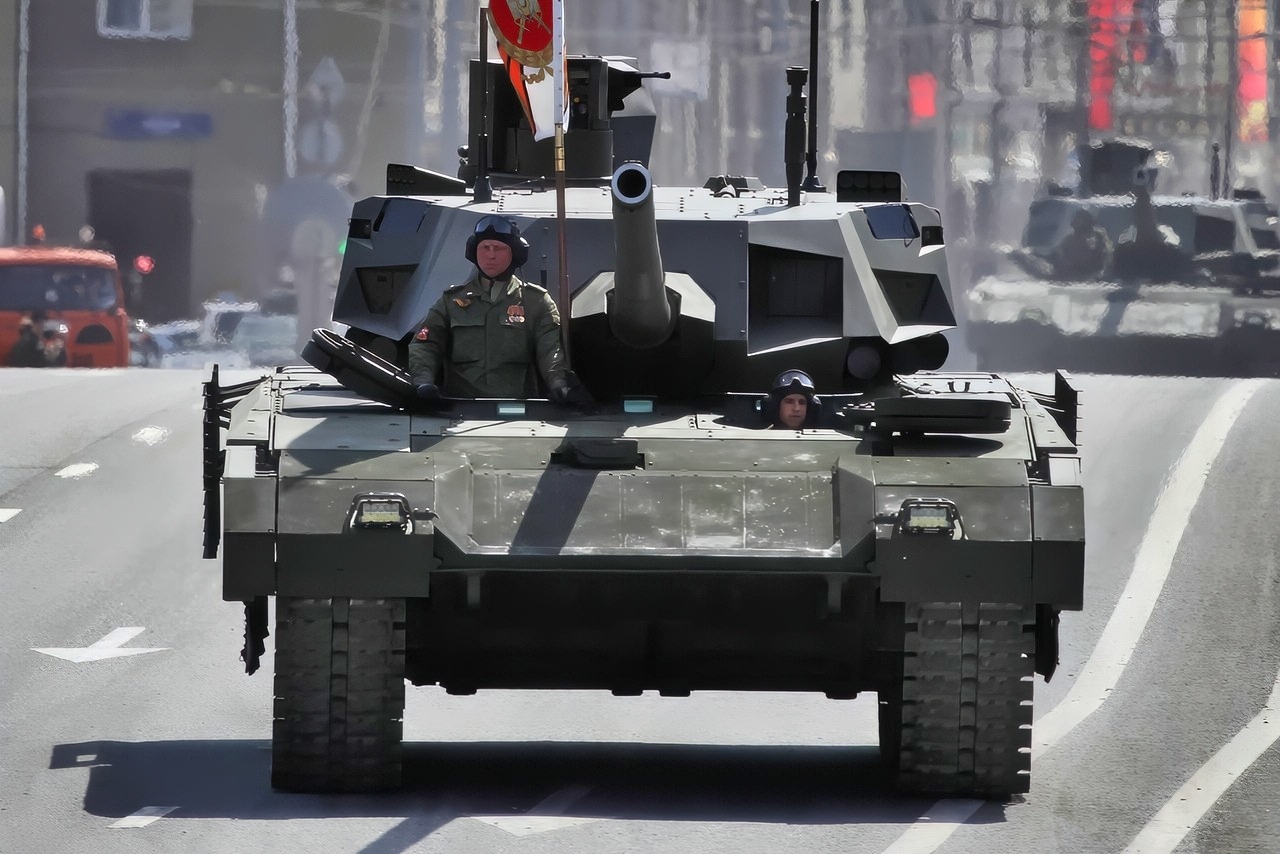
T-14 Armata Tank from Russia. Image Credit: Creative Commons.
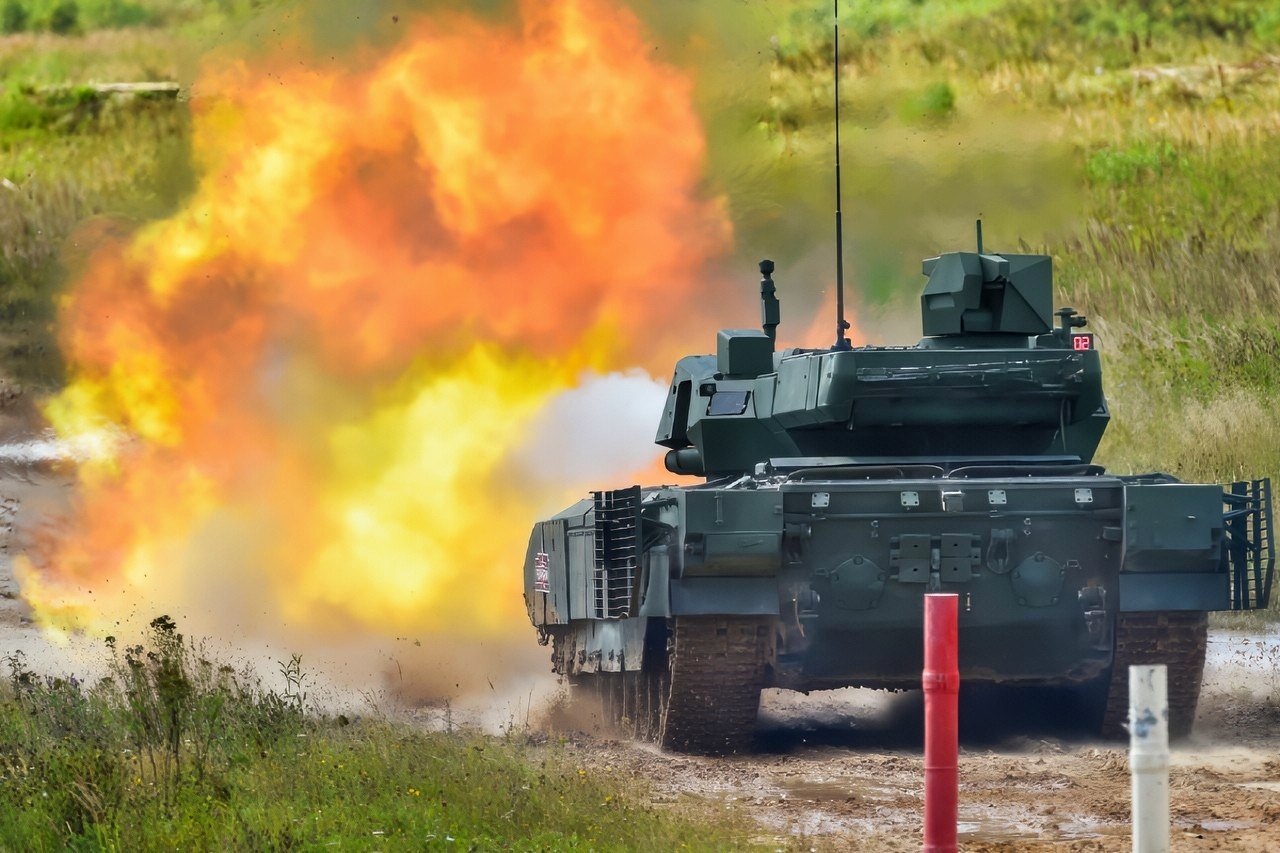
T-14 Armata Tank Russian Army. Image Credit: Creative Commons.
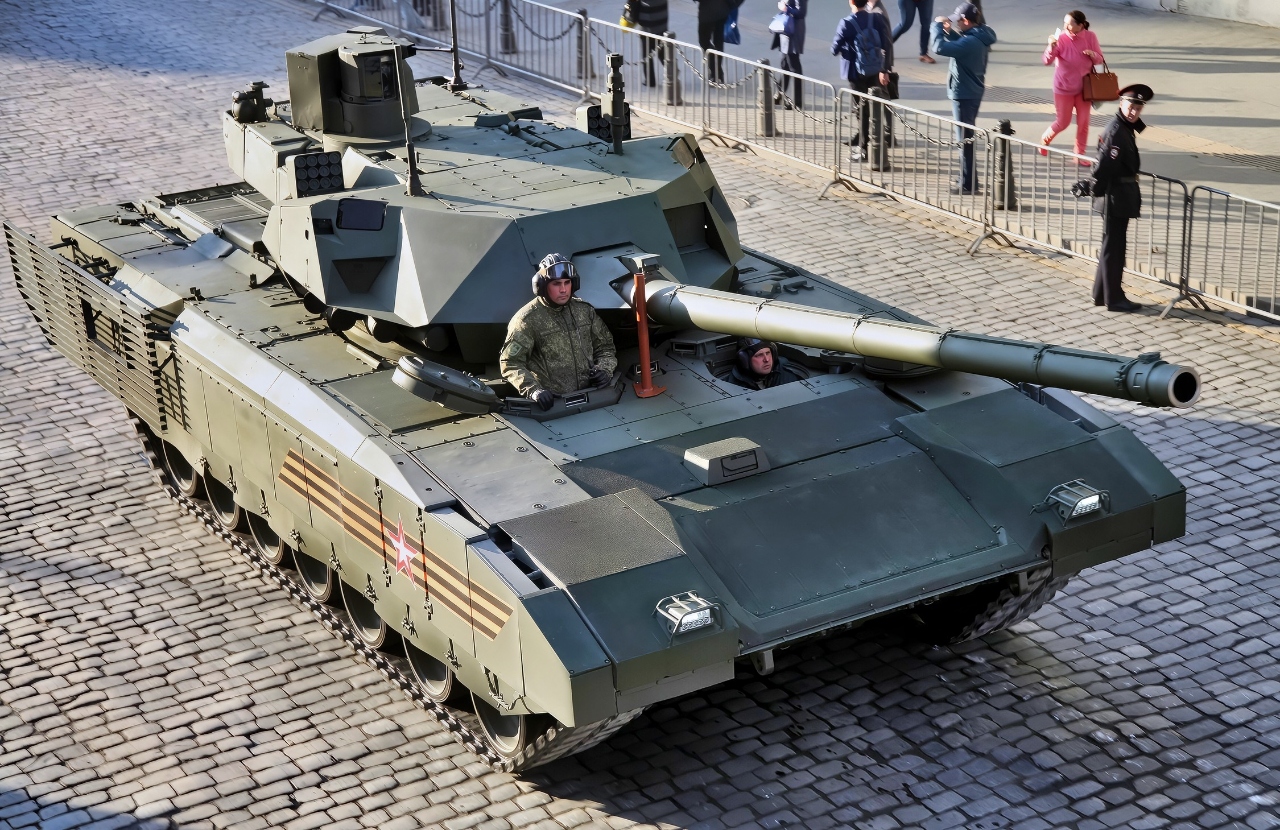
T-14 Armata Tank Russia. Image Credit: Creative Commons.
The T-95 should be chalked up as a failure.
It could have been useful against Ukraine, but it entered the defense acquisition “Valley of Death” and did not emerge due to ambitious specs that often failed, high costs, shifting priorities, and corporate greed and corruption.
This experience should have warned the Russians that tank warfare would be troublesome in future wars, and the T-95 experience stung because in the 2020s, every tank in the arsenal would be needed to fight what has become a tank doomsday loop for the Russians.
About the Author: Brent M. Eastwood, PhD
Author of now over 3,500 articles on defense issues, Brent M. Eastwood, PhD, is the author of Don’t Turn Your Back On the World: A Conservative Foreign Policy and Humans, Machines, and Data: Future Trends in Warfare, plus two other books. Brent was the founder and CEO of a tech firm that predicted world events using artificial intelligence. He served as a legislative fellow for US Senator Tim Scott and advised the senator on defense and foreign policy issues. He has taught at American University, George Washington University, and George Mason University. Brent is a former US Army Infantry officer. He can be followed on X @BMEastwood.


