


A B-2 Spirit “Spirit of Kansas” stealth bomber was destroyed at Andersen Air Force Base on Guam on February 23, 2008. The B-2 was valued at approximately $1.4 billion at the time of the crash. The U.S. Air Force estimated the real replacement cost at approximately $2 billion. The “Spirit of Kansas” crash was the most expensive aircraft loss in aviation history. The B-2 was destroyed after moisture infiltrated 3 of the bomber’s Port Transducer Units (PTUs) — critical sensors that feed air pressure and airflow data to the B-2’s flight computers.
The B-2 Spirit Stealth Bomber: Even Losing 1 Was a Tragedy

ANDERSEN AIR FORCE BASE, GUAM — F-16 Fighting Falcons, F-18 Hornets and a B-2 Spirit, line the Andersen flight line during Exercise Valiant Shield, 22 June, 2006. Valiant Shield 2006, the U.S. Pacific Command exercise, which runs June 19 to 23, will be conducted in the vicinity of Guam. Valiant Shield focuses on integrated joint training and interoperability among U.S. military forces while responding to a range of mission scenarios.
(U.S. Air Force Photo/Staff Sgt Bennie J. Davis III)
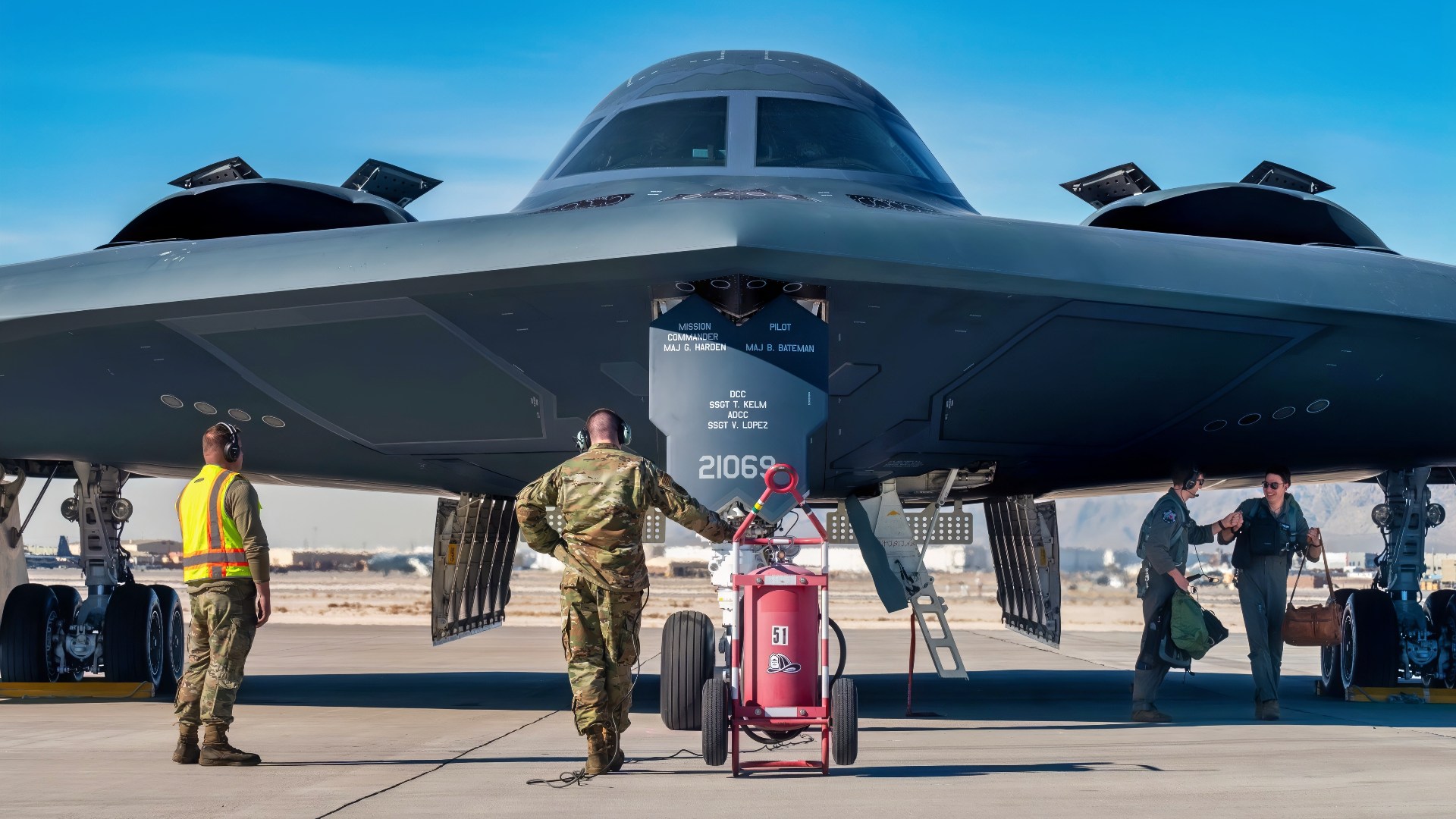
A B-2 Spirit gets ready to taxi out for Red Flag-Nellis 24-1 mission at Nellis Air Force Base, Nevada, Jan. 16, 2024. This Red Flag provides complex realistic scenarios concentrated on warfighting in the Indo-Pacific theater. (U.S. Air Force photo by Airman Brianna Vetro)
The 2008 crash of the Northrop Grumman B-2 Spirit long-range stealth bomber at Andersen Air Force Base on Guam remains one of the most incredible aviation disasters in modern military history. What is so astonishing about the 2008 B-2 crash is that enemy fire was not the cause. The crash happened after a tiny bit of moisture got inside the bomber’s sensors.
Once inside the expensive stealth bomber’s sensor systems, it tricked the plane’s onboard computer just seconds after takeoff from Andersen Air Force Base, crashing the plane.
February 23, 2008, will go down in aviation history as the B-2 Spirit, nicknamed “Spirit of Kansas,” was departing Andersen AFB on Guam after a deployment to the Pacific. The aircraft had completed its preflight procedures normally. Both pilots–Maj. Ryan Link and Capt. Mark McGreevy was an experienced aviator. Nothing initially appeared wrong.
But Guam is a tropical destination and, as anyone who has ever lived in a region with high humidity knows, it can wreak havoc on high-tech gear.
Moisture infiltrated three of the bomber’s Port Transducer Units (PTUs).
These are critical sensors that feed air pressure and airflow data to the B-2’s flight computers. During calibration, those sensors transmitted corrupted data. The aircraft’s computers believed the bomber was moving slower than it actually was and calculated an incorrect negative angle of attack, according to the Air Force’s official investigation.
As the bomber “rotated” for takeoff, the computers suddenly commanded an extreme, 30-degree nose-up altitude. The B-2 pitched violently upward, stalled immediately, rolled left, and slammed back onto the runway. One wingtip hit first. Then the bomber skidded, exploded into flames, and was destroyed.
The crew ejected successfully only moments before impact. Both survived.

B-2 Stealth Bomber July 2025 National Security Journal Photo.
Why the Crash Was So Terrifying
The B-2 is not flown like a conventional aircraft.
Think about the design of the B-2. It is a flying wing. Unlike traditional bombers with tails and fuselages, the B-2 is essentially a giant radar-evading wing. Its smooth contours and radar-absorbing materials drastically reduce radar cross-section. To enemy radar operators, the aircraft can appear as no larger than a bird under certain conditions.
That stealth architecture came with massive engineering tradeoffs, though.
These birds are maintenance-intensive. They require delicate coatings, too. As such, the B-2s have enormous operational costs. One report assessed that the operating costs for a single B-2 range from $150,000 to $200,000 per flight hour, resulting in $30 million to $40 million annually per aircraft.
These designs are intentionally unstable. Because of the inherent instability of the flying-wing design, B-2s rely almost entirely on their quadruple-redundant computerized flight control system to maintain flight. Pilots of B-2s don’t manually stabilize the aircraft the way one would with a traditional fighter or bomber. The onboard computers are constantly making thousands of corrections per second.
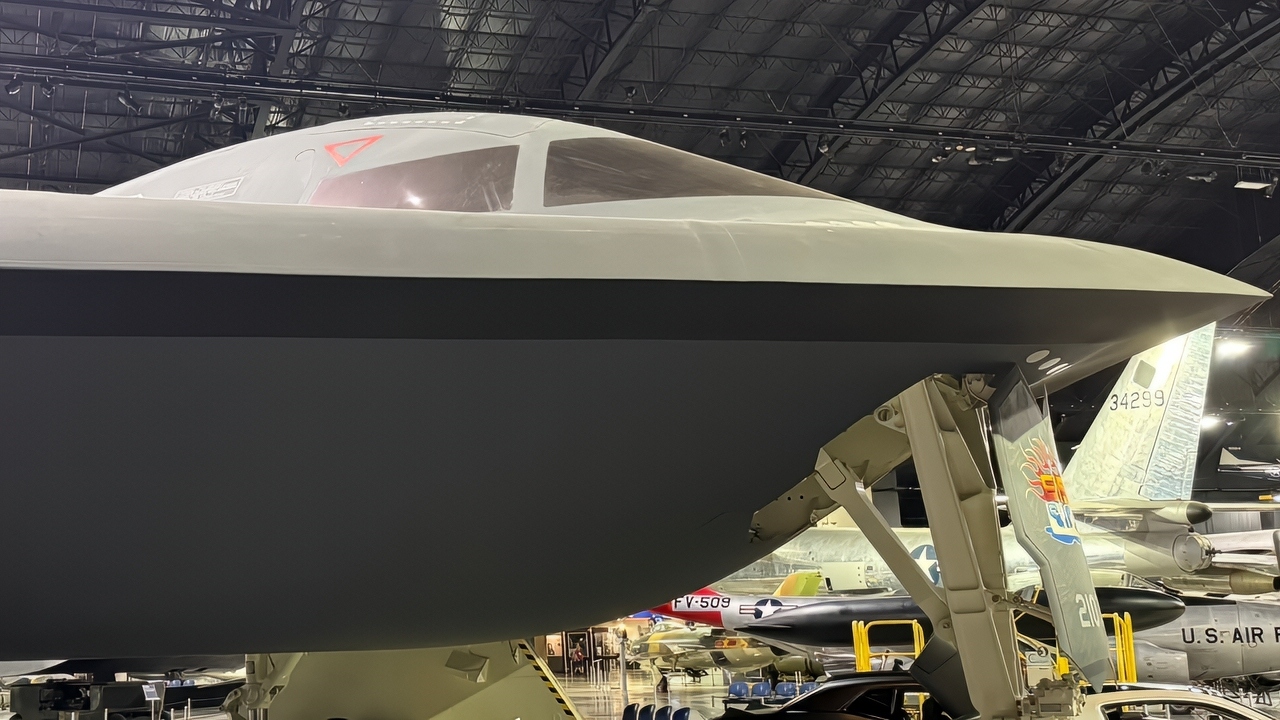
B-2 Bomber Really Close Up National Security Journal Photo
So, sensor data is key. Corrupted sensor data, therefore, becomes an existential threat to the bomber.
If the computer receives bad airflow information, the airplane basically loses control. The B-2’s stealth flying-wing design leaves little aerodynamic forgiveness once the system begins issuing incorrect control inputs.
In the Guam accident, it took only seconds for the B-2 to become unrecoverable.
The Most Expensive Plane Crash in History
At the time of the crash, the B-2 was valued at around $1.4 billion. Later estimates, however, placed the real cost of replacing the “Spirit of Kansas” at $2 billion. That’s because the Air Force would need to do research, make new stealth coatings, and factor in other production costs unique to the B-2.
Thus, the “Spirit of Kansas” was the most expensive aircraft loss in aviation history.
What’s more, only 21 B-2s had ever been built.
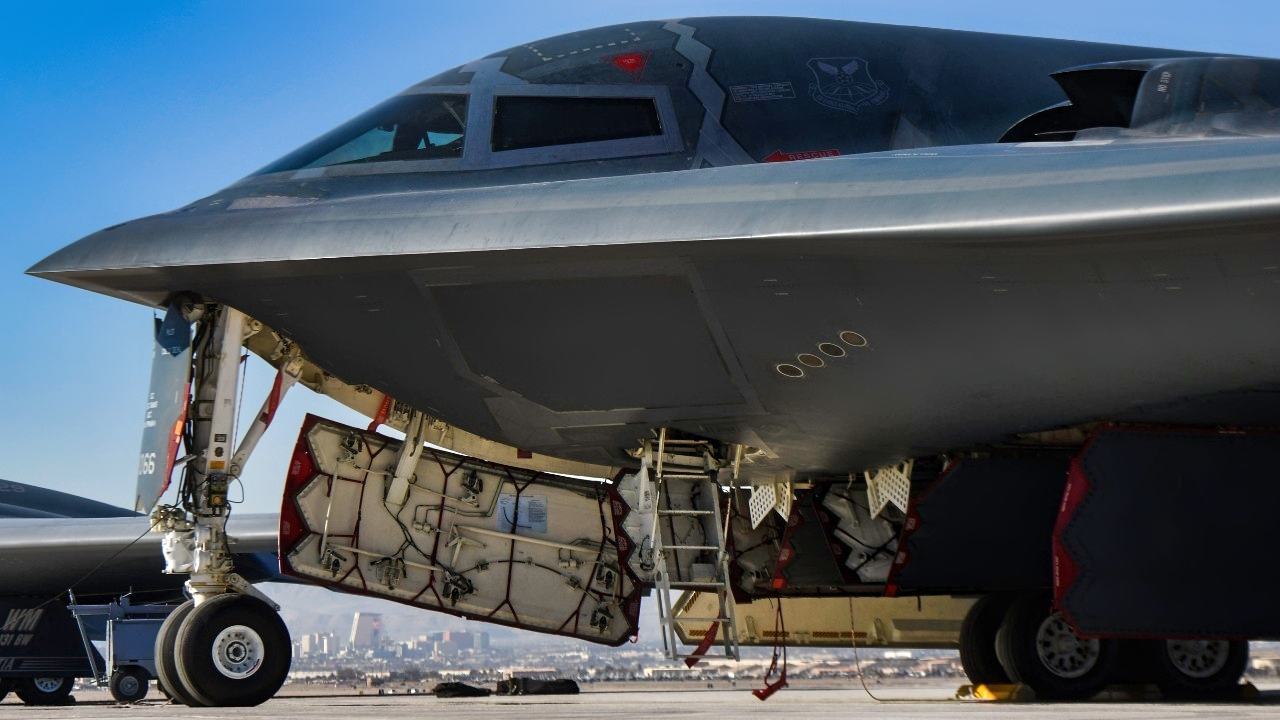
Three Whiteman Air Force Base 393rd Expeditionary Bomb Squadron B-2 Spirit stealth bombers sit on the runway during Red Flag-Nellis 22-1 on Jan. 26, 2022, at Nellis Air Force Base, Nevada. Red Flag-Nellis 22-1 provides realistic combat training that saves lives by increasing combat effectiveness. (U.S. Air Force photo by Senior Airman Michael A. Richmond)
With the Cold War over, the Pentagon had dramatically cut procurement of this expensive bomber. Instead of the originally envisioned fleet of more than 100 aircraft, the Air Force received just 21 operational bombers. Losing even one represented a massive strategic and financial blow.
The Entire Fleet Was Grounded
Because the failure mechanism was not combat-related, the crash became a point of concern for the Air Force.
They immediately grounded the B-2 fleet while investigators sought to determine whether the rest of the fleet would suffer the same fate. During the course of that investigation, the Air Force determined that moisture corrupted the key sensor data, that maintenance procedures had not accurately accounted for Guam’s tropical humidity, and that the aircraft’s software architecture allowed flawed data to cascade through the flight control network.
B-2 Specs
Northrop Grumman makes this legendary plane. Carrying a two-man crew, these globetrotting bombers have a wingspan of 172 feet and a maximum takeoff weight of around 336,500 pounds. They can carry a payload of up to 40,000 pounds and achieve high subsonic speeds. Their range is approximately 6,000 nautical miles without refueling.
B-2’s maiden flight occurred way back in 1989.
A Serious Weakness
As the Iran War has demonstrated, the United States depends on the stealthy capabilities that the B-2 offers. Sadly, there are too few of these planes–so much so that losing one to a freak accident was a major crisis in the Air Force. One tiny sensor error proved it could destroy one of the most advanced bombers ever built.
While the Air Force enacted new methods and measures for preventing the kind of accident that occurred in Guam from happening again, the fact that losing even one of these birds is so catastrophic indicates that the US military might have a force that is too exquisite to fight a high-intensity, great-power war of the kind that we appear on the brink of waging.
About the Author: Brandon J. Weichert
Brandon J. Weichert is the Senior National Security Editor at 19FortyFive.com. Recently, Weichert became the editor of the “NatSec Guy” section at Emerald. TV. He was previously the senior national security editor at The National Interest. Weichert hosts The National Security Hour on iHeartRadio, where he discusses national security policy every Wednesday at 8 p.m. Eastern. He hosts a companion show on Rumble entitled “National Security Talk.” Weichert consults regularly with various government institutions and private organizations on geopolitical issues. His writings have appeared in numerous publications, among them Popular Mechanics, National Review, MSN, and The American Spectator. And his books include Winning Space: How America Remains a Superpower, Biohacked: China’s Race to Control Life, and The Shadow War: Iran’s Quest for Supremacy. Weichert’s newest book, A Disaster of Our Own Making: How the West Lost Ukraine, is available for purchase at any bookstore. Follow him via Twitter/X @WeTheBrandon.


