

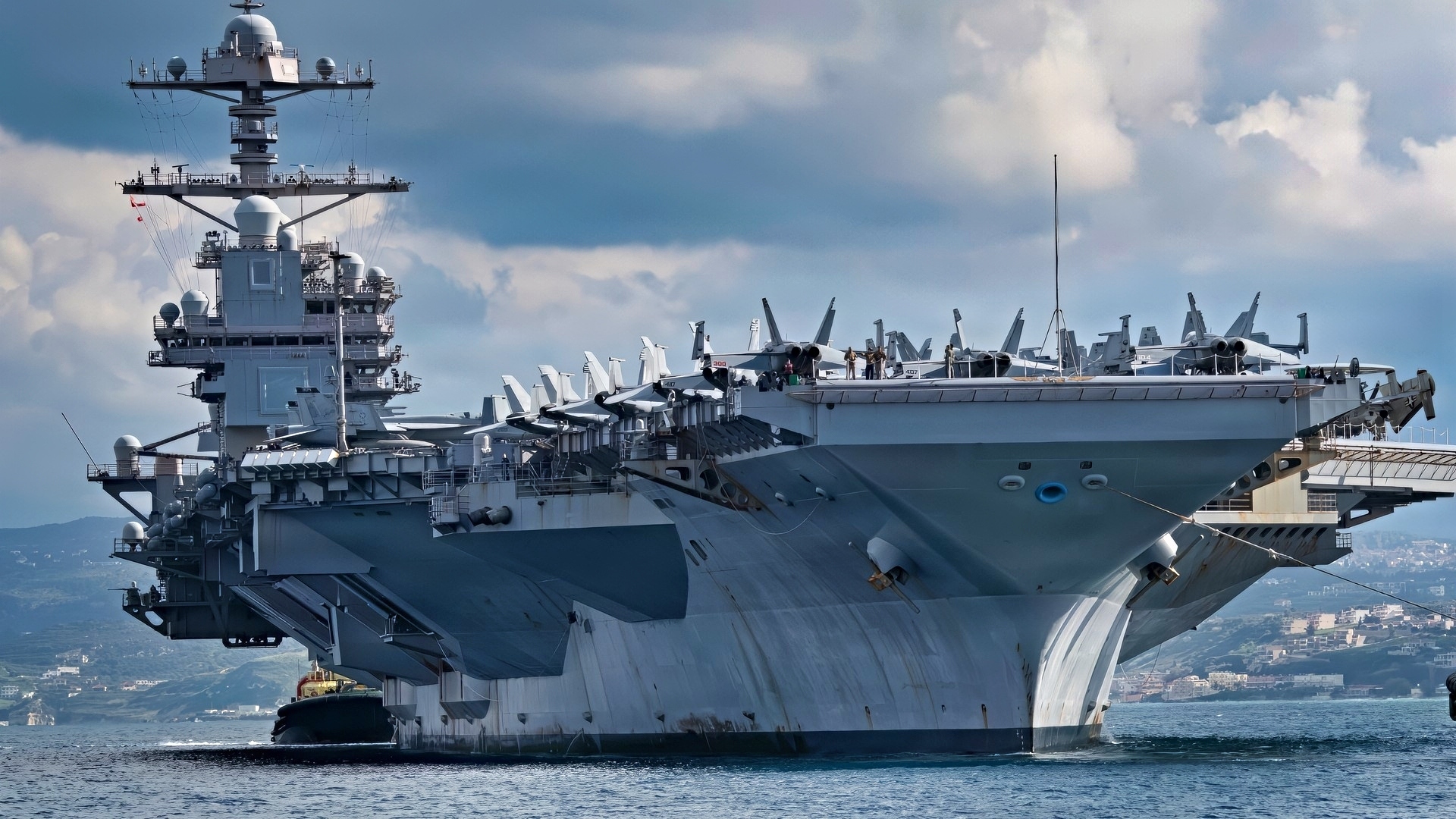
The USS Gerald R. Ford, the U.S. Navy’s lead Ford-class aircraft carrier, is heading into a major repair period after a 300-plus-day combat deployment — one of the longest in modern U.S. naval history. The damage list is long. The Electromagnetic Aircraft Launch System and Advanced Arresting Gear need full inspection after sustained combat sortie generation. The vacuum waste system that left sailors unable to flush toilets may be redesigned outright. Berthing compartments damaged by a multi-hour laundry fire need refurbishment. Propulsion shafts, bearings, radar arrays, and combat electronics all require deep maintenance. The repair effort will likely run more than a year.
The USS Gerald R. Ford Aircraft Carrier: Going Nowhere for At Least a Year
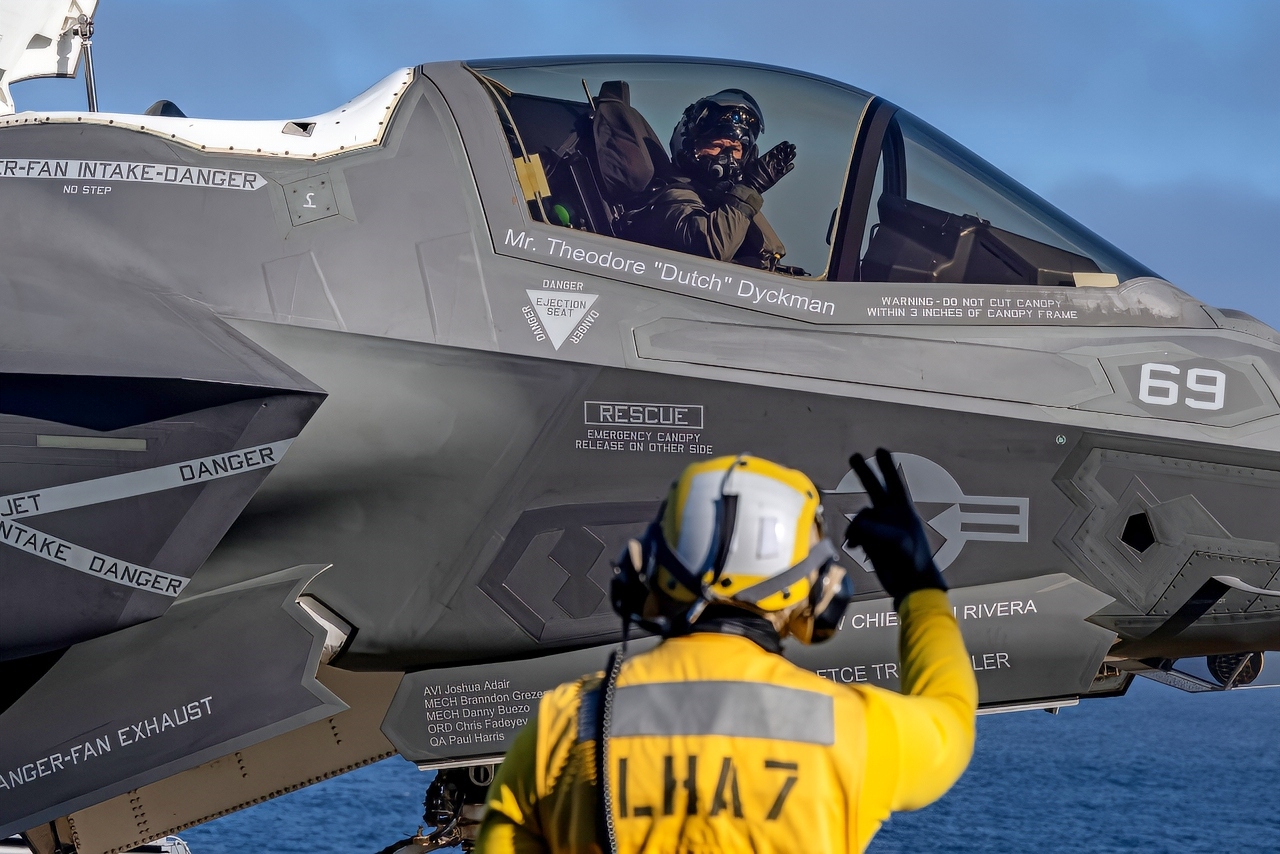
A joint team consisting of F-35 Patuxent River Integrated Test Force flight test members, U.S. Sailors and Marines, and the crew of the Japan Maritime Self-Defense Force Izumo-class multi-functional destroyer JS Kaga (DDH-184) are executing developmental sea trials in the eastern Pacific Ocean to gather the necessary data to certify F-35B Lightning II short takeoff and vertical landing aircraft operations. While aboard the MSDF’s largest ship, the Pax ITF flight test team has been gathering compatibility data for analysis in order to make recommendations for future F-35B operational envelopes, further enhancing the Japanese navy’s capabilities. The results of the testing will contribute to improved interoperability between Japan and the United States, strengthening the deterrence and response capabilities of the Japan-U.S. alliance and contributing to peace and stability in the Indo-Pacific region. Japan is an F-35 Joint Program Office foreign military sales customer planning to purchase 42 F-35Bs. The F-35 Joint Program Office continues to develop, produce, and sustain the F-35 Air System to fulfill its mandate to deliver a capable, available, and affordable air system with fifth-generation capabilities.
The deployment of the USS Gerald R. Ford has already entered naval history as one of the longest and most demanding post–Vietnam War aircraft carrier deployments.
After more than 300 days at sea, continuous flight operations, combat support missions, emergency repairs, and several highly publicized onboard incidents, the ship will almost certainly require a massive maintenance and repair period before it can safely return to operational service.
Prolonged deployments not only add psychological strain upon sailors, but they also place immense strain on every system aboard.
In the case of the Ford, the combination of combat operations, deferred maintenance, and technical problems means the Navy will likely face a repair effort lasting many months, and possibly more than a year.
One of the most urgent repair priorities will involve damage caused by the major onboard fire that broke out in the carrier’s laundry area during deployment.
Reports indicated that the blaze burned for many hours, displaced hundreds of sailors, and damaged berthing compartments and nearby infrastructure.
Plumbing Challenges
The carrier’s plumbing and sewage systems will also require extensive repairs.
Repair teams will likely need to overhaul portions of the vacuum waste system, replace worn pumps and valves, inspect pipes for corrosion or blockages, and modernize the software that controls the system’s operation.

An F/A-18F Super Hornet, attached to the “Blacklions” of Strike Fighter Squadron (VFA) 213 and a F/A-18E Super Hornet, attached to the “Golden Warriors” of Strike Fighter Squadron (VFA) 87 fly over the world’s largest aircraft carrier, USS Gerald R. Ford (CVN 78), the Arleigh Burke-class guided-missile destroyer USS Mahan (DDG 72), April 11, 2025. The Gerald R. Ford Carrier Strike Group is underway in the Atlantic Ocean completing integrated naval warfighting training. Composite Training Unit Exercise (COMPTUEX) is the Joint Force’s most complex integrated training event and prepares naval task forces for sustained high-end Joint and combined combat. Integrated naval training provides America’s civilian leaders and commanders highly-capable forces that deter adversaries, underpin American security and economic prosperity, and reassure Allies and partners. (U.S. Navy photo by Mass Communication Specialist 2nd Class Maxwell Orlosky

The world’s largest aircraft carrier USS Gerald R. Ford (CVN 78) steams in the Adriatic Sea, June 23, 2023. Gerald R. Ford is the U.S. Navy’s newest and most advanced aircraft carrier, representing a generational leap in the U.S. Navy’s capacity to project power on a global scale. The Gerald R. Ford Carrier Strike Group is on a scheduled deployment in the U.S. Naval Forces Europe area of operations, employed by U.S. Sixth Fleet to defend U.S., allied, and partner interests. (U.S. Navy photo by Mass Communication Specialist 2nd Class Jackson Adkins)
Since the Ford is the lead ship of a new class, the Navy may also use this maintenance period to redesign certain components entirely to prevent future failures.
Flight operations during such a long deployment also create major wear on the flight deck and aircraft support systems.
Aircraft carriers endure constant punishment from catapult launches, arrested landings, jet exhaust, and heavy equipment movement.
The Ford’s advanced Electromagnetic Aircraft Launch System (EMALS) and Advanced Arresting Gear (AAG) will require detailed inspection after months of sustained combat tempo and sortie generation.
Engineers will also need to inspect propulsion shafts, bearings, cooling systems, and steam distribution equipment for signs of excessive wear.
Long deployments can accelerate corrosion in piping and mechanical systems due to constant exposure to saltwater, heat, and vibration.

A U.S. Sailor, assigned to Airborne Command and Control Squadron 124, signals the launch of a Carrier Air Wing 8 E-2D Hawkeye aircraft on the flight deck of the world’s largest aircraft carrier, Ford-class aircraft carrier USS Gerald R. Ford (CVN 78), while underway in the Caribbean Sea, Nov. 29, 2025. U.S. military forces are deployed to the U.S. Southern Command area of responsibility in support of Operation SOUTHERN SPEAR, Department of War-directed operations, and the president’s priorities to disrupt illicit drug trafficking and protect the homeland. (U.S. Navy photo)
Maintenance crews will likely spend months cleaning and/or replacing critical engineering equipment to restore full reliability before the ship deploys again.
Combat systems and electronics will represent another major repair category.
During deployment, the Ford supported operations across multiple theaters and maintained a high operational tempo for radar, communications, electronic warfare, and missile-defense systems.
Constant use of sensitive electronics in harsh maritime conditions can degrade performance over time.
Technicians will need to inspect radar arrays, replace aging circuit components, test combat management software, and repair systems stressed by round-the-clock operations.
Cybersecurity updates and software modernization may also occur during the repair period to keep the carrier technologically current.
Stress of Long Deployment
Long deployments are physically and psychologically exhausting for sailors, especially when equipment failures and cramped living conditions worsen morale.
Reports from both journalists and sailors described fatigue, overcrowding after the fire, and mounting emotional strain among the crew.
Berthing compartments damaged by smoke or overuse may require refurbishment, including replacement of mattresses, ventilation systems, lighting, and damaged furniture.
Galley equipment, laundry facilities, recreational spaces, and medical areas may also undergo repairs to improve the quality of life for future deployments.
The Navy must restore the ship’s readiness while also learning lessons about how Ford-class carriers perform under extreme operational pressure.
After enduring record-setting combat operations, fire damage, mechanical failures, and one of the longest deployments in decades, the Ford will need extensive repairs to its structure, engineering systems, electronics, sanitation infrastructure, and living spaces.
About the Author: Kris Osborn
Kris Osborn is the Military Technology Editor. Osborn is also President of Warrior Maven – Center for Military Modernization. Osborn previously served at the Pentagon as a highly qualified expert in the Office of the Assistant Secretary of the Army—Acquisition, Logistics & Technology. Osborn has also worked as an anchor and on-air military specialist at national TV networks. He has appeared as a guest military expert on Fox News, MSNBC, The Military Channel, and The History Channel. He also has a Master’s Degree in Comparative Literature from Columbia University.


