

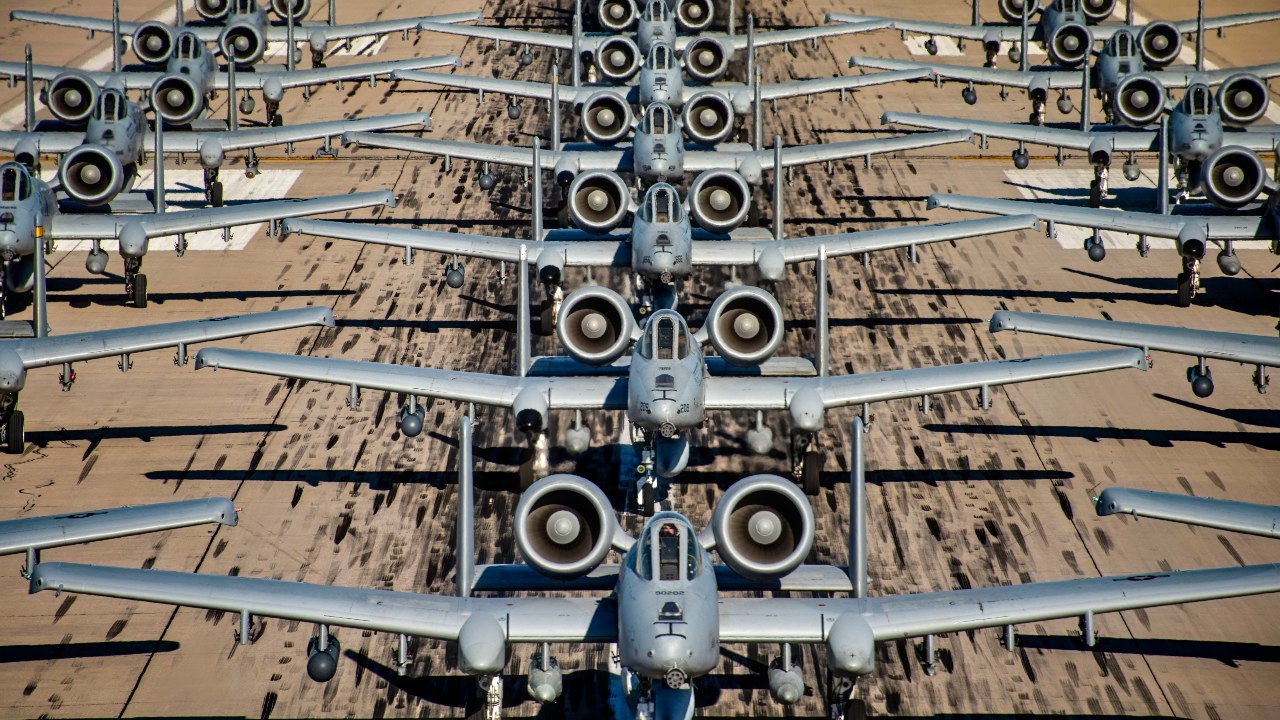
Operation Epic Fury has effectively saved the A-10 Warthog, an aircraft we have seen up close – our original videos and photos included below. The U.S. Air Force, which spent years trying to retire the venerable close air support platform, is now extending the A-10 Thunderbolt II’s service life into the 2030s — driven in part by the aircraft’s surprising success hunting Iranian small boats and coastal threats at low altitude during the campaign. The A-10 is engineered around its GAU-8/A 30mm Gatling gun, which fires 70 rounds per second from a 1,150-round magazine. The aircraft can carry 16,000 pounds of mixed ordnance, including JDAMs, Maverick missiles, AIM-9 Sidewinders, and rockets. The titanium hull is built to absorb small-arms fire and keep flying.
The A-10 Warthog Just Won’t Go Away
Extending the life of the A-10 Warthog ‘Flying Tank’ until 2030 is an extremely smart idea for the Pentagon, as the classic close-air-support platform continues to show its combat relevance in the ongoing U.S. war against Iran.
The Warthog has been known for years as a successful ground-support, low-altitude, land-attack aircraft armed with a lethal 30mm cannon and built with a titanium hull to absorb small-arms fire.
The A-10 Warthog: Saved by Iran Operation Epic Fury
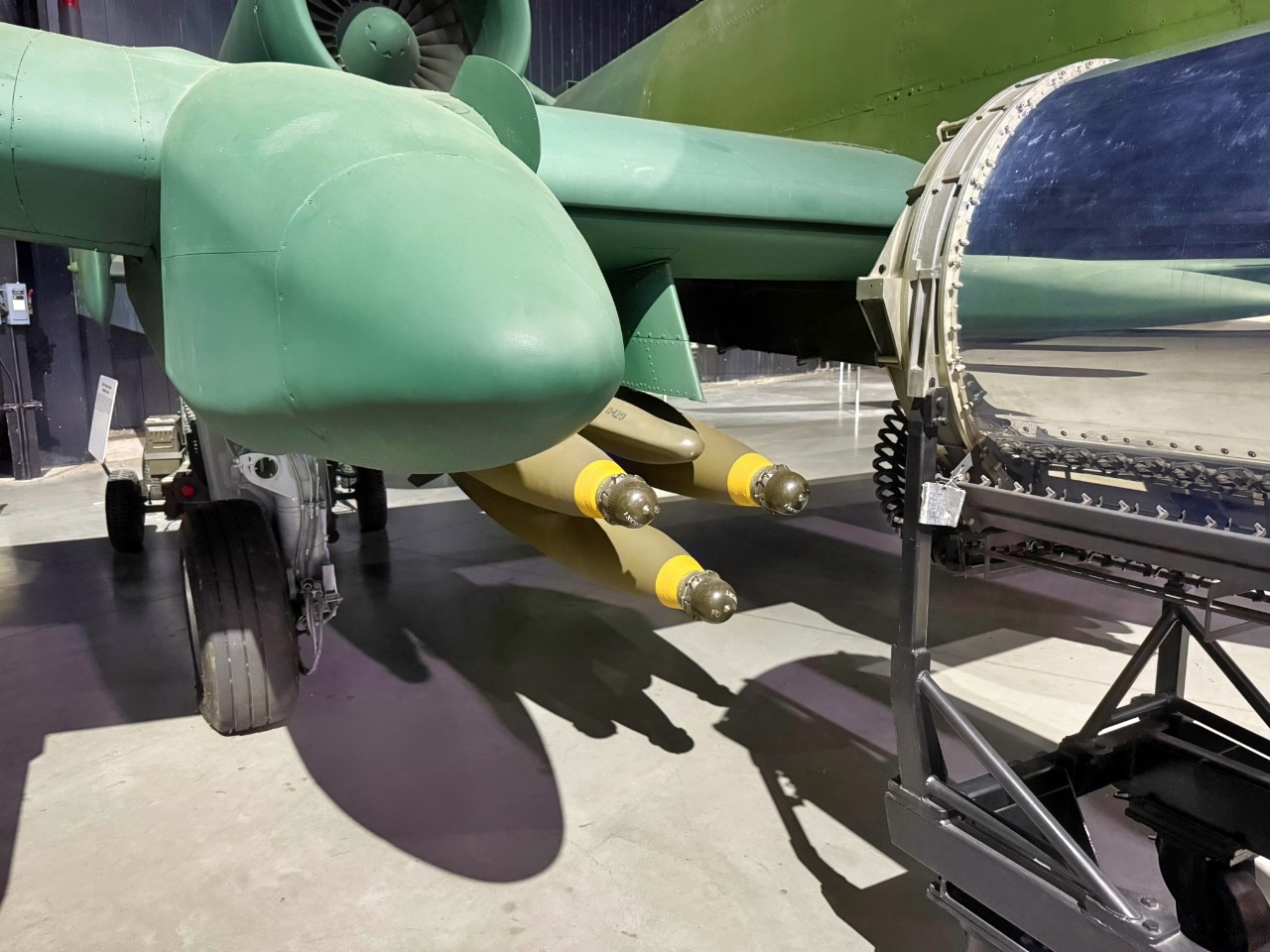
A-10 Warthog Bombs. Image Credit: National Security Journal.

A-10 Warthog NSJ Photos. Image taken on 7/20/2025.

A-10 Warthog National Security Journal Photo Essay Picture.
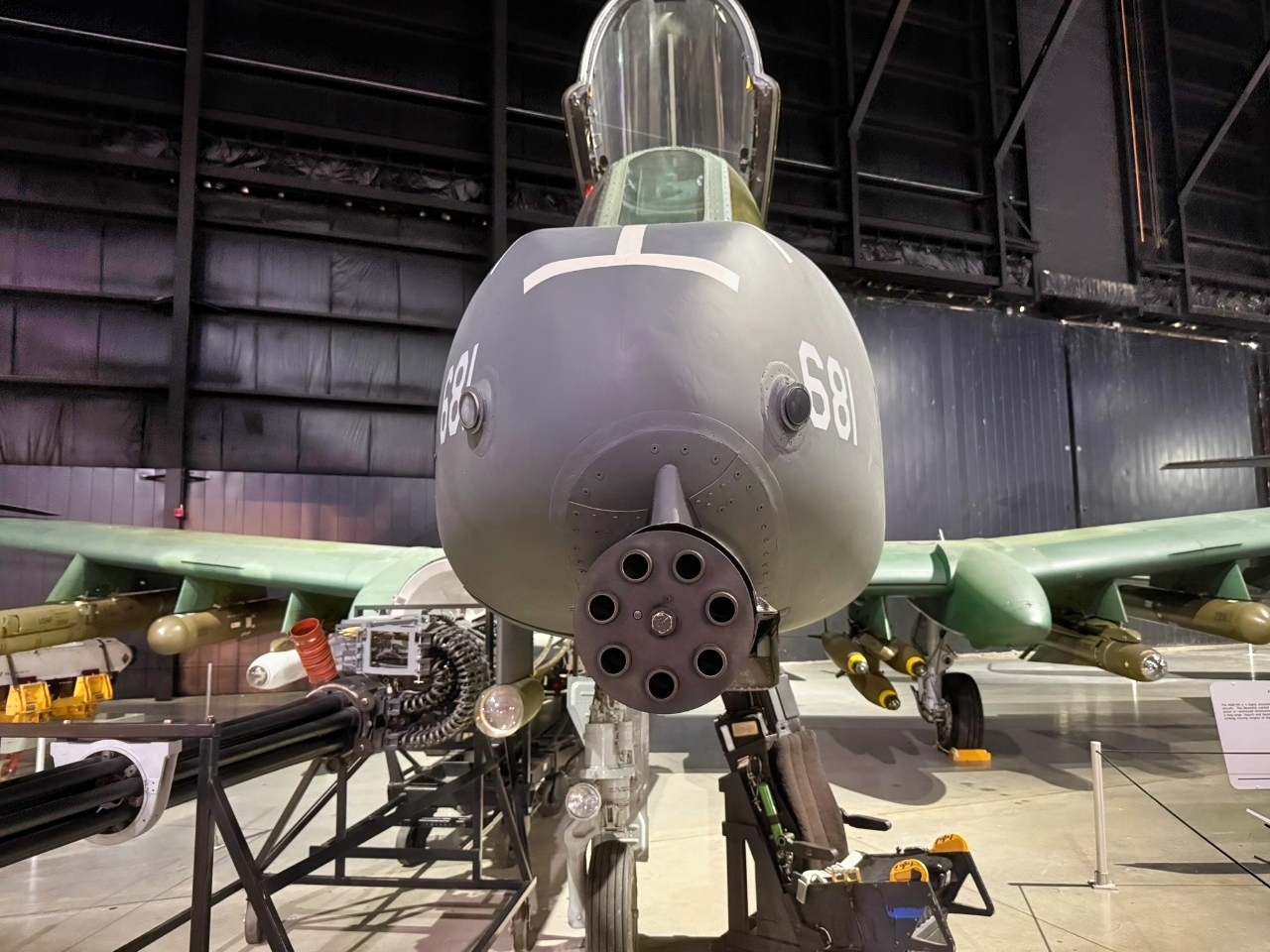
A-10 Warthog Cannon NSJ Photo. Taken at U.S. Air Force Museum on 7/19/2025.
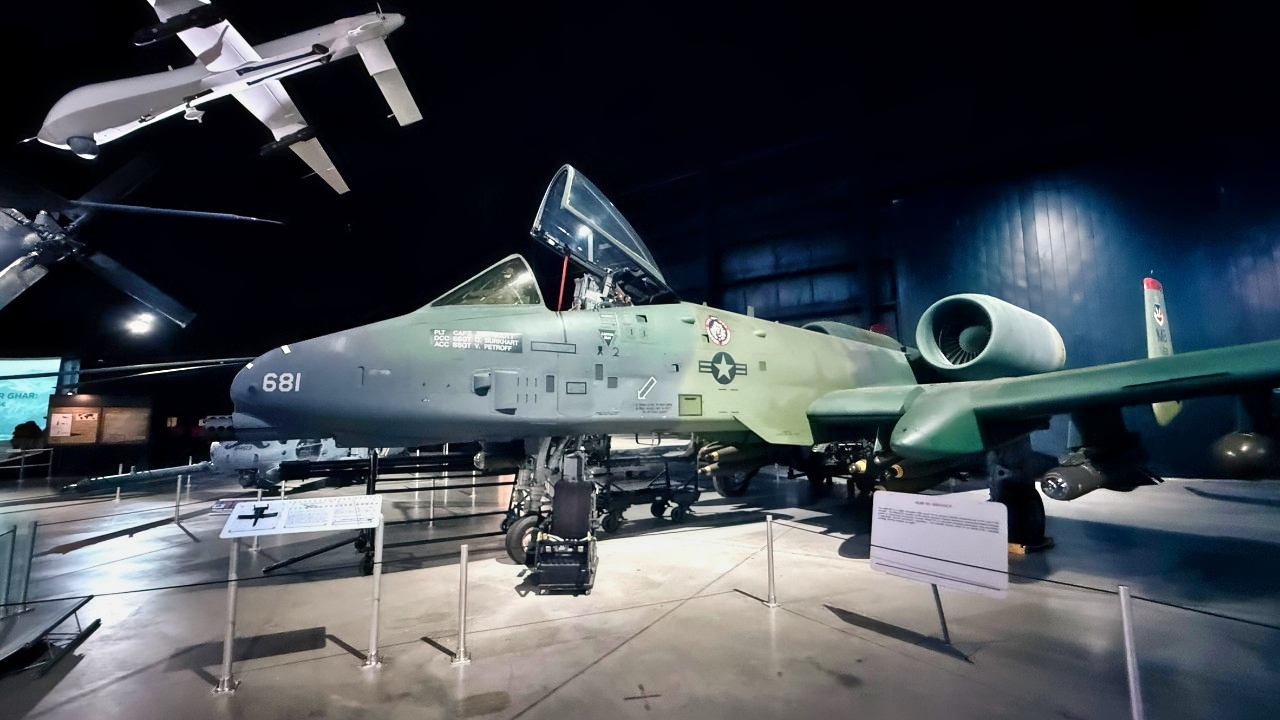
A-10 Warthog National Security Journal Photo.
In recent combat supporting Operation Epic Fury, the A-10 has pivoted its historic land-focused close air hunting and attack toward a less anticipated “maritime” utility.
The A-10 Warthog has been flying low and slow to hunt, target, and destroy Iranian small boats and coastal threats with surprising success, a combat performance now inspiring the Air Force to formally “extend” A-10 existence into the 2030s.
Perhaps of greatest significance, the aircraft is specifically engineered with built-in redundancy to keep it flying in the event of damage from enemy ground fire.
There are several famous incidents, including one from the Gulf War in the early 90s, when A-10s sustained massive damage and still managed to fly, operate, and land.
Nonetheless, the future of the A-10 has been the focus of intense debate and scrutiny for many years, and the Air Force has consistently sought to divest the force of the aircraft.
The concept, as articulated by Senior Air Force weapons developers for many years, is that the high-speed, stealthy F-35 can use its longer-range, high-fidelity sensors to target and destroy enemy ground forces at higher altitudes.
The contention has been that the F-35 is well-positioned to perform the CAS mission, and military and congressional advocates for the A-10 have fought for years to preserve it from intended extinction.

A-10 Warthog. Image Credit: Creative Commons.

A U.S. Air Force A-10 Thunderbolt II flies a routine mission over the U.S. Central Command area of responsibility Dec. 23, 2024. A-10 Thunderbolt II pilots train and operate under night vision, allowing them to conduct presence patrols critical to regional security at any time and under any conditions. (U.S. Air Force photo)
At some point years ago, the Pentagon conducted a special Close Air Support (CAS) fly-off competition to assess the A-10’s capabilities against the F-35.
Attacking A-10
The A-10 Warthog, also officially known as the A-10 Thunderbolt II, affectionately known as the Warthog, has been in service since the late 1970s and served as a close air support combat aircraft in conflicts such as the Gulf War, Operation Enduring Freedom, Operation Iraqi Freedom, and Operation Allied Force in Kosovo, among others.
If the aircraft loses all of its electronics including its digital displays and targeting systems, the pilot of an A-10 can still fly, drop general purpose bombs and shoot the 30mm cannon, Unlike other air platforms built for speed, maneuverability, air-to-air dogfighting and air-to-air weapons, the A-10 is specifically engineered around its gun, a 30mm cannon aligned directly beneath the fuselage.
The gun is also known as the GAU-8/A Gatling gun. Armed with 1,150 rounds, the 30mm cannon is able to fire 70-rounds a second.
The engines of the A-10 are mounted high so that the aircraft can land in austere environments such as rugged, dirty, or sandy terrain, A-10 pilots explain. The engines on the A-10 are General Electric TF34-GE-100 turbofans.
By virtue of being able to fly at slower speeds of 300, the A-10 can fly beneath the weather at altitudes of 100 feet.c
This gives pilots the ability to see enemy targets with the naked eye, enabling them to drop bombs, fire rockets, and open fire with the 30mm cannon in close proximity to friendly forces.
The aircraft’s bombs, rockets, and cannon attack enemies up close or from miles away, depending on the target and slant range of the aircraft.
The A-10 uses both “Lightning” and “Sniper” pods, equipped with infrared and electro-optical sensors, to help the pilot find targets.
A-10 Weapons
The A-10 carries a full complement of weapons to include Joint Direct Attack Munitions, or JDAM GPS-guided bombs; its arsenal includes GBU 38s, GBU 31s, GBU 54s, Mk 82s, Mk 84s, AGM-65s (Maverick missiles), AIM-9 Sidewinder missiles, and rockets along with illumination flares, jammer pods and other protective countermeasures.
The aircraft can carry 16,000 pounds of mixed ordnance; eight can fly under the wings and three under-fuselage pylon stations, Air Force statements said.
The cockpit is engineered with the CASS (Common Avionics Architecture System), which includes moving digital map displays and various screens showing pertinent information such as altitude, elevation, surrounding terrain, and target data.
The A-10 also fires the Maverick, an air-to-ground missile that has been in service since the Vietnam era.
The weapon recently received an upgraded laser-seeker, along with new software configurations to better enable it to hit targets on the run. This could prove extremely effective in targeting small maneuvering boats.
The Maverick uses Semi-Active Laser guidance to paint the target. It can also use infrared and electro-optical guidance to attack targets.
It can use a point detonation fuse that explodes upon impact, or a delayed fuse that allows the missile to penetrate a structure before detonating, to maximize its lethal impact.
It uses a 300-pound blast-frag warhead engineered to explode shrapnel and metal fragments in all directions near or on a designated target.
This kind of munition, supported by laser targeting or even a proximity fuse, could prove effective against small boats on the move. A-10 pilots also wear a high-tech helmet that displays targeting video.
A-10 Warthog Avionics Technology
Pilots flying attack missions in the aircraft communicate with other aircraft and ground forces via radios and a data link known as LINK 16. Pilots can also text message with other aircraft and across platforms
Part of the rationale for its continued utility, which is considered quite significant by weapons developers, is the broad recognition that today’s A-10 is quite different from what it was years ago due to continued integration of new weapons, avionics, communications systems, and computer technology.
Many modern aircraft technologies, electronics, and sensors increasingly rely upon secure and effective data organization, analysis, and transmission to ensure optimal combat functionality, a dynamic that, of course, requires advanced on-board processing.
MORE – The Dodge Durango of Submarine: The Virginia-Class Is Best on Planet Earth
About the Author: Kris Osborn
Kris Osborn is a Military Technology Editor. Osborn is also President of Warrior Maven – Center for Military Modernization. Osborn previously served at the Pentagon as a highly qualified expert in the Office of the Assistant Secretary of the Army—Acquisition, Logistics & Technology. Osborn has also worked as an anchor and on-air military specialist at national TV networks. He has appeared as a guest military expert on Fox News, MSNBC, The Military Channel, and The History Channel. He also has a Master’s Degree in Comparative Literature from Columbia University.


