


A-10 Warthog pilots ran their air conditioning at full blast in -20°F Alaska winters. The reason: “dress to egress.” Pilots wore 3 layers of warm clothes underneath their flight suits. The clothes would protect them if they had to eject onto the Alaska tundra. In the warm cockpit, they would sweat through the layers without the AC. If they ejected with sweat-soaked layers, they would freeze. So they ran the AC at full cold. Pilots called the A-10’s air conditioner the “Ice Maker.”
The A-10 Warthog Had Legendary AC

A-10 Warthog NSJ Photos. Image taken on 7/20/2025.
Taken at face value, the thought of A-10 Warthog and pilots of other military aircraft running the air conditioning full blast while flying in Alaska during the wintertime seems a bit crazy. But it makes total sense once the facts of the situation become clearer.
I mean, we all know how frigid the Alaskan winters can be, and coupled with flying a military aircraft at speeds of a couple of hundred knots and several thousand feet above the ground, you have a very cold environment.
So, why do A-10 Warthog pilots run the AC full on when flying in Alaskan winters?
“Dress To Egress” Is The Sensible Rule For Pilots and A-10 Warthog Flyers:
In an article in Aviation Geek, Dario Leone quoted a former A-10 pilot, Lynn Taylor, who stated that the practice of running the air conditioning full blast in the Alaskan winter was conducted with the pilot’s safety in mind.
“We would often run the air conditioning at full cold when flying in Alaska in the wintertime,” he explained. When asked why, his answer made perfect sense.
“Because you always need to ‘dress to egress.’ Just in case we had to eject and wait more than five minutes to be picked up on the Alaska tundra in the middle of winter, we wore three layers of very warm clothes. Trés hot. So, it’s twenty below outside the cockpit, but you’re sweating like you’re in a sauna. Hence, run the ice maker (air conditioner) full “ON.”
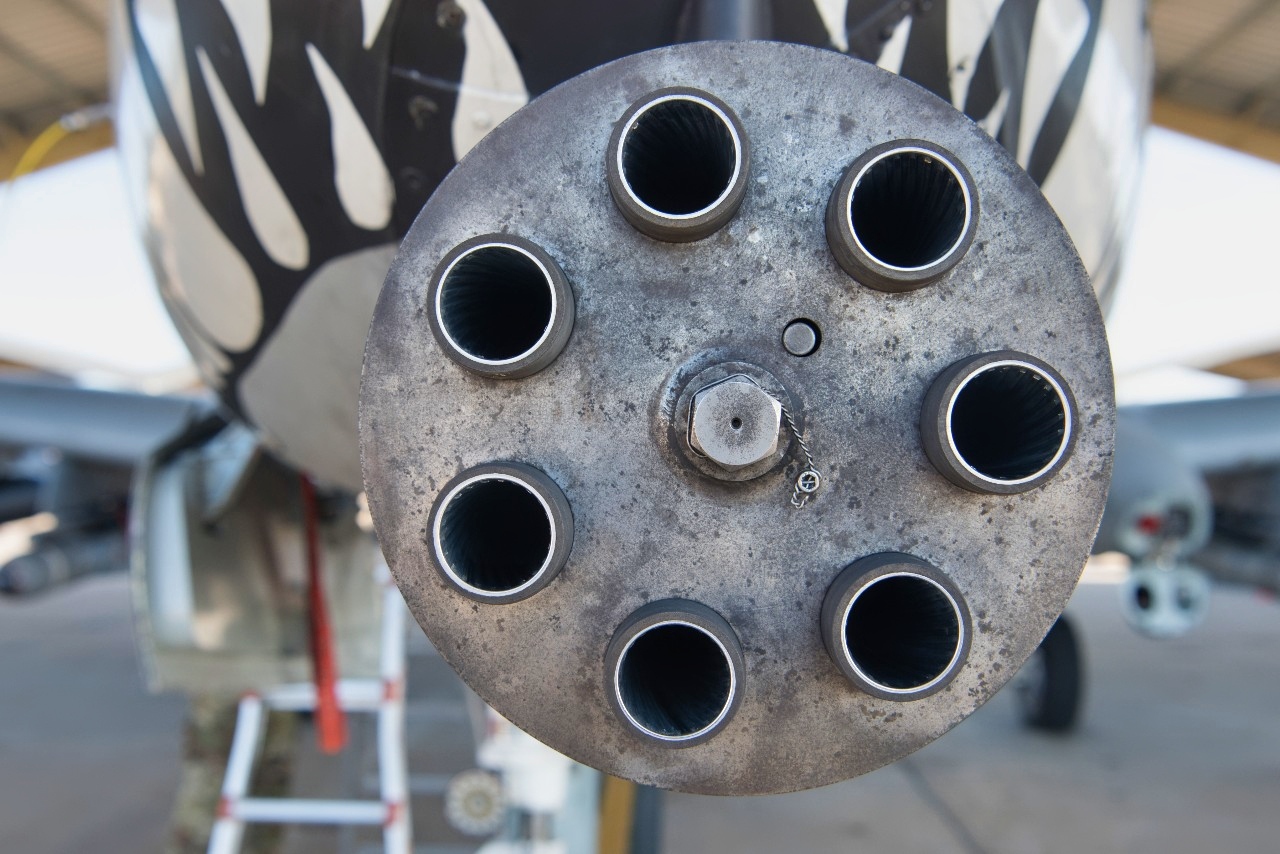
A GAU-8 Avenger 30mm cannon in the nose of an A-10 Thunderbolt II, assigned to the 442d Fighter Wing, at Whiteman Air Force Base, Missouri, April 9, 2021. The GAU-8 is a hydraulically-driven rotary autocannon capable of firing 3,900 rounds per minute with a variety of ammunition types for close air support missions. (U.S. Air Force photo by Senior Airman Parker J. McCauley)

A U.S. Air Force A-10 Thunderbolt II approaches a KC-135 Stratotanker for refueling over the U.S. Central Command area of responsibility, May 31, 2025. The KC-135 is the premier long-term aerial refueling capability for the U.S. Air Force, effectively providing fuel to fixed-wing aircraft operating with the USCENTCOM AOR. (U.S. Air Force Photo by Staff Sgt. John C.B. Ennis)
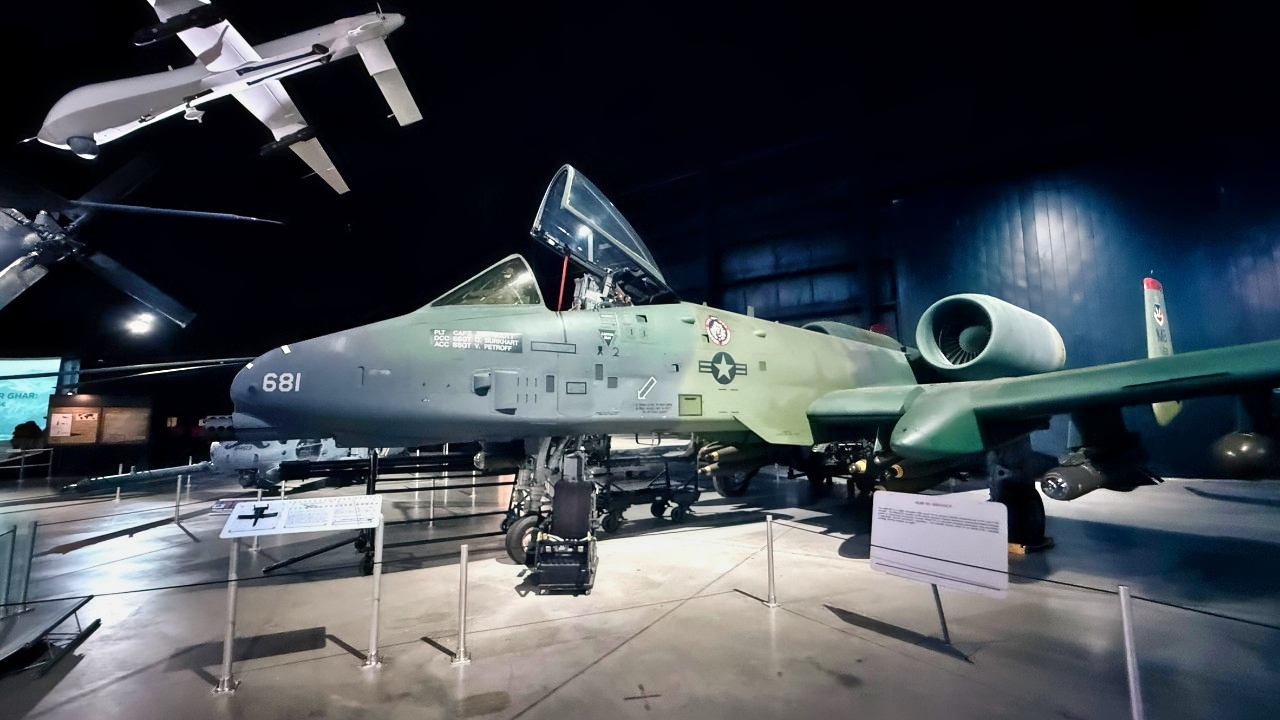
A-10 Warthog National Security Journal Photo.
Those layers of insulation would protect the pilots in the event that they had to eject in the frigid Alaskan winter, but if they were sweating in those heavy winter clothes, they’d quickly freeze to death.
Aircraft Have Environmental Control Systems To Protect The Crew:
Environmental Control Systems (ECS) is a critical subsystem that ensures passenger/crew comfort and safety by managing cabin temperature, pressure, and air quality at high altitudes, regardless of outside conditions.
It uses engine bleed air or dedicated compressors to provide heating, cooling, ventilation, and pressurization, while also cooling avionics, typically using air cycle machines.
“There is a separate controller for defogging the front windscreen. I think it is all part of the same air conditioning system, but it is possible to run one without the other,” Taylor said.
“I do remember that the windscreen defog is one of the steps in the pre-descent checklist. I remember that one in particular because one time I forgot to do that step. Yeah, that was embarrassing to have to abort a landing and go into a holding pattern while my windscreen cleared up.
“Shame can be a great teacher,” he added.
Why Did Pilots Call The Air Conditioning System “The Ice Maker”?
“I don’t remember all of the technical wizardry that made the air conditioning system work (bypass air, ram air, blah blah… this was a while ago) on the A-10, but I remember that it also doubled as a projectile ice maker,” Taylor said.
“If it ran on full cold long enough, ice would build up in the ducts. When maneuvering, or when taxiing, or when it felt like it, the ice would sometimes break loose and come shooting out of the vents at your more sensitive body parts.
“Most of the heat buildup in the cockpit was from the sun beating down on you (much like the inside of your car in the summer). Or because you were wearing a lot of stuff.”
“We didn’t fly when it got colder than -20 for sure. It might have been 0, but I don’t remember. In either case, yes.
“Not only do the jets not like it when it’s that cold, it reaches a point where, if you have to eject, your life expectancy is ridiculously short. You always have to plan for that possibility.
“Also, I think we didn’t even go into work when it was -40 or colder. It just wasn’t worth the risk of getting stuck partway home and getting found in the Spring.”
Taylor Flew An A-10 Warthog Too Fast, And Was Forced To “Hit The Brakes”:
Taylor, a graduate of Embry-Riddle University with a degree in aerospace engineering, also recalled a time when he was flying the A-10 too fast in a dive, and his alarms began to go off in the cockpit.
“There I was…” I actually oversped the A-10 on a dive attack once. In Alaska, in the dead of winter. Not that my airspeed was that fast (hey, it’s the Hawg), but the temperature was such that the Mach speed was pretty low that day.
“I exceeded the max allowable Mach number (around 0.56M IIRC), saw the barber pole on the airspeed indicator, and heard that strange beeping sound in my helmet telling me that something was wrong.
“It actually took me a few seconds to dredge up from the recesses of A-10 training what all of those things meant. My indicated airspeed was good on the attack, but the Mach number was what bit me.
“Remember, this was with full boards out in a steep dive.
“So, we knocked it off and, not knowing how serious this really was… (after all, neither my wingman nor I had ever heard of anyone overspeeding in the Hawg. It was more of a theoretical thing)… and drove home without declaring an emergency. I wrote it up in the forms and went to debrief.
“I got pulled out of debrief to talk to the maintenance crew. “Uhm, sir, I know you wrote it down in the forms, but what exactly happened again?”
The A-10’s depot maintenance people at Hill AFB had never heard of anyone going too fast in an A-10 Warthog, and just shrugged it off.
About the Author: Steve Balestrieri
Steve Balestrieri is a National Security Columnist. He served as a US Army Special Forces NCO and Warrant Officer. In addition to writing on defense, he covers the NFL for PatsFans.com and is a member of the Pro Football Writers of America (PFWA). His work was regularly featured in many military publications.


