

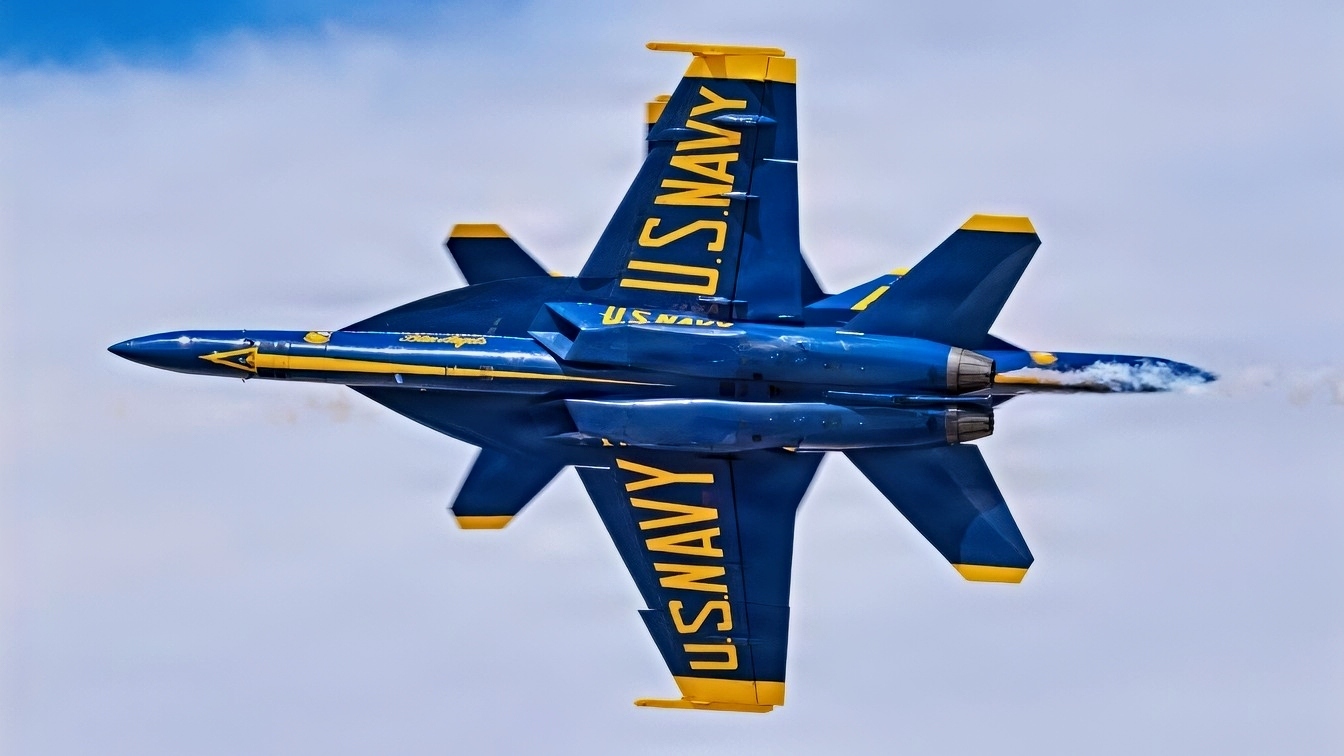
The F/A-18E/F Super Hornet has been the backbone of the U.S. Navy carrier air wing since 2001. Eight hundred and thirty-eight built. Roughly 550 are still in active service. Combat missions over Iraq, Afghanistan, Syria, Libya, Yemen, and now Iran during the opening waves of Operation Epic Fury. The aircraft Tom Cruise flew in Top Gun: Maverick. The aircraft that every American carrier strike group has built its operations around for the past two decades. Boeing is shutting down the production line in 2027, and the Navy has to make the existing fleet last into the 2050s.
The F/A-18 Super Hornet: The Navy’s Workhorse Strike Fighter For 23 Years — And The Aircraft Boeing Is Finally Shutting Down
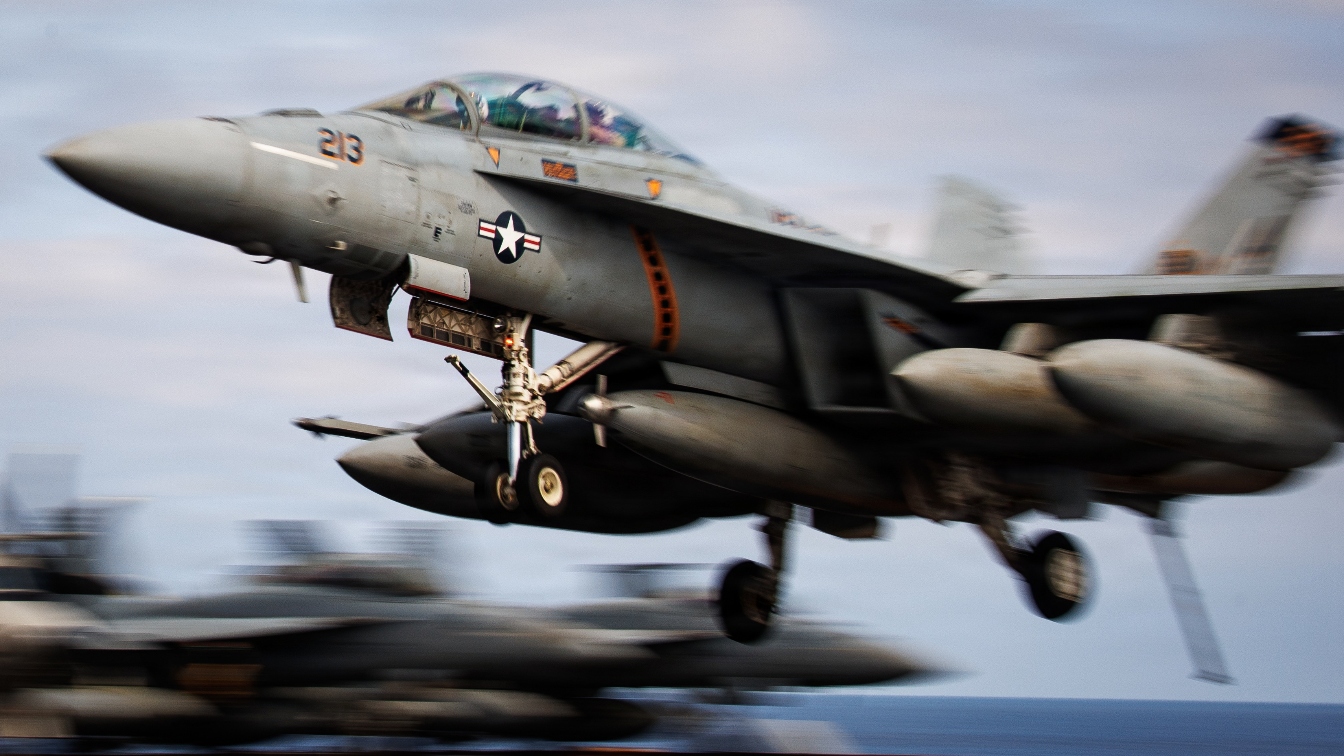
An F/A-18F Super Hornet, attached to Strike Fighter Squadron 213, lands on the flight deck of the world’s largest aircraft carrier, USS Gerald R. Ford (CVN 78), while underway in the Mediterranean Sea, April 11, 2026. Gerald R. Ford is on a scheduled deployment in the U.S. 6th Fleet area of operations to support the warfighting effectiveness, lethality and readiness of U.S. Naval Forces Europe-Africa, and defend U.S., Allied and partner interests in the region. (U.S. Navy photo by Mass Communication Specialist 2nd Class Tajh Payne)
The F/A-18E/F Super Hornet has been the backbone of the U.S. Navy carrier air wing since 2001. Eight hundred and thirty-eight have been built. Roughly 550 remain in active service. They have flown combat missions over Iraq, Afghanistan, Syria, Libya, Yemen, and, most recently, Iran during the opening waves of Operation Epic Fury in February 2026. They are the aircraft Tom Cruise flew in Top Gun: Maverick. They are the aircraft every American carrier strike group has built its operations around for the past two decades.
Boeing is shutting down the production line in 2027.
The final 17 airframes ordered by the U.S. Navy in March 2024 — a $1.3 billion contract for five F/A-18E single-seat and 12 F/A-18F two-seat fighters delivered in the Block III configuration — will be the last new-build Super Hornets ever produced.
After 2027, the existing fleet must last until the F/A-XX sixth-generation carrier fighter enters service in the mid-2030s, and likely beyond. Current Navy planning has the Super Hornet flying into the 2040s and possibly the 2050s.
Why The Navy Needed The Super Hornet

(Jan 31, 2009) An F/A-18 Super Hornet assigned to the “Tomcatters” of Strike Fighter Squadron (VFA) 31 launches from the flight deck of USS Theodore Roosevelt (CVN 71). The Nimitz-class aircraft carrier and embarked Carrier Air Wing (CVW) 8 are operating in the 5th Fleet area of responsibility and are focused on reassuring regional partners of the United States’ commitment to security, which promotes stability and global prosperity (U.S. Navy photo by Mass Communication Specialist 3rd Class Jonathan Snyder/Released)
The F/A-18 family exists because the U.S. Navy needed a strike fighter that the post-Vietnam War defense budget could actually afford.
The Navy’s mid-1970s plan called for a new strike fighter under the VFAX program — Naval Fighter-Attack, Experimental — to replace aging F-4 Phantom IIs and A-7 Corsair IIs in carrier air wings. The Naval History and Heritage Command’s official program history tracks how VFAX ballooned in cost during 1974 and was terminated in August of that year. Congress redirected the funding to a new program — the Navy Air Combat Fighter, or NACF — and directed the Navy to examine the two prototypes then competing in the U.S. Air Force’s Lightweight Fighter program: the General Dynamics YF-16 and the Northrop YF-17 Cobra.
The Air Force chose the YF-16. The Navy chose the YF-17. The decision was driven by carrier operations. Aviation historian Joe Baugher’s detailed program record documents that the Navy was skeptical that the single-engine YF-16 with narrow landing gear could be safely or economically adapted to carrier service. The twin-engine YF-17 offered the redundancy and structural margin required for catapult launches and arrested recoveries.
The YF-17 first flew on June 9, 1974. Northrop teamed with McDonnell Douglas — the latter had carrier aircraft experience that Northrop lacked — and the partnership substantially redesigned the YF-17 for naval service. The Pima Air & Space Museum’s profile of the lead F/A-18A documents the redesign: folding wings, strengthened landing gear, additional internal fuel capacity, and the structural reinforcements needed for sustained carrier operations. The YJ101 engines that powered the YF-17 were upgraded to the more powerful General Electric F404 family.
The first F/A-18A Hornet flew on November 18, 1978. The aircraft entered Marine Corps service on January 7, 1983, and Navy service in 1984. By the late 1980s, the Hornet was replacing both the F-4 Phantom and A-7 Corsair in carrier air wings across the fleet.
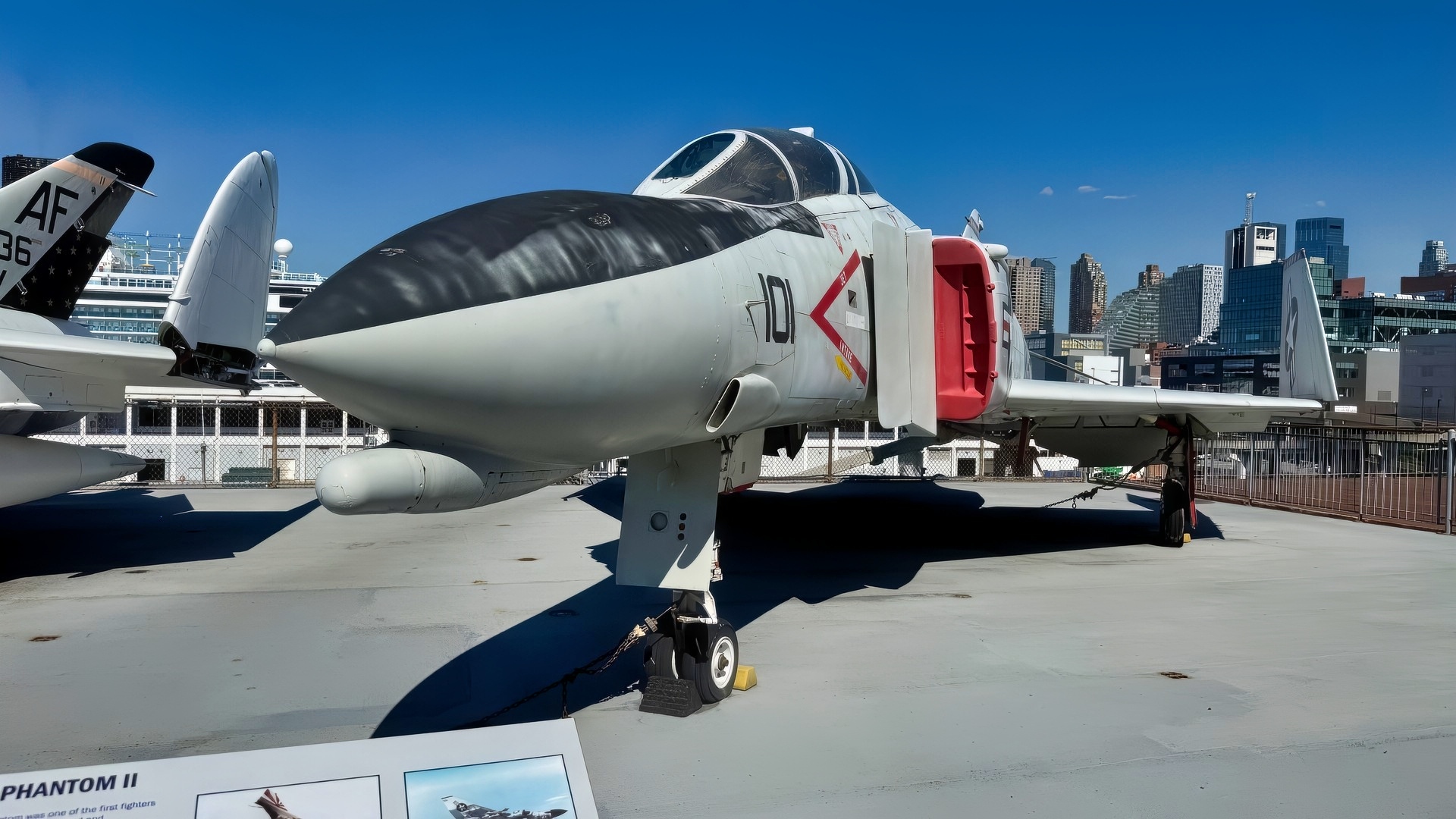
F-4 Phantom II Photo from National Security Journal. Taken on September 18, 2025.

F-4 Phantom II Fighter National Security Journal Image Taken Onboard USS Intrepid.
From Hornet To Super Hornet
The original F/A-18A through F/A-18D Hornets were excellent multirole aircraft. They were also too small for the missions the Navy needed them to perform.
The 1990s naval aviation environment had changed. The F-14 Tomcat was aging out. The A-6 Intruder was retiring with no replacement after the A-12 Avenger II program collapsed in 1991. The Super Tomcat 21 — Grumman’s proposed F-14 upgrade — had been canceled in favor of a different solution. The Navy needed a single carrier aircraft that could perform the strike, fleet defense, and reconnaissance roles previously distributed across four separate platforms.
The answer was a substantially larger F/A-18. The Super Hornet program built on the original Hornet design but enlarged the airframe across nearly every dimension. The wing area increased by approximately 25 percent. The fuselage was lengthened by roughly four feet. Internal fuel capacity grew by approximately 33 percent. The engines were upgraded to the more powerful General Electric F414-GE-400, each producing approximately 22,000 pounds of thrust with afterburner. The aircraft gained 11 hardpoints capable of carrying up to 17,750 pounds of ordnance.
One profile of the Super Hornet program notes that the F/A-18E/F retained roughly 25 percent commonality with the legacy Hornet airframe — meaning the supplier base, training pipeline, and maintenance infrastructure could transition without rebuilding from scratch. The cost-of-ownership argument that had defined the original Hornet program transferred directly to the Super Hornet.
The first Super Hornet flew in 1995. Production began at the McDonnell Douglas (later Boeing, after the 1997 merger) facility in St. Louis, Missouri. The aircraft entered fleet service in 1999 with VFA-122 — the Fleet Replacement Squadron at NAS Lemoore — and achieved Initial Operational Capability in September 2001.
The timing mattered. Within weeks of IOC, the September 11 attacks pushed the U.S. military into a 20-year combat tempo that the Super Hornet would absorb across multiple theaters and continuous operational deployments.

A U.S. Sailor prepares an F/A-18F Super Hornet aircraft for launch from the flight deck of the world’s largest aircraft carrier, Ford-class aircraft carrier USS Gerald R. Ford (CVN 78), while underway in the Caribbean Sea, Nov. 25, 2025. U.S. military forces are deployed to the Caribbean in support of the U.S. Southern Command mission, Department of War-directed operations, and the president’s priorities to disrupt illicit drug trafficking and protect the homeland. (U.S. Navy photo)
Combat History
The Super Hornet’s combat record began in November 2002.
A 2023 detailed history of the Hornet family documents the Super Hornet’s combat debut over Iraq in late 2002 during Operation Southern Watch, with VFA-115 aboard USS Abraham Lincoln. On November 6, 2002, two F/A-18Es conducted a Response Option strike against Iraqi surface-to-air missile launchers and a command and control bunker at Tallil Air Base. One of the pilots dropped 2,000-pound JDAMs from the Super Hornet for the first time during combat.
Operation Iraqi Freedom in March 2003 saw both single-seat F/A-18E and two-seat F/A-18F Super Hornets fly thousands of strike sorties against Iraqi targets. The campaign established the aircraft’s combat reputation and validated the Super Hornet’s central role in carrier aviation.
The 20-year campaign that followed touched every theater of operations in which the U.S. Navy operated. Operation Enduring Freedom in Afghanistan. Operation Inherent Resolve against ISIS in Iraq and Syria. The 2011 Libya campaign. Continuous deployments to the Persian Gulf, the Western Pacific, and the Mediterranean. The Red Sea engagements against Houthi forces since 2023.
The aircraft’s most consequential single combat engagement came on June 18, 2017. A U.S. Navy F/A-18E from VFA-87 aboard USS George H.W. Bush shot down a Syrian Air Force Su-22 Fitter that had bombed Syrian Democratic Forces positions in Tabqa. The American pilot first fired an AIM-9X Sidewinder that missed, then connected with an AIM-120 AMRAAM that destroyed the Syrian aircraft. It was the first U.S. Navy air-to-air kill since Operation Desert Storm in 1991, and the first American air-to-air engagement of a manned aircraft since 1999.

(March 7, 2016) An F/A-18E Super Hornet assigned to the Warhawks of Strike Fighter Squadron (VFA) 97 performs a flyby during an aerial change of command ceremony above USS John C. Stennis (CVN 74). Providing a ready force supporting security and stability in the Indo-Asia-Pacific, Stennis is operating as part of the Great Green Fleet on a regularly scheduled 7th Fleet deployment. (U.S. Navy photo by Mass Communication Specialist Seaman Tomas Compian/Released)
The most recent combat deployment is the one underway right now. As Simple Flying reported on the platform’s role in the Iran campaign, F/A-18E/F squadrons aboard USS Abraham Lincoln were among the first assets committed to sustained strike operations when Operation Epic Fury opened on February 28, 2026. Super Hornets flew coordinated waves alongside Tomahawk cruise missile launches against Iranian nuclear and military infrastructure. As the campaign expanded into the Strait of Hormuz crisis, the aircraft’s role extended to escort missions, counter-drone air policing, and air cover over critical shipping lanes.
In a recent assessment of the Super Hornet fleet in 2026 operations, the platform is currently bearing the bulk of American carrier air wing combat operations across all active theaters, with no other carrier-based platform capable of replicating the Super Hornet’s combination of range, payload, and multirole flexibility.
Block III: Keeping The Aircraft Relevant
The Super Hornet has been continuously upgraded across its production life. The most consequential current upgrade program is the Block III configuration.
The Block III package adds an active electronically scanned array radar — the AN/APG-79(V)4 — significantly upgraded mission computer processing, an Advanced Cockpit System with a 10-by-19 inch wide-area display replacing the legacy individual cockpit screens, the Distributed Targeting Processor-Networked combat data link for advanced network-centric warfare, conformal fuel tanks to extend range, and reduced radar cross-section enhancements.
Years back, reporting then noted that all 17 aircraft in the final March 2024 production lot were delivered in the Block III standard. The broader Service Life Modification program is bringing the existing Block II Super Hornet fleet up to Block III configuration across the next several years, with deliveries scheduled through approximately 2030.
The Aviationist’s coverage of the first in-house Block III upgrade detailed how Fleet Readiness Center Southwest completed the first fully in-house Block III conversion in 2025, marking a major shift away from sole dependence on Boeing for major modernization work. FRCSW can now modify up to 40 aircraft per year, joining two additional Block III upgrade locations in St. Louis. In December 2025, Boeing received a $931 million contract to continue the Service Life Modification program on 60 additional aircraft, bringing the total to roughly 125 Super Hornets covered by contracts since 2018.
And more updates were on the way. A $198 million Navy award to Boeing in September 2025 to extend Super Hornet airframe life from 6,000 to 10,000 flight hours. The increase supports the platform’s planned service through the 2040s and potentially into the 2050s.
World War Wings’ analysis of the broader Block III SLM strategy frames the entire effort as one designed to keep the existing fleet of approximately 550 F/A-18E/Fs and EA-18G Growlers combat-relevant once the production line closes. The math is straightforward: no new airframes are coming, so every existing airframe has to last substantially longer than the original design specifications anticipated.
Foreign Operators
The Super Hornet has been substantially less successful in the export market than the original legacy Hornet, which was sold to Australia, Canada, Spain, Switzerland, Finland, Kuwait, and Malaysia.
Two foreign operators currently fly the Super Hornet variant. The Royal Australian Air Force ordered 24 F/A-18F Super Hornets in 2007 to bridge the gap between the retiring F-111 fleet and the eventual F-35A. Australian Super Hornets entered service in December 2010 and have been deployed alongside U.S. Navy aircraft in combat operations against ISIS, with the RAAF flying its first armed combat mission over Iraq in October 2014. Australia subsequently acquired 12 EA-18G Growlers, making it the only foreign operator of the electronic warfare variant.
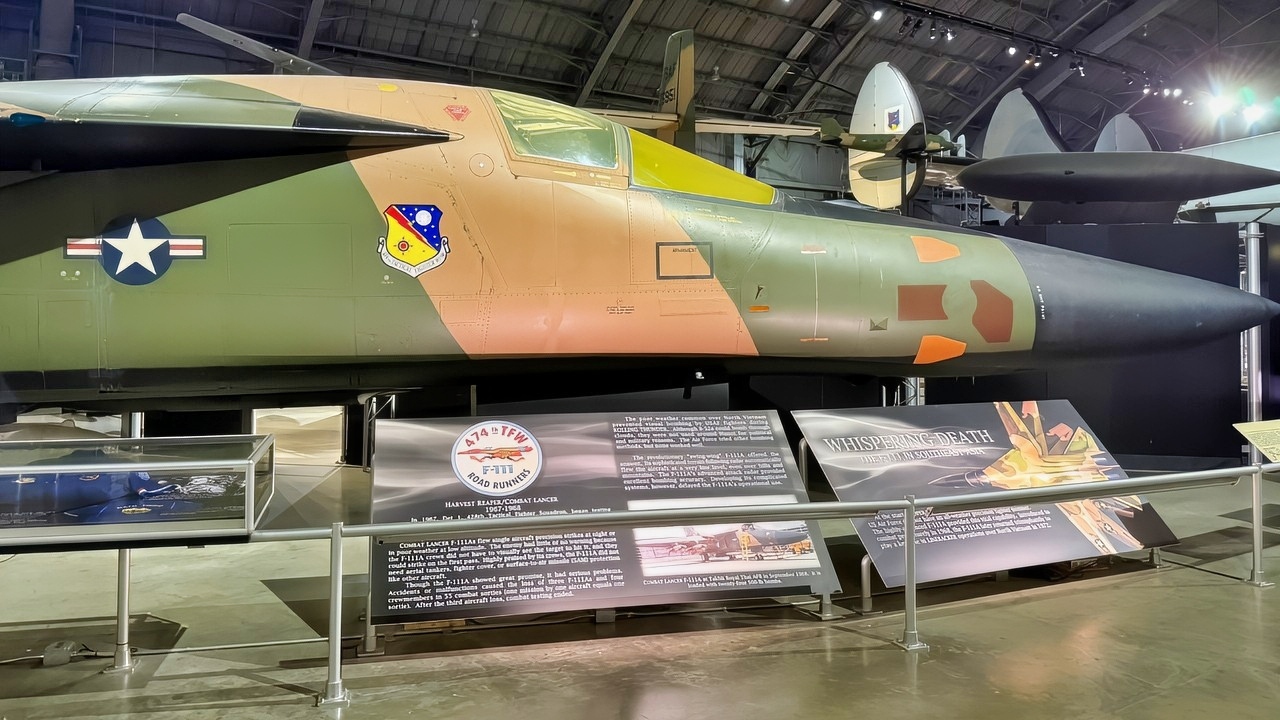
F-111 In USAF Museum July 2025 NSJ Image Taken by Harry J. Kazianis.
Kuwait is the other Super Hornet export customer. After a lengthy procurement process, Kuwait signed a contract in 2018 for 28 Super Hornets, which were delivered between 2021 and 2022.
The export market for the platform never materialized at the scale Boeing originally projected. The F-35 captured most of the international tactical aviation procurement that the Super Hornet would otherwise have competed for, and the remaining customer pool was substantially smaller than McDonnell Douglas had anticipated when the program was initially designed.
The End Of Production
Boeing announced in 2023 that it would end Super Hornet production. The original closure date was 2025. The March 2024 U.S. Navy order for 17 final airframes pushed the closure to 2027.
Various reports have detailed how Boeing’s St. Louis facility will transition to other military aircraft programs after the final delivery — increased T-7A Red Hawk trainer production, F-15EX assembly, MQ-25 Stingray drone manufacturing, and wing components for the Boeing 777X commercial airliner. The Pentagon does not expect to retire the Super Hornet from U.S. Navy service until approximately 2040, with the existing fleet upgraded to Block III standard supporting the carrier air wing through the F/A-XX transition.
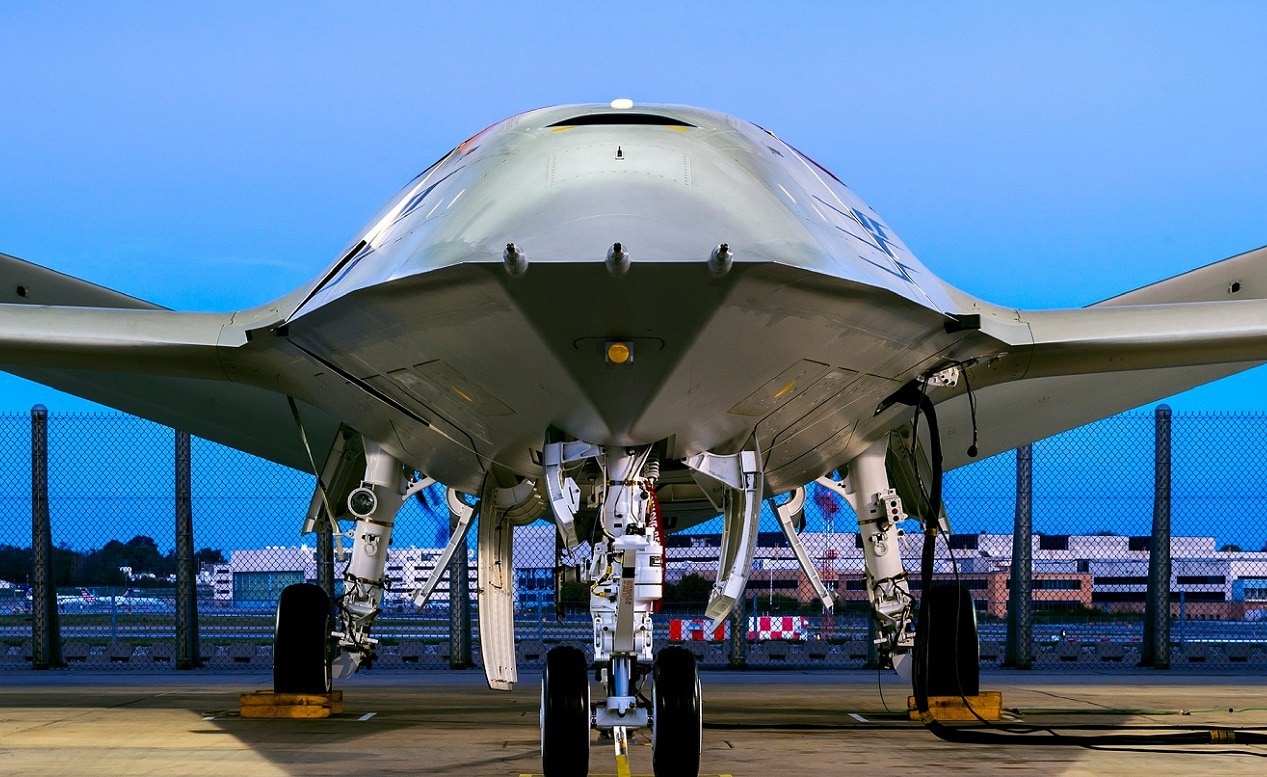
MQ-25. Image Credit: Creative Commons.
The F/A-18 production run will close after more than 2,000 aircraft delivered across the entire Hornet and Super Hornet family over approximately 40 years. The 1,500 workers currently supporting the production line will transition to other Boeing military programs over the coming years.
What Comes Next: Enter F/A-XX
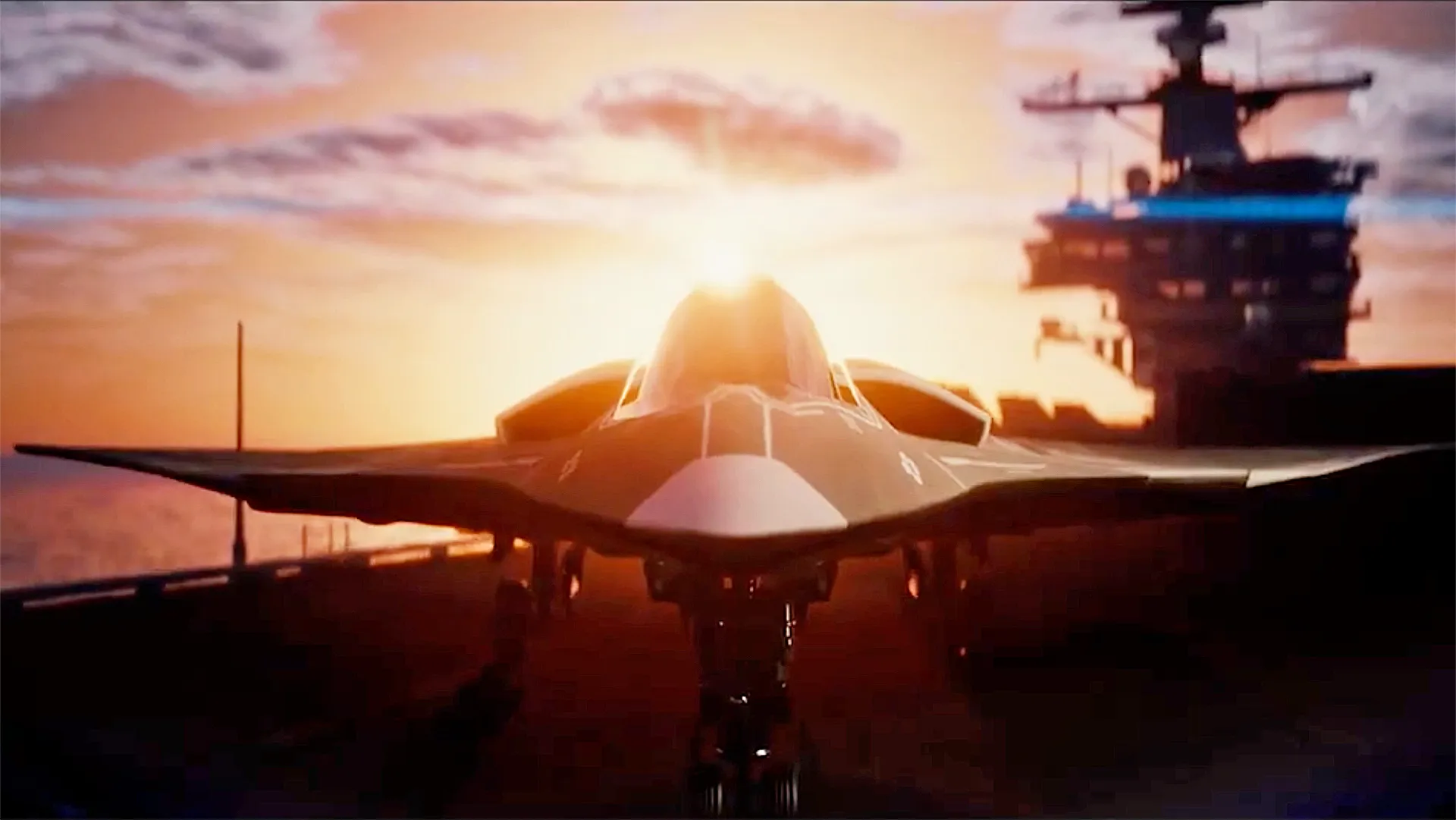
FA-XX. Northrop video screenshot.

Boeing NGAD F/A-XX Fighter Rendering. Image Credit: Boeing.

F/A-XX Handout Photo from Northrop Grumman.
The Super Hornet will fly until the F/A-XX arrives — and possibly considerably longer. The F/A-XX program is scheduled to make a contract decision in August 2026, with Boeing and Northrop Grumman as the remaining competitors after Lockheed Martin was eliminated in early 2025. The first operational F/A-XX aircraft are not expected to reach the fleet until the mid-2030s at the earliest.
That means the Super Hornet has at least another decade as the primary carrier strike fighter, and probably substantially more. The Block III upgrades, the 10,000-flight-hour life extension, and the ongoing Service Life Modification program are all designed to make the existing 550 airframes last into the 2040s and possibly the 2050s.
The aircraft is not stealthy. It does not have the long-range or sensor sophistication of the F-35C. Against modern Chinese and Russian integrated air defenses, the Super Hornet faces a survivability disadvantage that the F/A-XX is being designed to address.
What the Super Hornet is, is the aircraft that has actually flown — in numbers, on continuous deployments, in real combat across every American theater of operations for 23 straight years. The strike record is real. The combat experience is real. The institutional knowledge embedded in the platform across two and a half decades is the kind of accumulated capability that takes generations to rebuild. The era of the Super Hornet as the workhorse of carrier aviation is not over. It is just getting harder to replace.
About the Author: Harry J. Kazianis
Harry J. Kazianis (@Grecianformula) was the former Senior Director of National Security Affairs at the Center for the National Interest (CFTNI), a foreign policy think tank founded by Richard Nixon based in Washington, DC. Harry has over a decade of experience in think tanks and national security publishing. His ideas have been published in the NY Times, The Washington Post, The Wall Street Journal, CNN, and many other outlets worldwide. He has held positions at CSIS, the Heritage Foundation, the University of Nottingham, and several other institutions related to national security research and studies. He is the former Executive Editor of the National Interest and the Diplomat. He holds a Master’s degree focusing on international affairs from Harvard University.


J T Strong, Maj. USAF , Ret.
May 22, 2026 at 2:47 pm
We seriously need to STOP being impressed by the dogfighting capabilities of the Raptor because we will loose air battles to the Chinese if we propose to dogfighting as a primary tactic. The J-20 is a BVR interceptor being produced in numbers with which F-22 cannot cope! Raptor needs a whole new Super-long range missile, and Tomcat-like Radar system to put do the Chinese BVR threat! Ditto this with the Navy’s stupidly conceived F/A-XX, the needs to be a dedicated F-XX FLEET DEFENSE airframe, and leave the mud-moving missions to the Super Hornets and F-35s!