
The U.S. Air Force concluded Exercise Checkered Flag 26-2 at Tyndall Air Force Base in Florida on May 14, integrating F-22 Raptors, F-35A Lightning II stealth fighters, F-16 Fighting Falcons, Navy F/A-18 Super Hornets, EA-18G Growlers, and E-2D Advanced Hawkeyes into a single combat network. The 325th Fighter Wing ran the exercise in partnership with the 53rd Wing’s Weapons System Evaluation Program East. Aircrews conducted live-fire missile engagements against maneuvering aerial drone targets across the Gulf Range Complex. The E-2D, equipped with the AN/APY-9 radar, served as the airborne command-and-control node. The EA-18G Growler simulated suppression of enemy air defenses, radar jamming, and electromagnetic attack throughout the exercise.
The U.S. Air Force Is Drilling for a China War
The U.S. Air Force has concluded one of its largest and most operationally important air combat exercises of the year, integrating F-22 Raptors, F-35A Lightning II stealth fighters, Navy electronic warfare aircraft, airborne command-and-control platforms, and live-fire missile operations into a massive rehearsal for future high-end warfare against technologically advanced adversaries such as China.
The exercise, known as Checkered Flag 26-2, concluded on May 14 at Tyndall Air Force Base in Florida after several weeks of joint training conducted across the Gulf Range Complex.
It was organized by the Air Force’s 325th Fighter Wing in partnership with the 53rd Wing’s Weapons System Evaluation Program (WSEP East), and the drill focused heavily on multi-domain integration, distributed combat operations, electronic warfare coordination, and accelerated kill-chain operations under combat-like conditions.
A combination of Air Force F-22s, F-35As, F-16s, Navy F/A-18 Super Hornets, EA-18G Growlers, and E-2D Advanced Hawkeye aircraft formed a single combat network designed to simulate the kind of conflict dynamics the Pentagon expects to unfold in a future Indo-Pacific conflict.

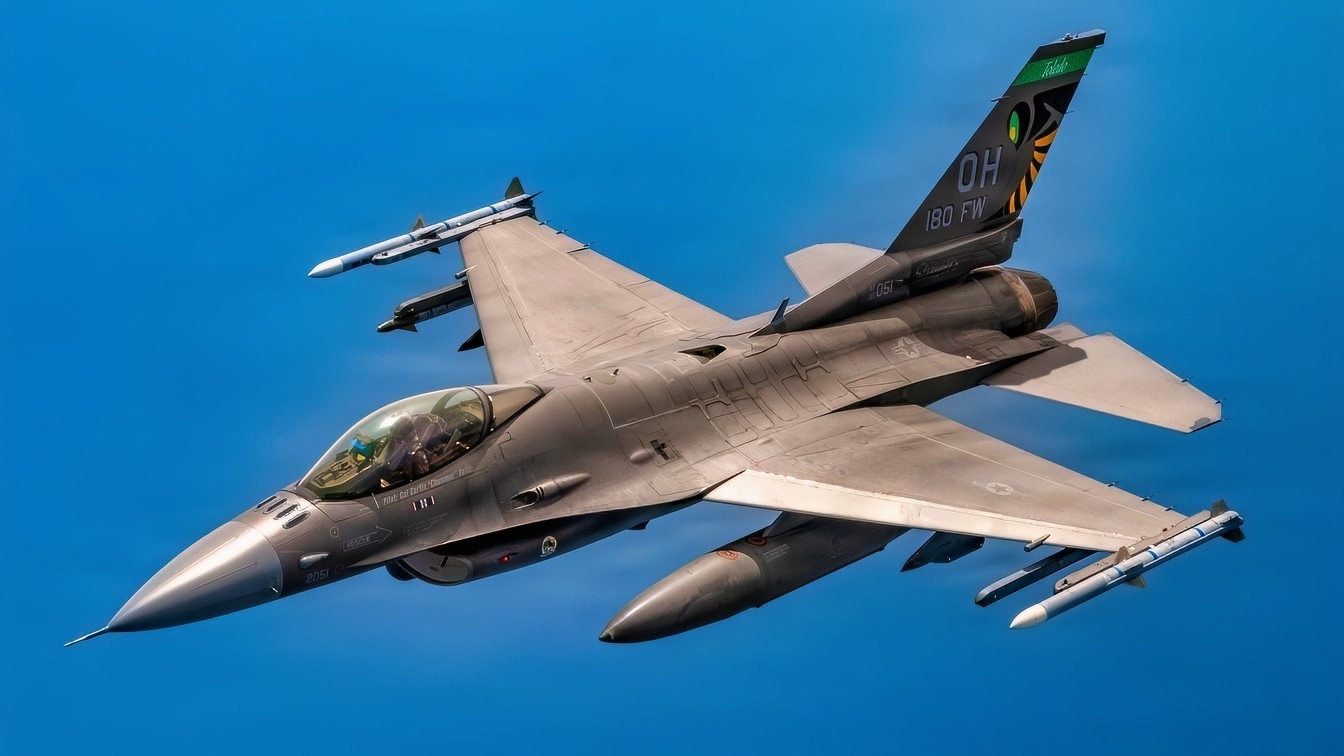
F-16 Fighting Falcons assigned to the 114th Fighter Wing sit ready on the ramp while conducting an elephant walk at Joe Foss Field, South Dakota, July 2, 2025. The 114th Fighter Wing conducted an elephant walk to demonstrate its ability to project fighter airpower. (U.S. Air National Guard photo by Master Sgt. Luke Olson)
According to the Air Force, participating aircraft conducted live-fire missile engagements against maneuvering aerial drone targets.
What Checkered Flag 26-2 Actually Tested
Although Checkered Flag is officially described as a training exercise, the scale and complexity of the recent event suggest it is increasingly serving as a laboratory for future large-scale warfighting planning.
This year’s exercise focused largely on integrating stealth aircraft with electronic attack assets and airborne battle management systems, as well as live missile engagements. It was a large test of American assets acting as a single operational network inside of a heavily contested airspace – the kind of dynamic widely expected to be seen in the event of a Taiwan contingency.
The exercise combined Checkered Flag with WSEP 26.04 – a U.S. Air Force formal evaluation exercise held at Tyndall Air Force Base, Florida, allowing pilots to conduct live missile launches under realistic combat conditions.
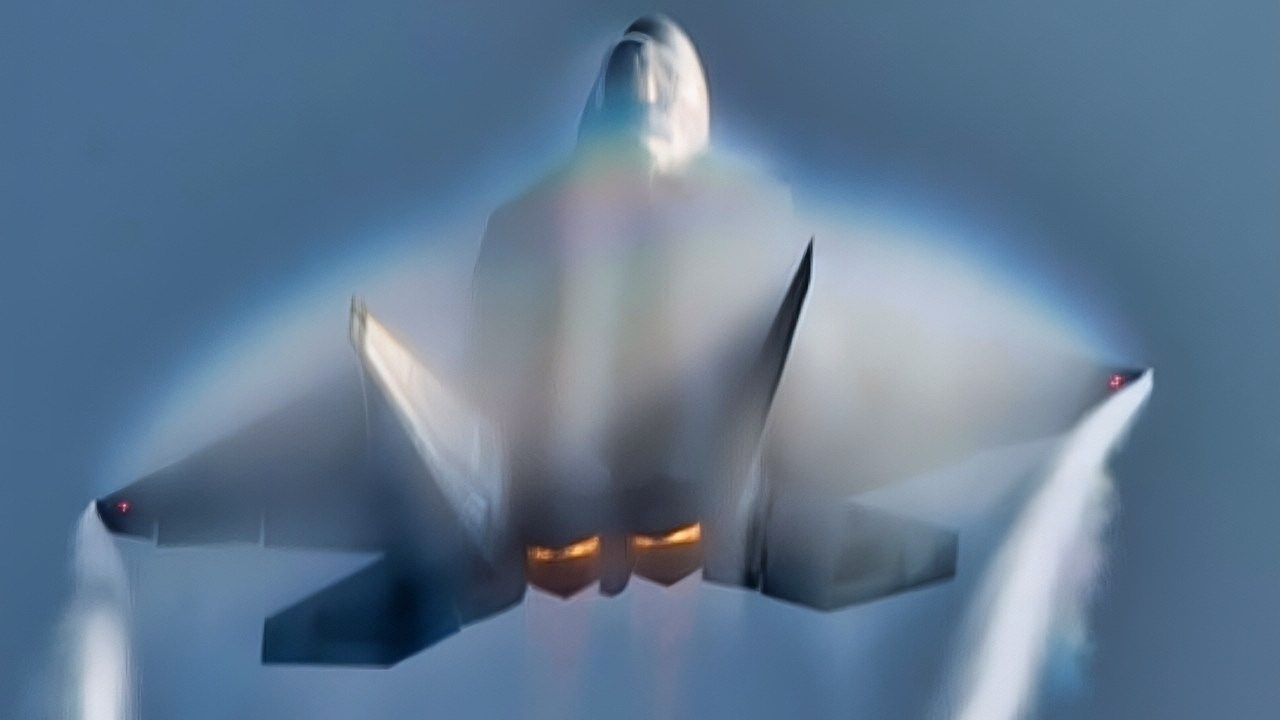
F-22 Raptor Fighter for US Air Force. Image Credit: Creative Commons.
According to the Air Force, crews practiced full mission profiles that included airborne intercepts, target tracking, electronic attack coordination, and multi-aircraft engagement sequencing.
Maj. Tyler Davidson described the exercise as one of the few opportunities where aircrews can employ weapons in conditions closely resembling actual combat.
“The Gulf Range Complex provides an invaluable platform to project combat airpower,” Davidson said.
“It’s one of the only places that we can truly go out and exercise full live weapons mission profiles, actually employ these weapons at the edges of the envelope against live flying drones and be able to get real-time data,” he continued.
A future conflict in the Pacific will almost certainly require parties to make quick decisions, with long-range missile engagements effectively guaranteed. Communications could be degraded, and intense electronic warfare activity is also likely.
Exercises like Checkered Flag, therefore, focus on the “kill chain” – the process of rapidly connecting sensors, targeting systems, command nodes, fighter jets, and bombers before an adversary can react.
The Growing Value of the Hawkeye and Growler
Arguably, one of the most significant aspects of the exercise was the prominent role played by the Navy’s E-2D Advanced Hawkeye and EA-18G Growler aircraft, both of which are becoming increasingly central to modern American air warfare doctrine.
The E-2D Hawkeye served as a critical airborne command-and-control node throughout the exercise.
Equipped with the AN/APY-9 radar system, the aircraft can track airborne threats at long range while coordinating multiple friendly aircraft across contested airspace. The aircraft effectively acts as an airborne battlefield manager, helping distribute targeting information and maintain situational awareness across dispersed combat formations.
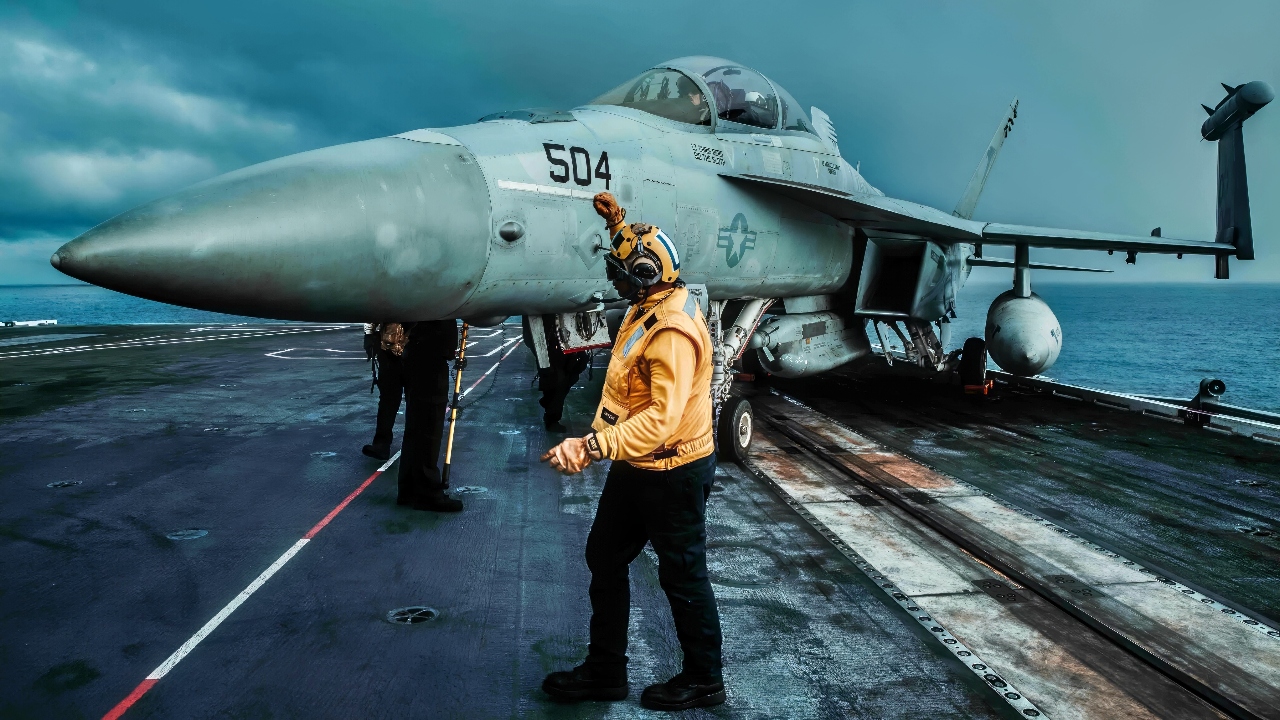
An E/A-18G Growler, attached to Electronic Attack Squadron (VAQ) 141, taxis on the flight deck of Nimitz-class aircraft carrier USS George Washington (CVN 73), while underway in the Indian Ocean, July 24, 2025. The USS George Washington Carrier Strike Group (GWA CSG) is conducting routine operations in the U.S. 7th Fleet area of operations. George Washington is the U.S. Navy’s premier forward-deployed aircraft carrier, a long-standing symbol of the United States’ commitment to maintaining a free and open Indo-Pacific region, while operating alongside allies and partners across the U.S. Navy’s largest numbered fleet. (U.S. Navy photo by Mass Communication Specialist Seaman Nicolas Quezada)
Navy Petty Officer 3rd Class Sydney Rodriguez, who serves as an avionics electronics technician, said that the E-2D Hawkeye “provides command and control” and paints a “combat zone picture.”
“We detect targets long before the fighter jets do. We identify the threats first and relay that tactical picture, ensuring the fighters successfully engage their required targets,” Rodriguez said.
The EA-18G Growler, meanwhile, provided electronic warfare support by simulating suppression of enemy air defenses, radar jamming, and electromagnetic attack operations.
That capability is necessary in a future conflict involving China, given that its military has spent years expanding its advanced radar systems and integrated air defenses, as well as its long-range missile coverage and electronic warfare capabilities across the Western Pacific.
How the Pentagon Plans to Fight Future Air Wars

A U.S. Navy EA-18G Growler prepares to refuel from a U.S. Air Force KC-135 Stratotanker over the U.S. Central Command area of responsibility, March 29, 2025. The Growlers are assigned to the Harry S. Truman Carrier Strike Group supporting maritime security operations in the CENTCOM AOR. (U.S. Air Force photo by Staff Sgt. Gerald R. Willis)
Checkered Flag 26-2 demonstrated how the Pentagon expects future air combat to function – and that it will be less about isolated fighter-versus-fighter engagements and more about fielding a fully integrated combat network that is dispersed and connects multiple aircraft and sensors with command systems.
During the exercise, the F-22 Raptor performed its traditional role as a stealth air superiority platform capable of penetrating contested airspace and engaging enemy aircraft at long range.
The F-35A, meanwhile, acted as both a strike fighter and an airborne sensor platform capable of collecting, processing, and distributing targeting information across the force.
Rather than replacing older aircraft entirely, however, the exercise also showed how fourth-generation platforms remain essential to American planning – even as sixth-generation fighters are in development.
F-16 Fighting Falcons proved their worth for their flexibility and combat mass, while Navy Super Hornets represented the carrier-based strike component that will likely play a major role in Pacific operations if and when a conflict occurs.
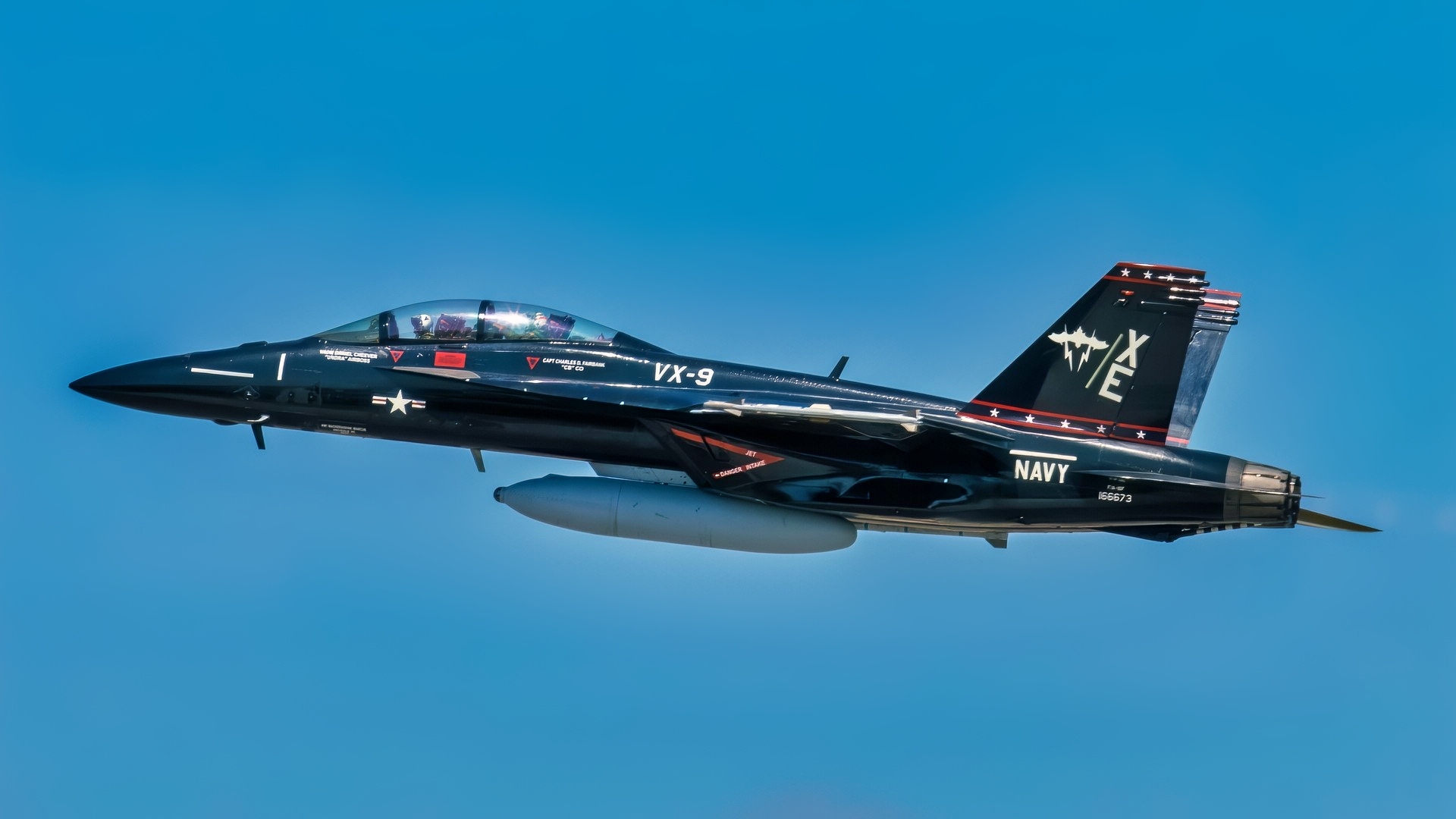
An F/A-18F Super Hornet attached to Air Test and Evaluation Squadron (VX) 9, the “Vampires,” takes off from Naval Air Station Point Mugu, California, September 11, 2025. Gray Flag 2025 is the naval aviation test community’s premier large force test event, providing unique venues for large scale integration of new capabilities across services and platform. Working with the Joint Force, industry, and our nation’s allies to ensure seamless integration and interoperability is key to ensuring warfighters have a decisive advantage in the field. (U.S. Navy photo by Mass Communication Specialist 2nd Class John T. Jarrett)
MORE – F-22 Down: America’s Best Stealth Fighter Was ‘Shot Down’ By A French-Made Mirage 2000 Fighter
MORE – The F-55 ‘Ferrari’ Stealth Fighter Is a Terrifying Idea. Here’s Why
About the Author: Jack Buckby
Jack Buckby is a British researcher and analyst specializing in defense and national security, based in New York. His work focuses on military capability, procurement, and strategic competition, producing and editing analysis for policy and defense audiences. He brings extensive editorial experience, with a career output spanning over 1,000 articles at 19FortyFive and National Security Journal, and has previously authored books and papers on extremism and deradicalization.


