

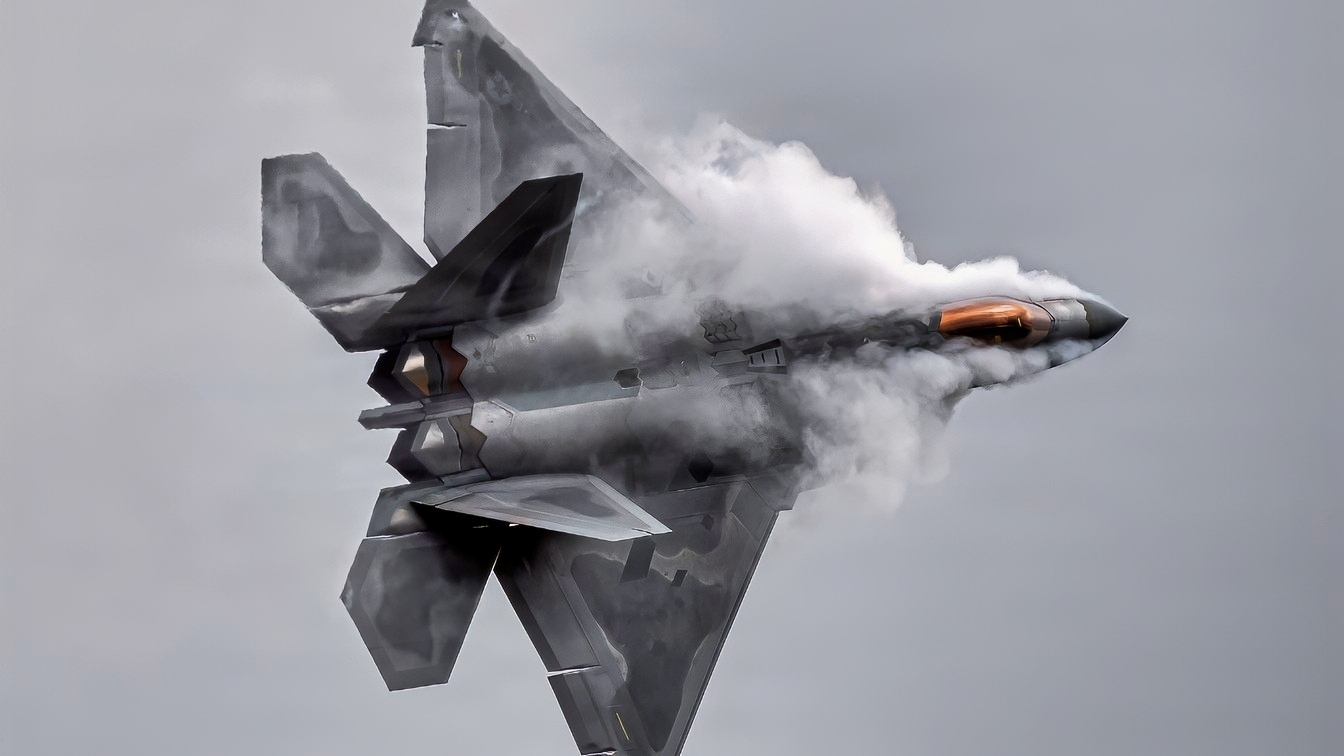
Summary and Key Points: In March 2013, two Iranian Air Force F-4 Phantom IIs scrambled to intercept an American MQ-1 Predator drone flying surveillance approximately 16 miles off the Iranian coast in international airspace. They did not know that two U.S. Air Force F-22 Raptors operating from a base in the United Arab Emirates were flying escort.
-Lt. Col. Kevin Showtime Sutterfield, an Air Force Reservist flying the lead F-22, eased his aircraft into a position under the lead Iranian F-4 to inspect its weapons loadout — the Iranian pilots never saw him. We have visited the F-22 Raptor in the past and present many original photos in this article.
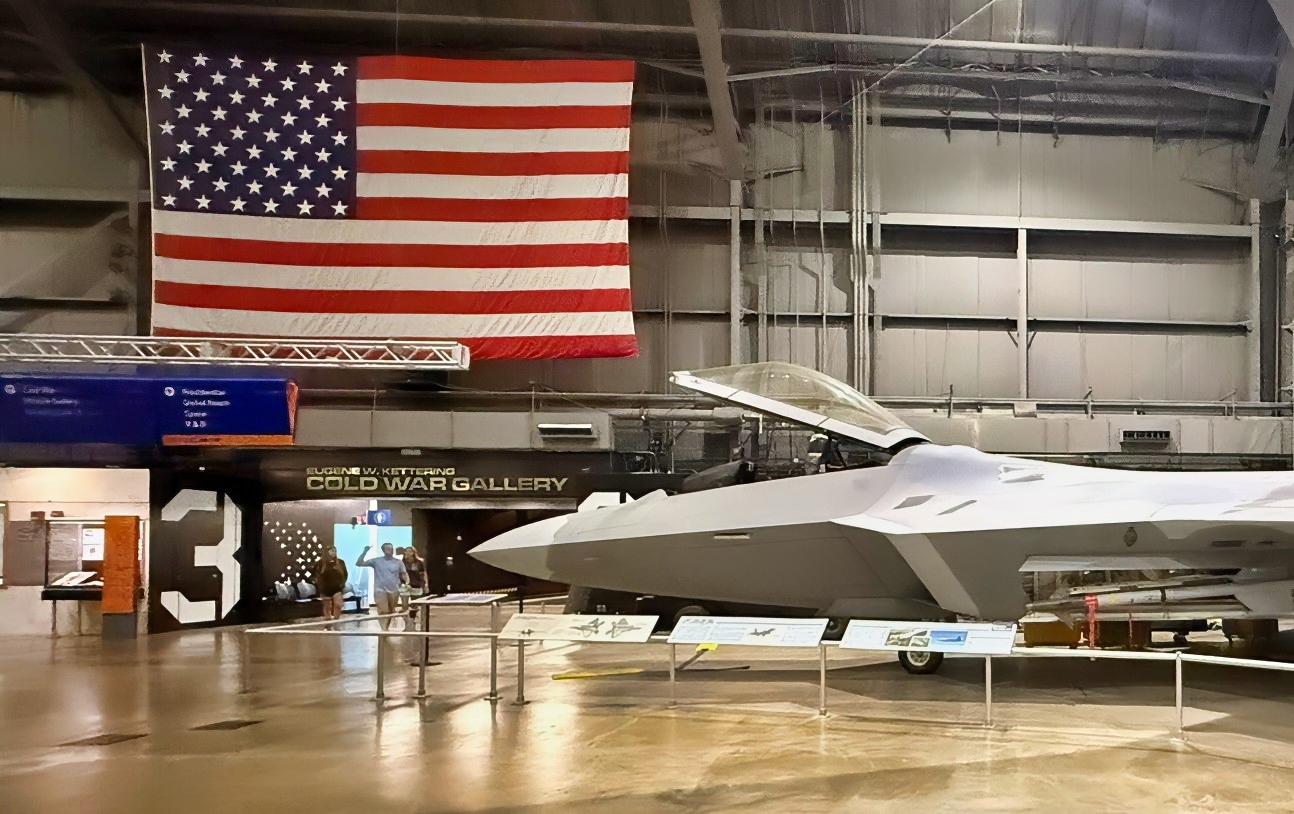
F-22A Raptor in the Air Force Museum. Image Credit: National Security Journal Original Photo.
-Sutterfield then climbed onto the F-4’s left wing and keyed his radio: “You really ought to go home.” The Iranian F-4s departed. The encounter was disclosed by Air Force Chief of Staff General Mark Welsh in September 2013.
F-22 vs. F-4: Who Wins a Fighter Dual?
An American MQ-1 Predator drone was flying surveillance and reconnaissance approximately 16 miles off the Iranian coast, in international airspace. Two Iranian Air Force F-4 Phantom IIs scrambled to intercept and shoot it down. The Phantoms had reason to think this would be straightforward work. Six months earlier, in November 2012, two Iranian Su-25 ground-attack aircraft had unloaded their entire ammunition supply trying to bring down a similar Predator — the entire failed engagement captured on the drone’s own cameras, an embarrassment Tehran wanted to avoid repeating.
The Predator was not the only aircraft in that patch of airspace. The Pentagon had reacted to the Su-25 incident by adding fighter escort to its Predator missions over the Persian Gulf. F/A-18 Super Hornets from USS John C. Stennis pulled some of those escort flights. F-22 Raptors operating from a base in the United Arab Emirates pulled others. And as someone who has gotten close to the F-22 Raptor and seen it fly, it’s pretty clear the F-22 had the advantage.
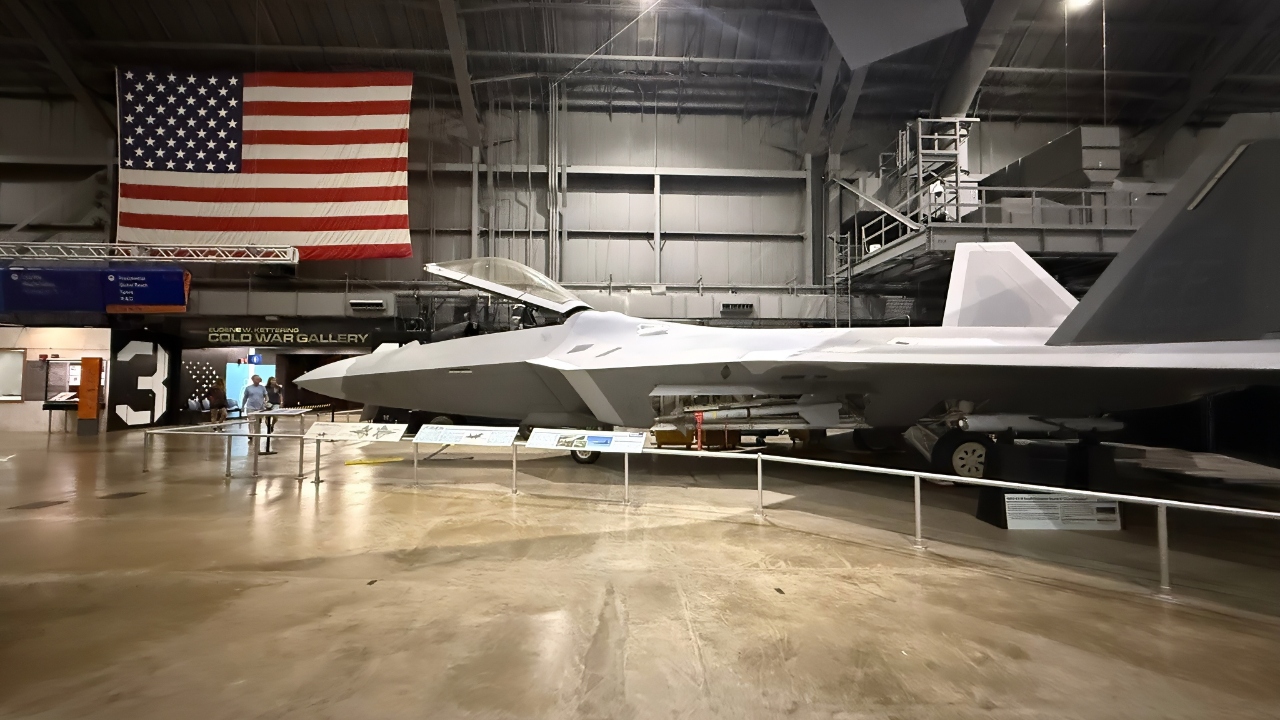
F-22 Resting at U.S. Air Force Museum. Image Credit: National Security Journal.
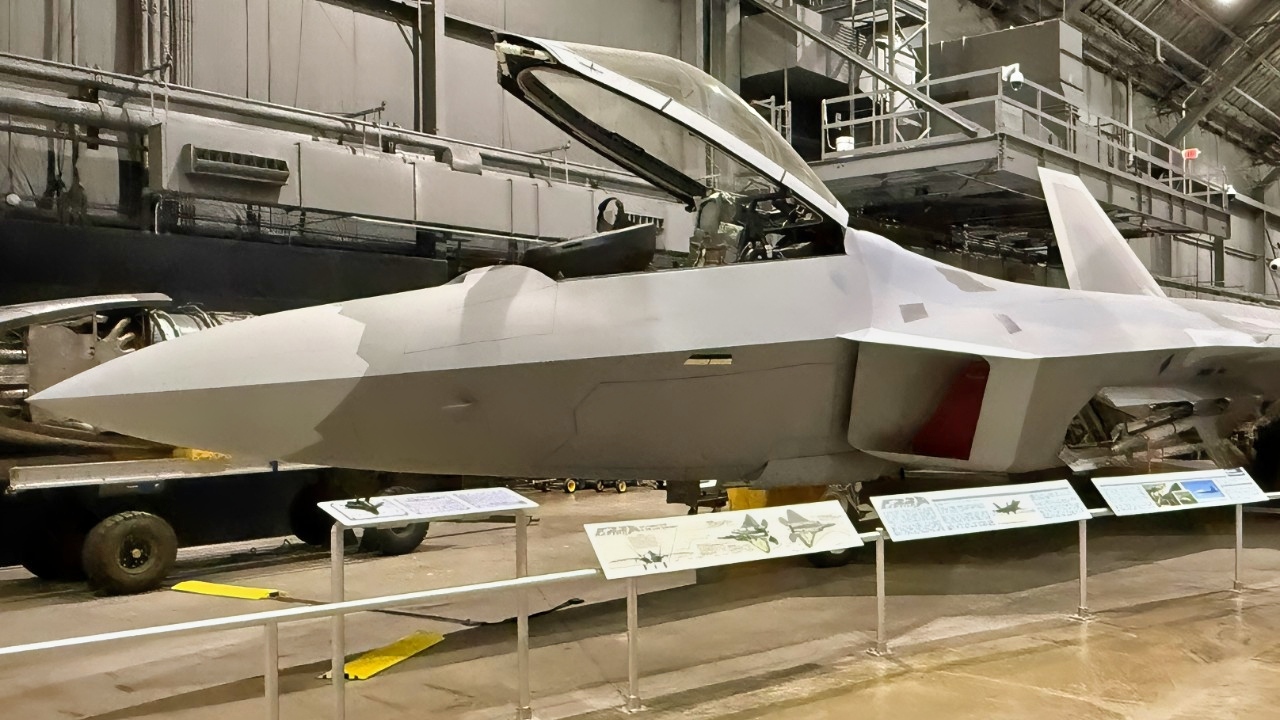
F-22A Raptor In Dayton, Ohio National Security Journal Photo.
During this March 2013 mission, two F-22s escorted the drone. The Iranian F-4 crews never saw them.
The lead Iranian Phantom closed on the Predator. Lt. Col. Kevin “Showtime” Sutterfield, an Air Force Reservist flying the lead Raptor, eased his aircraft into a position underneath the F-4 to inspect the Iranian’s weapons loadout. The Phantom pilots saw nothing. Sutterfield then climbed and slid up onto the F-4’s left wing, still invisible to the Iranian crew, before keying his radio.
“You really ought to go home.”
The Iranian pilots, suddenly aware that an American stealth fighter had been within visual range for an unknown number of minutes, broke off the intercept. Both F-4s returned to base. The Predator continued its mission.
How The Public Learned About It
The U.S. government did not announce the engagement at the time. American Air Force Chief of Staff General Mark Welsh disclosed the encounter during remarks at an Air Force Association event on September 17, 2013 — roughly six months after the engagement had taken place.
Welsh’s narrative was direct. The F-22 had flown under the Iranian Phantoms to assess their weapons load without being detected. The Raptor pilot had then pulled up alongside the Iranian fighter, identified himself by radio, and suggested the Iranians depart. “When the combatant commander wants air power there is only one number to call,” Welsh told the audience. “Showtime is an Air Force Reservist… he flies the F-22. He flies it really well.”

F-22 Raptor National Security Journal Image
The story has been retold extensively in the years since. A 2014 commemorative oil painting by Lt. Col. Warren Neary captured the encounter for the historical record, and the Sutterfield identification, the location detail, and the broader operational context have been confirmed across multiple independent open-source accounts.
What The F-4 Phantom Actually Was
The McDonnell Douglas F-4 Phantom II entered U.S. military service in 1961 and, as luck would have it, National Security Journal has spent a lot of time visiting the F-4 Phantom at various museums around the world, so we have many original pictures to show you below.
The aircraft was the workhorse American tactical fighter of the Vietnam War, serving with the Air Force, the Navy, and the Marine Corps for decades. By the mid-1990s, the United States had retired the platform.
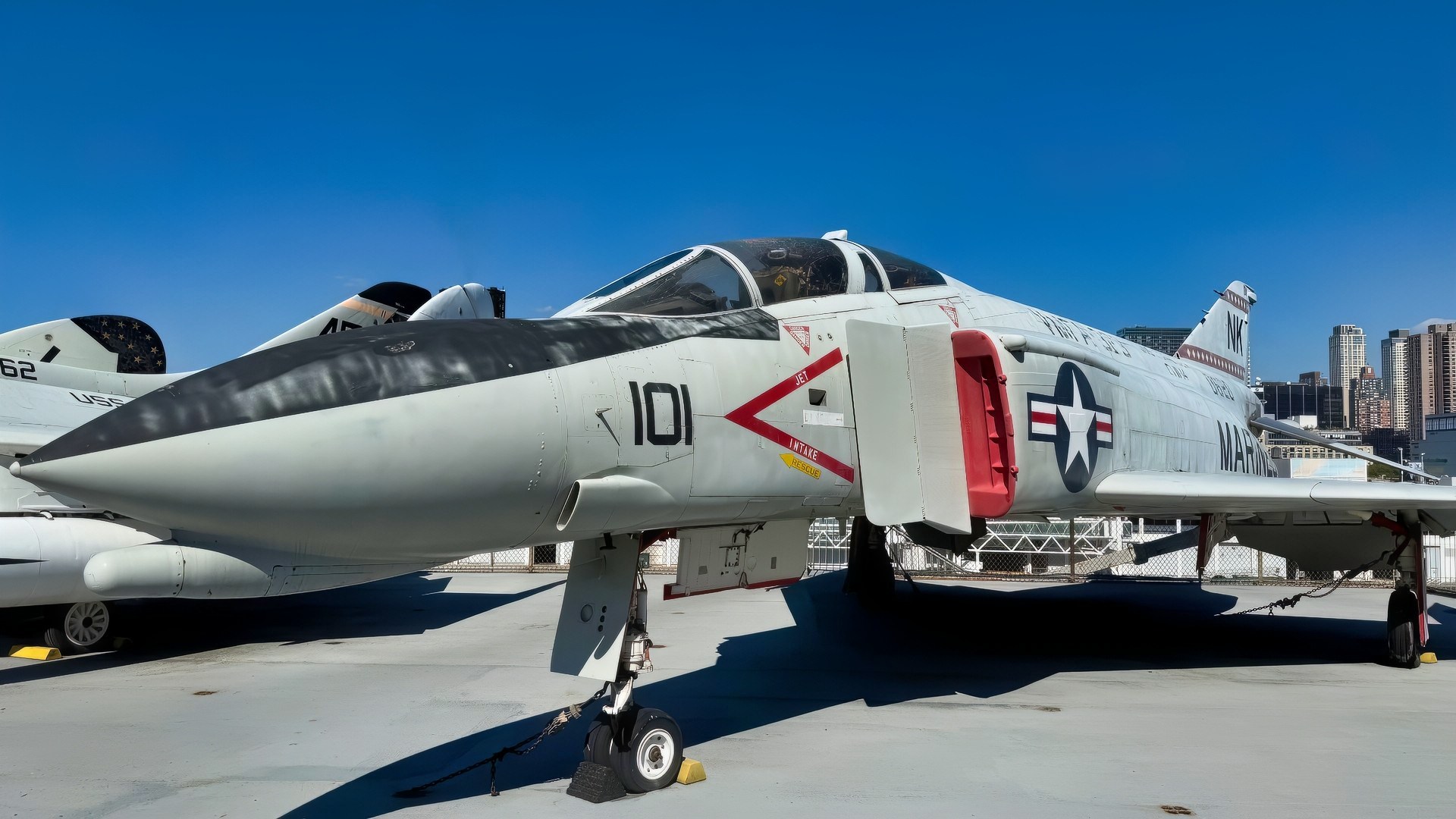
F-4 Phantom Photo Taken on USS Intrepid. Image Credit: National Security Journal.
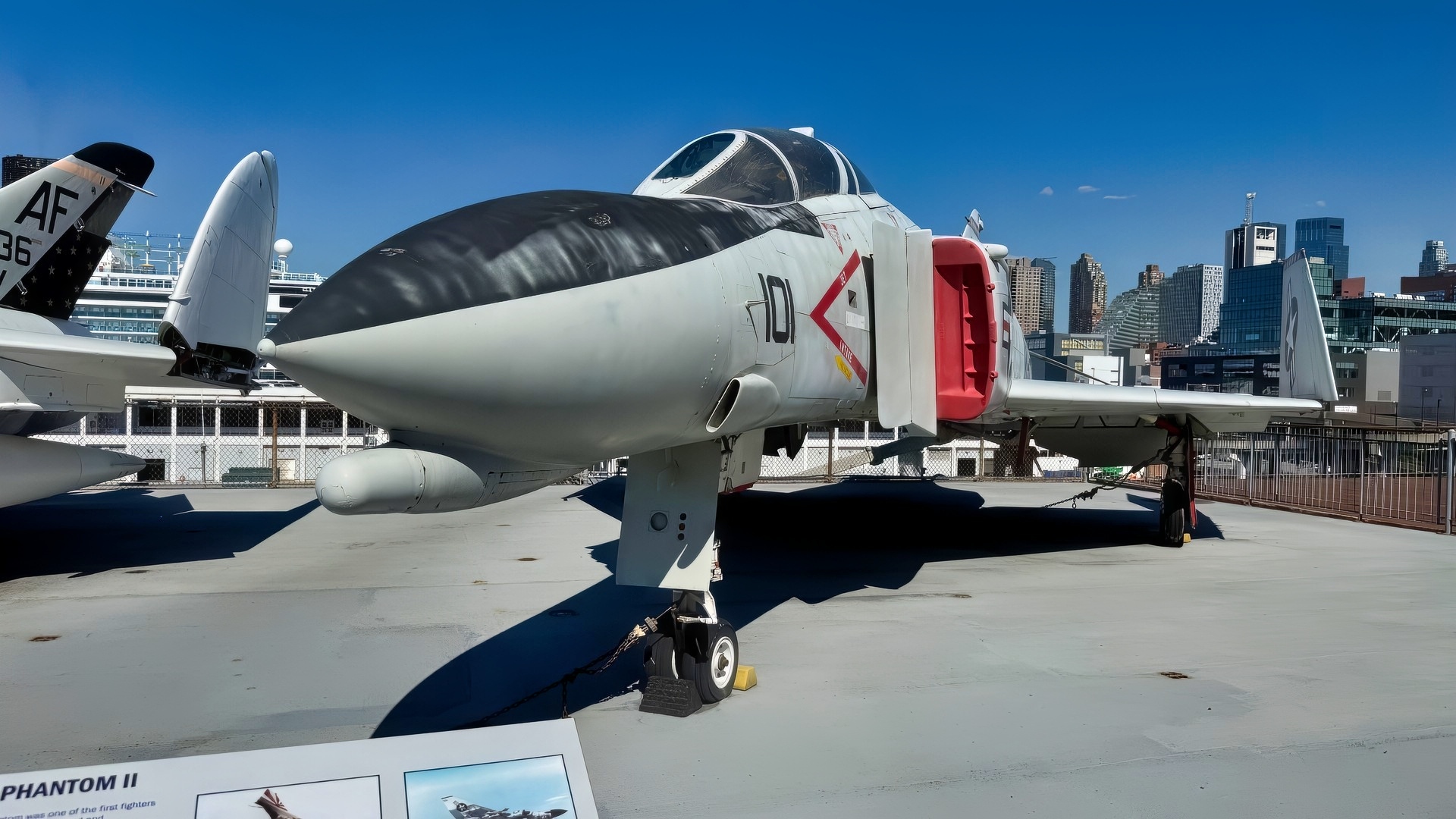
F-4 Phantom II Photo from National Security Journal. Taken on September 18, 2025.
The Iranian F-4 fleet that scrambled to intercept the Predator in March 2013 traced its origin to the late 1960s and early 1970s. Imperial Iran had been a major American military ally before the 1979 revolution, and the Shah’s air force had taken delivery of approximately 225 F-4 Phantoms across the 1970s. The post-revolution Islamic Republic of Iran Air Force inherited the fleet and has operated it ever since, with maintenance and parts support cobbled together through reverse-engineering and grey-market procurement.
In 2013, the Iranian F-4s still had real combat capability against soft targets. A top speed of Mach 2.23, nine external hardpoints carrying up to 18,650 pounds of ordnance, and a variety of legacy air-to-air missiles meant the platform could absolutely destroy an unarmed drone moving at 135 miles per hour. Against any modern fighter, the calculus collapsed instantly.
Why The F-22 Would Crush The F-4 In Combat
The 2013 engagement ended without weapons being fired. Had it gone differently, the outcome would have been one-sided in a way that comparative aircraft analyses rarely allow.
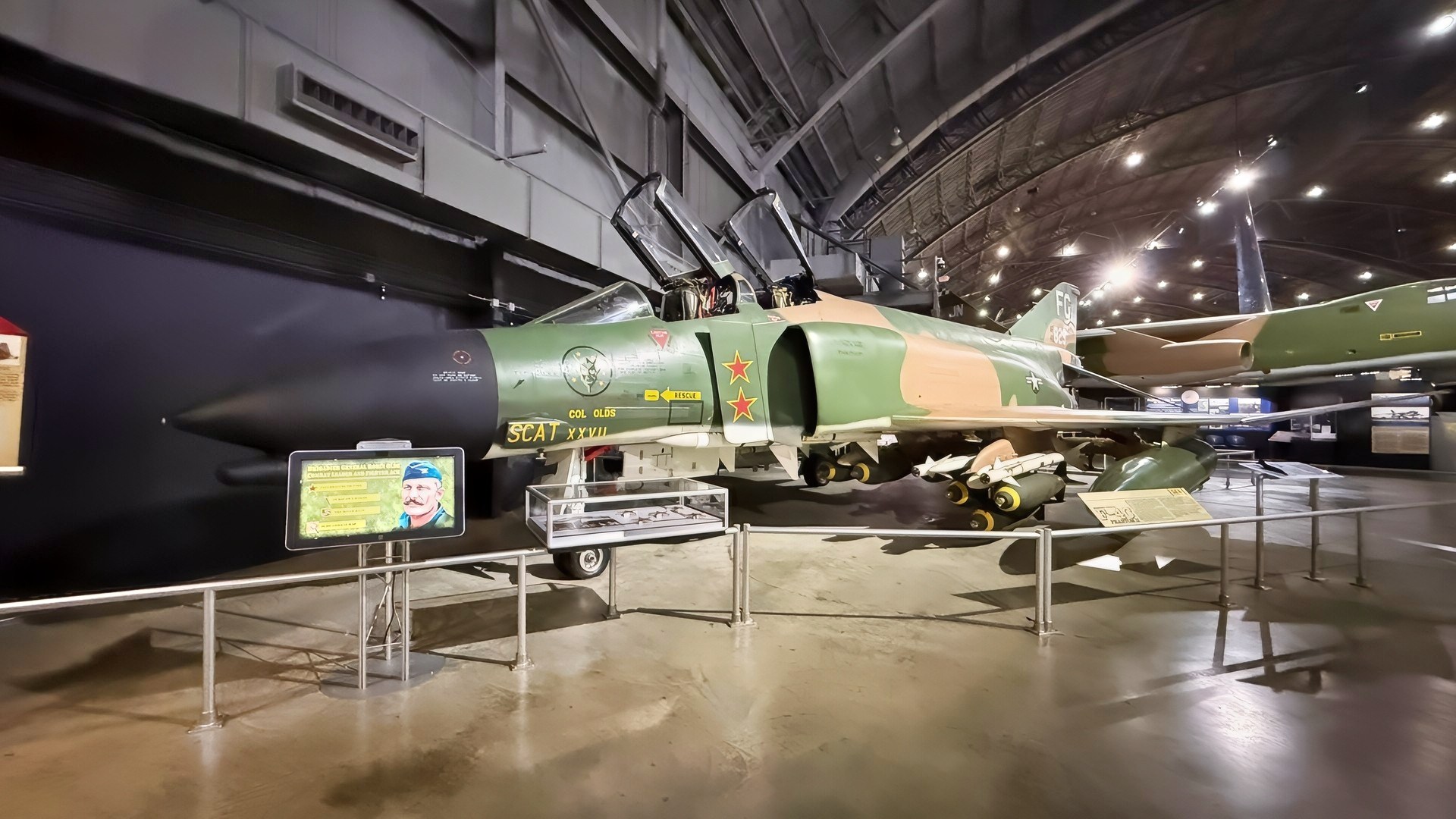
F-4 Phantom II from U.S. Air Force Museum July 2025. Image Credit: National Security Journal.
The first advantage is stealth. The F-22’s frontal radar cross-section is widely assessed at roughly the size of a marble. The F-4’s radar cross-section is the size of a small barn. The Iranian Phantoms’ onboard radar systems — late-1960s technology with cumulative degradation across decades of Iranian operation — could not have detected the F-22 at any range relevant to a missile engagement. The F-22 saw the F-4 first by an enormous margin.
The second advantage is supercruise. The F-22 can sustain supersonic flight without afterburner — Mach 1.8 in cruise. The F-4 cannot. The Raptor can engage, disengage, reposition, and reengage at speeds the Phantom can only achieve briefly while burning fuel at unsustainable rates.
The third advantage is missile reach. The F-22 carries the AIM-120D AMRAAM with engagement ranges in excess of 100 miles. The F-4 carries the AIM-9 Sidewinder family — a short-range, heat-seeking weapon effective at perhaps 10 miles in ideal conditions — and the AIM-7 Sparrow, an older medium-range radar-guided missile dependent on the fighter’s own radar holding a target lock. The Raptor would launch from beyond the Phantom’s detection range. The Phantom would be killed by a missile it never saw fired from an aircraft it never knew was there.

F-4 Phantom Images Original National Security Journal.

F-4 Phantom Fighter National Security Journal. Image Taken on August 23, 2025.
The fourth advantage is sensor fusion and situational awareness. The F-22’s avionics architecture integrates radar, infrared, electronic warfare, and data-link inputs into a single tactical picture. The F-4 pilot is looking out the canopy, working an analog instrument panel, and listening to a radio. The two aircraft are not operating in the same century of air combat doctrine.
If the F-22 had been cleared to fire on March 13, 2013, both Iranian F-4s would have been destroyed before either pilot understood an American aircraft was within 50 miles.
What The Encounter Actually Meant
The 2013 incident was not really about Iran versus the United States. It was a demonstration of what fifth-generation stealth aircraft can achieve when operating against fourth-generation legacy hardware. The Raptor was not impressive because it could have killed the Iranian Phantoms.
Every modern American fighter could have killed those Iranian Phantoms. The Raptor was impressive because the Iranian pilots never knew it was there until the American chose to make himself known.
The encounter became the template for how the U.S. Air Force would talk about F-22 capabilities for the rest of the decade.
Pilots from allied air forces have repeated similar stories from exercises against the Raptor — undetected approaches, missile shots taken from positions the opposing pilot could not see, complete situational awareness on one side of the engagement, and complete blindness on the other.

U.S. Air Force Maj. Joshua “Cabo” Gunderson, F-22 Raptor Demonstration Team commander and pilot, performs during the Orlando Air and Space Show at the Orlando Sanford International Airport, Florida, Oct. 30, 2022. The F-22A is a fifth-generation fighter incorporating fourth-generation technology, radical maneuvering capabilities, the ability to fly at supersonic speed without afterburners and unprecedented pilot situational awareness. (U.S. Air Force photo by Airman 1st Class Joshua Hastings)

U.S. Air Force Capt. Nick “Laz” Le Tourneau, F-22 Raptor Aerial Demonstration Team commander, performs an aerial maneuver during the Hyundai Air and Sea show at Miami, Florida, May 25, 2025. The F-22 Aerial Demonstration Team highlights cutting-edge airpower, precision, skill, all while reinforcing public confidence in the Air Force’s ability to protect and defend. (U.S. Air Force photo by Staff Sgt. Lauren Cobin)

U.S. Air Force F-22 Raptors assigned to the 27th Expeditionary Fighter Squadron and Philippine Air Force FA-50PH light jet fighters conduct joint combined exchange training, above Basa Air Force Base, Phillipines, on Aug. 9, 2024. Joint combined exchange training is critical to enhancing U.S. and Philippine Air Force interoperability in a free and open Indo-Pacific. (U.S. Air Force photo by Senior Airman Mitchell Corley)

U.S. Air Force Gen. Kevin B. Schneider, Pacific Air Forces commander, pilots the lead F-22 Raptor rendezvousing with a C-17 Globemaster III, both from Joint Base Pearl Harbor-Hickam, during a mission off the coast of O‘ahu, April 8, 2025. PACAF provides ready and lethal forces to ensure stability and security in the Indo-Pacific. (U.S. Air Force photo by Tech. Sgt. Emerson Nuñez)
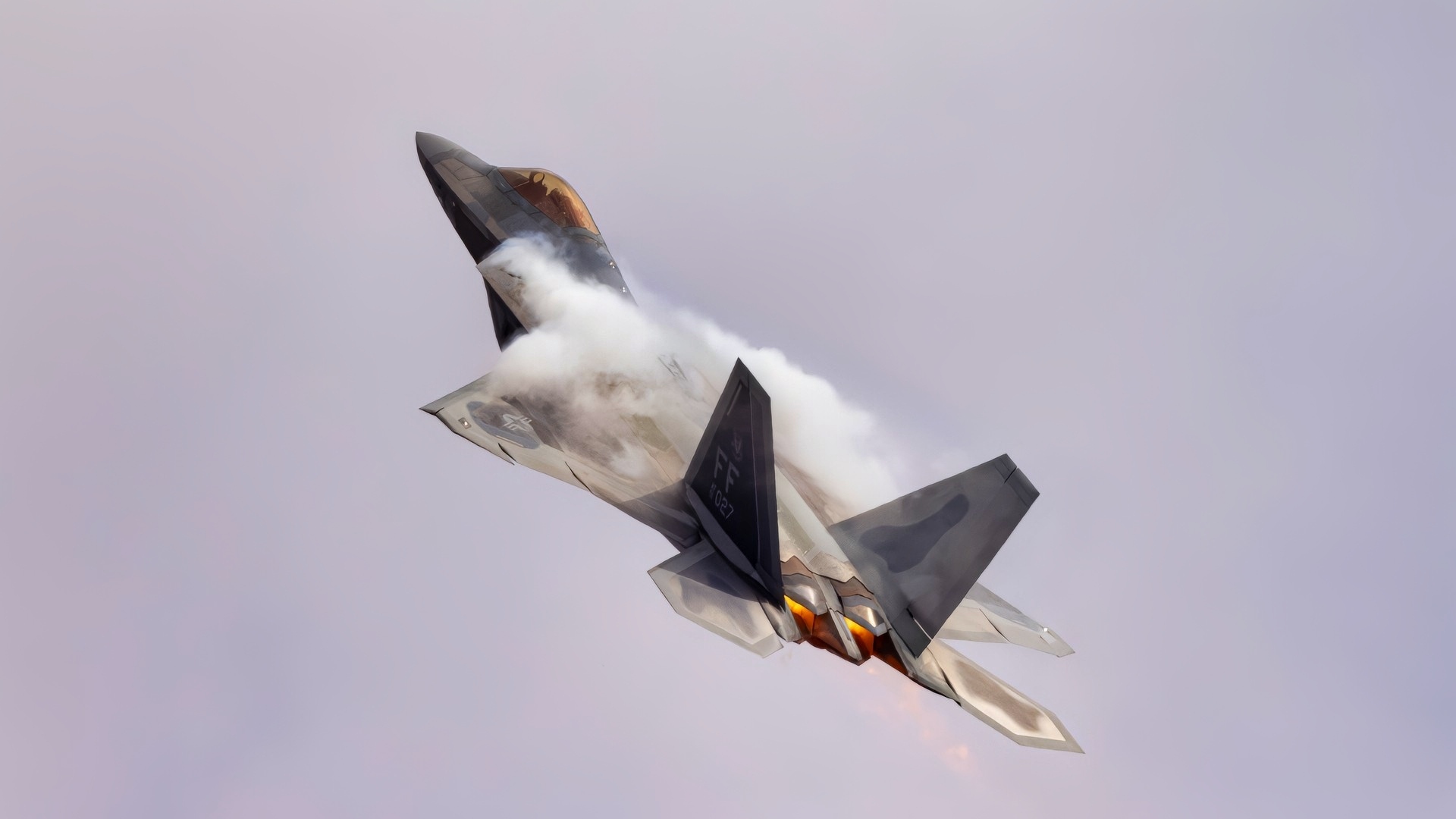
The U.S. Air Force F-22 Raptor Demonstration Team performs during the 2025 Marine Corps Air Station Miramar Air Show in San Diego, Sept. 27, 2025. The F-22 Raptor Demonstration Team performs precision aerial maneuvers at Air Shows across the world to demonstrate the unique capabilities of the world’s premier 5th generation fighter aircraft. America’s Air Show 2025 is a unique and incredible opportunity to witness Marine and joint aviation capabilities, civilian performers and the world-famous Blue Angels; to celebrate the 250th birthday of the Marine Corps alongside Marines and to see first-hand the innovative spirit of the Marine Corps through emerging technologies and forward-thinking. (U.S. Marine Corps photo by Lance Cpl. Jordan Searls)

F-22 Raptor Firing Missile. Image Credit: Creative Commons.
The Iran-U.S. relationship has changed substantially since 2013. The current Operation Epic Fury combat operations are not the same kind of standoff that produced the Phantom encounter. But the underlying point still holds. American stealth aviation operating against fourth-generation Iranian airframes is not a fight. It is a demonstration.
In March 2013, Lt. Col. Sutterfield decided to demonstrate that with a radio call rather than a missile shot. The Iranian F-4 pilots survived the encounter only because the Americans made that choice.
About the Author: Harry J. Kazianis
Harry J. Kazianis (@Grecianformula) was the former Senior Director of National Security Affairs at the Center for the National Interest (CFTNI), a foreign policy think tank founded by Richard Nixon based in Washington, DC. Harry has over a decade of experience in think tanks and national security publishing. His ideas have been published in the NY Times, The Washington Post, The Wall Street Journal, CNN, and many other outlets worldwide. He has held positions at CSIS, the Heritage Foundation, the University of Nottingham, and several other institutions related to national security research and studies. He is the former Executive Editor of the National Interest and the Diplomat. He holds a Master’s degree focusing on international affairs from Harvard University.


David T Petrie
May 25, 2026 at 9:56 am
How many times are you going to recycle this story? Are you running out of content?
Rick Fuendeling
May 25, 2026 at 2:24 pm
“Lt. Col. Sutterfield decided to demonstrate that with a radio call rather than a missile shot”
I expect it was not his choice to make.