

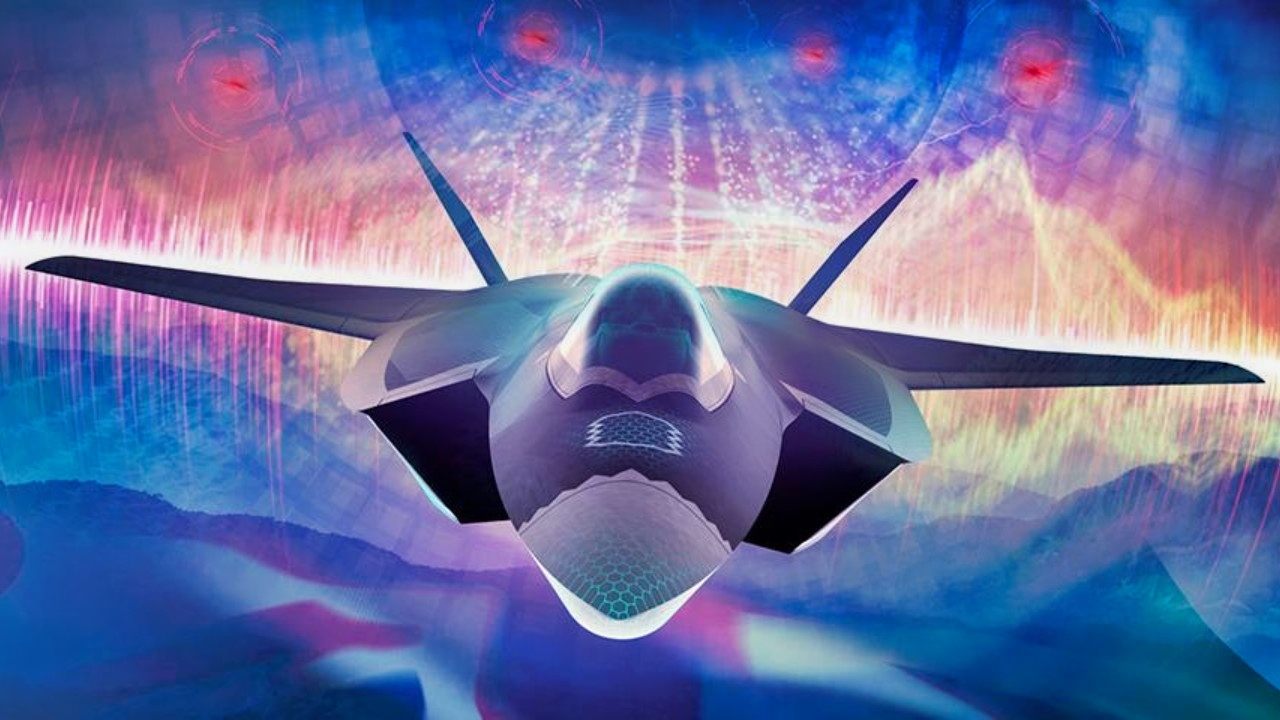
The UK-Italy-Japan Global Combat Air Program (GCAP) 6th-generation fighter aircraft is “a disaster in the making,” according to a lengthy report in one of London’s leading newspapers. The long investigative piece also finds that the GCAP is a microcosm of the UK’s defense establishment in that not just this program, but the country’s entire national security apparatus is in considerable jeopardy.
“The defense of the realm is in terrible trouble,” says the authoritative paper, the Daily Telegraph. “The long-delayed Defense Investment Plan – the costed follow-up to last year’s uncosted Strategic Defense Review – will have to contain many massive cuts and savings if it is to match up with planned funds,” the report projects.

GCAP 6th Generation Fighter.
This initial conclusion – that the GCAP is currently underfunded and no one knows where the money is coming from – is an old story in next-generation fighter programs. The other worry, which is that the program’s cost is bound to balloon well beyond its projected cost and will not proceed according to schedule, is also endemic to the development of any next-generation weapons platform.
What the authors of the report have been most concerned about is the future of this effort, which is two different concerns.
One projection is that for the UK to remain in the GCAP effort and carry it through to its conclusion, other smaller defense programs will likely have to be eliminated. This £ multi-billion aircraft will hoover up so much funding that there will not be much left for anything else.
“In an age when the Ukraine war is showing us how important and pivotal to an conflict it is for a nation to have a robust and affordable drone force, spending on a fighter aircraft at this scale looks a lot like the generals engaging in the proverbial ‘preparing to fight the last war’ instead of the one that is coming next,” said an airpower expert in London that NSJ spoke with this weekend.
Less Than Promising Track Record
But the other worry is that the history of fighter aircraft development in the UK over the past decades is not terribly promising. Two previous fighter designs led by the UK that – like the GCAP – were developed with multinational partners ended up being overpriced underperformers.
The GCAP would be the third aircraft to be created in this manner, and it is a valid question whether it is time to abandon this model.
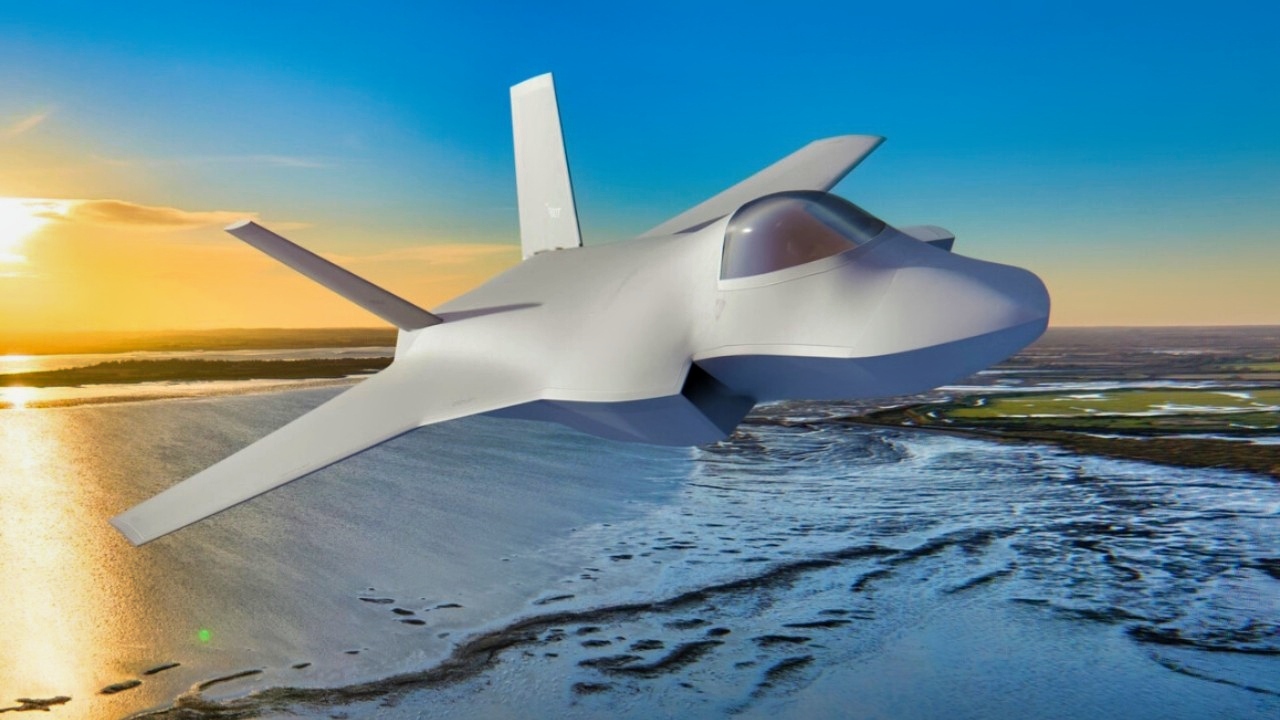
Tempest Fighter from BAE Systems.

Tempest Fighter. Image Credit: Creative Commons.
The Tempest fighter concept design, which serves as the basis for the GCAP, would eventually replace the Eurofighter Typhoon, which is currently in service with the UK’s Royal Air Force (RAF). The Typhoon was designed and manufactured in partnership with Italy, Germany, and Spain – all of which operate the aircraft in their own armed forces.
It was the second combat aircraft to be built in this manner, as the creation of the Typhoon followed the same developmental and organizational model of the Panavia Tornado, which the UK designed along with Italy and Germany.
Neither program has been a big hit with anyone.
Overall, the Tornado was a very disappointing aircraft. The only nation other than the three partners to acquire it was Saudi Arabia. Despite the Eurofighter being intended for European nations, the only EU military to acquire it was the Austrian Luftstreitkräfte.
Austria later calculated that operating the Eurofighter over a 30-year period would cost about €5 billion, largely due to maintenance costs, and they want to sell or lease them to another country. Their calculations indicate that buying and operating 15 of another new fighter model would cost €2 billion less over the same period.
The Cost of Multinational Efforts
As the Telegraph’s investigation points out, “the Eurofighter Typhoon, as flown by the RAF, is the most expensive tactical aircraft ever built by the human race. When the last Tranche 1 planes are gone next year (disposed of with half their lifetime hours unused), the RAF will possess 107 aircraft.”
What also must be considered, said the airpower expert, “are a couple of very important facts.” The GCAP is being designed along with the Japanese and the Italians. “But then there is another 6th-generation fighter project called the Future Combat Air System (FCAS), or SKAF in its French acronym, this being a fighter designed between France, Germany, and Spain.”
“Then the Americans have their own F-47 program. So we live in a world where everyone who can is now buying F-35s if they want a stealthy platform – one aircraft from one country. So, given how much these 6th-generation fighters will cost, just how many real customers are out there? Probably not enough to support three different such programs.”
Then the FCAS program also has more than its fair share of major disagreements between the partners. There have even been discussions about Spain and Germany exiting the partnership and joining the GCAP project.
Given these complications and the very discouraging history of these multinational collaborations, it may be a tremendous triumph of hope over experience to assume that the GCAP will be anything other than another horrendously high-cost defense item that delivers far too little performance for far too high a price.
About the Author: Reuben F.Johnson
Reuben F. Johnson has thirty-six years of experience analyzing and reporting on foreign weapons systems, defense technologies, and international arms export policy. Johnson is the Director of Research at the Casimir Pulaski Foundation. He is also a survivor of the Russian invasion of Ukraine in February 2022. He worked for years in the American defense industry as a foreign technology analyst and later as a consultant for the U.S. Department of Defense, the Departments of the Navy and Air Force, and the governments of the United Kingdom and Australia. In 2022-2023, he won two awards in a row for his defense reporting. He holds a bachelor’s degree from DePauw University and a master’s degree from Miami University in Ohio, specializing in Soviet and Russian studies. He lives in Warsaw.


pagar
May 25, 2026 at 1:08 pm
For Europe to get into bed with Japan for the slowly-drowning GCAP project is a terrible mistake, exposing the raw fact the europeans have unlearned some very harsh lessons of history.
The last time europeans got involved with Japan for the sake of advancing military aviation was the 1921 sempill mission.
Sempill mission exposed the japs to the benefits of modern military aviation, including innovative equipment, such as torpedoes, cannons and recce cameras.
Twenty years later, the japs put to good use what they had learned from the sempill mission when they attacked and smashed pearl harbor.
xi-xi-xi-xi
May 25, 2026 at 8:34 pm
(xi-xi-xi-xi = die-die-die-die.)
Breaking, breaking news.
President Donald trump has ordered centcom to carry out military strikes against Iran, today, Monday 25 may 2026.
Shows Donald trump cannot be trusted. Cannot be trusted.
Putin needs to follow and do what trump and centcom are doing.
Putin, whatcha waitin’ for ???
dooyle
May 25, 2026 at 10:08 pm
The GCAP military tie-up or collaboration between UK and japan exposes the huge glaring grand weakness on the part of xi jinping of china.
Both UK and japan are increasingly hostile and confrontational toward china, yet xi has been trying to curry favor with both of them.
Worse, xi has been tricked by donald trump, who now thinks he has a free hand dealing with cuba and iran, after xi gave him the all clear.
The HELL with xi jinping, and the HELL, too with donald.