

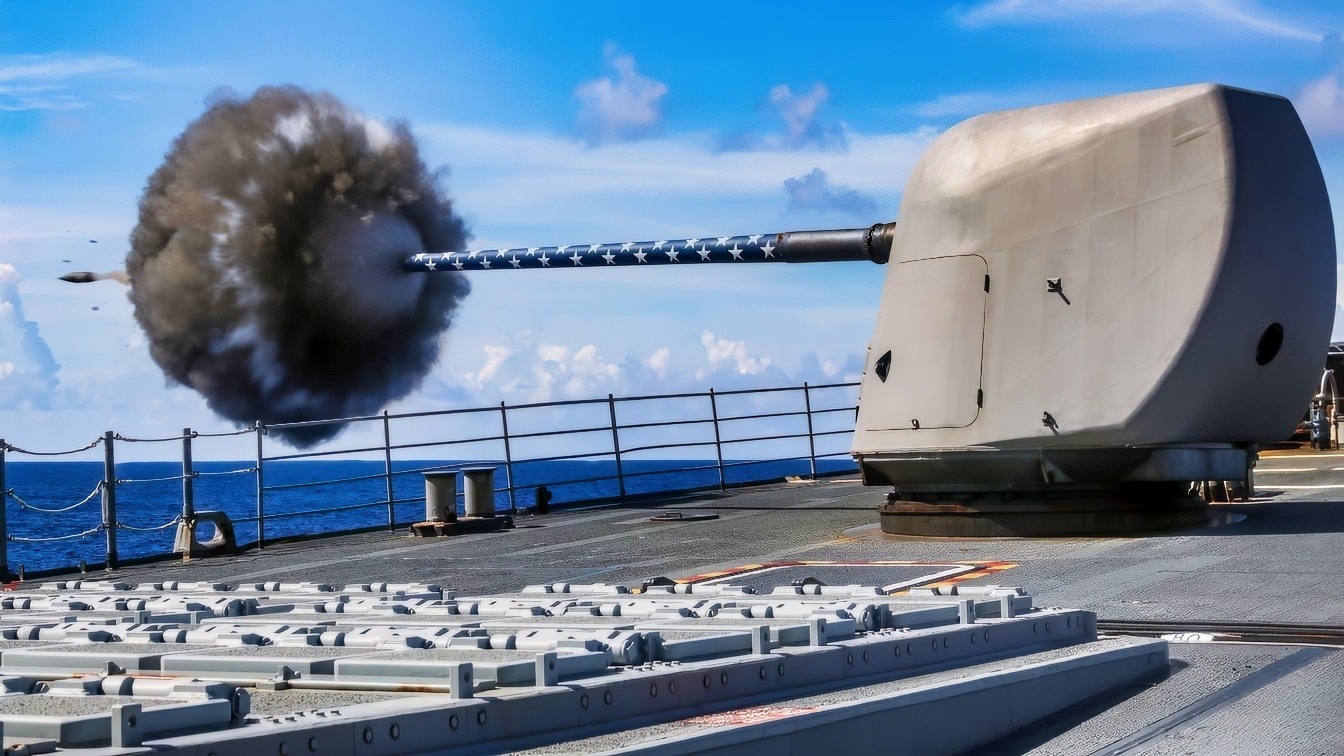
Summary and Key Points: Seven weeks into the Pakistan-brokered ceasefire, the IRGC has continued to fire on U.S. naval forces in the Strait of Hormuz — and Washington keeps misreading the signal because Iran’s diplomats and its military do not share a command structure.
The Iran War Gets Complicated
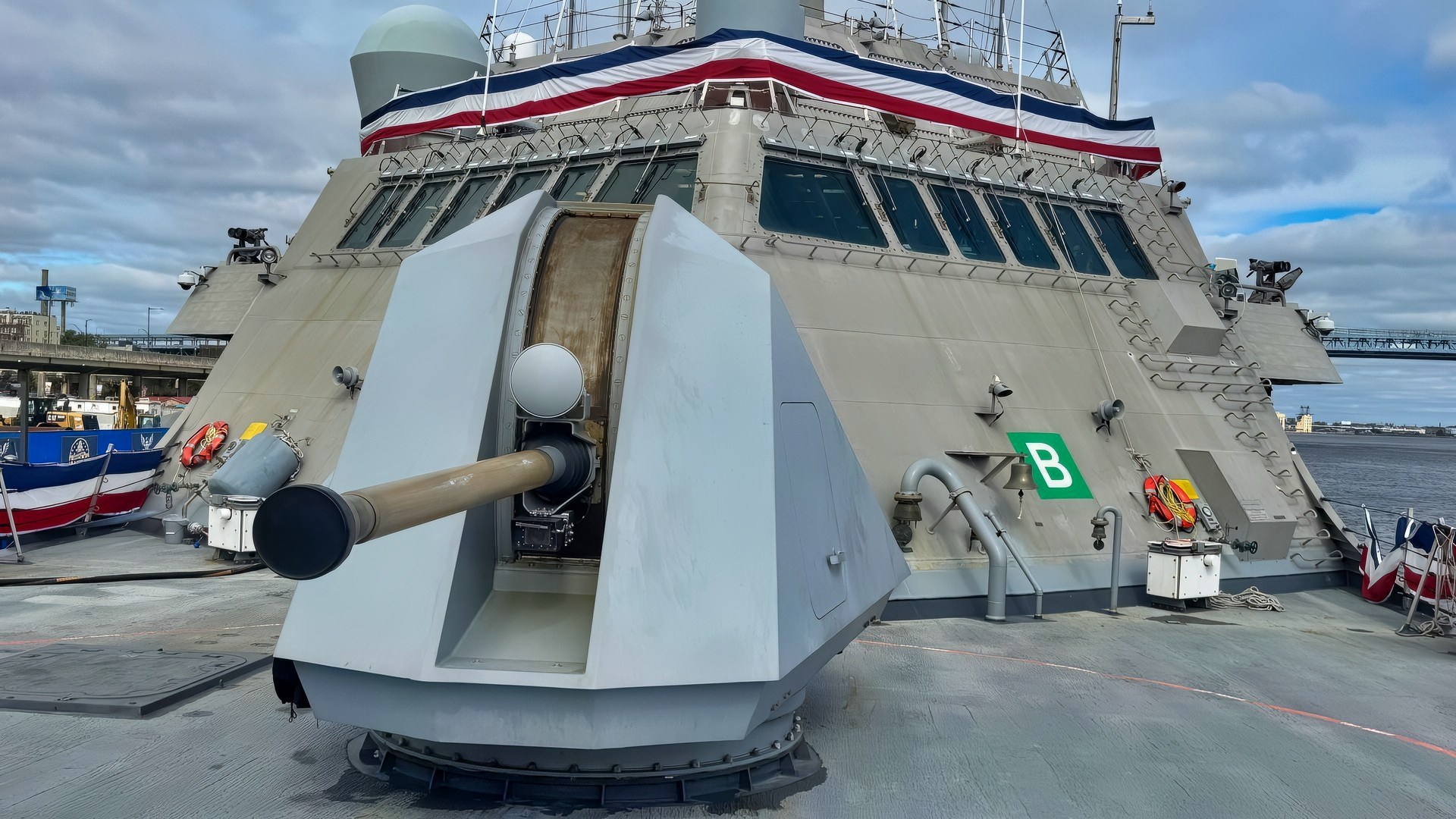
Littoral Combat Ship USS Cooperstown. Image Taken By National Security Journal October 14, 2025.
Seven weeks into the Pakistan-brokered ceasefire, shots were fired in the Gulf again last week. Oil markets spent most of the same day drifting lower on reports that the nuclear talks had made progress — specifically, that the latest back-channel session had produced what one intermediary described as a real opening. Crude was down before the afternoon briefings had even caught up with what happened in the water.
The question Washington keeps asking is whether the shooting is a diplomatic signal — hardliners trying to wreck the talks, or improve Tehran’s terms, or remind the Foreign Ministry who actually controls the water. Washington has been asking the wrong question. Whoever authorized last week’s incident does not answer to the same leadership currently receiving American proposals through Pakistani intermediaries.
That is not how Iranian civil-military relations work.
The IRGC Doesn’t Report to the Foreign Ministry
Iran’s diplomats and its military do not share a command structure. And that’s a clear problem.
The back-channel sessions — routed through Oman, through Islamabad, through whatever intermediary the administration has settled on this month — involve people who report to Foreign Minister Araghchi. The Islamic Revolutionary Guard Corps answers to Khamenei through a chain that has never run through the Foreign Ministry and was not designed to do so.
IRGC naval commanders in the southern Gulf are not tracking what Witkoff said in Muscat last week. They watch what U.S. forces are actually doing in the water — whether the enforcement tempo changes when Washington is in a hopeful mood, how quickly incidents get answered. Over the past seven weeks, they’ve gotten a reasonably clear picture. Political pressure not to give hardliners a pretext to blow up the negotiations is real, and it has operational consequences.
When Washington signals deal progress, the moves in oil prices also register inside the IRGC — just differently. When American attention shifts to the table, the water receives less scrutiny, and that window does not stay open for long.
The Proxy Network Is a Separate Problem
What remains of Houthi operational capacity, the Iraqi factions that maintain their own funding streams and their own internal command relationships — none of these answer to whatever framework emerges from Muscat. Tehran built this network to survive pressure. The decentralization was deliberate: these groups were structured to retain independent escalation options precisely during periods when Iran’s diplomats needed plausible distance from what was happening in the water. The same quality that makes the network durable makes it hard to switch off.
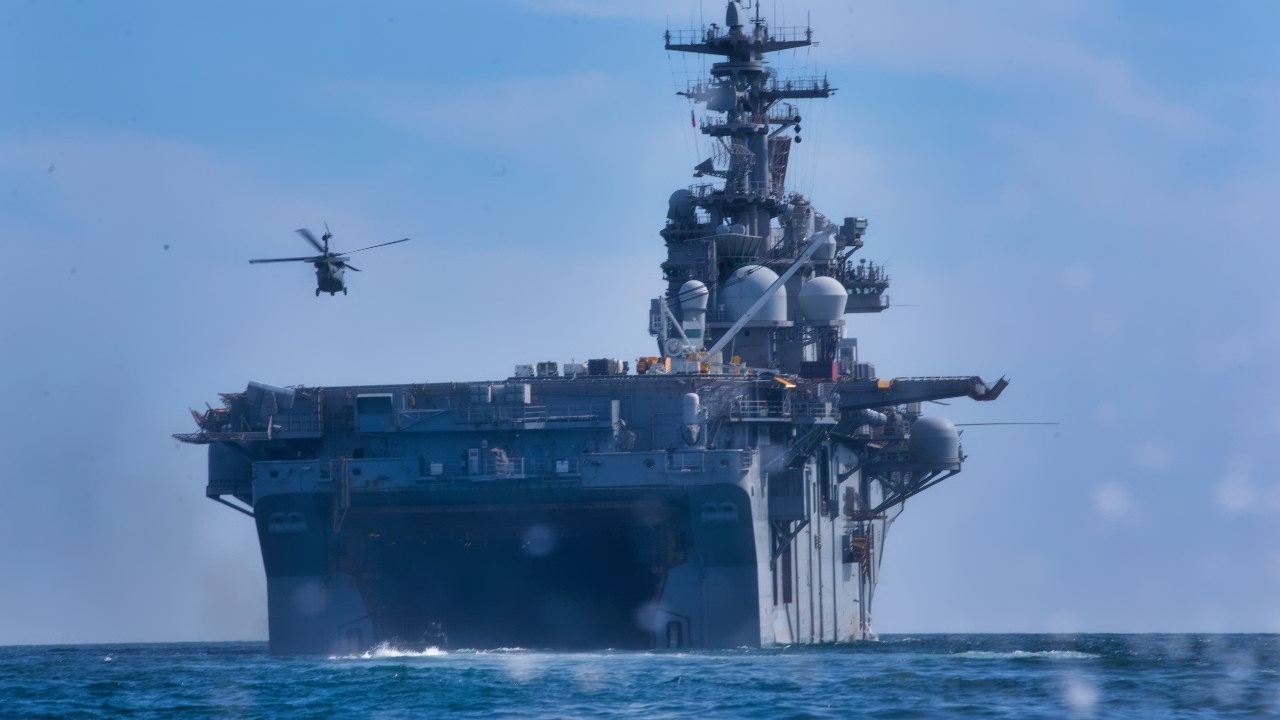
U.S. Marines with Bravo Company, 2d Assault Amphibious Battalion, 2d Marine Division approach the USS Wasp (LHD 1) in assault amphibious vehicles off of Onslow Beach during a three-day ship-to-shore exercise on Camp Lejeune, N.C., June 27, 2020. During the exercise, the Marines conducted amphibious maneuvers and dynamic ship-to-shore operations with the USS Wasp (LHD 1). (U.S. Marine Corps photo by Lance Cpl. Jacqueline Parsons)
Any deal that comes out of Muscat carries all of this with it the moment it takes effect. The negotiators cannot deliver compliance from actors they do not control, and the oil markets, pricing in a resolution, will find that out when the next incident happens.
What the Cycle Is Actually Producing
Seven weeks is enough to read the pattern. Diplomatic signals move oil prices, which gives the administration room to breathe at home. An incident in the Strait of the Gulf of Oman produces a spike — brief, these days, briefer than it used to be — and a new round of optimism smooths it over. Traders have figured out that each one is a buying opportunity.
Every incident that gets absorbed without a clear response is noticed in Tehran. Trump dismissed the exchange near Qeshm as a “love tap.” Rubio is waiting on a diplomatic response to the 15-point proposal that Iran rejected in late March. The IRGC has spent seven weeks conducting its own assessment of American willingness to respond to provocations during a ceasefire window, and it is acting on the results.
The Gap That Needs Closing
The talks may be going somewhere — nothing in Iran’s 14-point counteroffer rules that out, and the ceasefire has held longer than most people expected.
The same statements calming oil prices are also telling IRGC planners something about American resolve, and probably not what the administration intends. Every time the diplomatic temperature rises, U.S. operational posture in the Gulf tends to soften, and the signal reaching IRGC commanders is not a reason for restraint. The clearest example came earlier this month. Trump launched Project Freedom on May 3 to escort commercial vessels through the Strait, then stood it down 48 hours later, citing deal progress and Pakistan’s request. Iran’s Ports Authority declared it a victory. Within two days, IRGC forces attacked three U.S. destroyers transiting the same water.

Members of the US Navy F/A-18F Super Hornet Demo Team performs a maneuver at the Wings Over South Texas Air Show. This year’s air show marks the first return of Wings Over South Texas to Naval Air Station Corpus Christi since 2019.
Any deal worth signing needs a military channel that runs in parallel — not to replace what is happening in Muscat, but to make clear that U.S. force posture in the Strait does not track the mood in the back channel. Deterrence that softens when diplomats are talking is not deterrence. It is a schedule.
Oil traders take Trump at his word. The IRGC has spent seven weeks watching what the Navy actually does, and it has a different read on it. Right now, those two assessments are not pointing in the same direction, and the Gulf is where that gap shows up.
About the Author: Dr. Andrew Latham
Andrew Latham is a professor of international relations and political theory at Macalester College in Saint Paul, MN. You can follow him on X: @aakatham.


