


Everyone is again talking about a potential deal between the United States and the Islamic Republic of Iran that will end the war and see the Strait of Hormuz, which remains closed despite a (shaky) ceasefire being in place, reopened to all civilian shipping.
Yet again, it seems, the world has amnesia. We’ve all been down the false path of peace talks between the Trump administration and Tehran. Every time, it has yielded no results whatsoever (other than keeping the Strait of Hormuz closed).
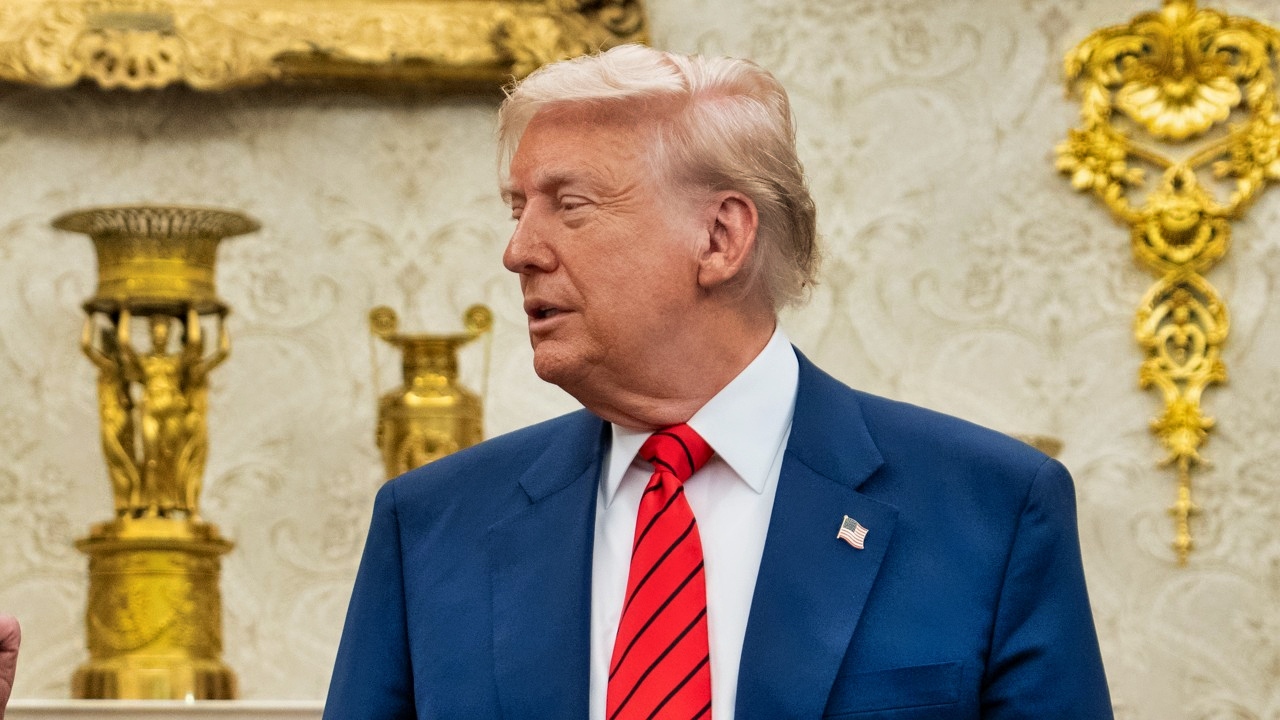
President Donald Trump meets with Canadian Prime Minister Mark Carney, Tuesday, May 6, 2025, in the Oval Office. Vice President JD Vance attends. (Official White House Photo by Emily J. Higgins)
Still, even a blind pig finds its slop bowl once in a while. Perhaps this time is different. At least, that’s what the markets are telling themselves, as they cling to the delusion that we’re almost at the end of this self-imposed crisis and everything will magically return to normal. What was just described, of course, is normalcy bias.
When ordinary people engage in this form of faulty thinking, they can make mistakes. When nations and global businesses embrace normalcy bias, it is downright destructive.
Iran Has No Intention of Restoring the Old Status Quo
There is no going back to the way things were. The Iranian government has made clear that, while they would prefer reopening the Strait of Hormuz to trade, they are refusing to restore it to the way it was before February 28, the day the US and Israel started the war.
Much talk has been had about what compromises the Trump administration was willing to accept. For instance, would they accept a deal that would allow Iranians and Omanis to charge service fees to ships passing through the Strait of Hormuz?
What if, in exchange for charging service fees on ships passing through the Strait of Hormuz, the Iranians submitted to intensive nuclear weapons inspections? Certainly, that would be a fair compromise, as it would satisfy President Trump’s top two priorities: reopening the Strait and denuclearizing the Islamic Republic.
Trump’s Oman Outburst Changes Everything
Although Trump earlier today confounded the international press when he apparently threatened to bomb (checks notes) the Sultanate of Oman. That unhinged response from Trump was prompted by a reporter’s question about the feasibility of Oman charging service fees to ships passing through the Strait of Hormuz (which runs through Omani territory).
To be clear, the Sultanate of Oman has been a close ally of the United States in the Middle East for years. Indeed, Oman endeavored to facilitate a peace deal between the United States and Iran in the run-up to the war on February 28 (at great political and diplomatic cost to the Omani government).
These irresponsible, unhinged statements by America’s forty-seventh president are not only fodder for late-night comedians, but they also further complicate any attempts at meaningful diplomacy between the United States, Iran, and the rest of the Middle East.
America’s Regional Standing Is Crumbling
How is anyone supposed to conduct meaningful diplomacy under these conditions? Forget about what Iran is supposed to take away from Trump’s unpredictable diplomacy. How are America’s partners in the Middle East supposed to react? What’s stopping them from simply washing their hands of the United States whenever the current crisis with Iran abates?
The US has already lost many of its bases in the region, resulting from damage from Iranian strikes. Iran’s closure of the Strait of Hormuz has demonstrated how ineffective the United States Navy is at using force to reopen the critical waterway.
By now threatening US partners in the region with military action, Washington risks losing any semblance of standing in the region–or creating a peace deal that is in any way beneficial to the United States
Iran Now Holds the Upper Hand
Trump entered office as the self-styled dealmaker-in-chief. In his second year, the forty-seventh president is not only triggering unpopular wars with inconclusive results, but he’s also not threatening to bomb smaller, friendly states, like Oman, which have done nothing to warrant such harsh rhetoric.
Given the apparent unpredictability and unhinged nature of the American president, Iran is likely disinclined to negotiate seriously with the Americans.
After all, how could Tehran even be sure that the Americans would keep their word–especially if the US leader is clearly unable to tell friend (Oman) from foe (Iran)?
At this rate, Iran is not only going to maintain its de facto control over the Strait of Hormuz, but they are likely going to win some new friends in the region who are completely turned off by the American president’s unstable behavior.
About the Author: Brandon J. Weichert
Brandon J. Weichert is a Senior National Security Editor. Recently, Weichert became the editor of the “NatSec Guy” section at Emerald. TV. He was previously the senior national security editor at The National Interest. Weichert hosts The National Security Hour on iHeartRadio, where he discusses national security policy every Wednesday at 8 p.m. Eastern. He hosts a companion show on Rumble entitled “National Security Talk.” Weichert consults regularly with various government institutions and private organizations on geopolitical issues. His writings have appeared in numerous publications, among them Popular Mechanics, National Review, MSN, and The American Spectator. And his books include Winning Space: How America Remains a Superpower, Biohacked: China’s Race to Control Life, and The Shadow War: Iran’s Quest for Supremacy. Weichert’s newest book, A Disaster of Our Own Making: How the West Lost Ukraine, is available for purchase at any bookstore. Follow him via Twitter/X @WeTheBrandon.


Michael Lynch
May 27, 2026 at 11:13 pm
This is the 1st I have read the National Security Journal. I really like the article by Mr. Weichert. i have to agree with 85% of it.
U.S.A. was a leader in the globe. Trump has brought us down a crap hole, where the leftover vacuum is being filled by undesirables; and some European leaderships. What is more important is not that Trump is doing this stuff, but that the US is doing it to long term allies
Not to mention the long term affect on the globe.
looking forward to more info and history of the National Security Journal Thanks
Swamplaw Yankee
May 28, 2026 at 3:31 am
Faulty thinking, mistakes, compromises – Is this the GULF Muslin Geopolitical Miasma being explained to the Doodle Dandy reader?
Sultanate of Oman is not getting respect? They are long term allies of the USA! Sounds like the Sultanate of Canada, This very long term ally, the Trudeau WOKE regime under clever 3T is not getting any respect! 3T = Third Trudeau.
The various theatres of the unique World War Xi are kinetic. Maybe Putin’s Kremlin Muscovy anarchists can use a single jet powered, high explosive Shahed drone to blow up the 6 reactor hub of Europe’s largest Nuclear generating plant. Putin flies his lethal drones over the reactors daily and can tell Trump some unidentified Muscovy fellow ethnic did not follow Commander Putin’s directions.
The lethal radioactivity from the huge reactors will kill off most of those pesky Europeans + even impress the GULF State muslims!
The quick panic retreat of every USA force member in Europe + the GULF states will be closely watched by the Theocratic terrorist Bayt-e Rahbari.